Categories for Blog

February 26, 2020

Learn a language: Can I learn Polish, Czech, French, Russian & Portuguese on YouTube?

Today, I’d like to see if we can improve our language skills via YouTube channels.  I hope to inspire you to use some free resources that are available online. I’ll first focus on the languages that I’m familiar with (Polish, Czech, French and Russian) or plan to learn (Portuguese). Yes, I’m giving myself a new language challenge for the coming 8-12 months: to learn some basic Portuguese. I’ll write a new blog post on my progress soon! Today, I’ll focus on YouTube channels and will provide one or two online resources per language to inspire you to practise your language skills more:

Czech: Basic greetings & Americans speaking Czech

Polish: A smiling intro to Polish greetings and Japanese uni students learning & speaking Polish

French: To listen and learn more street French

Portuguese: Students tend to have a preference whether they wish to study European Portuguese (that one that’s spoken in Portugal) or Brazilian Portuguese (spoken in Brazil).

European Portuguese: Basic Portuguese from the Portuguese

Brazilian Portuguese: To start from scratch & for the joy of listening to the melodic Brazilian Portuguese

Russian: A short & fun intro to basic Russian

These are my findings. What YT channels / podcasts / online resources do you use to improve your language skills in Polish, Czech, French, Portuguese or Russian? Let me know in the comments below.

Kinga Macalla
February 19, 2020

Travelling corner: Winter in Exmoor

This winter I re-discovered Exmoor. The last time I went to this beautiful part of England was when I was pregnant with my oldest daughter, around 5 years ago! I remember being 7 months pregnant and climbing North Hill and, by mistake, taking the steep route up the hill… Oh yes, it was proper exercise and this winter, surprisingly (!), we avoided this steeper path 🙂 Below, you’ll find my favourite walks from Exmoor. BTW, if you can, please recommend some books/blogs on Exmoor, as I’m curious to learn more about this undiscovered (by me) land.

North Hill

Yes, we did it again, but this time we chose a more humane path. It was beautiful to walk among green ferns at the lowest point, among clouds in the middle and above the clouds and bathed in sunlight at the highest point. We had such amazing weather that day, which turned the whole walk into a magical experience.

Lynton

I had been planning to visit Lynton for a while and somehow it didn’t happen, but this winter I was determined to go there and explore its uniqueness. Lynton is located on a hill with a Cliff Railway train going down to Lynmouth, a picturesque sea village (unfortunately, the train doesn’t operate in winter). We went for a walk to Lee Bay following the coast. Even though we were wet as we walked in the clouds, the views of the rocks on the left and the sea on the right and the copper hills around the valley created a beautiful scenery.

Porlock Weir

I like analysing maps to see where it would be interesting to go and I had a feeling that this little harbour just outside Porlock might be an intriguing spot to visit and I was right! I also read a brochure that said that in the 18th and 19th centuries the place was famous for oysters and recently a community project was established and oyster farming returned to Porlock Weir! Truly intrigued, we went to explore it. We found a long stony beach, a small harbour, a tiny oyster warehouse (!), and a petite gallery with a café (it was true bliss to have a mug of tea there!). We took a long walk along the stony beach and beyond, to the marshland. It was quiet and peaceful, yet so uniquely beautiful.

We so enjoyed our short winter trip to Exmoor that we’d love to return there in Spring/Summer, to see it in its full colours and flavours. Have you been to Exmoor recently? Let me know in the comments below.

Kinga Macalla

February 12, 2020

Book review: Goodbye, things. On minimalist living by Fumio Sasaki

“A table, a chair, a bowl of fruit and a violin;

what else does a man need to be happy?”

 Albert Einstein

In a world so overloaded with information, things, promotions and a want-more philosophy, shall we all become minimalists? Is there happiness in having less?

Personally, I’m on a journey to declutter my belongings: I no longer have many clothes/cosmetics, I try to buy sustainable clothing/beauty products and only when I really need them (I do not wear make-up, though if an occasion requires it, I have a red lipstick ;)). And this all started before reading the book on minimalism by Fumio Sasaki. Let’s see what the next chapter will bring.

Fumio Sasaki is a Japanese minimalist who, throughout his journey to declutter his tiny apartment in Tokyo, learnt some valuable lessons on life and became a better person himself. I found the book a very interesting read, observing his from-maximalist-to-minimalist journey (Do objects make us more valuable? Certainly not!), learning about some practical minimalist tools (What do I really need to have a good life?, organising is not minimising, our homes are not museums, borrow/rent it, don’t buy it!, one in, one out) and seeing some profound benefits of having less (more time, enjoying life more, cleaning less, not comparing oneself with others, focusing better, being healthier, being present in the moment, feeling gratitude).

 “Happiness is actually all around us. We just need time to find it.” (p. 166)

“The very act of living brings me joy.” (p. 174)

“Minimalism is built around the idea that there’s nothing that you’re lacking.” (p. 160)

I truly recommend this book and suggest learning more about minimalism. It seems that via decluttering our houses, we also dust ourselves down and discover a more meaningful life.

Which item(s) would you like to have less of? Please let me know in the comments below.

Kinga Macalla

February 5, 2020

Book review: Slow by Jo Peters

“For fast-acting relief, try slowing down.” Lily Tomlin

“Slow. Finding peace and purpose in a hectic world.” After a very intensive January, I wanted to slow down, hence was looking for some slow reading and came across this publication. It’s beautifully published with photographs and graphics that inspire readers to pause and slow down. The book gives some guidance into slow health and well-being, home, relationships, food, work and nature. It reminds us where the slow idea originated: Italy. Carlo Petrini created a slow food movement as an act of protest to fast food. The idea then influenced other parts of people’s lives, from slow parenting and slow cities to slow exercising. Then, in 1999, the World Institute of Slowness was formed by Geir Berthelsen in Norway.

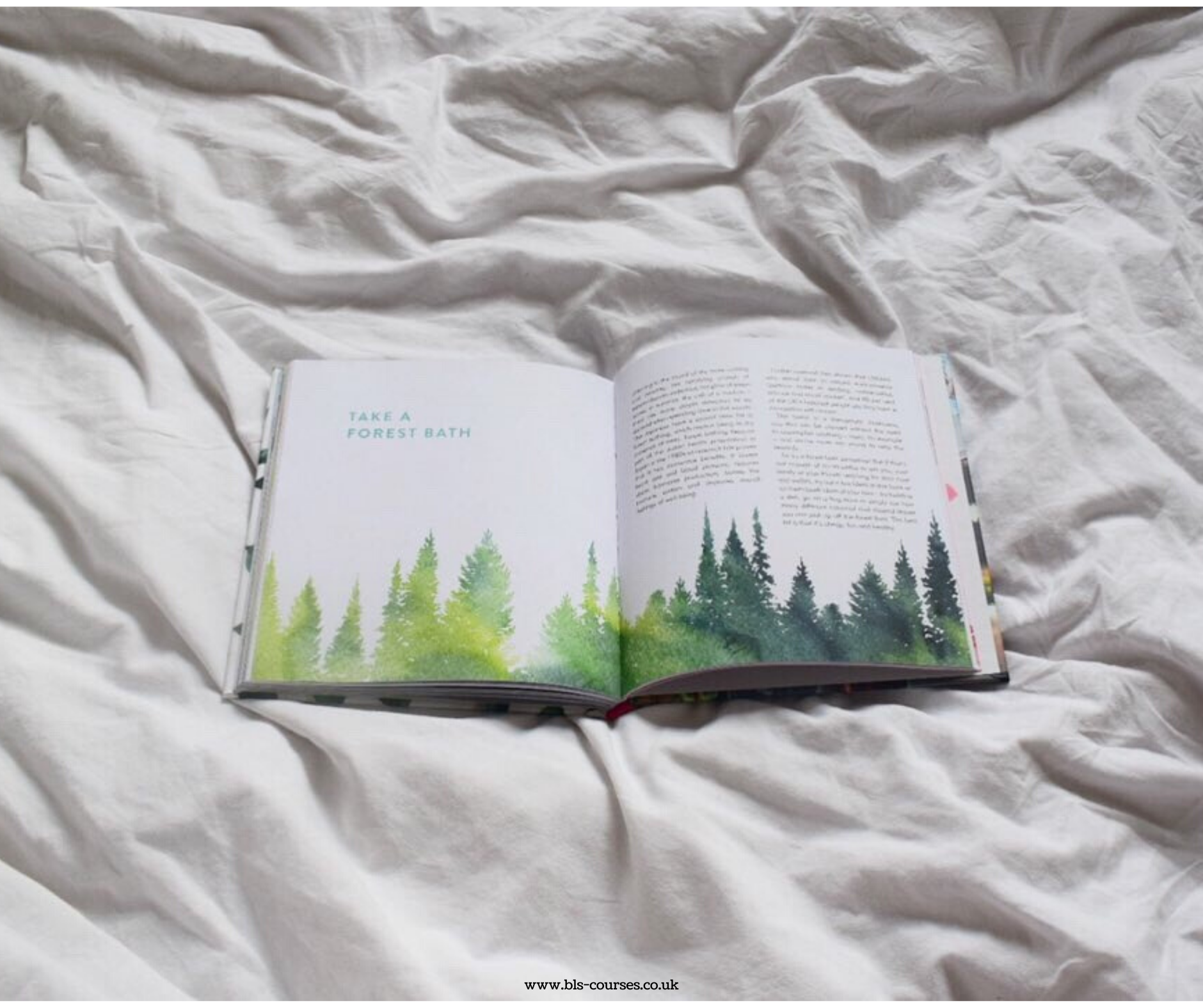
The book is a beautiful introduction to slow life (not lazy life!), to a less-do, be-more-present and mindful life. It teaches you how to focus on single tasks (e.g. when working, learning languages, reading), how to create daily slow rituals and simplify your calendar (oh my absolutely favourites: JOMO-the joy of missing out and JONO-the joy of no), and how to enjoy nature (e.g. forest bathing, wild swimming, rainbow walking).

I’m glad I read it, as I feel more ready to live a better (and slower) life. What’s the book that greatly inspired your recently? Let me know in the comments below.

Kinga Macalla

January 29, 2020

Book review: Sea Journal by Lisa Woollett

It’s a beautiful read. Mindful, slow, inspirational, interesting, funny. And the photographs of the sea and of the sea life make the read so real and yet incredibly artistic. I started reading it when I was by the sea and couldn’t stop, just continued reading it every day. I was so amazed by it that I was telling some of the stories to my family and we had long discussions about how fascinating nature is and how incredible it is that a small fossil can lead us a hundred or even a million years back. It shows how everything is linked yet individual and how every little creation plays its important role in forming nature. It’s also a gentle reminder that plastic doesn’t belong in nature (!).

‘Sea Journal’ is written by Lisa Woollett, a photographer and writer currently living in Cornwall (my short review of her previous book you can find here). I know I’ll return to Lisa’s stories as the year goes by and I re-visit the sea. A pleasure of reading and discovering nature.

One of my absolute favourite stories is about a Lego dragon. Which story is your favourite? Do let me know in the comments below.

Kinga Macalla

January 22, 2020

Travelling corner: 5 Best of North-West Cornwall

We returned to Cornwall last summer to re-discover the beautiful area of St Ives Bay, located in North-West Cornwall. It’s a blissful location, if you wish to visit the famous gems of Cornwall, have long beach walks, do some hiking, go to family-friendly places and enjoy some beautiful scenery. Yes, this part of Cornwall has it all and below you’ll find my absolute favourites:

Beach

There are many of them, St Ives alone has several of them, so it’s a true heaven for beach lovers (like me)! My favourite is Godrevy, it stretches long, so walking is very pleasant, and so is the swimming (for surfers, Gwithian might be a better option). You can park at the far end NT parking and go for a walk (see below).

Walk

From Godrevy NT car park you can walk to see the seal colony (remember to be quiet, as seals can be easily distracted by loud voices) or enjoy the views of the lighthouse. Or, you can walk further, along the coast path. Scenic views guaranteed!

Tate

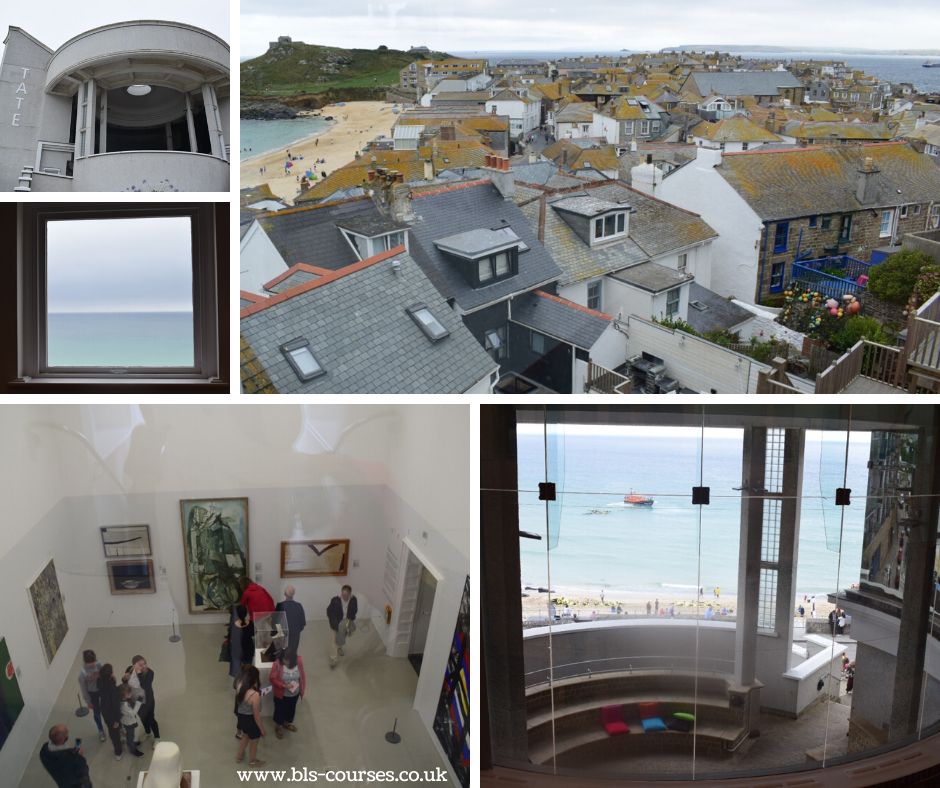
Visiting St Ives is a must if you’re in North-West Cornwall and this summer we went to the famous Tate St Ives art gallery. We started with a quick lunch at their top floor café, which has beautiful views of the town and the sea. The gallery has an activity room for children (with some very friendly staff members), so our pre-schooler was very happy to have some creative time there, while our baby girl had a very comfortable nap among the paintings, so I had chance to slowly go around the galleries and admire the art. I was especially fascinated by the gallery’s temporary exhibition devoted to the Lebanese artist, Huguette Caland.

Train

As much as I enjoy being by the sea, I also like travelling by train! While in Cornwall this summer, we could see the little train going by the coast every day and we knew we wanted to experience it. So we travelled from St Erth to St Ives and the views were truly amazing. We also went from St Erth to Penzance (in both instances the train journey didn’t last longer than 10 minutes).

Sunsets

The sunsets in this part of Cornwall are epic (unless it’s very cloudy or rainy!). The colours of the sky slowly changing, wide landscape and the sparkly silver sea. You can stare at the sky and wonder how nature can be so generous with its amazingness.

Have you visited this part of Cornwall? What did you enjoy most? Do let me know in the comments below.

Kinga Macalla

January 8, 2020

Hello to you all in 2020!

Happy New Year, my wonderful readers!

I hope your Christmas was wonderful and so were the New Year’s celebrations.

I think January is a good time to reflect on the past year and dream about what the New Year will look like?! For me, personally, 2019 was a challenging year. With the arrival of our second daughter, life was flipped upside down and it brought us many new challenges, as well as many beautiful moments. In terms of business, I think we had our day-to-day usual challenges which fortunately were relatively quickly solved, thanks to the many wonderful people who work with us!

What will 2020 bring? Personally, I’d like to learn to manage my time better, travel to some beautiful places, and accomplish some personal goals (yes, language learning is one of them!). Business-wise, I think I’d like our school to continue having the rich choice of morning, afternoon and evening courses that we run, and to expand our individual tuition and corporate offers (details are available on request and are aimed at meeting your specific language needs).

BTW, do you know we’re starting our WINTER LANGUAGE COURSES very soon? On Monday 13th January 2020! You can join one of more than 60 language classes, study 11 different languages and join our evening, morning or afternoon courses (yes, we’re spoiling you with our winter course choice!).

If you haven’t enrolled yet, join our language courses now and register here!

Wishing you a wonderful New Year & hope to see you soon!

Lots of love,

Kinga

December 25, 2019

What would be the perfect present this Christmas?

As the festive time approaches, we would like to thank you for this wonderful year and wish you all a very Merry Christmas, Veselé Vánoce! / Счастливого Рождества! (Schastlivogo Rozhdestva) / С рождеством Христовым!  (S rozhdyestvom Hristovym!) / Wesołych świąt Bożego Narodzenia! / Feliz Navidad! / Buon Natale! / Joyeux Noël! / Bon Nadal! / Feliz Natal! / Fröhliche Weihnachten! / Zalige Kerstdagen! / Merry Christmas! メリークリスマス (Merīkurisumasu) /诞快乐 (Shèngdàn kuàilè) / عيد ميلاد المسيح” (‘eed milaad al-maseeH).

We hope that you enjoy your festive break and we are hoping to see you back in January 2020!

Thank you for learning languages with us!

Lots of love,

BLS Team

PS. What would be the perfect present this Christmas? The answer is easy: to learn a new language!

December 11, 2019

Book review: The Art of Making Memories by Meik Wiking

The author Meik Wiking is probably mostly associated with the concepts hygge and lykke, as he wrote two books exploring those Danish lifestyle ideas (you’ll find my book reviews here and here). So when I saw his new publication, I knew I wanted to read it to learn more about how to live a happier life, especially since the author is the founder of the world’s first Happiness Research Institute, based in Copenhagen, Denmark.

If you have read any of Meik Wiking’s books, you will know that he has a fantastic sense of humour, great distance to his life and himself and, in my humble opinion, he writes his books in the hygge spirit; you’ll find them heart-warming, kind and funny.

So Christmas is coming and we may want to create it as a memorable moment. Even though I find Christmas very special, I don’t remember each and every one of the Christmasses I have experienced in my life. I remember when I got an enormous amount of books one Christmas when I was a child, when we went to the mountains or to Scotland, when we celebrated it in one tiny room which I and my husband were renting then (we had the floor heated, so no cold feet!), the last Christmas together with my father-in-law before he passed away and of course, the first Christmasses of our daughters. OK, that’s enough, or I’ll soon start crying and will never finish this book review!

So, what is the recipe for making happy memories? Meik Wiking has some practical ideas that can help you turn your ordinary everydayness into memorable special moments, for example having a new experience (do you speak foreign languages? Learn a new language!), using all your senses (how does childhood’s innocence smell?), paying full attention (remember: what you pay attention to, grows), connecting with your loved ones (invite your friends over and prepare for them the most scrumptious dessert & some Japanese tea/Colombian coffee and don’t forget to invite me!), sharing your embarrassing story (oh yes, that can be a good one especially at family gatherings), challenging yourself (I always think about it when I practise some sports, go an extra mile and you’ll feel so much better), telling a story (remember and retell those wonderful/funny/scary stories of your life), create and treasure memorable objects (I remember when my friend in high school, started writing a diary for her future children, to be given when they’re 18, special huh?)). And if you want to plan a memorable year, there are some tips/ideas on this subject, too.

As we keep reading Meik Wiking’s book, we discover how fascinating our memory is and as we know memory is an integral part of language learning. We want to memorise the vocabulary, grammar structures, cultural rules, etc. So is there a secret ingredient that can help us remember better? It’s association! “As a consequence, forgetting may be caused by a simple lack of appropriate cues that spark the memory.” (p. 106) The next time you have a list of vocab to learn, try to associate the words with some images, objects or specific circumstances, I bet you’ll remember them better! Also, you can read our blog posts on vocab learning (here and here).

My favourite story is on pages 279-281, once you’ve read it, do let me know if you find it special, too. And enjoy reading the book!

Kinga Macalla

December 4, 2019

Interview with Cate Hamilton, co-founder of Babel Babies

Cate Hamilton is a linguist, teacher, mum, entrepreneur and co-founder of the popular Babel Babies. Hello Cate, thank you for being our interview guest today. You’re a great advocate for learning languages. What’s your educational background? When was your passion for languages born?

I learned French and German at school, and went to Oxford University to study English and French. I remember being on a ferry to France with my parents as a young child and thinking that my brother and I had discovered a secret language when we heard French for the first time. I must have been about six! I have always loved words and collected dictionaries. My parents actively encouraged reading and exploring new languages, and their attitude was just to have a go. I enjoyed my school exchanges in France and Germany and really just like talking to people. It’s great to be able to make new friends and see the world from different perspectives. My pen-friends from 22 years ago are still good friends and it’s amazing to see our children playing together across their different languages.

Have you always professionally worked with languages? What are your current language-related projects?

I trained as a secondary French and English teacher, working in inner city Glasgow schools. I then moved to Cheltenham when we started our family and I co-founded Babel Babies with my friend Ruth Kemp. Since 2011 I’ve been working with local families and early years settings, encouraging them to sing languages together. We now have classes running in Bristol too, and have helped thousands of families discover languages from all around the world. We sing songs in French, German, Spanish, Italian, Portuguese, Arabic, Russian, Norwegian, Japanese, Korean, Welsh and English. It’s multilingual music, and I love introducing people to linguistics through music. It’s Languages with a Capital L. I’ve now got a podcast, The Language Revolution, where I talk about talking with guests ranging from neuroscientist Dr Thomas Bak to linguist Professor David Crystal. Language is the thread through all of human experience, and I’d love to help weave it back into the fabric of the school curriculum, especially in primary and early years. I also help coordinate the International Day of Multilingualism on 27th March, the date on the Rosetta Stone. If you’d like to get involved, check out the #multilingualisnormal hashtag on Twitter and join the conversation.

How did you discover your entrepreneurial talent? Have you always known you had it? How did you come up with the idea to start a business? What inspired/motivated you?

I’ve always admired entrepreneurs and free thinkers. I guess I’m a revolutionary at heart! I’ve worked on lots of start-ups from my teenage years onwards, from magazines to companies (I now run three of them). I had a stint organising networking events for entrepreneurs before I started teacher training. I remember thinking ‘I could do that’ and just needed an idea. The idea came when I had my first baby and realised that language is a process that starts even before birth. I’ve married up my love of the research and education side of linguistics with my entrepreneurial spirit to create novel solutions to the UK languages crisis. I’m on a mission to change UK attitudes to foreign languages, and all my projects are working towards that in some way.

You inspire families to introduce foreign languages to their children at a very young age. Why is it beneficial to be exposed to languages as babies/toddlers?

Someone once told me I was silly for doing languages before babies could speak, but the speaking part is really just the icing on the cake: the two years before that (including the last few months of pregnancy) are when babies are absorbing language rapidly and getting ready to say their first words. They have it all in their heads and have absorbed the grammar (just listen to a baby’s intonation – they know how to form sentences!) before they utter those magic first words.

Babies are natural linguists because they need to communicate with their caregivers and communities. It’s a survival mechanism really, and part of how we have evolved as a species. Far from birth being ‘too early’ to introduce languages, the UK actually starts language education far too late. Babies can recognise their mother tongue at birth, notice when a new language is introduced even when they are just hours old, and they can hear any sound in any language for most of their first year. They are processing new things at light speed, with billions of new synaptic connections per second. Whether they hear one, two, three or even more languages around them, babies are not confused. They simply process what they are exposed to, learn who will respond to which language, and soon enough they will work out how to get what they want from the people around them by communicating in the language that is most effective for their purpose. So if that means they need Italian to speak to papà, Japanese for mummy, and English at school to do so, they will learn them all. Multilingual is normal for most children around the world. It’s more unusual to speak only one language, and English monolingualism is the exception rather than the rule. Attitudes to languages are cemented in the early years – I think it’s vital to give children a positive first foray into foreign languages, whatever their backgrounds.

I know you’re a mum to three children, how do you balance your professional and family life?

Babel Babies is my second of four babies! My children have grown up with it, and they are the inspiration for it. It’s far more flexible to be my own boss than to work full time in school environment. I can pick up the children every day and go to all their school activities, and if that means I need to do some work in the evenings then I do. Being an entrepreneur means I’m passionate to the point of obsessive about my work – it’s not work really, since I love it and think about it all the time. The children are my testers of new songs and books, and new ideas. I discovered bullet journalling in 2017 and am so passionate about it that I run occasional workshops on how to get started. It’s a life-changing organisational technique and a bit like having a PA. Have a look at my Instagram @cateh_inc if you’d like to know more about it.

Do you raise your children multilingually? Do you encourage them to learn foreign languages?

The children are my inspiration for the whole idea of Babel Babies, and when my first son was born I immediately knew that I wanted to encourage him to love languages, and maybe skip the hard work of trying to learn to roll his Rs in French. However, as a new mum, I had lots to figure out and speaking French all the time felt strangely not like me. We settled on singing and reading lots of books in French, but also in Italian and Portuguese, and any other languages that take our fancy. I then had two more children, and over time we have turned them into keen linguists. My eldest son is fascinated with languages and how they are similar/different to each other, and loves code-breaking new alphabets like Arabic and Russian; my middle child is amazing at accents and loves connecting with people – she’s amazing; and my youngest has probably had the most exposure to French as I was far more confident speaking to him in French with five years of Babel Babies already under my belt when he was born. Now he’s four and says, ‘No Mummy, don’t say it in French, say it in Normal!’ so we have a period of resistance, but he still knows how to respond when I say something in French. They all love exploring new languages. I’m excited to see where they go with it as they grow! I used to think that not having raised bilingual kids was a failure, but actually I’m super proud of their positive attitudes towards languages and they are genuinely interested. They make up new languages in their games all the time.

How many foreign languages do you know? How do you maintain your language skills?

I know French, bien sûr, and then probably Italian is my next most fluent. I tend to translate from French into Italian rather than English to Italian when I’m speaking, so I sometimes wade into the middle of a sentence before I’ve really got a clue what the verb is going to be! It’s often quite amusing to see what my brain does. I did two years of night school in Portuguese with my husband and we travelled around Portugal for a month, so my Portuguese is okay. I also have German to a reasonable level, and my best friend’s mother is German so I’ve heard quite a lot of it. I read stories and sing songs in at least ten languages, and I just have languages on the brain all the time. I always study languages together, rather than monolingually, so I’m currently learning Spanish, Portuguese and Italian all at once. I sometimes use Duolingo, but mostly it’s reading aloud, and always singing. I get myself an ohrwurm and stick with it until I have mastered the words.

We’re a language school, do you remember your favourite language teacher? What was so special about their teaching?

Mr Harrison was my German teacher at secondary and he was legendary. He was so passionate and enthusiastic, and hilarious sometimes (oh those modal verbs lessons!) He made languages come to life. I am eternally grateful for his encouragement and would love to see what he thinks of Babel Babies and The Language Revolution. Danke schön, Herr Harrison!

Thank you, Cate, it was great to have you as our interview guest. We want to wish you success in all your professional and language adventures.

Photos courtesy of Cate Hamilton