Tag Archive: bilingual

November 25, 2020

Book review: Multilingual is normal. An anthology of voices. Talking about talking.

#multilingualisnormal

What an amazing idea to collect voices about multilingualism. It’s so ordinary, yet so extraordinary. 60 stories about the pleasure, the fun, the enthusiasm of learning, knowing and using foreign languages. The book shows different life scenarios, career possibilities and language journeys. It’s a perfect read for those learning languages, as well as translators, polyglots, multilingual families, teachers and professionals working with languages or with multilingual students and families.

The idea to collect stories about multilingualism was born in the summer of 2020 and belongs to the wonderful Cate Hamilton. Cate Hamilton is so multi-talented: she’s a co-founder of Babel Babies and a leader of the Language Revolution Podcast. She has also started a postgrad degree at Oxford University (!!!). The book was actually created in just one month: from 10th July to 10th August 2020 (amazing, huh?).

And which story is my favourite? All of them! Just read below:

“It was during a parents’ evening, the first one I had been brave enough to conduct in Catalan, that I discovered the filler word I had picked up in the backstreet bars in town meant: ‘I shit on the Eucharist.’

The raised eyebrows from the first two parents didn’t alert me. Neither did the look of alarm on the pair I saw next. It was during the third meeting that I began to get the sense that something was going wrong. ” (Peter Munford, p. 45)

“I think the little monolingual boy who first opened Fun to Learn French would be proud of how far he’s come, and really pleased that he’s teaching children to love language like he does.

But I also think he’d be scowling at me and saying: ‘You’re not stopping at nine languages, are you?’

So I should probably crack on with Basque.” (Darren Lester, p. 75)

“Raising a multilingual family does not mean to choose a language strategy that everyone says will work but to choose one that allows you to go at your own pace. Find a way where you could teach your languages to your children that follows their interests.” (Adrienne, p. 173)

And finally, a little hint, you’ll find a story about my language journey there, too 😉

Enjoy reading!

You can get your e-book here and a paper version here.

Kinga Macalla

September 23, 2020

Book review: The Bilingual Brain by Albert Costa

“(…) bilingualism is the rule rather than the exception in the sense that the majority of the world’s population can communicate in more than one language.” Albert Costa

What a fascinating read! To be honest with you, I didn’t expect to be taken on a such an interesting journey learning about the science of language! While reading it, I was laughing, putting exclamation marks, taking side-notes, discussing it with my friends. I completely and entirely immersed myself into reading this wonderful publication.

Why is it so fascinating? I think mainly because, on one hand, we have a truly profound knowledge about bilingualism and, on the other, there are so many unanswered questions. So if there are any uni students or researchers reading my review: there is definitely some potential in the subject of bilingualism / multilingualism.

The book covers topics such as bilingual development in babies, bilingual brain vs monolingual brain, bilingualism and other cognitive skills, bilingualism in the social context, etc. What hides under those academic topics are some most interesting experiments, research and discussions about language and bilingualism.

Let me now share with you some of the most interesting findings (in my opinion!). Do you know that babies as young as six months of age, can have already developed a complex (!) knowledge of a language, including some words?! What is more, babies as young as 2 days (yes, days!) can differentiate between two different languages. Those findings only confirm that language development and the bilingual journey starts as early as in pregnancy.

Another fascinating topic is language attrition: the loss of the native language. What?! Can one forget their native language? Actually, yes. One can completely ‘forget’ their native language and swap it with the new one. I think learning a language is a truly complex phenomenon which as you can see from the above starts prenatally and requires our constant work (whether we’re aware of it or not). Hence, if you know more languages, the importance of maintaining the foreign / native language skills on a regular basis.

And finally decision-making and bilingualism: “(…) moral judgements do change according to language.” (p. 143), when facing a problem in a foreign language, we make better decisions (p. 137) and finally language can also influence how we’re seen by others (social marker, p. 144).  For example, we can be seen less trustworthy when speaking a language with a foreign language. This might be one of the reasons why people don’t want to have a foreign accent and are after accent reduction lessons. On the other hand, does trust increase, if there are more people speaking with foreign accents and this becomes a norm? Interesting, huh?!

One final point, the research brings as many questions as answers and it seems that there is a long way to verify and objectivise some of the findings and research. There is most certainly a huge potential in the subject of bilingualism and multilingualism, so am hopeful for more passionate and fascinating books to be published in the future!

What’s your current read on language or bilingualism? Please let me know in the comments below.

Kinga Macalla

January 9, 2019

Important questions about children’s bilingualism

With globalisation and the ease of travel, more often than ever people find themselves living abroad and living a multilingual and multicultural life. That is why raising my daughter bilingually was more a natural consequence of my life trajectory than a thought-through process. I read some guidebooks on bilingualism to have a general idea on how to organise our bilingual life, but that was it. It was a natural decision which I thought all parents would follow, but since having met some parents who decided not to raise their children bilingually, I started to think about why we might want to raise our children bilingually and why we decide in favour of or against our children’s bilingualism. We as parents are the main people who are responsible for our children’s bilingualism and it is true that it can be overwhelming to learn, implement and follow the principles of bilingual parenting. Moreover, as immigrants we want to fit into society; through speaking two languages we may stand out on the monolingual landscape. At the same time, a bilingual upbringing can generate many advantages for people, economically, socially and culturally. What to choose and why? Parents’ decisions on bilingualism may be based on their personal beliefs, but they might also be influenced by others, for example, medical or educational professionals.

If you’re a bilingual family or planning to become one, you may want to think and form your own definitions/answers to the below questions (I added a short commentary to each question, please treat it as some form of inspiration to your further research and study of bilingualism):

What is bilingualism?

Because of the complexity of the term, you may want to create your own definition of bilingualism. Your understanding of the notion might be influenced by the fact that bilingualism is created and functions in various environments, family settings and countries/regions and may impact individuals with different talents and skills differently.

Is Bristol a good place to raise bilingual children (if you’re from Bristol)?

I think it’s important to have a better understanding of the local perception of bilingualism. If your children go to nursery/school, ask staff members some questions about bilingualism and see their approach to bilingualism. You can also check if there are extra-curricular language or cultural classes organised by the local council, schools or private people.

What influences parents’ decision-making on family bilingualism?

Here, we can think whether society and medical, educational or governmental authorities can influence our decisions on the bilingual upbringing of our children. Parental choice for or against bilingualism will influence a child’s life in many different aspects, e.g. their identity, cultural bonding or linguistic skills, among others. If parents decide not to form a bilingual family, they may make this decision based on the disadvantages linked with bilingualism, e.g. hard work, not being a ‘normal’ family, worries about language development and potential misunderstandings. (see Barron-Hauwaert) Through choosing monolingualism and full linguistic assimilation, immigrant parents can deprive their children of certain experiences, e.g. a bond with their linguistic, family or cultural heritage.

How do stereotypes around multilingualism influence our decisions on bilingualism?

To be honest with you I didn’t know any stereotypes around multilingualism until I started reading more literature on bilingualism. One of the stereotypes around bilingualism is that bilingualism can be linked with underachievement at school (see Marzán), but the most recent research suggests the opposite, that actually bilingualism “is now associated with a mild degree of intellectual superiority.” (Baker 2014: 54)

What are the advantages of bilingualism?

Bilingualism can be associated with many different benefits, in the form of communication (being able to communicate more effectively with others) and practical and social value (facilitating cultural exchanges and promoting multi-cultural understanding). Colin Baker also mentions cognitive advantages (creativity), character advantages (increased self-esteem), curricular advantages (easier to learn a third language) and economic advantages (employment benefits). (see Baker) We can add the following benefits to the list: more freedom to be mobile, an increased tolerance towards other languages and cultures and an understanding of other foreigners’ needs. (see Barron-Hauwaert)

Can you think of any other benefits of bilingual upbringing of your children? Please let me know in the comment below.


References:

Baker, C. 2014. A Parents’ and Teachers’ Guide to Bilingualism. Bristol: Multilingual Matters

Barron-Hauwaert, S. 2014. Language Strategies for Bilingual Families. The One-Parent-One-Language Approach. Bristol: Multilingual Matters

Marzán, J. 2003. Found in Translation. Reflections of a Bilingual American. In: Sommer D. (ed) Bilingual Games. Some Literary Investigations. New York: Palgrave Macmillan

Kinga Macalla
December 5, 2018

Interview with Christina Andersen on bilingualism

Hello Christina, shall we start with a short introduction? Can you say a few words about yourself?

My name is Christina and I am Danish. I lived in Denmark for the first 21 years of my life but I’d always felt drawn to England. I moved to the UK with the hope of practising my English and of course having a bit of adventure When I was 21.
I lived with 2 Danish friends in Birmingham for two years then when I was 23 I went to visit a friend in Bristol and met my now husband Ed and for the next 13 years beautiful Bristol was my home.
It was never in my plans to stay in the UK but after buying a house, setting up a gym, having two children and getting married it was never in my plans to leave.
We created and amazing life with lots of friends and clients and some businesses that we really loved.
In 2017 my dad became very sick with cancer, he had had it for 3 years but now it looked like he was losing the fight.
We decided to visit him and my mum in their home just north of Copenhagen, while we were there we were walking on the beach and talking about what life would be like if we moved to Denmark.
We decided to give it ago because we wanted to be closer to my mum as we knew she would be alone soon, but we also wanted to bring our kids up with more freedom, more nature and more time with us.
100 days after that walk on the beach we were in Denmark ready for a new adventure. We are now just over one year in and truly identifying as a bilingual family.

You’re a bilingual family now living in Denmark, can you tell us more about the languages your family speak and how you approach bilingualism on a daily basis?

We speak English and Danish as a family now. It never really materialised in the UK despite my efforts. Now a year into our Denmark adventure and the girls (4 and 7) are both bilingual.
I think to say we have an approach would be an over statement. We speak which ever language fits at the time. My husband is trying to learn Danish from apps but without attending classes it’s hard to speak Danish for an adult. The Danes are so good at English that they tend to switch as soon as then notice you’re English. When my mum visits she will only talk to the girls in Danish which is really nice.

How did you come up with the decision to have a bilingual family? Was it a natural consequence or rather a thought-through process?

When I knew I was going to have children with Ed I was definitely keen to have a bilingual family. I think it is such an advantage. I think it goes much deeper than just words. I think when you learn a new language, especially at a young age you learn about different cultures and different labels and different approaches to the world. I think it provides a way of seeing the world that you cannot teach in any other way. I wish more schools would teach languages from the beginning.

Bilingualism is a wonderful gift, what benefits do you see in bringing up your children bilingually?

I have to step outside of proud mum for a minute here I think. My girls are both incredibly kind, thoughtful, happy, they know what they want and they are both a calming influence on the children around them. I both see this and am told it often by teachers and friends.
With all of that said I really couldn’t say that this is due to our parenting, their lovely teachers at Silverhill school in Winterbourne, there lovely teachers here in Copenhagen or their bilingualism. It’s likely a combination of all of the above and no doubt a bit of luck too.

Bilingualism is also a complex phenomenon, what are the biggest challenges you face as a bilingual family?

I’m not sure we have encountered any challenges. My husband Ed often needs a translation or gets a little left out sometimes but I think he would say that’s sometimes and inventive and sometimes a blessing.

What’s one piece of advice you’d give to future parents wanting to have a bilingual family?

I’m not sure I see myself as qualified to give advice. Something I know from health coaching that I have applied to bringing up my children is, you can’t force, shame, or discipline your children into habits. If you want it to happen it has to be fun.

Many thanks for taking time to be our interview guest today, Christina. Where can we find you online?

You can find my on
My website: www.mumsgetfit.co.uk
Facebook: https://www.facebook.com/mumsgetfit/
Instagram: https://instagram.com/p/BqqFNVmnVHl/

Photos: Lidia from Visuable

November 7, 2018

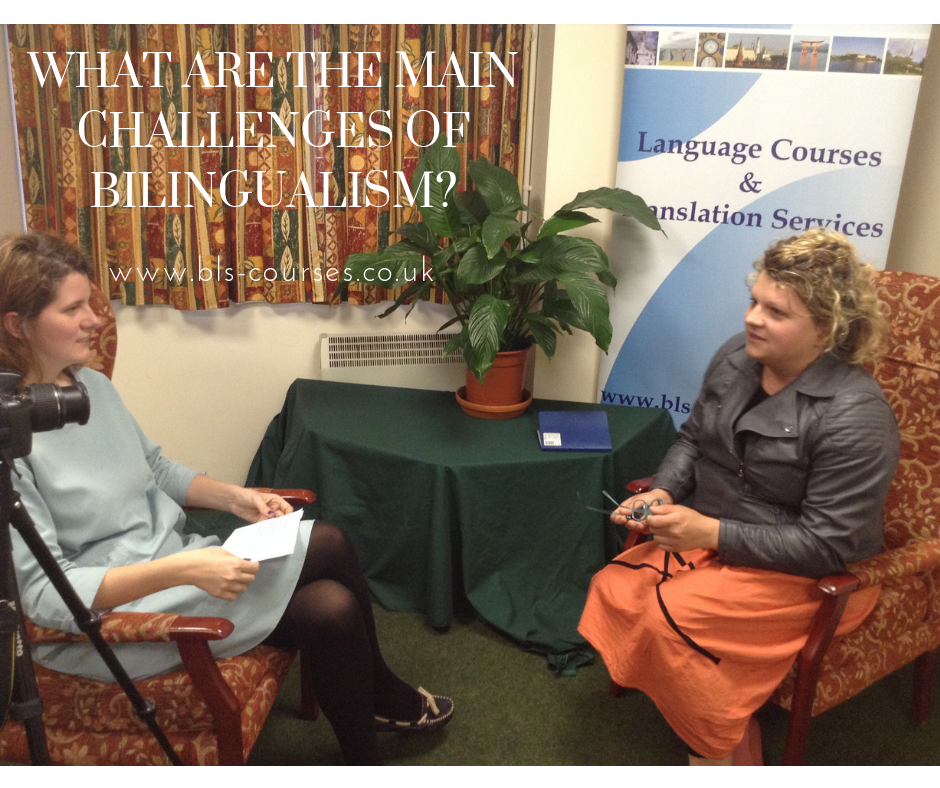
What are the main challenges of bilingualism? How can you keep both languages balanced? (5)

Some time ago, we introduced a new series of video interviews and online interviews which are devoted to the subject of bilingualism. We find the topic of bilingualism fascinating and we want to discuss some of the issues and benefits linked with being bilingual, as well as many other bilingualism-related topics. If you have any ideas or questions related to bilingualism, let us know in the comments below.

Today, in our fifth YT video, we attempt to answer  the question “What are the main challenges of bilingualism? How can you keep both languages balanced?”. Our special guest is Łucja Miniewska, an expert on bilingualism both academically (she holds an MSc in Bilingualism) and practically (she’s a mum of two bilingual children). Please click the link to watch our YT video.

Kinga Macalla

October 17, 2018

Book review: The Bilingual Family. A Handbook for Parents by Edith Harding and Philip Riley

Learning is the product of ‘motivation x opportunity’ – Edith Harding and Philip Riley

With over half of the world’s population being bilingual, as Edith Harding and Philip Riley remind us, I find the topic of bilingualism important to discuss and learn more about. The Bilingual Family by Edith Harding and Philip Riley is a practical guide to bilingualism. We can find there many useful topics being covered and issues discussed. It starts with an introduction to language and bilingualism (definition, level of fluency, simultaneous and successive acquisition). The chapter that I found really important was about the factors that influence the decision on whether to bring up children bilingually. After all, the decision on bilingualism will influence the whole family’s life, and it’s crucial to make it as informed as possible. Obviously, sometimes bilingualism is a completely natural consequence, as it was in my family’s case. I did read some books on bilingualism, but rather than thinking about pros and cons against bilingualism, I thought about how to implement it and what language plan to have for my family. Another interesting chapter is devoted to case studies. Here we find 16 different examples of bilingual families and learn how they approached bilingualism, and how their children learnt to be bilingual (to various degrees). To whet your appetite, I’ll only mention that there is also a sub-chapter on intelligence and bilingualism.

I highly recommend this publication to parents who face the decision of introducing bilingualism and don’t know how to approach it and for those who are already bilingual, but need some support or have some unanswered questions.

Are you a bilingual family? What books on bilingualism have you read and would like to recommend? Please let me know in the comments below.

Kinga Macalla

October 3, 2018

How do you start? What would be your key tips for parents wanting to raise their children bilingually?(4)

Three months ago, we introduced a new series of video interviews and online interviews which are devoted to the subject of bilingualism. We find the topic of bilingualism fascinating and we want to discuss some of the issues and benefits linked with being bilingual, as well as many other bilingualism-related topics. If you have any ideas or questions related to bilingualism, let us know in the comments below.

Today, in our fourth YT video, we attempt to answer  the question “How do you start? What would be your key tips for parents wanting to raise their children bilingually?”. Our special guest is Łucja Miniewska, an expert on bilingualism both academically (she holds an MSc in Bilingualism) and practically (she’s a mum of two bilingual children). Please click the link to watch our YT video.

Kinga Macalla

September 5, 2018

What are the main benefits of a bilingual upbringing? (3)

Two months ago, we introduced a new series of video interviews and online interviews which are devoted to the subject of bilingualism. We find the topic of bilingualism fascinating and we want to discuss some of the issues and benefits linked with being bilingual, as well as many other bilingualism-related topics. If you have any ideas or questions related to bilingualism, let us know in the comments below.

Today, in our third YT video, we attempt to answer  the question “What are the main benefits of a bilingual upbringing?”. Our special guest is Łucja Miniewska, an expert on bilingualism both academically (she holds an MSc in Bilingualism) and practically (she’s a mum of two bilingual children). Please click the link to watch our YT video.

Kinga Macalla

June 13, 2018

Why to raise children bilingually? (2)

Last month, we introduced a new series of video interviews and online interviews which are devoted to the subject of bilingualism. We find the topic of bilingualism fascinating and we want to discuss some of the issues and benefits linked with being bilingual, as well as many other bilingualism-related topics. If you have any ideas or questions related to bilingualism, let us know in the comments below.

Today, in our second YT video, we attempt to answer  the question “Why to raise children bilingually”. Our special guest is Łucja Miniewska, an expert on bilingualism both academically (she holds an MSc in Bilingualism) and practically (she’s a mum of two bilingual children). Please click the link to watch our YT video.

Kinga Macalla

May 16, 2018

New videos on bilingualism! (1)

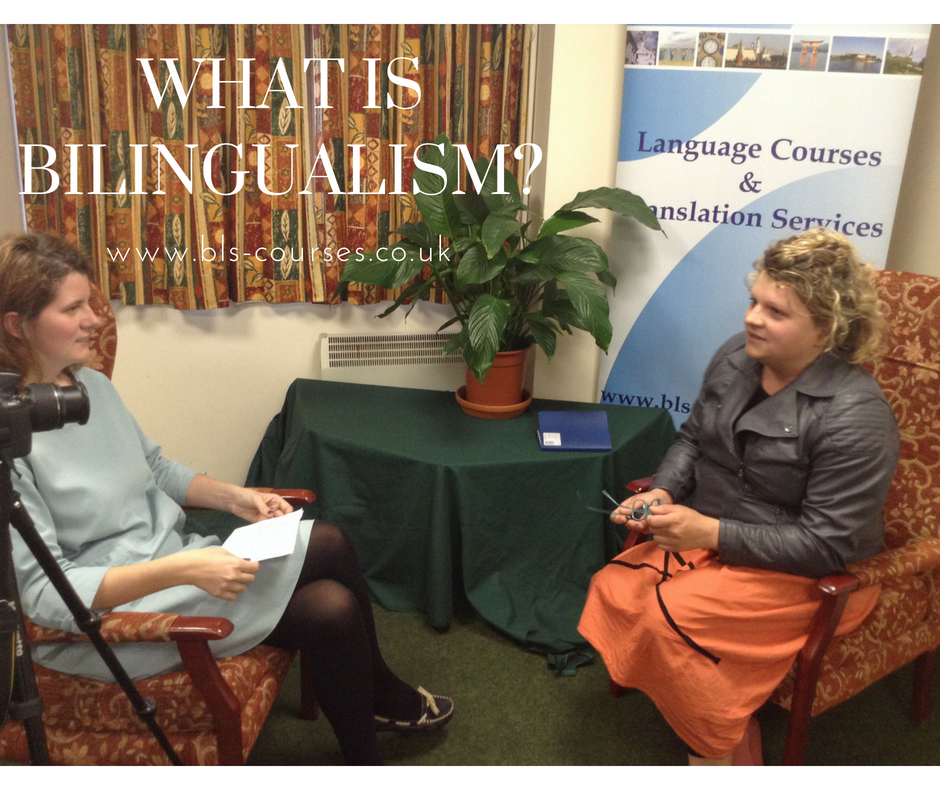
We’d like to introduce a new series of video interviews and online interviews which will be devoted to the subject of bilingualism. We find the topic of bilingualism fascinating and we want to discuss some of the issues and benefits linked with being bilingual, as well as many other bilingualism-related topics. If you have any ideas or questions related to bilingualism, let us know in the comments below.

Today, in our first YT video, we attempt to answer  the question “What is bilingualism?”.  Our special guest is Łucja Miniewska, an expert on bilingualism both academically (she holds an MSc in Bilingualism) and practically (she’s a mum of two bilingual children). Please click the link to watch our YT video.

Kinga Macalla