Tag Archive: book review

November 25, 2020

Book review: Multilingual is normal. An anthology of voices. Talking about talking.

#multilingualisnormal

What an amazing idea to collect voices about multilingualism. It’s so ordinary, yet so extraordinary. 60 stories about the pleasure, the fun, the enthusiasm of learning, knowing and using foreign languages. The book shows different life scenarios, career possibilities and language journeys. It’s a perfect read for those learning languages, as well as translators, polyglots, multilingual families, teachers and professionals working with languages or with multilingual students and families.

The idea to collect stories about multilingualism was born in the summer of 2020 and belongs to the wonderful Cate Hamilton. Cate Hamilton is so multi-talented: she’s a co-founder of Babel Babies and a leader of the Language Revolution Podcast. She has also started a postgrad degree at Oxford University (!!!). The book was actually created in just one month: from 10th July to 10th August 2020 (amazing, huh?).

And which story is my favourite? All of them! Just read below:

“It was during a parents’ evening, the first one I had been brave enough to conduct in Catalan, that I discovered the filler word I had picked up in the backstreet bars in town meant: ‘I shit on the Eucharist.’

The raised eyebrows from the first two parents didn’t alert me. Neither did the look of alarm on the pair I saw next. It was during the third meeting that I began to get the sense that something was going wrong. ” (Peter Munford, p. 45)

“I think the little monolingual boy who first opened Fun to Learn French would be proud of how far he’s come, and really pleased that he’s teaching children to love language like he does.

But I also think he’d be scowling at me and saying: ‘You’re not stopping at nine languages, are you?’

So I should probably crack on with Basque.” (Darren Lester, p. 75)

“Raising a multilingual family does not mean to choose a language strategy that everyone says will work but to choose one that allows you to go at your own pace. Find a way where you could teach your languages to your children that follows their interests.” (Adrienne, p. 173)

And finally, a little hint, you’ll find a story about my language journey there, too 😉

Enjoy reading!

You can get your e-book here and a paper version here.

Kinga Macalla
October 21, 2020

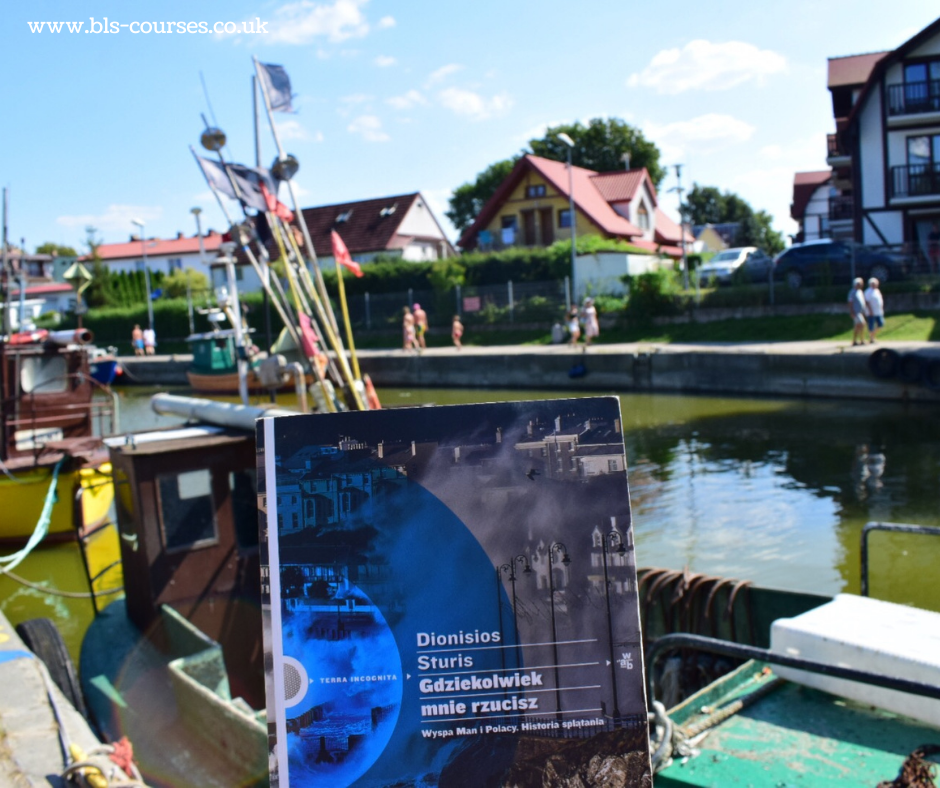
Book review: Gdziekolwiek mnie rzucisz by Dionisios Sturis

Dionisios Sturis was born in Greece, but grew up in Poland. He’s a documentary writer. After graduating from university, he moved to the Isle of Man to work in a shellfish factory, as many other Poles did back then. However, his story is different, because after a few years he left the island, returning to it regularly to work as a writer. This is when the book was born, a story about war, politics, Polish migration, ordinary everyday life, love, and death. It’s like reading about a big world being shrank into a tiny island. Fascinating. It somehow reminds me about Central Europe, where geopolitical, economic, and cultural ideas influence each other to create a pot of different flavours: important and trivial, grande and petit, global and local. It’s all so mixed up that it’s sometimes difficult to distinguish what’s important. Does it feel the same or similar on the Isle of Man? I don’t know. It’s probably a good question to be answered by the author himself.

Do you read books in other languages? In which language(s)? Let me know in the comments below.

Kinga Macalla

July 15, 2020

Book review: These Islands. A portrait of the British Isles

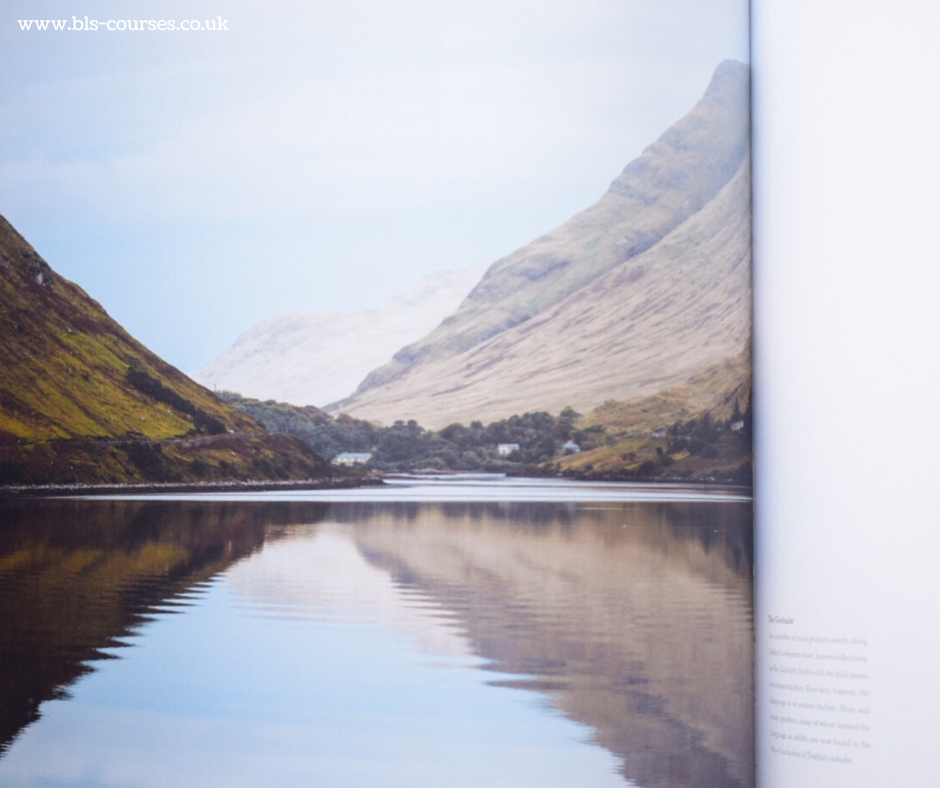
I’d most probably recommend that you read this book review in autumn so that your could get the book for those long wintery evenings. So why publish it now? I think that for many of us, the summer plans have changed (including mine!) and it might be a very good time to get inspired by some local routes and travel destinations—your ‘summer playground’. The book / album I want to write about today is so beautiful that I could easily photograph every page of it to inspire you to visit the British Isles. To explore this beautiful land of secret beaches, grey lakes, narrow walking paths and ancient woods.

The album creates an interesting portrait of the Isles, from the Jurassic Coast, Lake District, and the Isles of Scilly, through Snowdonia, the Pembrokeshire Coast to the Wild Atlantic Way and the Isle of Sky. The album contains photographs, short essays, paintings, and poetry, all to inspire you to reflect, to slow down, to travel. It tries to get underneath the known history, pictures and destinations, to bring the Isles closer to the reader and explorers.

Published by Cereal, edited by Rosa Park.

June 3, 2020

Book review: The Summer Book by Tove Jansson

It was a particularly good evening to begin a book. Tove Jansson

At first, when I started reading The Summer Book, I didn’t like it very much. However, after a few chapters my appetite started to grow and then I couldn’t stop reading and thinking about it. What caught my attention most when I read the first few pages was the realism and authenticity of the language, landscape, everydayness, emotions and relationships. It was raw and authentic to the core and somehow it made me uncomfortable. Then after some time, I realised how much I’m used to the superficial softness and sweetness of the language and relationships in my daily life; where consumerism is the main tool / power, and social media rules my thinking. It made me stop to think about my life. Do I have enough place in my everyday life for different emotions; from fear, sadness, annoyance to happiness and pure joy?!

The book is written by Tove Jansson, the famous author of the Moomin stories. The Summer Book is a series of short stories about an elderly artist and her 6-year-old granddaughter, Sophia, who spent their summer on a tiny island in the gulf of Finland. Even though the island is very small and their adventures rather ordinary, the stories are so lively, interesting and full of suspense and humour. It only shows that everydayness and nature are never boring nor lack anything, quite the opposite, our daily life can be as fascinating as we want it to be.

For some inspiration, see the video.

Have you read any of Tove Jansson’s books? Please let me know in the comments below.

Kinga Macalla

May 20, 2020

Book review: The Hidden Messages in Water by Masaru Emoto

What you know is possible in your heart is possible. Masaru Emoto

Today, I’m reviewing an amazing book about water. About water? On a language-related blog? Yes! 🙂 The author is a Japanese scientist who, through his research, discovered some fascinating truths about water. The read may inspire you to travel to Japan or to learn Japanese. Also, the presented knowledge may be transferred to our daily life and help us achieve better results in language learning.

What did the Japanese researcher discover through his research? Through analysing tap water and its crystals (e.g. from Tokyo or London) the pictures showed deformed crystals or didn’t have any crystals at all. Whereas when he analysed water from springs or lakes, there were beautifully formed crystals. But, it’s more than that. He wrote words on water, e.g. love & gratitude or thank you and then the water formed beautiful and complete crystals. After writing stupid and fool, the crystals were dark, incomplete or not formed at all. But the worst results with the crystals were when the water was ignored (interesting, huh?).

What can we take it from these amazing discoveries? That our words and thoughts have power. Whenever we say ‘I can’t do it’, ‘I’m too old’, ‘I’m a slow learner’, ‘I don’t have any language ability’, regardless of wherever that’s true or not, the said words can become our reality. A good exercise could be to watch what we say about ourselves (whether out loud or in our heads) to see what picture we draw of ourselves and what impact it can have on our language learning or, more broadly, on our lives.

The book talks deeper about the subject of water, its healing powers, its links to the beginnings of life on planet Earth, and the inner power of human beings. The book has many pictures of the water crystals which make the read more real and even more fascinating!

What interesting book have you read recently? Do let me know in the comments below.

Kinga Macalla

May 13, 2020

Book review: Maximize your child bilingual ability by Adam Beck

Read, read, read. William Faulkner

An essential guidebook to children’s bilingualism. It’s a practical handbook for parents wishing to get a grasp of bilingual upbringing, it answers many questions and provides a step-by-step guide to having a bilingual family.

Adam Beck, the author of the book is an American living in Japan who is raising two bilingual children. He is also the founder of the blog Bilingual Monkey and the forum The Bilingual Zoo.

I think the main message I will take from this book is: read aloud daily (adapt reading to your child’s age, tell stories using picture books, use walls to display messages to your children), have a minority-language routine (important!), follow your children’s natural passions in the minority language (what do they like doing /talking about?), talk to your children in the minority language as often as possible (story-telling), listen to and sing songs (e.g. when cycling—this is what we often do!), be firm with your schedule, but play it through the activities (have fun!) and bilingualism is a long-term project (be patient and consistent).

I like how the book is organised, that it has short chapters, which makes the reading easy to follow and allows reading in short spans of time (important when having kids). Each chapter starts with a quotation which I found really inspirational.

To sum up, I think I would mostly recommend the publication to families who wish to raise their kids bilingually but don’t know how to start, what resources to use, or what strategies to follow. For existing bilingual families, it’s an interesting read which reminds us of the importance of regular input in the minority language and which gives some inspirational tips on resources, activities and the day-to-day routine of the bilingual family.

What books on bilingualism do you recommend? Do let me know in the comments below.

Kinga Macalla

April 22, 2020

Book review: How languages changed my life

‘The decision to learn a foreign language is (…) an act of friendship’ John le Carré

It’s a fascinating read which should be compulsory for those studying/learning/living with foreign languages. The book “How languages changed my life” (Project MEITS) contains 26 stories written by people whose lives were transformed by languages. It made me think how languages changed my life.

Below you’ll find my favourite quotations from the book:

“I miss that working at Westminster. In fact being back here is like swimming against the internationalism of my life hitherto. I miss the opportunity, the pleasure, the luxury of being able to bump into a colleague in the corridor and just drop into another language.” (Stephen Kinnock, p. 6)

“When I speak Russian, I’m a slightly different person from when I talk in English. That’s a wonderful thing to find out about yourself, and other people recognize it in you too.” (Bridget Kendall, p.17)

“Linguistic diversity is the human cultural equivalent of biodiversity.” (John Fraser Williams, p.34)

“(…) [W]hatever you end up doing, being able to speak other languages means you’ll do it quicker and better. (Paul Hughes, p.50)

“I like to think that one day I might enjoy the luxury of sitting under a tree and studying Chinese without having to instrumentalize it. It’s such a poetic language, incredibly distilled: a whole episode in history, can be evoked in just one four-character four-syllable phrase, like an explosion in your brain.” (Carrie Gracie, p.74)

“To learn a different language is to encounter a different logic, a different cadence, a different sequence of words. It prepares you to think differently and to adapt (…).” (Martina Navratilova, p.173)

And finally, if you still think that after graduating from a university with a degree in languages your career path is either being a teacher or a translator, this book will certainly change your view as, in fact, when knowing languages the possibilities are truly endless. Enjoy reading!

Kinga Macalla

March 18, 2020

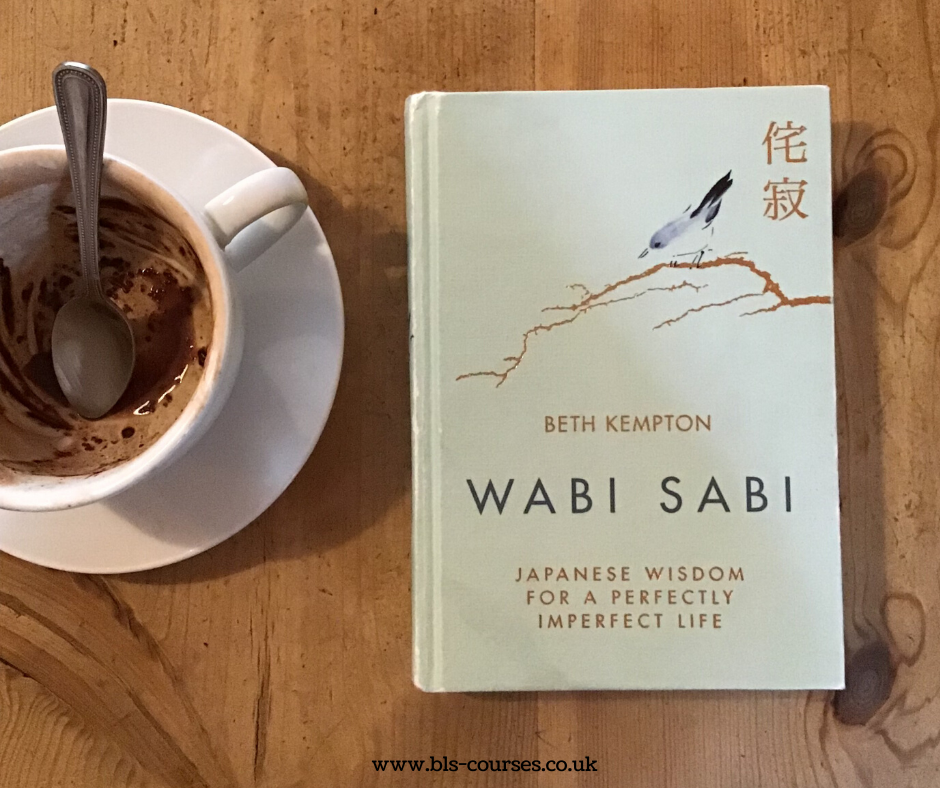
Book review: WABI SABI by Beth Kempton

“The forest does not care what your hair looks like. The mountains don’t move for any job title. The rivers keep running regardless of your social-media following, salary or your popularity. The flowers keep on blooming, whether or not you make mistakes. Nature just is, and welcomes you, just as you are.” Beth Kempton

I had a different article planned for today. But, I’ve been reading Wabi Sabi for the last week or so, every day, to keep my mind occupied and to feel calm, inspired and hopeful. I needed to find strength inside me. I enjoyed the read so much, and I’m excited to be sharing my insights here with you today.

I learnt about wabi sabi for the first time in autumn 2018 when I came across the book Wabi-Sabi Welcome by Julie Pointer Adams (you can read my review here). I was so overwhelmed by the beauty of this Japanese philosophy, that I was sad when I read the last page of it. I felt very similar this time, I wanted to continue reading about this perfectly imperfect philosophy and enjoy the little pleasure coming from reading and learning about it.

Beth Kempton, the author, is a Japologist who studied Japanese at university and spent many years living and working in Japan. As we read on the first pages of the book, she considers Japan her second home.

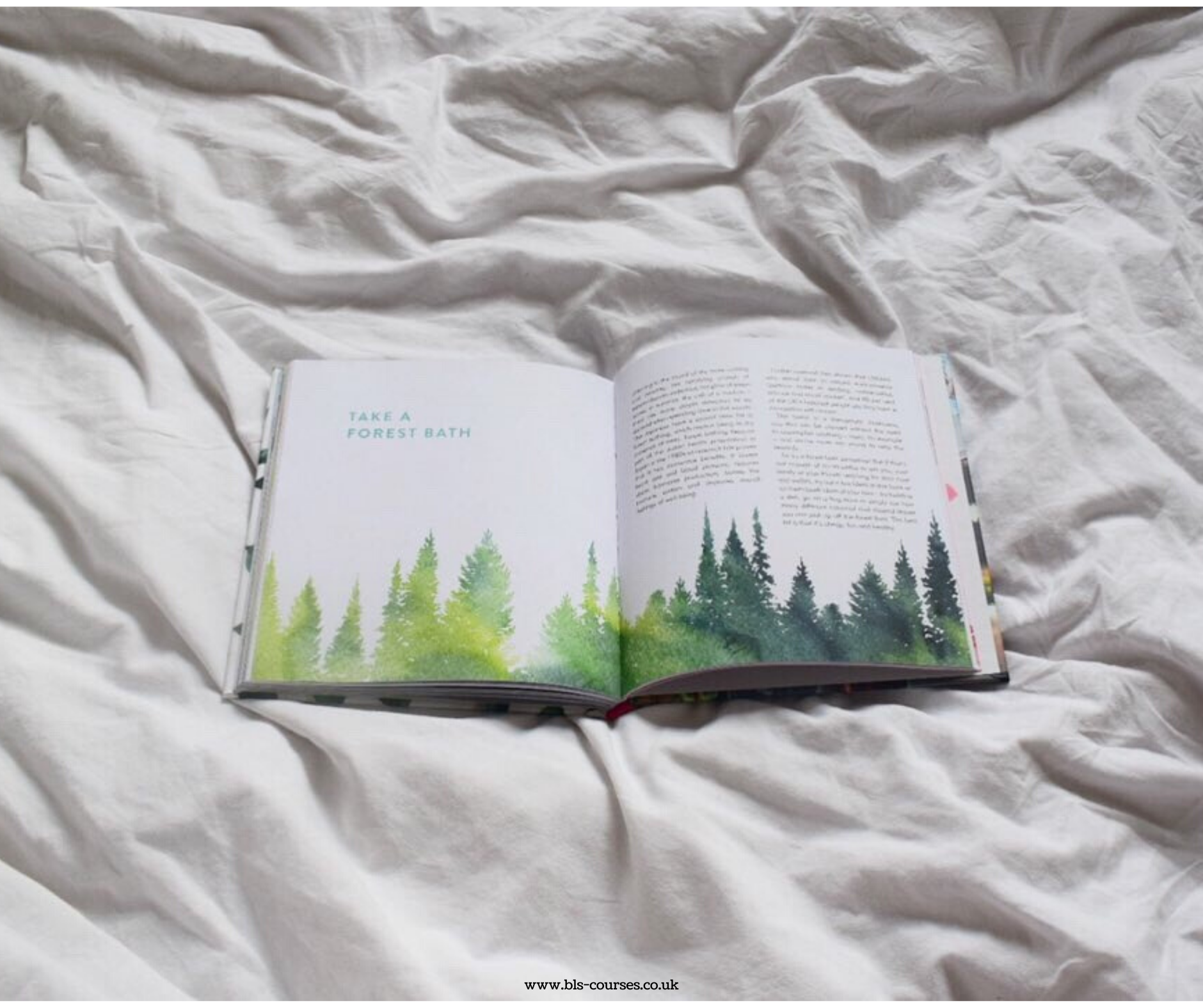
The book contains 8 chapters: first we learn about the origins and characteristics of wabi sabi, how to create simple yet beautiful interiors in our homes, the importance of connection with nature (shinrin-yoku aka forest bathing), the gentle reminder that everything is impermanent, imperfect and incomplete, how to overcome the fear of creative failures (!), how to maintain/create good relationships and to enjoy our career path, and finally how to enjoy the little moments in life.

My absolute favourite parts were the little reminiscences from the author’s past experiences; whether as a student, traveller, interpreter or researcher in Japan. They made the whole concept of wabi sabi more alive, funny and real. They added an emotional aspect to this wise Japanese philosophy.

Have you read a different publication on wabi sabi? Let me know in the comments below.

Kinga Macalla

February 12, 2020

Book review: Goodbye, things. On minimalist living by Fumio Sasaki

“A table, a chair, a bowl of fruit and a violin;

what else does a man need to be happy?”

 Albert Einstein

In a world so overloaded with information, things, promotions and a want-more philosophy, shall we all become minimalists? Is there happiness in having less?

Personally, I’m on a journey to declutter my belongings: I no longer have many clothes/cosmetics, I try to buy sustainable clothing/beauty products and only when I really need them (I do not wear make-up, though if an occasion requires it, I have a red lipstick ;)). And this all started before reading the book on minimalism by Fumio Sasaki. Let’s see what the next chapter will bring.

Fumio Sasaki is a Japanese minimalist who, throughout his journey to declutter his tiny apartment in Tokyo, learnt some valuable lessons on life and became a better person himself. I found the book a very interesting read, observing his from-maximalist-to-minimalist journey (Do objects make us more valuable? Certainly not!), learning about some practical minimalist tools (What do I really need to have a good life?, organising is not minimising, our homes are not museums, borrow/rent it, don’t buy it!, one in, one out) and seeing some profound benefits of having less (more time, enjoying life more, cleaning less, not comparing oneself with others, focusing better, being healthier, being present in the moment, feeling gratitude).

 “Happiness is actually all around us. We just need time to find it.” (p. 166)

“The very act of living brings me joy.” (p. 174)

“Minimalism is built around the idea that there’s nothing that you’re lacking.” (p. 160)

I truly recommend this book and suggest learning more about minimalism. It seems that via decluttering our houses, we also dust ourselves down and discover a more meaningful life.

Which item(s) would you like to have less of? Please let me know in the comments below.

Kinga Macalla

February 5, 2020

Book review: Slow by Jo Peters

“For fast-acting relief, try slowing down.” Lily Tomlin

“Slow. Finding peace and purpose in a hectic world.” After a very intensive January, I wanted to slow down, hence was looking for some slow reading and came across this publication. It’s beautifully published with photographs and graphics that inspire readers to pause and slow down. The book gives some guidance into slow health and well-being, home, relationships, food, work and nature. It reminds us where the slow idea originated: Italy. Carlo Petrini created a slow food movement as an act of protest to fast food. The idea then influenced other parts of people’s lives, from slow parenting and slow cities to slow exercising. Then, in 1999, the World Institute of Slowness was formed by Geir Berthelsen in Norway.

The book is a beautiful introduction to slow life (not lazy life!), to a less-do, be-more-present and mindful life. It teaches you how to focus on single tasks (e.g. when working, learning languages, reading), how to create daily slow rituals and simplify your calendar (oh my absolutely favourites: JOMO-the joy of missing out and JONO-the joy of no), and how to enjoy nature (e.g. forest bathing, wild swimming, rainbow walking).

I’m glad I read it, as I feel more ready to live a better (and slower) life. What’s the book that greatly inspired your recently? Let me know in the comments below.

Kinga Macalla