Tag Archive: book review

January 29, 2020

Book review: Sea Journal by Lisa Woollett

It’s a beautiful read. Mindful, slow, inspirational, interesting, funny. And the photographs of the sea and of the sea life make the read so real and yet incredibly artistic. I started reading it when I was by the sea and couldn’t stop, just continued reading it every day. I was so amazed by it that I was telling some of the stories to my family and we had long discussions about how fascinating nature is and how incredible it is that a small fossil can lead us a hundred or even a million years back. It shows how everything is linked yet individual and how every little creation plays its important role in forming nature. It’s also a gentle reminder that plastic doesn’t belong in nature (!).

‘Sea Journal’ is written by Lisa Woollett, a photographer and writer currently living in Cornwall (my short review of her previous book you can find here). I know I’ll return to Lisa’s stories as the year goes by and I re-visit the sea. A pleasure of reading and discovering nature.

One of my absolute favourite stories is about a Lego dragon. Which story is your favourite? Do let me know in the comments below.

Kinga Macalla

December 11, 2019

Book review: The Art of Making Memories by Meik Wiking

The author Meik Wiking is probably mostly associated with the concepts hygge and lykke, as he wrote two books exploring those Danish lifestyle ideas (you’ll find my book reviews here and here). So when I saw his new publication, I knew I wanted to read it to learn more about how to live a happier life, especially since the author is the founder of the world’s first Happiness Research Institute, based in Copenhagen, Denmark.

If you have read any of Meik Wiking’s books, you will know that he has a fantastic sense of humour, great distance to his life and himself and, in my humble opinion, he writes his books in the hygge spirit; you’ll find them heart-warming, kind and funny.

So Christmas is coming and we may want to create it as a memorable moment. Even though I find Christmas very special, I don’t remember each and every one of the Christmasses I have experienced in my life. I remember when I got an enormous amount of books one Christmas when I was a child, when we went to the mountains or to Scotland, when we celebrated it in one tiny room which I and my husband were renting then (we had the floor heated, so no cold feet!), the last Christmas together with my father-in-law before he passed away and of course, the first Christmasses of our daughters. OK, that’s enough, or I’ll soon start crying and will never finish this book review!

So, what is the recipe for making happy memories? Meik Wiking has some practical ideas that can help you turn your ordinary everydayness into memorable special moments, for example having a new experience (do you speak foreign languages? Learn a new language!), using all your senses (how does childhood’s innocence smell?), paying full attention (remember: what you pay attention to, grows), connecting with your loved ones (invite your friends over and prepare for them the most scrumptious dessert & some Japanese tea/Colombian coffee and don’t forget to invite me!), sharing your embarrassing story (oh yes, that can be a good one especially at family gatherings), challenging yourself (I always think about it when I practise some sports, go an extra mile and you’ll feel so much better), telling a story (remember and retell those wonderful/funny/scary stories of your life), create and treasure memorable objects (I remember when my friend in high school, started writing a diary for her future children, to be given when they’re 18, special huh?)). And if you want to plan a memorable year, there are some tips/ideas on this subject, too.

As we keep reading Meik Wiking’s book, we discover how fascinating our memory is and as we know memory is an integral part of language learning. We want to memorise the vocabulary, grammar structures, cultural rules, etc. So is there a secret ingredient that can help us remember better? It’s association! “As a consequence, forgetting may be caused by a simple lack of appropriate cues that spark the memory.” (p. 106) The next time you have a list of vocab to learn, try to associate the words with some images, objects or specific circumstances, I bet you’ll remember them better! Also, you can read our blog posts on vocab learning (here and here).

My favourite story is on pages 279-281, once you’ve read it, do let me know if you find it special, too. And enjoy reading the book!

Kinga Macalla
November 27, 2019

Book review: Growing Up with Two Languages. A Practical Guide for the Bilingual Family by Una Cunningham

What a fantastic compendium of practical knowledge for bilingual families! I found the publication interesting to read, as it implements stories from the author’s own experience and quotations from bilingual families, and these make the whole reading experience much more alive and real.

As we read on the back cover, the author Una Cunningham is an Associate Professor in Modern Languages at Stockholm University in Sweden, and she raised her 4 children to speak English and Swedish.

Growing Up with Two Languages is mostly a practical read, but it also has a short chapter devoted to research and further reading. We read there that most of the world’s population speak more than one language, this may well mean that we should question monolingualism in our society and see it as a (curable!) problem. (vide Li Wei, p. 165)

The book refers to many topics that new or well-established bilingual parents may find interesting to learn about, such as balancing two languages, dealing with public/family reactions to bilingual upbringing, the one parent-one language method, cultural competence, active and passive languages, practical advice from the author and from other bilingual parents (e.g. feed your child with bilingual and bicultural knowledge but do not force-feed), motivation, etc.

Another piece of advice which I found really useful to follow when reading this book is that Una Cunningham emphasises that as a reader and a bilingual parent, we know best what works in our current family setting, so we should only take the advice that will work for our children’s bilingual upbringing. “According to their circumstances, a family will develop a system regulating the use of two languages with which they live.” (p. 31) Interestingly, the language chosen by siblings to talk between themselves is usually the majority language (if it’s their dominant language). And the key ingredients to have a successful bilingual family are determination, consistency and perseverance.

Finally, of all the interviewees mentioned in the book, none of them regrets being exposed to more than one language in their childhood. Quite the opposite, those who weren’t raised bilingually (but for example only biculturally), regret that their parent/s didn’t speak to them in their native language.

What’s your recent reading on bilingualism? Please let me know in the comments below.

Kinga Macalla

November 13, 2019

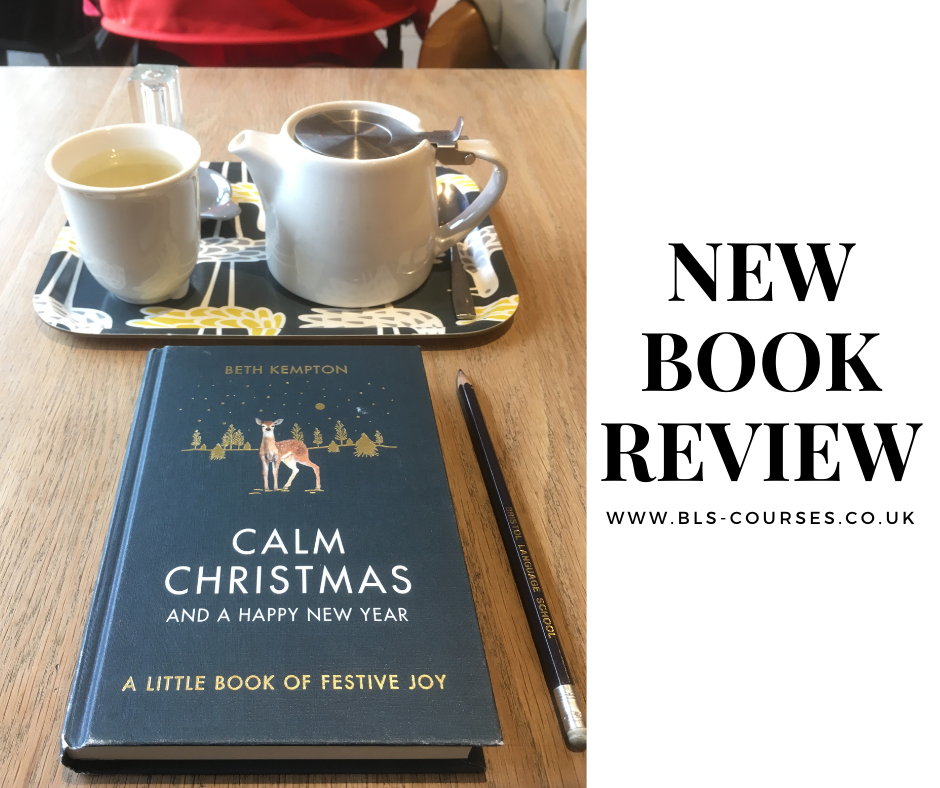
Book review: Calm Christmas and a Happy New Year: A little book of festive joy by Beth Kempton

“A calm Christmas does not have to be a small Christmas or even a quiet Christmas.” [p. 121]

It’s a beautiful read which attempts to prepare readers for Christmas; calm Christmas. I read it in October which may seem to be too early, but actually no, it’s the perfect time to start thinking about the Christmas one wishes to have this year. The book mindfully guides us through the pre-, during- and post-Christmas times and through questions, stories and quotations coming from the author’s own experiences or those of her friends’ or the community’s. The reader may reflect/question/re-invent their own way of celebrating the festive season. The book is simply published, yet the magic is felt on every page.

And if you’re wondering whether there are any language-related digressions, I can only point out that the author has a Masters degree in Japanese.

What inspirational read on Christmas would you recommend? Let me know down in the comments.

Kinga Macalla

October 30, 2019

Book review: Notes from a Small Island by Bill Bryson

“There used to be a kind of unspoken nobility about living in Britain.” [253]

When I started reading the book, I knew I would laugh unstoppably, enjoy the off-track travel stories & sentimental retrospective mentions. But in this publication, I feel I discovered more; a land that the author calls home. His sentiment for the past times and warmth for the hidden paths & forgotten towns makes you want to immediately visit the exact same locations. And the fact that he travelled by public transport makes me want to hug him (yes, I’m a huge advocate for using public transport, bikes or your own legs)!

I found it extremely interesting that the book, which was written in the nighties, is so up-to-date today. The issues regarding conservation, heritage, nature, community, and public transport still need our voice and understanding.

I hope you enjoyed my short introduction to this fascinating read by Bill Bryson. What in Notes from a Small Island stroke your attention most? Do let me know in the comments below.

Kinga Macalla

September 11, 2019

Book review: Wild by Cheryl Strayed

It’s a fascinating read. It’s a memoir of a young woman who makes the brave, yet vulnerable step and decides to hike alone the Pacific Crest Trail (PCT). The author’s life became unbearably painful after her mother’s death and she began harming herself and others. The PCT became her self-discovery journey, where she had to overcome some physical pains and fears. But, even though she decided to walk the trail because of her inner scars, once she experienced the wilderness, she understood that being in nature or even part of nature was “powerful and fundamental” (p. 207) and a good enough reason to be walking the trail. I read the book while travelling in Cornwall, so you may want to read it when walking/being in nature, as it’ll add that extra spice to your outdoor experience.

Did you enjoy reading “Wild”? What was your favourite travel read this summer? Do let me know in the comments below.

Kinga Macalla

August 14, 2019

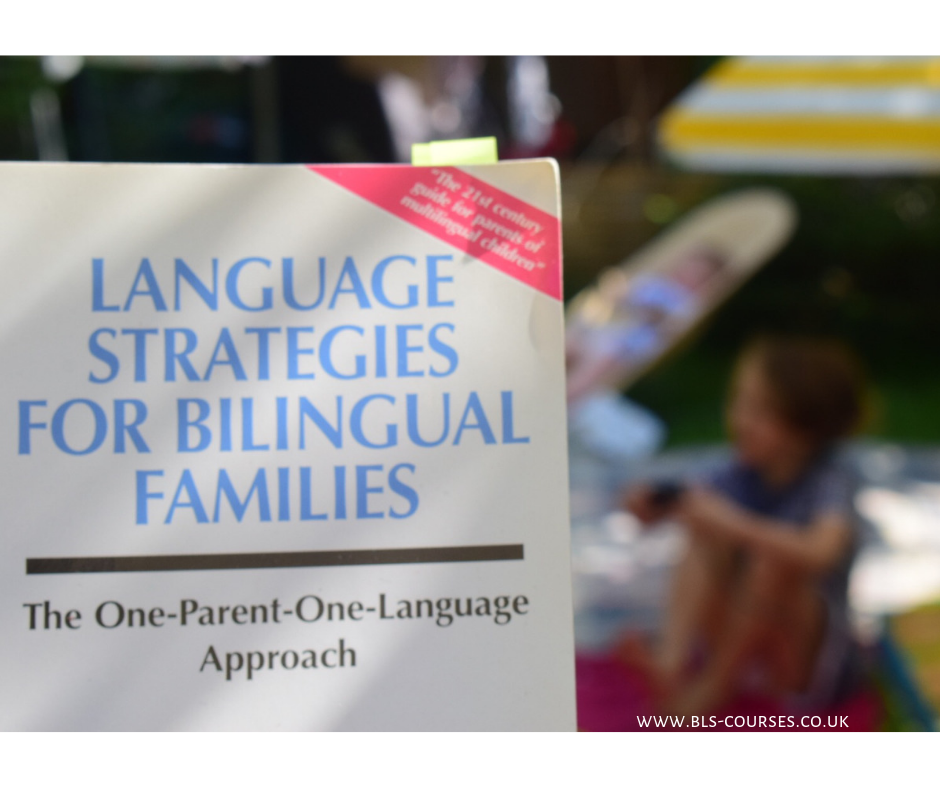
Book review: Language strategies for bilingual families. The one-parent-one-language approach by Suzanne Barron-Hauwaert

This is an interesting and useful publication for bilingual families. Mainly, because each chapter finishes with some comments from the parents on the topics discussed in the given chapter. I think it’s a very good addition to the research-based theory, the real voice of bilingual parents.

What is the one-parent-one-language approach (OPOL)? “The original term came from a French linguist, Maurice Grammont, who […] introduced the idea of une personne; une langue”. Literally translated from the French as one person; one language”. (p. 1) OPOL means that each parent speaks their language to the child. (p. 213)

Suzanne Bareon-Hauwaert, the author of Language strategies for bilingual families is an expert on bilingualism both academically, through her extensive research and practically, as a mum to her three multilingual children. In her publication, she discusses various topics linked with bilingual upbringing and OPOL, from a child’s refusal to speak one language, mixing languages, homework, grandparents’ involvement, trilingualism (multilingualism), the advantages and disadvantages of bilingualism to biculturalism. Suzanne Barron-Hauwaert also discusses the philosophy behind being successful in bilingual upbringing and I personally found it fascinating, not only in regards to bilingual upbringing, but also in other aspects of the child’s life (e.g. education or interests/hobbies). So, what guarantees successful active bilingual upbringing? Interestingly, the families who are most successful are those who are passionately committed to their kids’ bilingualism. “[They] discuss, read, and plan their children bilingualism well in advance of the child‘s arrival (…). They highly value bilingualism and its benefits to both the individual and society.” (p. 112)

Do you follow OPOL? How does this approach work in your bilingual family setting? Please let me know in the comments below.

Kinga Macalla

August 7, 2019

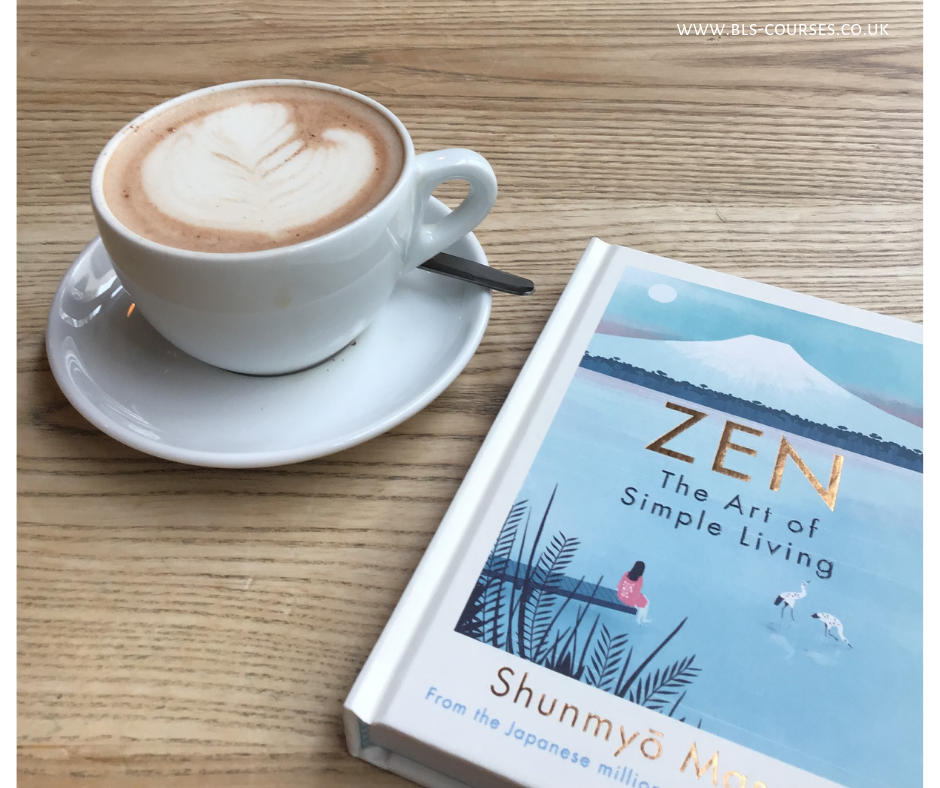
Book review: Zen: The Art of Simple Living. by Shunmyō Masuno

Zen is a perfect bed-time read. It’ll calm you down and give you some perspective on your worries, stress, sadness, but also all the positive aspects of your life. It’s written by Shunmyō Masuno, a Japanese Zen Buddhist who very gently, but also practically, leads us into the Zen philosophy, how to enrich and simplify our lives through introducing some Zen day-to-day solutions and practices. The book is beautifully published with the illustrations designed by the talented Zanna and Harry Goldhawk. The book is divided into four main chapters and a hundred mini-chapters on how to live a more Zen life.

I often read the book before bed-time, depending on what I feel, I look for the right mini-chapter to resonate with my feelings (or even a heading, if I’m very sleepy). Reading the book has definitely brought more tranquillity into my life and sleep and also makes me think that everything is figureoutable and that being surrounded by nature can heal our bodies and minds.

To bring the book and the Zen philosophy closer to you, below I present some of my favourite chapter titles and quotations:

Savour the morning air (p. 22)

Don’t waste time worrying about things you cannot control (p. 58)

Don’t put off what you can do today (p. 74)

You cannot regret the future (p. 74)

Try your best to do what you can now (p. 76)

Don’t be troubled by things that have not yet happened (p. 82)

Joy is to be found within yourself (p. 84)

Don’t compare yourself to others (p. 92)

Cultivate your sense of gratitude (p. 146)

See things for what they are (p. 162)

Make someone happy (p. 178)

Be here now (p. 184)

Be positive (p. 190)

Make the most of life (p. 222)

Have you read Zen. The Art of Simple Living.? What are your favourite chapters? Please let me know in the comments below.

Kinga Macalla

July 24, 2019

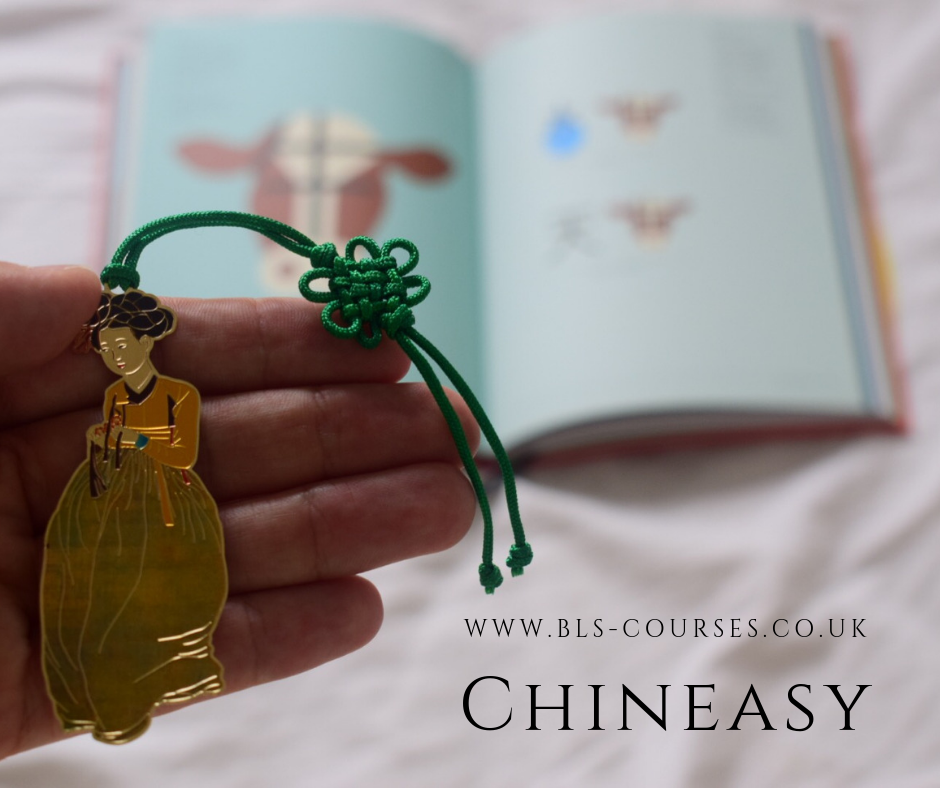
Book review: Chineasy. The New Way to Read Chinese by Shaolan

Learning a language is a journey.

We love exploring different languages: how they work, look, and sound, and today we’re going to try Chinese. We’ll learn Chinese characters using Chineasy, a learning recourse created by Shaolan (Taiwanese now living in London). The idea behind Chineasy was born when Shaolan tried to teach Chinese to her own children. What is Chineasy? Its goal is to “allow people to learn to read Chinese easily by recognising characters through simple illustrations.” (p. 9). In other words, each Chinese character presented in the book has its own graphic design which feeds our imagination and makes the learning process easier and more enjoyable. What is more, we can also learn how to link characters, draw them or know their exact or historical/cultural meaning.

My favourite characters are: woman, boat, weapon, rain, river and numbers.

I also have a memory game which I plan to play with my friends this summer (I’ll report how we managed to memorise the Chinese characters 😉

You can learn more about Chineasy via their website: https://www.chineasy.com/

Do you use a similar recourse when learning a foreign language? Let me know in the comments below.

Kinga Macalla

July 17, 2019

Book review: Le Mot Juste by Imogen Fortes

We read on the back cover: “celebrating the art of the French language”. Beautiful, huh?


Le mot juste is a collection of French words, phrases and quotations with their actual meaning, pronunciation and sometimes also literal translation. I think it’s a good way to refresh one’s French if it’s a bit rusty or to have a useful reference of the borrowed French words, such as la joie de vivre, je ne regrette rien, l’avant-garde, la crème de la crème, cordon bleu or le prêt-à-porter.

My favourite French words:

Un pamplemousse. A grapefruit

Au claire de lune. In the moonlight

Le coup de foudre. Love at first sight (lit. translation: a thunder bolt)

En faire tout un fromage. To make a fuss (lit. translation: to make a whole cheese out of it)

Plus tard ça sera trop tard. Notre vie c’est maintenant. Jacques Prévert (translation: Later will be too late. Life is for living now.)

Nous sommes nos choix. Jean-Paul Sartre (translation: We are our choices.)

Have you read a similar publication in the language you currently learn? Please let me know in the comments below.

Kinga Macalla