Tag Archive: Books

December 8, 2021

Book review: Lagom by Niki Brantmark

The right amount is best. (Swedish proverb)

I read and reviewed a lagom book some time ago and this winter I decided to return to this concept. Why? To get inspired by a simpler and more harmonious life. The word lagom loosely translated means ‘not too much and not too little – just right.’ It’s about having a more comfortable and balanced life. Sounds good, right?
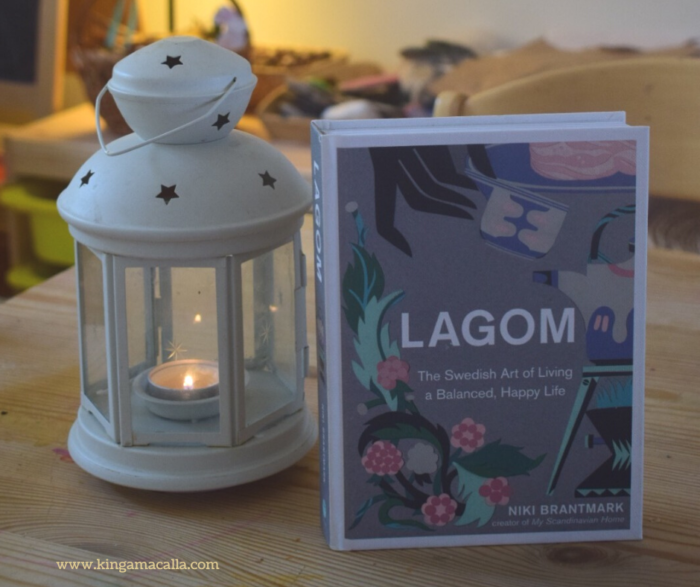
In the introduction we read a wonderful story where the author writes about her summer holiday in Sweden. Her Swedish holiday was carefree, uncomplicated and enjoyable. Even though it sounds so simple and idyllic, in my personal experience, I find it difficult to completely switch off and slow down. And now, when the festive season is coming, I’m feeling even more encouraged to try not to put too much pressure on myself to have the ‘perfect’ Christmas and instead to balance my energy to have more relaxed celebrations and to enjoy this special time with my family and friends.

The book Lagom: The Swedish Art of Living a Balanced, Happy Life is divided into three main categories: personal life, family & relationships and the wider world. The book first focuses on home and personal life and how to make them more lagom, for example through decluttering, buying second-hand, bringing nature indoors, preparing your bedroom for a good night’s sleep, taking good care of yourself (oh yes!), enjoying time in nature, and integrating some exercise into your daily life.

Niki Brantmark also writes about work-life balance: this aspect is important to me, as I sometimes struggle with it. What recently helped me to have some perspective into my work-life balance are my values: putting my family and home life first. As we read further, the Swedes also try to have a balanced work etiquette: they work very effectively and timely (staying late at work is not popular in Sweden!). We also read about the importance of having a break at work or from any other daily commitments (in Swedish it’s called fika aka taking time for a coffee, treats and conversation with friends) and disconnecting from emails and social media.

Another chapter that I found inspiring was on parenting. Being a parent myself, I sometimes feel overwhelmed by the amount of work involved in raising our little ones. If we apply the lagom approach, maybe we’ll feel less pressured and plan our family life in moderation. After all, it’s good for our children not to be constantly stimulated and to be actually bored.

The book also contains lagom guides to celebrations (including Christmas and Easter), community, nature and eco-life.

Personally, I found the publication an inspiring and useful reminder about the importance of having a more balanced life. I think I feel ready for the coming festive season and the coming year. Let’s make them more lagom 😉

Have you recently read any books on the Swedish lagom? Please let me know in the comments below.

November 25, 2020

Book review: Multilingual is normal. An anthology of voices. Talking about talking.

#multilingualisnormal

What an amazing idea to collect voices about multilingualism. It’s so ordinary, yet so extraordinary. 60 stories about the pleasure, the fun, the enthusiasm of learning, knowing and using foreign languages. The book shows different life scenarios, career possibilities and language journeys. It’s a perfect read for those learning languages, as well as translators, polyglots, multilingual families, teachers and professionals working with languages or with multilingual students and families.

The idea to collect stories about multilingualism was born in the summer of 2020 and belongs to the wonderful Cate Hamilton. Cate Hamilton is so multi-talented: she’s a co-founder of Babel Babies and a leader of the Language Revolution Podcast. She has also started a postgrad degree at Oxford University (!!!). The book was actually created in just one month: from 10th July to 10th August 2020 (amazing, huh?).

And which story is my favourite? All of them! Just read below:

“It was during a parents’ evening, the first one I had been brave enough to conduct in Catalan, that I discovered the filler word I had picked up in the backstreet bars in town meant: ‘I shit on the Eucharist.’

The raised eyebrows from the first two parents didn’t alert me. Neither did the look of alarm on the pair I saw next. It was during the third meeting that I began to get the sense that something was going wrong. ” (Peter Munford, p. 45)

“I think the little monolingual boy who first opened Fun to Learn French would be proud of how far he’s come, and really pleased that he’s teaching children to love language like he does.

But I also think he’d be scowling at me and saying: ‘You’re not stopping at nine languages, are you?’

So I should probably crack on with Basque.” (Darren Lester, p. 75)

“Raising a multilingual family does not mean to choose a language strategy that everyone says will work but to choose one that allows you to go at your own pace. Find a way where you could teach your languages to your children that follows their interests.” (Adrienne, p. 173)

And finally, a little hint, you’ll find a story about my language journey there, too 😉

Enjoy reading!

You can get your e-book here and a paper version here.

Kinga Macalla

October 21, 2020

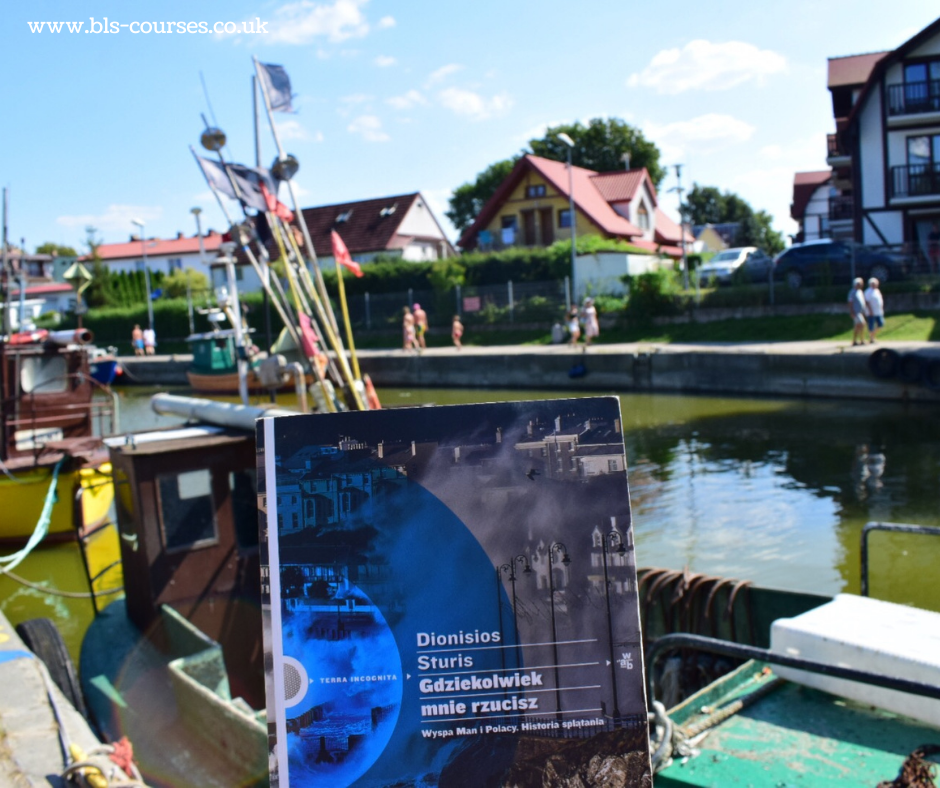
Book review: Gdziekolwiek mnie rzucisz by Dionisios Sturis

Dionisios Sturis was born in Greece, but grew up in Poland. He’s a documentary writer. After graduating from university, he moved to the Isle of Man to work in a shellfish factory, as many other Poles did back then. However, his story is different, because after a few years he left the island, returning to it regularly to work as a writer. This is when the book was born, a story about war, politics, Polish migration, ordinary everyday life, love, and death. It’s like reading about a big world being shrank into a tiny island. Fascinating. It somehow reminds me about Central Europe, where geopolitical, economic, and cultural ideas influence each other to create a pot of different flavours: important and trivial, grande and petit, global and local. It’s all so mixed up that it’s sometimes difficult to distinguish what’s important. Does it feel the same or similar on the Isle of Man? I don’t know. It’s probably a good question to be answered by the author himself.

Do you read books in other languages? In which language(s)? Let me know in the comments below.

Kinga Macalla

March 18, 2020

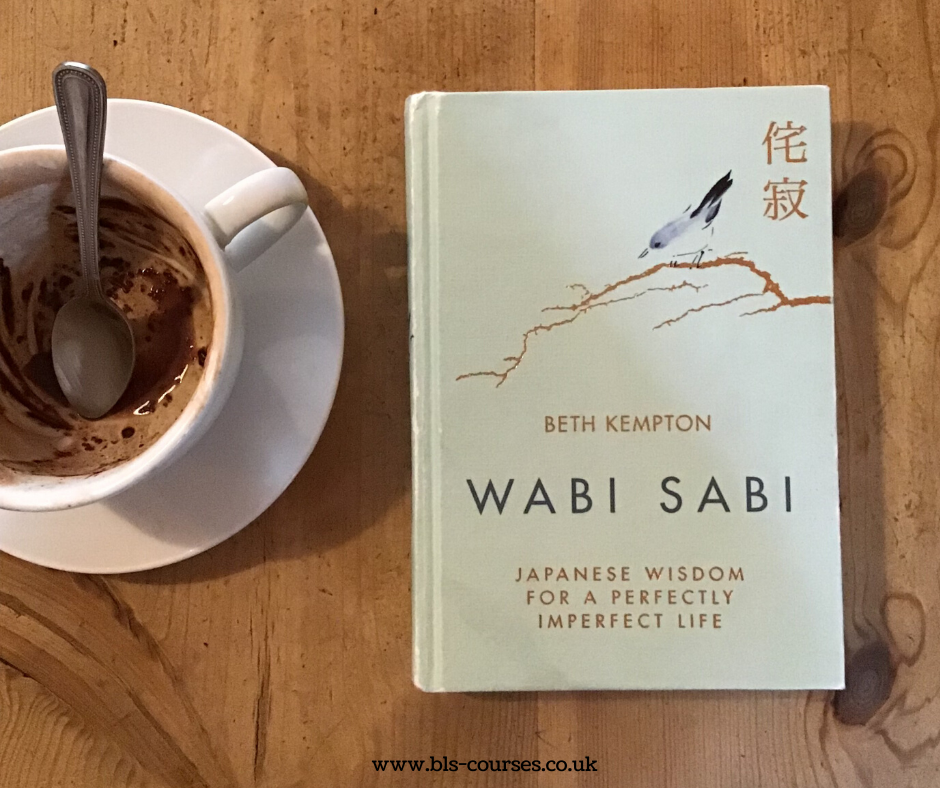
Book review: WABI SABI by Beth Kempton

“The forest does not care what your hair looks like. The mountains don’t move for any job title. The rivers keep running regardless of your social-media following, salary or your popularity. The flowers keep on blooming, whether or not you make mistakes. Nature just is, and welcomes you, just as you are.” Beth Kempton

I had a different article planned for today. But, I’ve been reading Wabi Sabi for the last week or so, every day, to keep my mind occupied and to feel calm, inspired and hopeful. I needed to find strength inside me. I enjoyed the read so much, and I’m excited to be sharing my insights here with you today.

I learnt about wabi sabi for the first time in autumn 2018 when I came across the book Wabi-Sabi Welcome by Julie Pointer Adams (you can read my review here). I was so overwhelmed by the beauty of this Japanese philosophy, that I was sad when I read the last page of it. I felt very similar this time, I wanted to continue reading about this perfectly imperfect philosophy and enjoy the little pleasure coming from reading and learning about it.

Beth Kempton, the author, is a Japologist who studied Japanese at university and spent many years living and working in Japan. As we read on the first pages of the book, she considers Japan her second home.

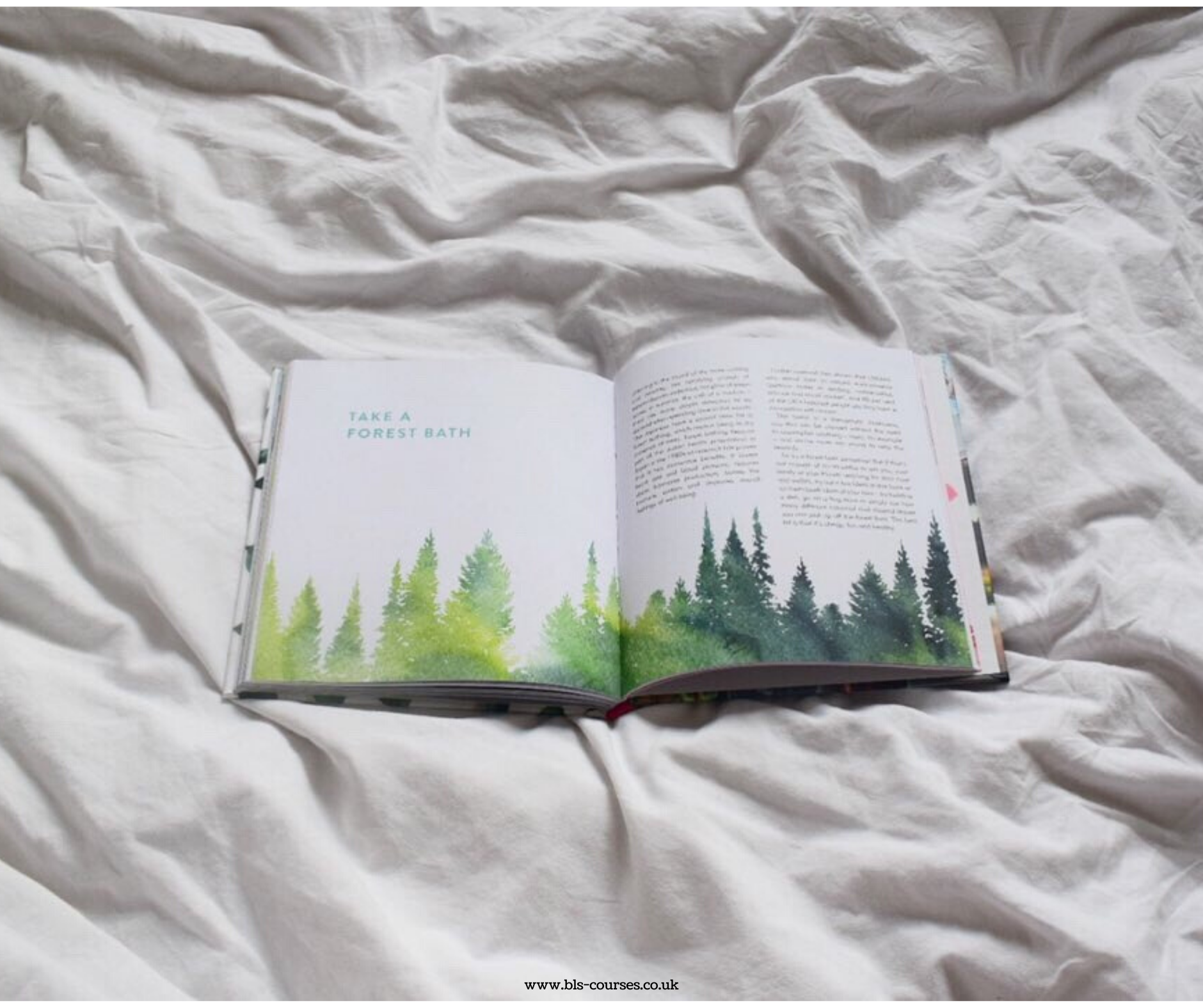
The book contains 8 chapters: first we learn about the origins and characteristics of wabi sabi, how to create simple yet beautiful interiors in our homes, the importance of connection with nature (shinrin-yoku aka forest bathing), the gentle reminder that everything is impermanent, imperfect and incomplete, how to overcome the fear of creative failures (!), how to maintain/create good relationships and to enjoy our career path, and finally how to enjoy the little moments in life.

My absolute favourite parts were the little reminiscences from the author’s past experiences; whether as a student, traveller, interpreter or researcher in Japan. They made the whole concept of wabi sabi more alive, funny and real. They added an emotional aspect to this wise Japanese philosophy.

Have you read a different publication on wabi sabi? Let me know in the comments below.

Kinga Macalla

February 12, 2020

Book review: Goodbye, things. On minimalist living by Fumio Sasaki

“A table, a chair, a bowl of fruit and a violin;

what else does a man need to be happy?”

 Albert Einstein

In a world so overloaded with information, things, promotions and a want-more philosophy, shall we all become minimalists? Is there happiness in having less?

Personally, I’m on a journey to declutter my belongings: I no longer have many clothes/cosmetics, I try to buy sustainable clothing/beauty products and only when I really need them (I do not wear make-up, though if an occasion requires it, I have a red lipstick ;)). And this all started before reading the book on minimalism by Fumio Sasaki. Let’s see what the next chapter will bring.

Fumio Sasaki is a Japanese minimalist who, throughout his journey to declutter his tiny apartment in Tokyo, learnt some valuable lessons on life and became a better person himself. I found the book a very interesting read, observing his from-maximalist-to-minimalist journey (Do objects make us more valuable? Certainly not!), learning about some practical minimalist tools (What do I really need to have a good life?, organising is not minimising, our homes are not museums, borrow/rent it, don’t buy it!, one in, one out) and seeing some profound benefits of having less (more time, enjoying life more, cleaning less, not comparing oneself with others, focusing better, being healthier, being present in the moment, feeling gratitude).

 “Happiness is actually all around us. We just need time to find it.” (p. 166)

“The very act of living brings me joy.” (p. 174)

“Minimalism is built around the idea that there’s nothing that you’re lacking.” (p. 160)

I truly recommend this book and suggest learning more about minimalism. It seems that via decluttering our houses, we also dust ourselves down and discover a more meaningful life.

Which item(s) would you like to have less of? Please let me know in the comments below.

Kinga Macalla

February 5, 2020

Book review: Slow by Jo Peters

“For fast-acting relief, try slowing down.” Lily Tomlin

“Slow. Finding peace and purpose in a hectic world.” After a very intensive January, I wanted to slow down, hence was looking for some slow reading and came across this publication. It’s beautifully published with photographs and graphics that inspire readers to pause and slow down. The book gives some guidance into slow health and well-being, home, relationships, food, work and nature. It reminds us where the slow idea originated: Italy. Carlo Petrini created a slow food movement as an act of protest to fast food. The idea then influenced other parts of people’s lives, from slow parenting and slow cities to slow exercising. Then, in 1999, the World Institute of Slowness was formed by Geir Berthelsen in Norway.

The book is a beautiful introduction to slow life (not lazy life!), to a less-do, be-more-present and mindful life. It teaches you how to focus on single tasks (e.g. when working, learning languages, reading), how to create daily slow rituals and simplify your calendar (oh my absolutely favourites: JOMO-the joy of missing out and JONO-the joy of no), and how to enjoy nature (e.g. forest bathing, wild swimming, rainbow walking).

I’m glad I read it, as I feel more ready to live a better (and slower) life. What’s the book that greatly inspired your recently? Let me know in the comments below.

Kinga Macalla

January 29, 2020

Book review: Sea Journal by Lisa Woollett

It’s a beautiful read. Mindful, slow, inspirational, interesting, funny. And the photographs of the sea and of the sea life make the read so real and yet incredibly artistic. I started reading it when I was by the sea and couldn’t stop, just continued reading it every day. I was so amazed by it that I was telling some of the stories to my family and we had long discussions about how fascinating nature is and how incredible it is that a small fossil can lead us a hundred or even a million years back. It shows how everything is linked yet individual and how every little creation plays its important role in forming nature. It’s also a gentle reminder that plastic doesn’t belong in nature (!).

‘Sea Journal’ is written by Lisa Woollett, a photographer and writer currently living in Cornwall (my short review of her previous book you can find here). I know I’ll return to Lisa’s stories as the year goes by and I re-visit the sea. A pleasure of reading and discovering nature.

One of my absolute favourite stories is about a Lego dragon. Which story is your favourite? Do let me know in the comments below.

Kinga Macalla

December 11, 2019

Book review: The Art of Making Memories by Meik Wiking

The author Meik Wiking is probably mostly associated with the concepts hygge and lykke, as he wrote two books exploring those Danish lifestyle ideas (you’ll find my book reviews here and here). So when I saw his new publication, I knew I wanted to read it to learn more about how to live a happier life, especially since the author is the founder of the world’s first Happiness Research Institute, based in Copenhagen, Denmark.

If you have read any of Meik Wiking’s books, you will know that he has a fantastic sense of humour, great distance to his life and himself and, in my humble opinion, he writes his books in the hygge spirit; you’ll find them heart-warming, kind and funny.

So Christmas is coming and we may want to create it as a memorable moment. Even though I find Christmas very special, I don’t remember each and every one of the Christmasses I have experienced in my life. I remember when I got an enormous amount of books one Christmas when I was a child, when we went to the mountains or to Scotland, when we celebrated it in one tiny room which I and my husband were renting then (we had the floor heated, so no cold feet!), the last Christmas together with my father-in-law before he passed away and of course, the first Christmasses of our daughters. OK, that’s enough, or I’ll soon start crying and will never finish this book review!

So, what is the recipe for making happy memories? Meik Wiking has some practical ideas that can help you turn your ordinary everydayness into memorable special moments, for example having a new experience (do you speak foreign languages? Learn a new language!), using all your senses (how does childhood’s innocence smell?), paying full attention (remember: what you pay attention to, grows), connecting with your loved ones (invite your friends over and prepare for them the most scrumptious dessert & some Japanese tea/Colombian coffee and don’t forget to invite me!), sharing your embarrassing story (oh yes, that can be a good one especially at family gatherings), challenging yourself (I always think about it when I practise some sports, go an extra mile and you’ll feel so much better), telling a story (remember and retell those wonderful/funny/scary stories of your life), create and treasure memorable objects (I remember when my friend in high school, started writing a diary for her future children, to be given when they’re 18, special huh?)). And if you want to plan a memorable year, there are some tips/ideas on this subject, too.

As we keep reading Meik Wiking’s book, we discover how fascinating our memory is and as we know memory is an integral part of language learning. We want to memorise the vocabulary, grammar structures, cultural rules, etc. So is there a secret ingredient that can help us remember better? It’s association! “As a consequence, forgetting may be caused by a simple lack of appropriate cues that spark the memory.” (p. 106) The next time you have a list of vocab to learn, try to associate the words with some images, objects or specific circumstances, I bet you’ll remember them better! Also, you can read our blog posts on vocab learning (here and here).

My favourite story is on pages 279-281, once you’ve read it, do let me know if you find it special, too. And enjoy reading the book!

Kinga Macalla

November 27, 2019

Book review: Growing Up with Two Languages. A Practical Guide for the Bilingual Family by Una Cunningham

What a fantastic compendium of practical knowledge for bilingual families! I found the publication interesting to read, as it implements stories from the author’s own experience and quotations from bilingual families, and these make the whole reading experience much more alive and real.

As we read on the back cover, the author Una Cunningham is an Associate Professor in Modern Languages at Stockholm University in Sweden, and she raised her 4 children to speak English and Swedish.

Growing Up with Two Languages is mostly a practical read, but it also has a short chapter devoted to research and further reading. We read there that most of the world’s population speak more than one language, this may well mean that we should question monolingualism in our society and see it as a (curable!) problem. (vide Li Wei, p. 165)

The book refers to many topics that new or well-established bilingual parents may find interesting to learn about, such as balancing two languages, dealing with public/family reactions to bilingual upbringing, the one parent-one language method, cultural competence, active and passive languages, practical advice from the author and from other bilingual parents (e.g. feed your child with bilingual and bicultural knowledge but do not force-feed), motivation, etc.

Another piece of advice which I found really useful to follow when reading this book is that Una Cunningham emphasises that as a reader and a bilingual parent, we know best what works in our current family setting, so we should only take the advice that will work for our children’s bilingual upbringing. “According to their circumstances, a family will develop a system regulating the use of two languages with which they live.” (p. 31) Interestingly, the language chosen by siblings to talk between themselves is usually the majority language (if it’s their dominant language). And the key ingredients to have a successful bilingual family are determination, consistency and perseverance.

Finally, of all the interviewees mentioned in the book, none of them regrets being exposed to more than one language in their childhood. Quite the opposite, those who weren’t raised bilingually (but for example only biculturally), regret that their parent/s didn’t speak to them in their native language.

What’s your recent reading on bilingualism? Please let me know in the comments below.
Kinga Macalla

November 13, 2019

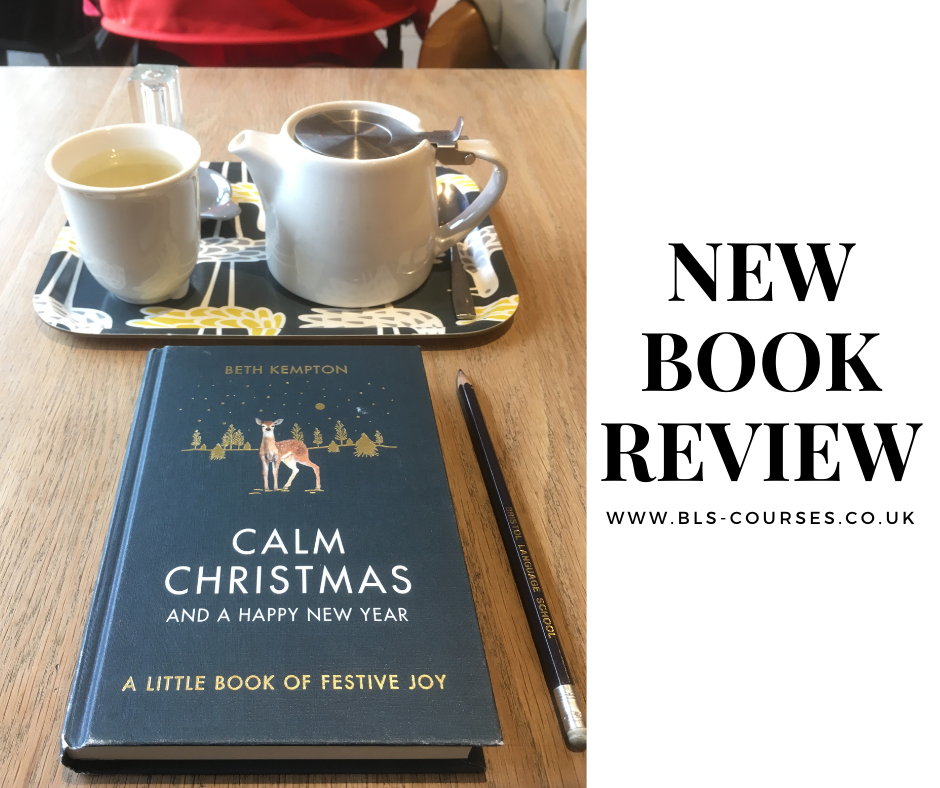
Book review: Calm Christmas and a Happy New Year: A little book of festive joy by Beth Kempton

“A calm Christmas does not have to be a small Christmas or even a quiet Christmas.” [p. 121]

It’s a beautiful read which attempts to prepare readers for Christmas; calm Christmas. I read it in October which may seem to be too early, but actually no, it’s the perfect time to start thinking about the Christmas one wishes to have this year. The book mindfully guides us through the pre-, during- and post-Christmas times and through questions, stories and quotations coming from the author’s own experiences or those of her friends’ or the community’s. The reader may reflect/question/re-invent their own way of celebrating the festive season. The book is simply published, yet the magic is felt on every page.

And if you’re wondering whether there are any language-related digressions, I can only point out that the author has a Masters degree in Japanese.

What inspirational read on Christmas would you recommend? Let me know down in the comments.

Kinga Macalla