Tag Archive: Books

October 30, 2019

Book review: Notes from a Small Island by Bill Bryson

“There used to be a kind of unspoken nobility about living in Britain.” [253]

When I started reading the book, I knew I would laugh unstoppably, enjoy the off-track travel stories & sentimental retrospective mentions. But in this publication, I feel I discovered more; a land that the author calls home. His sentiment for the past times and warmth for the hidden paths & forgotten towns makes you want to immediately visit the exact same locations. And the fact that he travelled by public transport makes me want to hug him (yes, I’m a huge advocate for using public transport, bikes or your own legs)!

I found it extremely interesting that the book, which was written in the nighties, is so up-to-date today. The issues regarding conservation, heritage, nature, community, and public transport still need our voice and understanding.

I hope you enjoyed my short introduction to this fascinating read by Bill Bryson. What in Notes from a Small Island stroke your attention most? Do let me know in the comments below.

Kinga Macalla

September 11, 2019

Book review: Wild by Cheryl Strayed

It’s a fascinating read. It’s a memoir of a young woman who makes the brave, yet vulnerable step and decides to hike alone the Pacific Crest Trail (PCT). The author’s life became unbearably painful after her mother’s death and she began harming herself and others. The PCT became her self-discovery journey, where she had to overcome some physical pains and fears. But, even though she decided to walk the trail because of her inner scars, once she experienced the wilderness, she understood that being in nature or even part of nature was “powerful and fundamental” (p. 207) and a good enough reason to be walking the trail. I read the book while travelling in Cornwall, so you may want to read it when walking/being in nature, as it’ll add that extra spice to your outdoor experience.

Did you enjoy reading “Wild”? What was your favourite travel read this summer? Do let me know in the comments below.

Kinga Macalla
August 14, 2019

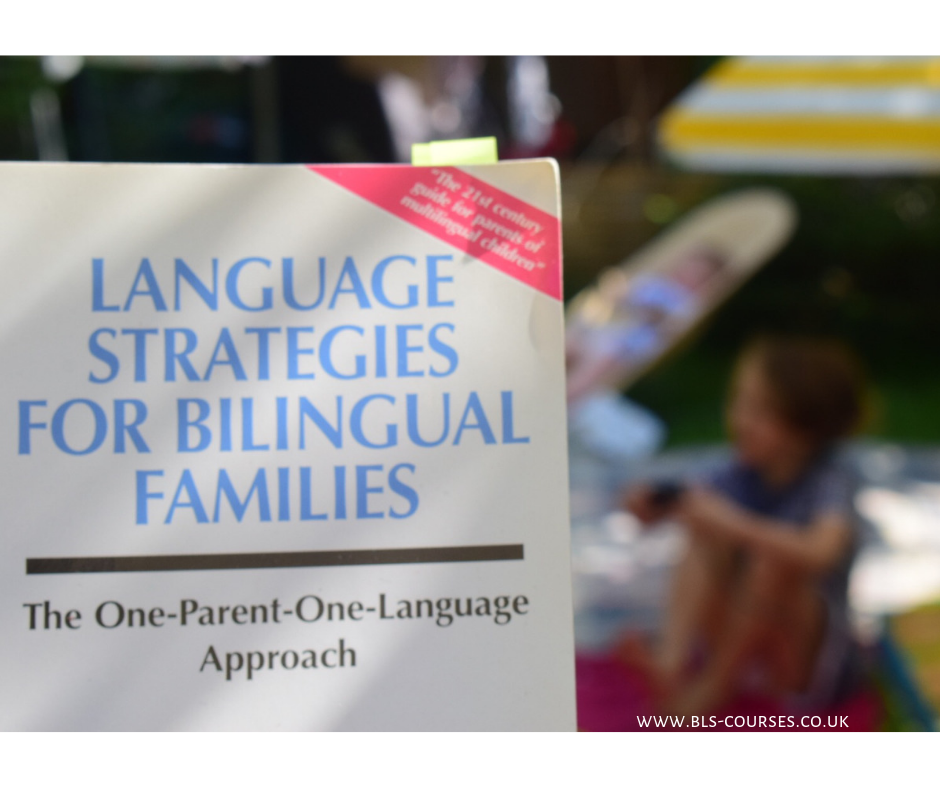
Book review: Language strategies for bilingual families. The one-parent-one-language approach by Suzanne Barron-Hauwaert

This is an interesting and useful publication for bilingual families. Mainly, because each chapter finishes with some comments from the parents on the topics discussed in the given chapter. I think it’s a very good addition to the research-based theory, the real voice of bilingual parents.

What is the one-parent-one-language approach (OPOL)? “The original term came from a French linguist, Maurice Grammont, who […] introduced the idea of une personne; une langue”. Literally translated from the French as one person; one language”. (p. 1) OPOL means that each parent speaks their language to the child. (p. 213)

Suzanne Bareon-Hauwaert, the author of Language strategies for bilingual families is an expert on bilingualism both academically, through her extensive research and practically, as a mum to her three multilingual children. In her publication, she discusses various topics linked with bilingual upbringing and OPOL, from a child’s refusal to speak one language, mixing languages, homework, grandparents’ involvement, trilingualism (multilingualism), the advantages and disadvantages of bilingualism to biculturalism. Suzanne Barron-Hauwaert also discusses the philosophy behind being successful in bilingual upbringing and I personally found it fascinating, not only in regards to bilingual upbringing, but also in other aspects of the child’s life (e.g. education or interests/hobbies). So, what guarantees successful active bilingual upbringing? Interestingly, the families who are most successful are those who are passionately committed to their kids’ bilingualism. “[They] discuss, read, and plan their children bilingualism well in advance of the child‘s arrival (…). They highly value bilingualism and its benefits to both the individual and society.” (p. 112)

Do you follow OPOL? How does this approach work in your bilingual family setting? Please let me know in the comments below.

Kinga Macalla
August 7, 2019

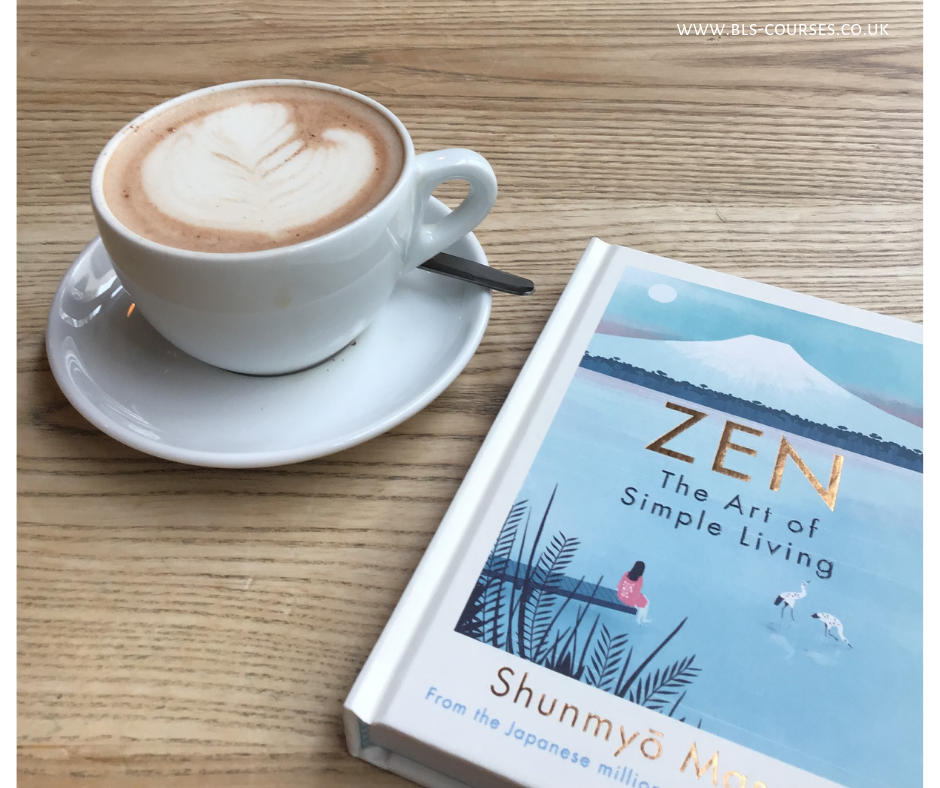
Book review: Zen: The Art of Simple Living. by Shunmyō Masuno

Zen is a perfect bed-time read. It’ll calm you down and give you some perspective on your worries, stress, sadness, but also all the positive aspects of your life. It’s written by Shunmyō Masuno, a Japanese Zen Buddhist who very gently, but also practically, leads us into the Zen philosophy, how to enrich and simplify our lives through introducing some Zen day-to-day solutions and practices. The book is beautifully published with the illustrations designed by the talented Zanna and Harry Goldhawk. The book is divided into four main chapters and a hundred mini-chapters on how to live a more Zen life.

I often read the book before bed-time, depending on what I feel, I look for the right mini-chapter to resonate with my feelings (or even a heading, if I’m very sleepy). Reading the book has definitely brought more tranquillity into my life and sleep and also makes me think that everything is figureoutable and that being surrounded by nature can heal our bodies and minds.

To bring the book and the Zen philosophy closer to you, below I present some of my favourite chapter titles and quotations:

Savour the morning air (p. 22)

Don’t waste time worrying about things you cannot control (p. 58)

Don’t put off what you can do today (p. 74)

You cannot regret the future (p. 74)

Try your best to do what you can now (p. 76)

Don’t be troubled by things that have not yet happened (p. 82)

Joy is to be found within yourself (p. 84)

Don’t compare yourself to others (p. 92)

Cultivate your sense of gratitude (p. 146)

See things for what they are (p. 162)

Make someone happy (p. 178)

Be here now (p. 184)

Be positive (p. 190)

Make the most of life (p. 222)

Have you read Zen. The Art of Simple Living.? What are your favourite chapters? Please let me know in the comments below.

Kinga Macalla

July 24, 2019

Book review: Chineasy. The New Way to Read Chinese by Shaolan

Learning a language is a journey.

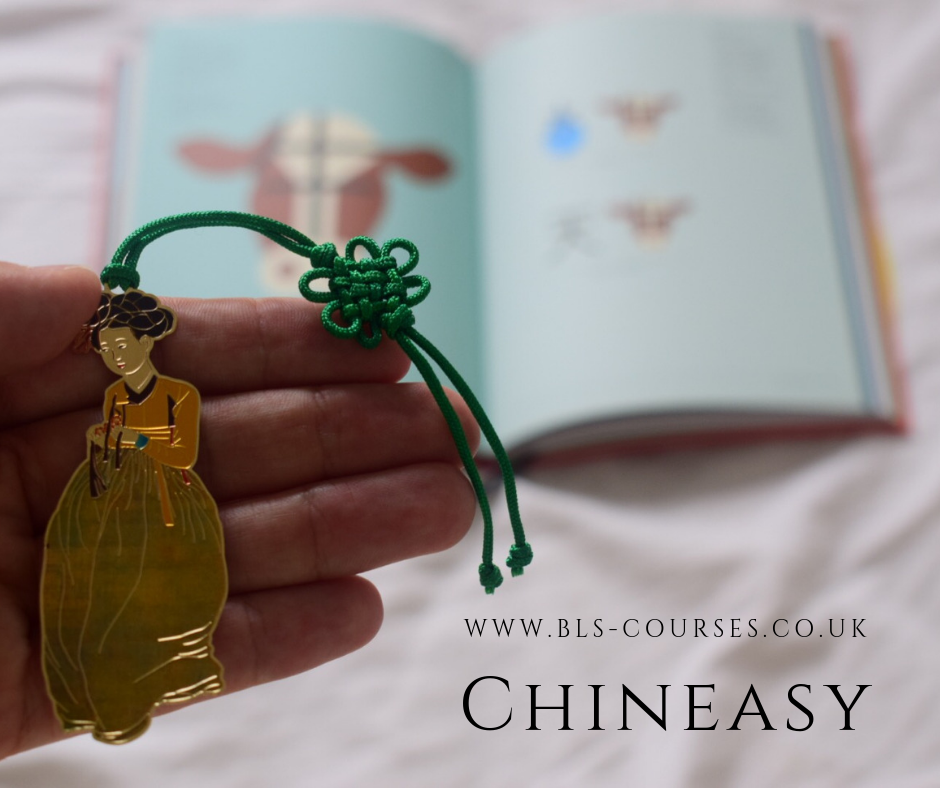
We love exploring different languages: how they work, look, and sound, and today we’re going to try Chinese. We’ll learn Chinese characters using Chineasy, a learning recourse created by Shaolan (Taiwanese now living in London). The idea behind Chineasy was born when Shaolan tried to teach Chinese to her own children. What is Chineasy? Its goal is to “allow people to learn to read Chinese easily by recognising characters through simple illustrations.” (p. 9). In other words, each Chinese character presented in the book has its own graphic design which feeds our imagination and makes the learning process easier and more enjoyable. What is more, we can also learn how to link characters, draw them or know their exact or historical/cultural meaning.

My favourite characters are: woman, boat, weapon, rain, river and numbers.

I also have a memory game which I plan to play with my friends this summer (I’ll report how we managed to memorise the Chinese characters 😉

You can learn more about Chineasy via their website: https://www.chineasy.com/

Do you use a similar recourse when learning a foreign language? Let me know in the comments below.

Kinga Macalla
July 17, 2019

Book review: Le Mot Juste by Imogen Fortes

We read on the back cover: “celebrating the art of the French language”. Beautiful, huh?


Le mot juste is a collection of French words, phrases and quotations with their actual meaning, pronunciation and sometimes also literal translation. I think it’s a good way to refresh one’s French if it’s a bit rusty or to have a useful reference of the borrowed French words, such as la joie de vivre, je ne regrette rien, l’avant-garde, la crème de la crème, cordon bleu or le prêt-à-porter.

My favourite French words:

Un pamplemousse. A grapefruit

Au claire de lune. In the moonlight

Le coup de foudre. Love at first sight (lit. translation: a thunder bolt)

En faire tout un fromage. To make a fuss (lit. translation: to make a whole cheese out of it)

Plus tard ça sera trop tard. Notre vie c’est maintenant. Jacques Prévert (translation: Later will be too late. Life is for living now.)

Nous sommes nos choix. Jean-Paul Sartre (translation: We are our choices.)

Have you read a similar publication in the language you currently learn? Please let me know in the comments below.

Kinga Macalla

June 26, 2019

Book review: Walking. One Step at a Time by Erling Kagge

Walking is man’s best medicine. Hippocrates

Paradise is where I am. Voltaire

This book is genius. That should be my whole review, but I’ll try to explain why.

Erling Kagge is a Norwegian explorer and the author of Silence (my book review you can read here) which is a fascinating read. From this book is coming one of my favourite quotations: “Being on the journey is almost always more satisfying than reaching the goal.” (p. 126) His next book is on walking. It explains and explores the process, the ability, the relativism, the poetry, the philosophy, the medicine, the wisdom behind – one can say – the simple and basic human skill: walking. He refers to many philosophers, writers, artists, explorers, as well as to his own experiences, e.g. to his walking through LA, walking towards the South Pole or walking through New York’s sewerage system. I think the genius of this book is that he presents walking as poetry, as something so fascinating and beautiful that we immediately want to go out and try it as a new (more aware!) experience. Below I list some of my favourite quotations:

“I got lost here before, so now I know where we are.” (p. 21)

“I don’t expect some great thrill on the way to work each morning but I do expect something.” (p. 30)

“To walk is to enjoy simple pleasures.” (p. 98)

“It took me years to realise that a single piece of chocolate tastes better than an entire bar.” (p. 98)

“The present moment and the eternity are not necessarily opposites. Time ceases, and both can be experienced at once.” (p. 134)

It was a true pleasure to read the book. Do let me know in the comments below what impressed you most in Walking.

Kinga Macalla

May 29, 2019

Book review: Neither here nor there. Travels in Europe by Bill Bryson

Love it or hate it, it’s definitely an interesting read (especially since it was written in the 90s – that’s almost pre-Internet era!). Neither here nor there by Bill Bryson, an American-British writer and traveller, takes us on a tour around well-known European cities. The book is written with a great sense of humour, so be careful, you may burst out with laugher, unexpectedly and hysterically (in my case: I woke up my husband and my baby girl, as it was impossible for me to stop laughing!). It’s inspiring, funny, occasionally politically-incorrect, retrospective, and today we would say that it represents slow-travelling since the author travels mostly by train!

I highly recommend it for those planning their European holidays or looking for some good laughs!

BTW, the writer finds Austria more European than the rest of Europe and in his view Sofia is the most European of all the cities (interesting!). Which country/city do you find more European?

Kinga Macalla

February 20, 2019

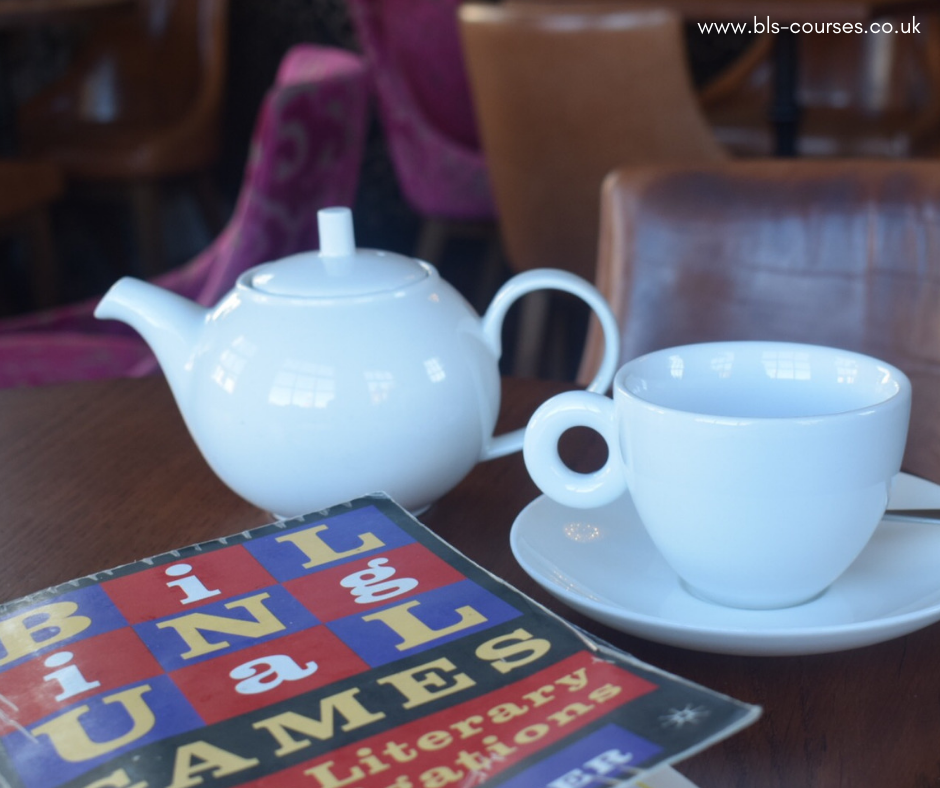
Book review: Bilingual Games. Some Literary Investigations, ed. by Doris Sommer

Speaking another language is quite simply the minimum and primary condition for being alive. Julia Kristeva

It’s a thought-provoking and fascinating read. Bilingual Games, edited by Doris Sommer, presents the idea of bilingualism from many different perspectives. The book is divided into 5 parts and each of them contains essays written by intellectuals who portray the topic of bilingualism as a concept: social, geographical, literary and cultural, educational, but most importantly as human and natural. The contributors seem to prove that multilingualism is a natural human phenomenon and we shouldn’t and cannot limit ourselves to be speaking only one language, after all monolingualism is rarer than multilingualism.

The wonderful thing about this book is that you can choose which essays you wish to read, and find your own reading order. One of the essays that I found particularly interesting was devoted to bilingualism in the educational setting: “Found in Translation. Reflections of a Bilingual American.” by Julio Marzán. Bilingualism can be defined in many different positive ways, it can be also seen as an obstruction to being a ‘true citizen’ or to being fully assimilated in a new country; it can also be understood as having a negative impact on a child’s achievement at school.  One can say that bilingualism is a personal choice on the part of parents, but if we are living in a new country and “learning that true Americans are loath to speak a foreign language” (Marzán 2003: 224), one cannot doubt it will have some impact on our and our children’s bilingualism. A simple question like, “Does your child speak another language at home?” which, as Julio Marzán writes, is also aimed at parents who are potentially seen as those who could obstruct “their child’s capacity to learn in an English-speaking classroom” (221) is not an innocent question, especially considering that Marzán answers in contradiction with the truth and says “no”.  As he later explains, he said “no” because he did not want to endanger his daughter’s “ability to achieve in the classroom”, but he also chose bilingualism, because he wanted his daughter to be able to connect with her cultural heritage. It might be surprising that bilingualism can be linked with underachievement at school, especially since the most recent research suggests that, actually, bilingualism “is now associated with a mild degree of intellectual superiority.” (Baker 2014: 54)

As you can see, it’s a fascinating read and I highly recommend it to those interested in bilingualism seen from many different intellectual perspectives. Let me know what your current read on bilingualism is in the comments below.

Quotations:

Baker, C. 2014. A Parents’ and Teachers’ Guide to Bilingualism. Bristol: Multilingual Matters

Sommer D. (ed) Bilingual Games. Some Literary Investigations. New York: Palgrave Macmillan

Kinga Macalla

January 2, 2019

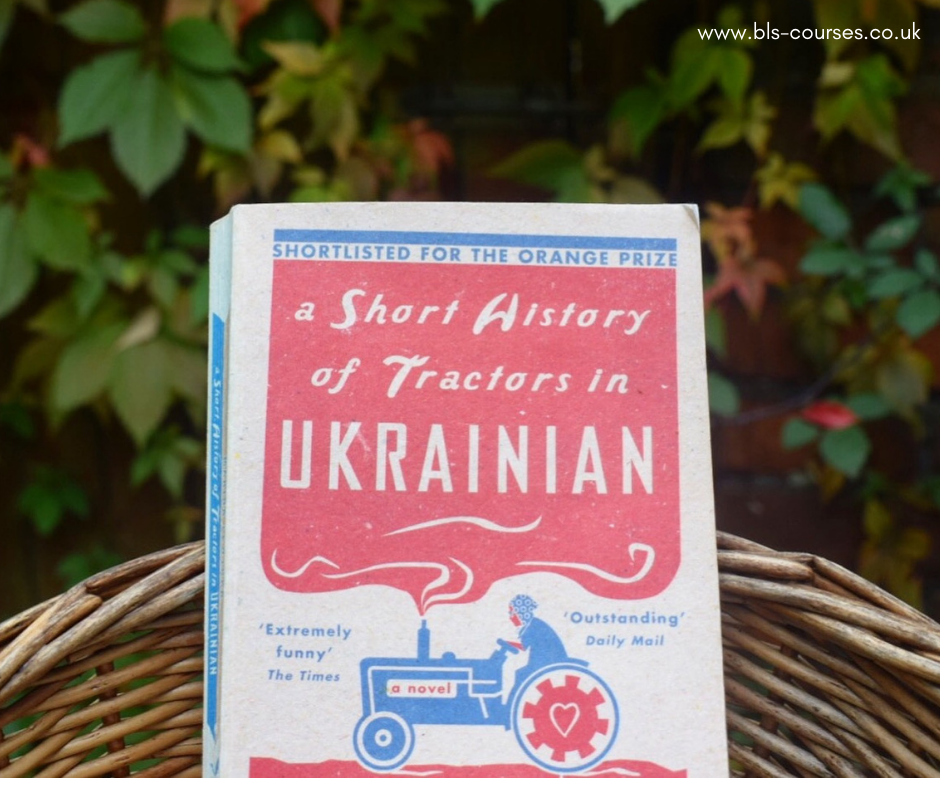
Book review: A Short History of Tractors in Ukrainian by Marina Lewycka

Translated into 35 languages & with many positive reviews, I couldn’t resist the temptation of reading it. What’s more I rarely read fiction, so it was a treat.

I had mixed, bitter-sweet feelings when I was reading the book: On one hand I was laughing out loud and on the other the story made me very sad. I think the sadness was coming from the fact that I also lived in a formerly communist country, Poland, till I reached my early twenties, and I think the story brought some memories back. In the book, the economical, intellectual and cultural differences between East and West are portrayed in a semi-caricatured way. This division pinpoints some aspects of our history and culture that are uncomfortable to me and I think I would prefer not to remember them.

Overall, I think it is a wonderful read, as it doesn’t stop with the last page. You’re left with some unanswered questions and some ideas that you want to analyse and think about. If you wish to learn more about Ukrainian history, about refugees’ lives in the UK, and about human nature, all being presented in a rather comical way, this is the book you want to read!

What have you read recently that fascinated you? Let me know in the comments below.

Kinga Macalla