Tag Archive: Books

December 12, 2018

Book review: Wabi-Sabi Welcome by Julie Pointer Adams

Each moment is worth basking in because it won’t be with us forever. Julie Pointer Adams

I have been reading this book every evening this autumn. Yes, it was a real treat for me: I was waiting for this moment every day, to read another few pages and to experience wabi-sabi through reading this publication. This book resonates with my reading taste, especially when it comes to reading about creating a cosy and comfortable home and, in this particular instance, how to prepare your home and yourself for having guests. The photographs are unique, simple, yet so beautiful. I would often leaf through the book to analyse in detail the photos and their authentic and intimate character.

So, what is wabi-sabi, you may think? Wabi-sabi is a Japanese concept which is built of two separate words, wabi and sabi. “Wabi means something like simplicity, humility, and living in tune with nature”. (18) “Sabi, on the other hand, refers to what happens with the passage of time; it’s about transience and the beauty and authenticity of age.” (18) We can think of wabi-sabi as being perfectly imperfect, as “beauty found in unusual, unfashionable places or objects, and in moments usually overlooked or unappreciated.” (11) The book is divided into 5 chapters and the author doesn’t only visit Japan to experience wabi-sabi, she travels to Denmark, California, France and Italy to find this unique way of life there, too.  Each experience brings us closer to the concept of wabi-sabi: in Japan it can be the joy of sharing simple and nourishing food; in Denmark, the rituals, nearly sacred, of having coffee breaks with your friends (called fika in Sweden); in California, being together in the kitchen and letting your friends participate in cooking; in France we can learn to say c’est la vie, if the situation is less than ideal, and adopt a more natural and organic approach to everything (joie de vivre – the joy of living) and in Italy, spending time together (insieme), going for a walk, eating ice-cream or having a big celebration and appreciating each other’s company.

As you can see, it’s difficult not to fall in love with wabi-sabi and I think the book could be a perfect Christmas gift for yourself or your loved ones. Reading it will beautifully fill long wintery evenings…

Do you know the concept of wabi-sabi? How do you experience it in your life? Do let me know in the comments below.

Quotations:

Julie Pointer Adams, Wabi-Sabi Welcome, New York 2017: Artisan.

Kinga Macalla

November 14, 2018

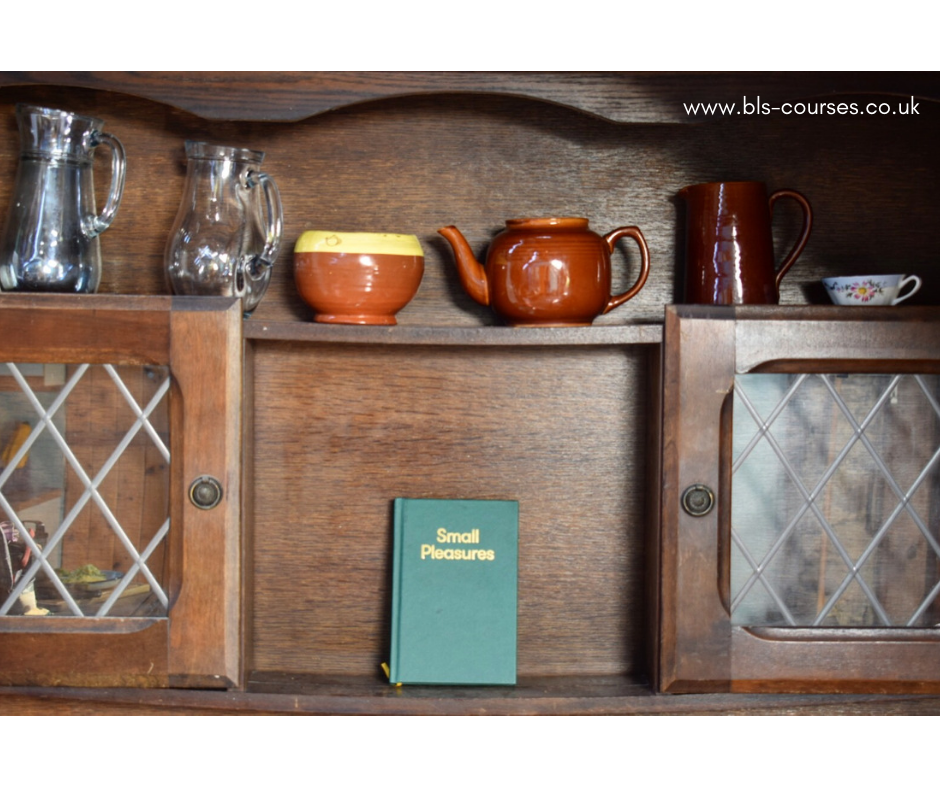
Book review: Small Pleasures by The School of Life

I first came across Small Pleasures in the little paper boutique, Papersmiths, in Clifton Village, Bristol, UK. But, when I returned there, all copies were sold out so, thanks to modern technology, I ordered my copy online. I guess that means that the book seems to be interesting not only for me! I found the book incredibly relaxing to read and a great journey to discovering or re-discovering the pleasures of everyday life. Just look at the chapter titles: Stars, Sunbathing, Up at Dawn, A Hot Bath, Kissing, Sunday Mornings, A Favourite Old Jumper, A Book that Understands You, Pleasant Exhaustion after a Productive Day, Whispering in Bed in the Dark, Figs, etc. There are 52 chapters (one for each week of the year?), so you can easily find great joy in exploring all the tiny pleasures we all experience in our life. I don’t want to say too much to spoil the pleasure of reading the book, but I have some quotations which may inspire you to read it or to get it as a Christmas present for a friend.

“[Some small pleasures can create the] respect for civilisations that have more time for things that are simultaneously delightful and wholesome.” p. 13

“Time could be rearranged: there are plenty of things that can contribute to leading a life more like the one we want. We could get new chances. Every day, it happens.” p. 59

“(…) [T]he pleasure of bath is primarily intellectual. Baths are ideal places to think.” p. 66.

Kinga Macalla

October 17, 2018

Book review: The Bilingual Family. A Handbook for Parents by Edith Harding and Philip Riley

Learning is the product of ‘motivation x opportunity’ – Edith Harding and Philip Riley

With over half of the world’s population being bilingual, as Edith Harding and Philip Riley remind us, I find the topic of bilingualism important to discuss and learn more about. The Bilingual Family by Edith Harding and Philip Riley is a practical guide to bilingualism. We can find there many useful topics being covered and issues discussed. It starts with an introduction to language and bilingualism (definition, level of fluency, simultaneous and successive acquisition). The chapter that I found really important was about the factors that influence the decision on whether to bring up children bilingually. After all, the decision on bilingualism will influence the whole family’s life, and it’s crucial to make it as informed as possible. Obviously, sometimes bilingualism is a completely natural consequence, as it was in my family’s case. I did read some books on bilingualism, but rather than thinking about pros and cons against bilingualism, I thought about how to implement it and what language plan to have for my family. Another interesting chapter is devoted to case studies. Here we find 16 different examples of bilingual families and learn how they approached bilingualism, and how their children learnt to be bilingual (to various degrees). To whet your appetite, I’ll only mention that there is also a sub-chapter on intelligence and bilingualism.

I highly recommend this publication to parents who face the decision of introducing bilingualism and don’t know how to approach it and for those who are already bilingual, but need some support or have some unanswered questions.

Are you a bilingual family? What books on bilingualism have you read and would like to recommend? Please let me know in the comments below.

Kinga Macalla

October 10, 2018

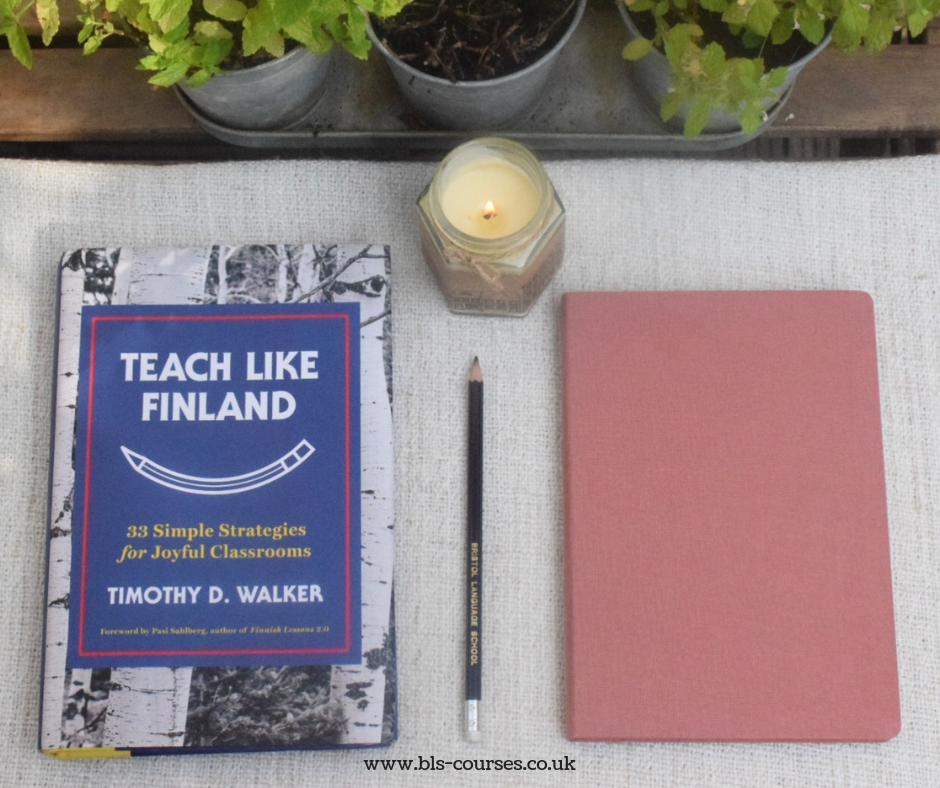
Book review: Teach like Finland. 33 Simple Strategies for Joyful Classrooms by Timothy D. Walker

Once, I walked into [the] first grade classroom at my Helsinki school, and I found tiny children with real needles in their hands. It was especially scary, because I couldn’t find [the teacher] initially. Timothy D. Walker

Flow is being completely involved in an activity for its own sake. The ego falls away. Time flies. Every action, movement, and thought follows inevitably from the previous one, like playing jazz. Mihaly Csikszentmihalyi

In 2001, Finland shocked the world when its pupils achieved the highest scores on the Programme for International Student Assessment (PISA), a set of tests evaluating critical-thinking skills in maths, science and reading. What was their secret? – I wanted to know. My query lead me to a book by Timothy Walker, Teach like Finland, where he walks the readers through the Finnish schooling system from an insider’s perspective, him being a teacher in Finland.

When we read the book, we come across many surprising facts, e.g. in Finland, pupils have frequent breaks, short school days, light homework, long holidays and little standardised testing. We also learn that the education system finds it important to invest in certain values, such as well-being (recharging, physical activity, simplicity, playing outside/in the wild), belonging (building strong relationships with the pupils, having fun and celebrating with the pupils, banishing bullying), autonomy (valuing freedom, getting to know pupils’ passions, planning with the students, demanding responsibility), mastery (the importance of teaching the essentials, leveraging technology, implementing some music elements, preparing summative assessments, discussing grades with the pupils), mind-set (enjoying the teaching process and then the holiday time, collaborating with other teachers, welcoming experts). The last two sub-chapters talk about time-off (vacate on vacation) and about joy of teaching, and I find both of those topics essential if one wants to implement any of the suggested strategies. Taking time off to recharge is crucial if we want to be more productive and enjoy our work, and joy of teaching (learning) means that we’re not only passionate about what we’re doing, but we actually enjoy the process of teaching (learning), which makes us happy.

I think the focus in Finnish schools is more on developing different life skills (e.g. mindfulness, interpersonal relationships and self-awareness) than concentrating only on their academic achievements. At the same time, this education system is deeply rooted in Finnish culture and heritage, which may mean that implementing it in another country may not be as successful (worth checking?). However, through making small changes and amending our teaching styles or our approaches to teaching, we may experiment to see if the Finnish approach (or parts of it) can work in our teaching/learning setting.

The book is a fascinating publication for those who are involved in the education system: teachers, scholars, policy makers… but also for parents, if they wish to learn more about the Finnish teaching and learning style.

Have you read any interesting publications on the Finnish education system or other countries’ education systems? Please let me know in the comments below.

Kinga Macalla

June 27, 2018

My Long Weekend in Montolieu Book Village – A Booklover’s Paradise

Book Village

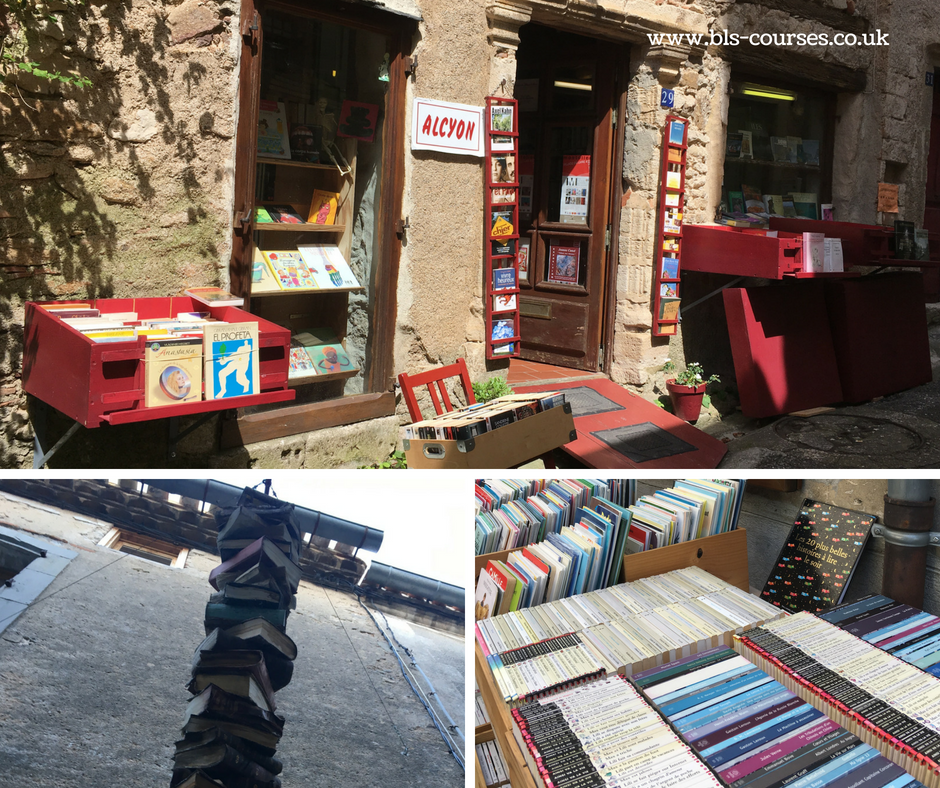
Montolieu is a charming village in the Aude département of France – half an hour’s drive from World Heritage Site, Carcassonne.  The utopian brainchild of bookbinder Michel Braibant, since 1989, Montolieu has been known as the “Village du livre”, or Book Village.  This village of 800 inhabitants boasts more than 10 independent, second-hand bookshops, a bookmaking museum and numerous art galleries and jewellery/curiosity shops too.  It is also located in a beautiful setting, with the Provencal countryside very close by and a river running beneath the village that visitors can sit by and swim in at their leisure!
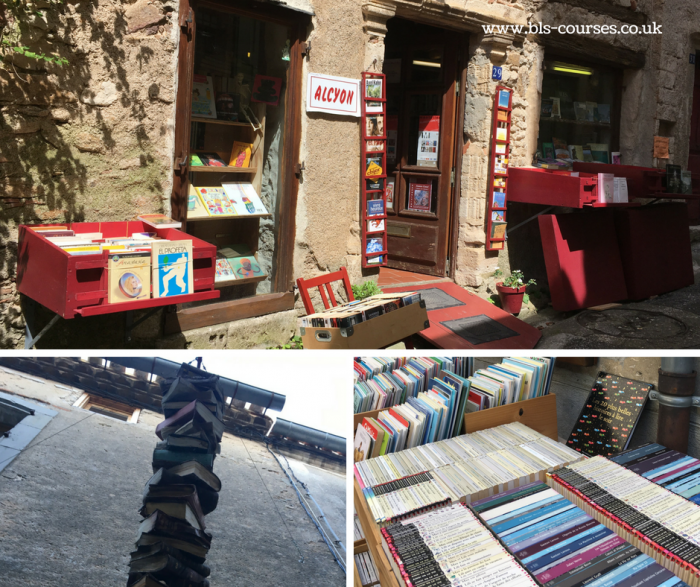
Intended as a way to reverse the decline of this small village in the South of France, the Book Village idea has created a thriving tourist attraction that also hosts literary events – conferences, authors’ visits, exhibitions, lectures, book fairs, children’s literary workshops and an educational book trail.  Since 1991, over 50 buildings have been renovated and many have been turned into accommodation for the 52,000 tourists that visit every year.  The old paper mill has also been brought back into use and there are several artists and bookmakers in the village.

I spent a long weekend there very recently and wanted to share my thoughts on the village with you and perhaps inspire you to visit this wonder of French creativity that can also be a great place to practise your language skills (reading and speaking) if you are learning French.

Great atmosphere

I found that the village’s many bookshops are all very well-stocked and sell everything from collectors’ editions of La Fontaine’s Fables to pocket editions of the most famous (and not-so-famous) French authors.  There are antiquarian and new books, non-fiction and fiction books, children’s books, comic books, novels and more.  Most of the works on sale are in French but there are also a fair amount of books in other languages, mainly English, and occasionally Spanish or other languages too.  The booksellers take pride in their work and only choose the best books but they are all very reasonably priced.  They are also happy to chat about their books, or books in general, so it is a good opportunity to practise speaking French.  A lot of the booksellers speak good English as well as French, so even if you are not learning French, you can talk to the shop owners and likely find a book you like too – you might even get a recommendation.
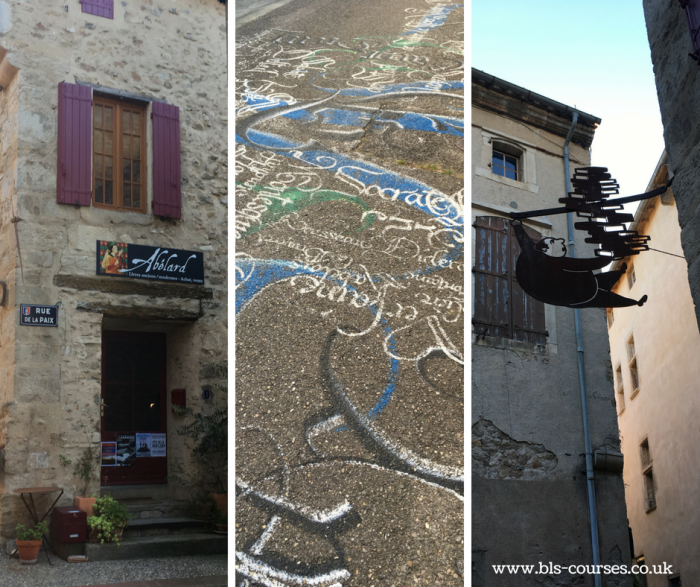
The atmosphere in Montolieu is very relaxed and jovial, and everyone is happy to have a chat and will at the very least say “Bonjour” as you pass by.  The village is also very cosmopolitan; I was told that 25 different nationalities are represented among the residents.

Lots to see and do

The bookmaking museum (to give it its full title, the “museum of bookmaking as an art and a profession”) is worth a visit as it explains the history of bookmaking and celebrates the beauty and charm of books and reading.

I went to Montolieu at the end of June, which is a very busy time of year because there are several festivals going on that everyone can participate in for free (or almost free).  While I was there, I went to the “Fête de la Musique” (music festival) on 21st June, where there are street concerts and music in almost every venue; the “Fête de la St Jean” (Saint John’s Fête) which consisted of a huge plate of paella, music from a brilliant brass band, fireworks and dancing on the local sports field, all for €15; a “vide-grenier” or car-boot sale in the middle of the village and a book launch in one of the restaurants, followed by wine-tasting and nibbles.  I was told that there are events on all through the year, so you don’t have to go in June to join in the festivities; in nearby Carcassonne for the whole of the month of July there are three nightly concerts, two of which are free and which attract big names like Sting, Elton John, Simple Minds and Beth Ditto to name but a few.  Then, in August there is the Montolieu village fête, three days of non-stop music that goes on well into the night.

Where to go

I stayed at the lovely Maison de Mallast guest house, which has several princely rooms in the 18th-century French style and a garden restaurant where they serve fish and chips at the weekend.  There are also numerous other hotels and guest houses to choose from, in and out of the town centre.
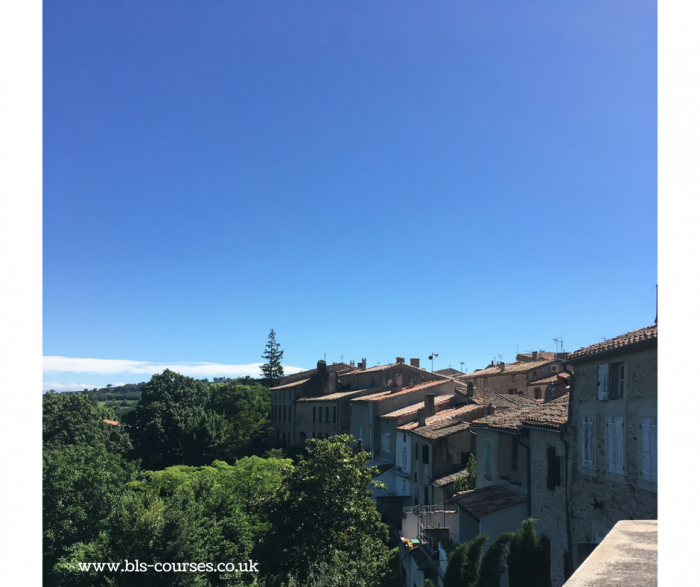
Around Montolieu, the places to visit are Carcassonne and other beautiful French towns, Saissac and St-Denis.  We did not hire a car this time (the taxi from the airport was €35) but we would like to go back and hire one next time to have the freedom to travel around (although there was such a lot to do in Montolieu that we did not need to go anywhere else for the 4 days we were there).

All in all, my trip to Montolieu was both enjoyable and educational as I learnt more about bookmaking and brought a few French books home to keep me going.

My next trip…

Montolieu is not the only Book Town in Europe – two others that are nearby are Redu in Belgium and Hay on Wye in Wales (the first ever Book Town) that are also a must for booklovers and served as inspiration for Michel Braibant when he came up with the idea for Montolieu Book Village.

Suzannah Young
February 7, 2018

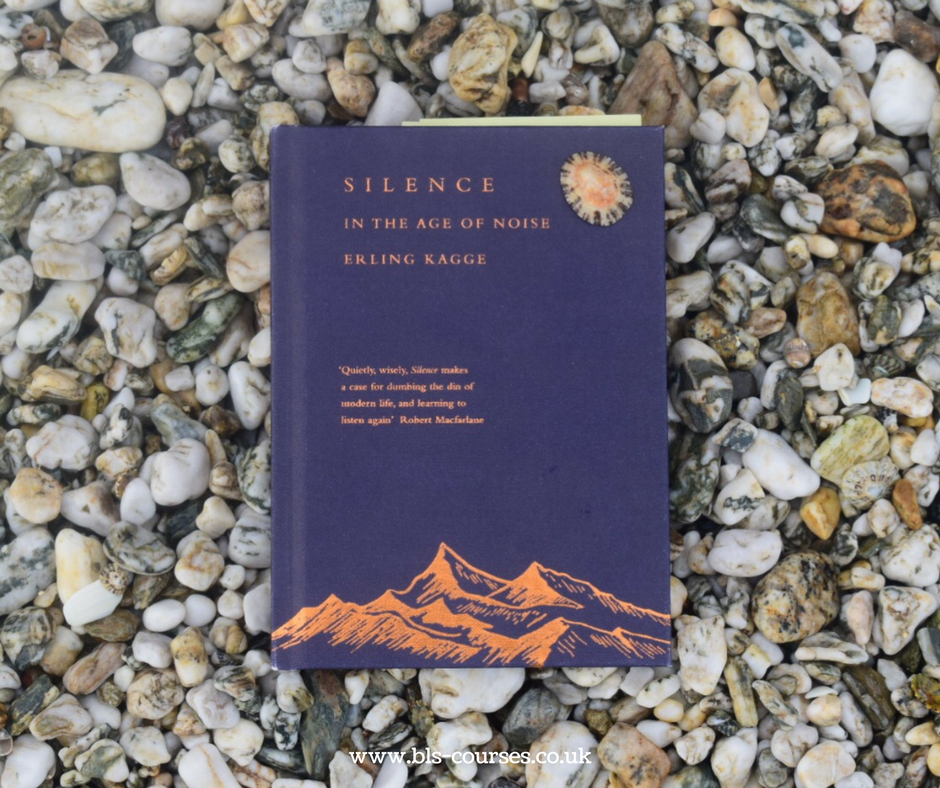
Book Review: Silence by Erling Kagge

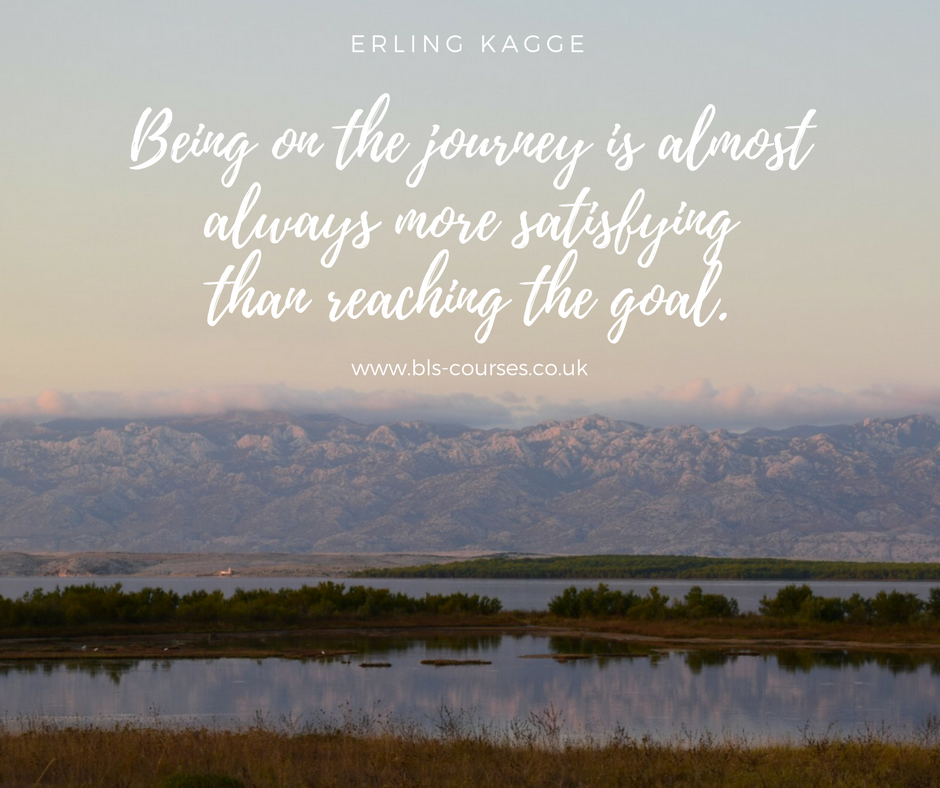
I read this book in one day and couldn’t to put it down because it was so fascinating. The book is written by Norwegian explorer Erling Kagge who once spent 50 days in silence walking across Antarctica. The author explores the idea of silence by answering some fundamental questions: what is silence? Where can we find it? And why do we need it? He finds answers not only in his solo travels, but also in his busy life back in Norway. The book is written in a poetic and philosophical style yet it never loses its attachment to realism. One of my favourite quotations is: “Being on the journey is almost always more satisfying than reaching the goal.” (p. 126)

Erling Kagge, Silence. In the Age of Noise. UK, Viking, 2017.

Written by Kinga Macalla

March 15, 2017

Book Review: My Reading Companions to Prague

Prague is a fascinating city. It’s beautiful and magic, but full of paradoxes. Reading about Prague is like discovering some secret spot that was once internationally recognised for its intellect, mystery, architecture and culture. Let me take you on this reading journey to discover Prague once again.

book review-Reading Companions to Prague 1Pocket Rough Guide. Prague.

I’m in love with these pocket guides. They’re super practical (size-wise too!), yet with many photographs, maps and useful details. You can follow their ‘Best of…’ sections or read district by district. The best part is that you have cafe and restaurant recommendations linked with a particular part of the city. I must say it’s very useful!

Magic Prague by Angelo Maria Ripellino

A classic. One of the most important books on Prague was written by Angelo Maria Ripellino, an Italian Slavist. It’s not an easy read, but it’s truly fascinating to uncover the mystery of Prague with Ripellino. The author has an amazing knowledge and understanding of the history and culture of the city, without forgetting its legends and mystery. After all, it is Magic Prague.

Prague Pictures. Portraits of a City. by John Benville

Prague Pictures by John Benville is a selection of 6 essays capturing the magic of the city: from recent years and the Cold War period to historical and scientific times (I only need mention two astronomers: Kepler and Brahe who worked together in Prague). It’s a fascinating read, as Benville presents his selective pictures of “this mysterious, jumbled, fantastical, absurd city on the Vltava.” (p. 9)

Prague. A Traveller’s Literary Companion. Ed. by Paul Wilson

“A city is like a person: if we don’t establish a genuine relationship with it, it remains a name, an external form that soon fades from our minds. To create this relationship, we must be able to observe the city and understand its peculiar personality, its ‘self,’ its spirit, its identity, the circumstances of its life as they evolved through space and time.” (Ivan Klíma, “The Spirit of Prague”, p. 212)

What are your favourite reading companions to Prague? Please let me know in the comments below.

Written by Kinga Macalla

January 11, 2017

Book Review: My reading companions to Crete

What did I read when I travelled to Crete? A rather eclectic selection of travel writing, which I enjoyed reading and from which I learnt a lot more about Crete.

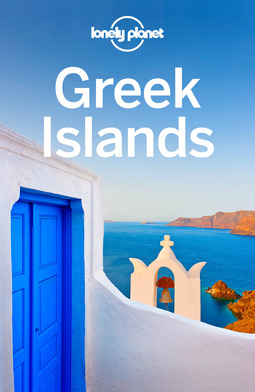
Greek Islands, Lonely Planet

I think I have a good relationship with the Lonely Planet guidebooks. I’ve been using them for a while and find them easy to use and follow, but I must mention that I only read their sight-seeing suggestions, I don’t check their recommendations on restaurants or accommodation.

book-review-greek-travel-books-1

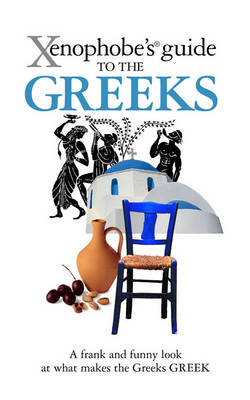
Xenophobe’s Guide to the Greeks by Alexandra Fiada

If you read this blog, you will know I love this series and I adore the Xenophobe’s Guide to the Greeks written by the Athens-born Alexandra Fiada. The author introduces her culture with all the quirkiness it brings and entertains the reader with many examples of the funny habits, customs or obsessions the Greek have. A very pleasant read.

book-review-greek-travel-books-2

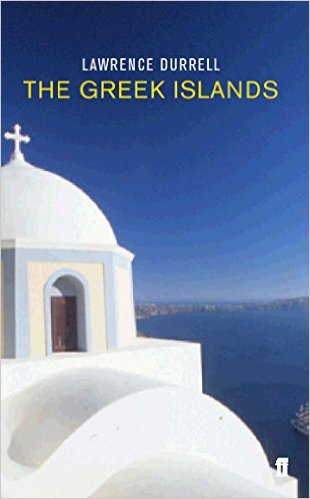
The Greek Islands by Lawrence Durrell

First published in 1978 and even now The Greek Islands by Lawrence Durrrell still gives us a flavour of the Islands. The chapter on Crete is a 50-page-long description of Cretan life, character, scenery and associated myths (with particular attention to the Minotaur: a half-man, half-bull creature). It is an informative, interesting read with some thought-provoking questions which Durrell himself attempts to answer.

book-review-greek-travel-books-3

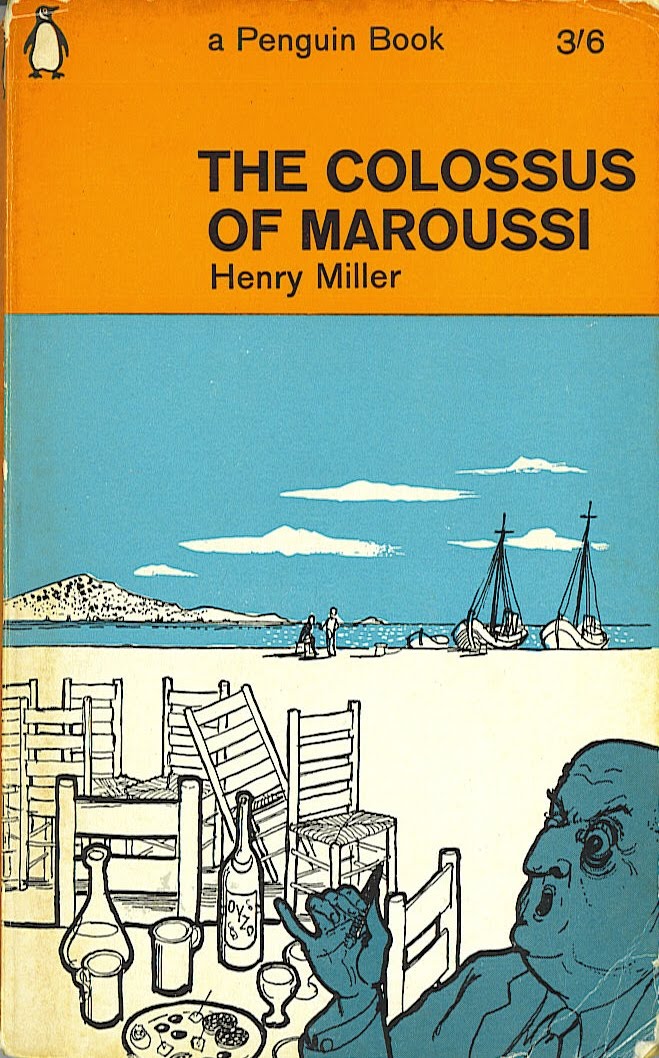
The Colossus of Maroussi by Henry Miller

Henry Miller was a very good friend of Lawrence Durrell, so I decided to also read about Miller’s travels to the Greek Islands in 1939. It is a beautifully written story of his life on the Greek Islands with some philosophical digressions here and there, like “I was never more certain that life and death are one and that neither can be enjoyed or embraced if the other be absent.” An excellent read, to be enjoyed on a deserted beach, perhaps?

book-review-greek-travel-books-4

What are your favourite reading companions to Crete? Please let me know in the comments below.

Written by Kinga Macalla

May 11, 2016

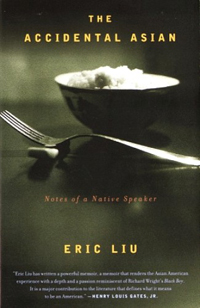
Book Review: The Accidental Asian by Eric Liu

Eric Liu is a monolingual American whose Chinese parents emigrated to the USA and lived there for the rest of their lives. In Liu’s memoir, The Accidental Asian, he presents a series of essays on ethnic identity, assimilation and “Chinese-ness ”. He chose topics that are particularly close to him, to his experience and to his unique family and life situation.

The_Accidental_Asian_cover

I found the extracts devoted to the Chinese language really fascinating. Eric Liu is not bilingual; he speaks and understands some Chinese, but not fluently. In fact, he expresses his surprise in the book at how little he could understand his Chinese grandmother, Po-Po. We also learn that he is unable to read a Chinese memorial book about his father’s life. I suppose  his complete assimilation had its price: he lost this common skill binding him to his family and ancestors.

I would definitely recommend this book to any parent who is hesitating as to whether to raise their child multilingually and also to anyone who is interested in multilingualism, multiculturalism and “Chinese-ness”.

Written by Kinga Macalla

April 6, 2016

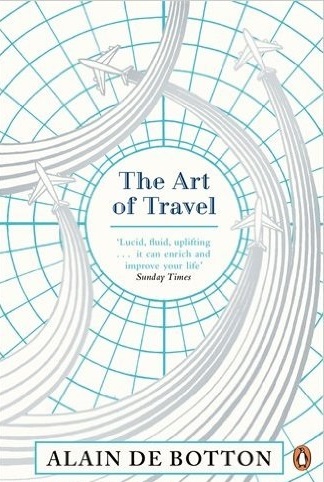
Book Review: The Art of Travel by Alain de Botton

Like any “Art of…” book, this publication focuses on how to, in this instance, travel better.

It takes the reader on a fascinating intellectual journey through ideas, thoughts, paintings, literature, cities, countries and much more.

I will say no more other than that it was a pleasure to read.

Book Review The art of travel

Written by Kinga Macalla