Tag Archive: Books

March 16, 2016

Interview with Multilingual Matters

Multilingual Matters is an international independent publishing house with lists in the areas of bilingualism, second/foreign language learning, sociolinguistics, translation and books for parents.

Most publishing companies tend to be based in London. Why did you choose Bristol?
The company was originally based in Clevedon where the company’s founders Mike and Marjukka Grover lived. When they retired and their son Tommi Grover became Managing Director we moved our office to Bristol as that’s where the majority of the staff lived.

As your publications are highly specialised, are your staff also experts in the area?
We are not all specialists in applied linguistics and tourism studies, our expertise lies in publishing not the world of academia. All our books are peer reviewed by academics working in the field to ensure that the content is accurate and appropriate.

Are all your publications written by academics or are other professionals also considered?
The majority of our books are written by academics but we do publish a small number of books aimed at parents and teachers, some of which are written by non-academics. These books are usually for a more general audience and are more accessible to the general reader. The most popular of these titles is A Parents’ and Teachers’ Guide to Bilingualism by Colin Baker which is a guide for parents bringing up their children with more than one language or teachers working with multilingual children.

Do you organise any events, such as meetings with authors or discussion forums?
We don’t tend to organise our own events but we attend a number of conferences every year where we meet with authors and often we participate in a publisher session where we advise academics, particularly younger postgraduates, on the process of academic publishing and how to get their research published.

What would you say are the most interesting aspects of working in publishing?
Working for a small independent publisher allows for a lot of variety and flexibility that isn’t always possible in bigger publishers. It’s also great to work with the same people over several years so you can build good relationships – both with colleagues in the office and authors in the academic world.

How has the publishing sector changed in the era of e-books?
People have been saying for decades that the increasing popularity of ebooks will cause the death of the print book but so far that hasn’t happened although we are selling fewer print books and more ebooks all the time. More university libraries are purchasing electronic content for students and many of our customers prefer to read books on a tablet or e-reader rather than in print these days. However, we’re pretty sure that the print book isn’t going to disappear any time soon!

Thank you!
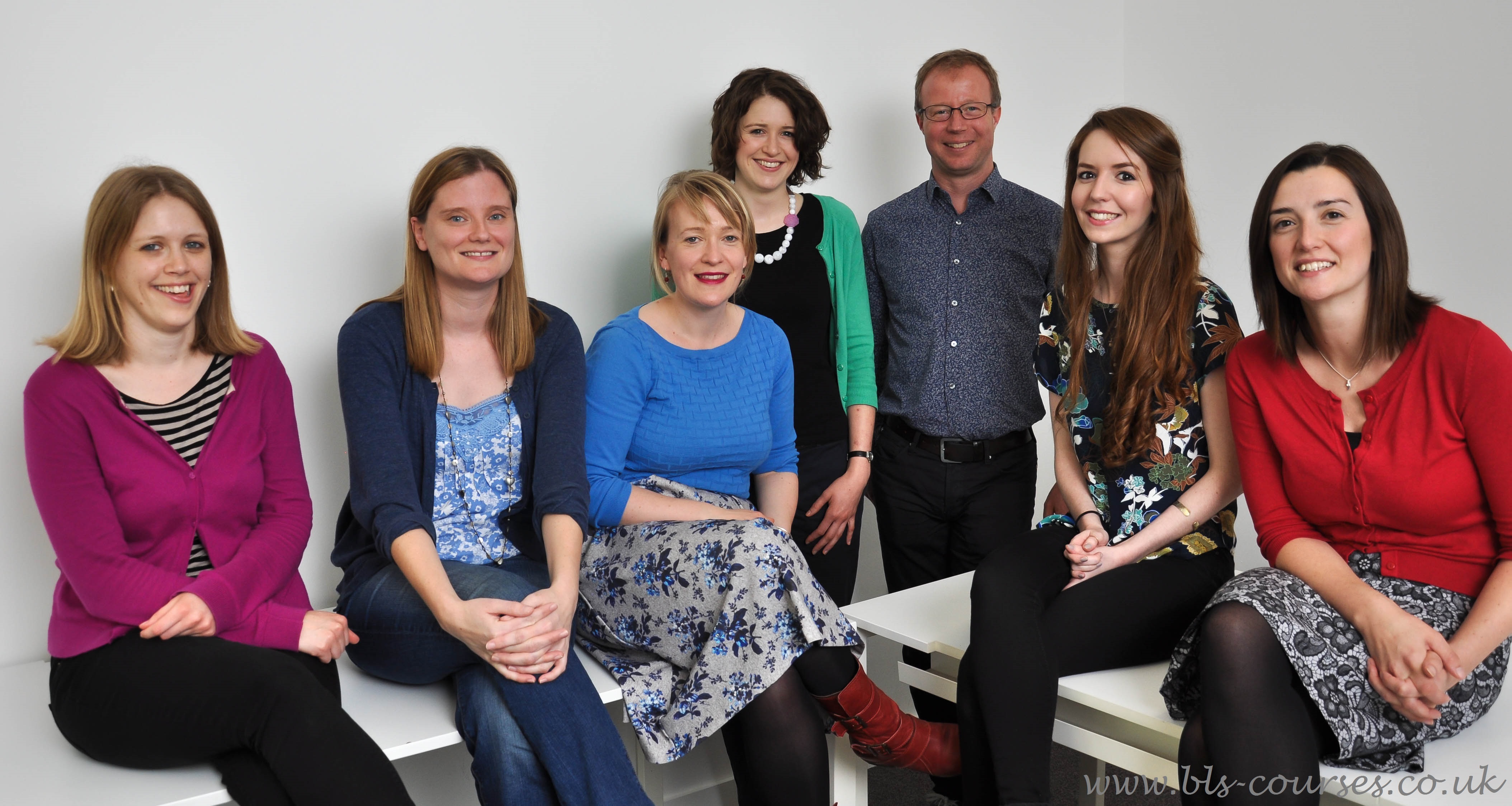
Multilingual Matters -- photo

Interviewed by Bristol Language School  
Photo courtesy of Multilingual Matters
March 9, 2016

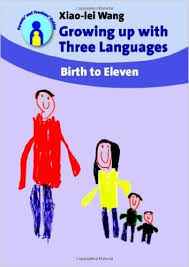
Book Review: Growing up with Three Languages by Xiao-Lei Wang

Raising children bilingually sounds challenging enough, but trilingually? Xiao-Lei Wang and her husband decided to teach their children their heritage languages: Chinese and French, while living in the USA. They were very serious about this project and gave their full attention and creativity to make it work for their boys who are now trilingual! Xiao-Lei Wang described their experience in the book Growing up with Three Languages. Birth to Eleven and says that one of the motives behind this publication was the lack of successful examples of multilingual upbringing practises. By writing this book Xiao-Lei Wang wanted to help parents discover the possibilities of raising multilingual children. This is not to say that the task in itself was somehow easy and without difficulty or frustration, rather it was overall an enjoyable and rewarding process.

Growing up with three languages

Growing up with Three Languages was recommended to me by a friend who is planning to raise her daughter trilingually and found some of the book’s guidelines very useful. I particularly enjoyed its style, case studies, real-life examples, friendly reader approach and long lists of resources. I would point out however that the addition of an all-in-one bibliography would have been useful.

The author highlights a number of key factors on the process of raising children trilingually. Firstly , if we are planning to raise our children multilingually, we must ask ourselves a number of questions: from our reasons and motives, practicalities and teaching methods to our children’s names (yes, that is important, too!) and then deciding whether they should be going to a supplementary school or not. Secondly, let’s make the whole process as interesting, enjoyable and also positively challenging as we can, so that it does not feel like a chore both for us and for our little ones. Thirdly, we should not forget that communication should always be the most important priority and that language learning is a life-long process (I certainly agree with this!).

I would definitely recommend this book to any parent who is planning to raise their children multilingually, and it is an undeniably helpful resource for those whose heritage languages are Chinese or French.

Written by Kinga Macalla

November 24, 2015

Interview with Writer & Illustrator Ella Frances Sanders

As a linguist, I found your book particularly interesting. Was your work linguistically motivated in any way? Do you have an interest in translation?
That’s lovely to hear, thank you! I suppose in retrospect, the book was linguistically motivated without me necessarily realising—but I think Lost in Translation is often picked up by people with no experience in translation, or people who only speak one language, and it was important to me that the book crossed the boundaries and elusiveness that, for a lot of people, sometimes accompany faraway cultures or languages. It was important that people felt able to connect with ideas that came from a place other than the one they grew up in. My own interest in language and translation really grew alongside the book, because everything happened very back-to-front. I wasn’t planning on writing a book, but after a small blog post I wrote on the topic of untranslatable words went viral, it quickly became the plan—when the universe gives you an opportunity that seems far too good to be true, you take it.
ella
 Why did you choose those particular words and languages?
The 52 words in the book were ruthlessly culled from a list of over 200 possibles that I compiled during my frantic research phase (I researched, wrote, and illustrated all the content for the book in less than 3 months). The final words were chosen for various reasons, but most of the time they simply seemed to be universal feelings or emotions, and many had great illustration potential. At one point I wanted to have 52 different languages in the book but ach, German has far too many great ones.


 Do you have a favourite untranslatable word?
I think this depends, and changes. A favourite of mine from the book is the Japanese ‘boketto’, which is to stare vacantly into the distance and not really think of much—I find myself in this position far too frequently. A favourite that isn’t in the book is ‘ayün’, a word from the Mapuche language which literally means ‘dawn’ or ‘rising sun’. It equates to ‘love’ but carries all these nuances about illumination and beauty, and also invokes conscious speaking or action—it’s as complicated as it is beautiful.


 You call yourself a writer out of necessity and an illustrator by accident. Would you like to expand on that?
A long story cut short, my apparent career as an illustrator was not entirely planned, while on the other hand, I have always written things down on paper—stories, life, people. My need to write often feels much more severe than my need to draw, although over time I’ve found that they complement each other wonderfully… more than I had ever hoped. I feel incredibly lucky to be in this position, where I can practice and develop both my great loves together.


 What do you like most about your work? What’s the typical day like for you?
Most of all, I love the flexibility my work gives me in terms of time and location; during the last two years I have lived in Morocco and Switzerland, and have now settled for now in the UK, which is where I grew up. But inks do not travel well on airplanes, and I’ve found this out the hard way, so there are definitely some limitations when it comes to throwing yourself around the globe and keeping your work intact along the way. Sometimes coming and going from the same place is good—I try to note the beauty which lives in the monotony of everyday tasks. As for a typical day, I don’t think there is one. I certainly don’t keep a 9-5 schedule, because some days I want to work late, and other days I want to be up and working before the city has risen. But all days involve some illustration, some writing, some walking, and a lot of tea.


 Can you tell us anything about your second book that you’re currently working on?
Well. I can tell you that it will be a companion of sorts to Lost in Translation, and that they will look splendid together on a bookshelf. It’s different, but in a similar vein linguistically speaking. If things go to plan, the book will go to print at the end of March next year, and then will be out in mid-September. I think I’ll allow myself to start getting excited soon.
Thank you.


To follow Ella’s lovely work visit her website.
If you would like to purchase a copy of Lost in Translation, you can do so here.
Interviewed by Alicja Zajdel
June 14, 2014

Welcome to Bristol Languages!

Welcome to Bristol Languages, a blog run by language enthusiasts. We are linguists: translators, interpreters, language tutors, travellers, language learners and university students who decided to embark upon this fascinating journey of writing a blog, as we want to understand better the genius that each language represents (Humboldt) and explore the different world views that every language expresses (Sapir-Whorf).

We want to share with you our interests and by publishing here, we want to inform you about interesting language events and worth-reading books, give you practical learning tips and conduct interviews with passionate linguists.
We hope you will find our blog interesting. Enjoy reading!
(Bristol) Languages Enthusiasts
Pencils