Tag Archive: Czech

February 26, 2020

Learn a language: Can I learn Polish, Czech, French, Russian & Portuguese on YouTube?

Today, I’d like to see if we can improve our language skills via YouTube channels.  I hope to inspire you to use some free resources that are available online. I’ll first focus on the languages that I’m familiar with (Polish, Czech, French and Russian) or plan to learn (Portuguese). Yes, I’m giving myself a new language challenge for the coming 8-12 months: to learn some basic Portuguese. I’ll write a new blog post on my progress soon! Today, I’ll focus on YouTube channels and will provide one or two online resources per language to inspire you to practise your language skills more:

Czech: Basic greetings & Americans speaking Czech

Polish: A smiling intro to Polish greetings and Japanese uni students learning & speaking Polish

French: To listen and learn more street French

Portuguese: Students tend to have a preference whether they wish to study European Portuguese (that one that’s spoken in Portugal) or Brazilian Portuguese (spoken in Brazil).

European Portuguese: Basic Portuguese from the Portuguese

Brazilian Portuguese: To start from scratch & for the joy of listening to the melodic Brazilian Portuguese

Russian: A short & fun intro to basic Russian

These are my findings. What YT channels / podcasts / online resources do you use to improve your language skills in Polish, Czech, French, Portuguese or Russian? Let me know in the comments below.

Kinga Macalla
May 4, 2016

On Languages: Czech

The Czech language or čeština is a language which may look and sound difficult: the words’ endings can change, vowels with acute signs have a longer pronunciation and words are written with diacritics. BUT, it is a funny sounding language due to its soft pronunciation, with many words you may already know or which may sound familiar: e.g. muzeum, galerie, sestra, tři, robot, Pilsner, Škoda, Bat’a. What’s more, the stress is always on the first syllable and there are only three tenses: the present, the past and the future!

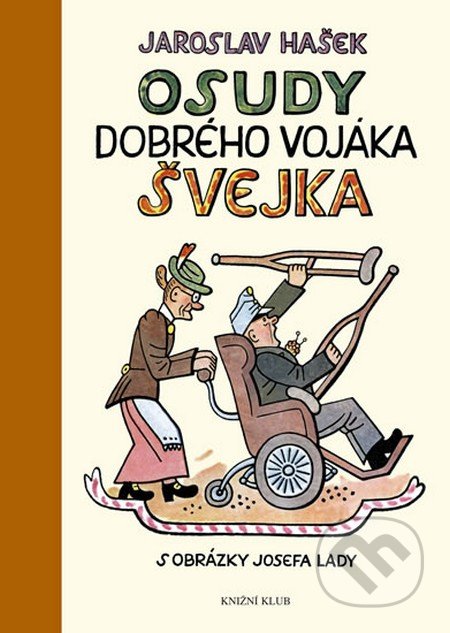
Osudy dobreho vojaka Svejka

The Czech language belongs to the group of Slavonic languages and if you speak Russian, Polish or Croatian, that certainly helps. But, this does not mean that non-Slavonic-language speakers cannot master the language.

In many textbooks, it is said that there are two Czech languages, the standard (spisovná čeština) and the colloquial (obecná čeština). This is a phenomenon that also exists in many other languages: the everyday language is different from the one spoken in formal situations. Yet  in Czech, the difference between the two is indeed visible. If you happen to live in the Czech Republic you can learn it fairly quickly (as you will hear how the natives speak on a regular basis) and if you are living abroad and want to learn Czech for business or to follow the news and read newspapers, then the formal language might be more useful. However, you can always learn both!
Written by Kinga Macalla

September 24, 2015

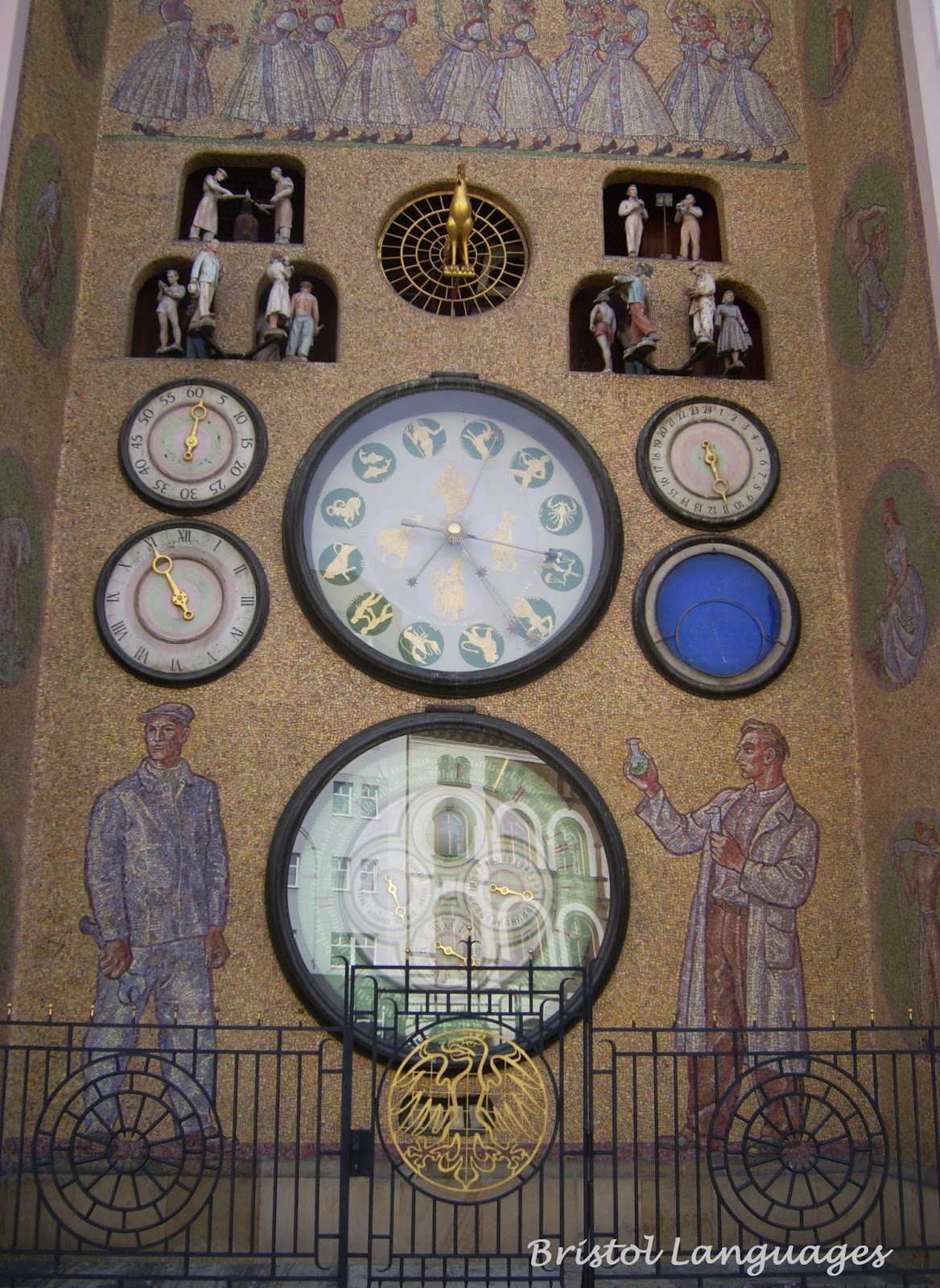
Third Year Aboard: Olomouc, Czech Republic

The first time I went to Olomouc was as a university student and just like my peers, I became fascinated by this small Czech town. To this very day, I cannot say what its charm was exactly, whether it was the beautifully refurbished university library, the cobble stones surrounding the centre and the university or the atmospheric inns with delicious cuisine. Perhaps it was the possibility of experiencing them all at the same time.
I was understandably overjoyed when I found out that my third year abroad will be at Palacký University in Olomouc. I was thrilled with the idea of studying there for the whole year and not only practising foreign languages, but also getting to know the town and the country.
It was a very interesting year academically. As a Socrates-Erasmus student, apart from the compulsory subjects, I could choose seminars I wanted to attend across the department. Among my favourite ones were history of cinematography taught by a truly passionate tutor in the university cinema room, history of theatre in the old building with a theatre stage, political studies where all the stormy discussions happened and Czech literature with an amazing intellectualist-lecturer.
In my free time I travelled a lot, as the train system in the Czech Republic works amazingly well and it is also attractive price-wise. I went to Prague, Brno, Ostrava, but also abroad to Bratislava, Vienna and Budapest. When travelling I became much closer to the idea of Central Europe where everything is ‘centred’ enough that it becomes a new ‘local’. I was utterly amazed by the idea that you could almost bump into a well-known writer or poet in a local café, and that does not only happen in Prague. Localness is felt everywhere, in the form of travelling distance, city & town differentiation, closeness of high culture, ease in making friends. It is also visible in the Czech prose of Bohumil Hrabal, Josef Škvorecký or Jaroslav Hašek where with a pinch of humour you are told a story where the important and serious is greatly mixed with the trivial and silly. Or even the real and fictional, like the extremely popular Czech genius (also a playwright) Jára Cimrman who is a fictional persona created by Czech artists.
As you can see, my stay in Olomouc was a great journey, I see it as my first step into adulthood, but yet under the umbrella of being a university student. Many years later, it still brings a smile to my face and many happy memories. 
Written by Kinga Macalla
Edited by Alicja Zajdel

Photo courtesy of Kinga Macalla 

Olomouc