Tag Archive: Dutch

November 6, 2019

Learning a language: Learn Dutch with BLS online & FREE!

As you remember, we introduced a new series of blog posts (see Spanish, French, German, Russian, Italian, Portuguese, Mandarin Chinese, Arabic & Polish) where we teach you some useful phrases in different languages. Sounds amazing? And it’s DUTCH today!

Do you travel frequently to Brussels or Amsterdam? Are you planning to learn more about the Flemish painters? Do you dream of going for a weekend-away in the Netherlands? If so, we would like you to taste & learn some essential Dutch first. Below you’ll find a list of useful phrases in Dutch (greetings, polite phrases, closed question words, numerals and simple questions & sentences). We also video recorded Victoria, our Dutch tutor, to help you with reading, pronunciation and accent (also available on YouTube). We hope you enjoy this series and that you’ll come and learn Dutch with us! Good luck!

Which language would like you like to learn next? Let us know in the comments below.

Kinga Macalla

February 21, 2018

The Language Journey – Suzannah’s Story (in 6 Languages)

Hello, my name is Suzannah and I’m a linguist and freelance translator.  In this video, I answer questions about my journey to speaking 6 languages. I give one answer in each of the languages I speak: French, Dutch, English, Polish, Italian and Spanish. Firstly, in French, I talk about how I discovered I had a talent for the language and almost accidentally ended up spending some time in France and eventually studying French at university, which opened the door to me learning other languages – something I never imagined I would be able to do when I was a shy, quiet teenager. Then, in Dutch, I talk about the story behind why I started to learn other languages – mainly out of curiosity and thanks to friendships I made, as well as having the opportunity to live and work abroad.  I then give away a few tips on how to learn a language – or at least I explain what works best for me and how I have gone about learning each language – in English. After that I explain (in Polish) why I chose to learn Polish, my latest language: it came down to friendships again; plus, it was/is a fun challenge for me.  Then, in Italian, I talk about the advantages of speaking and learning different languages and what I like best about being able to speak other languages. Finally, in Spanish I reveal how I keep up my language skills and what I do to practise every day so I don’t forget them!  Bon visionnement! Veel kijkplezier! Happy watching! Bawcie się dobrze! Buona visione! Disfrutéis de la película!

Suzannah Young

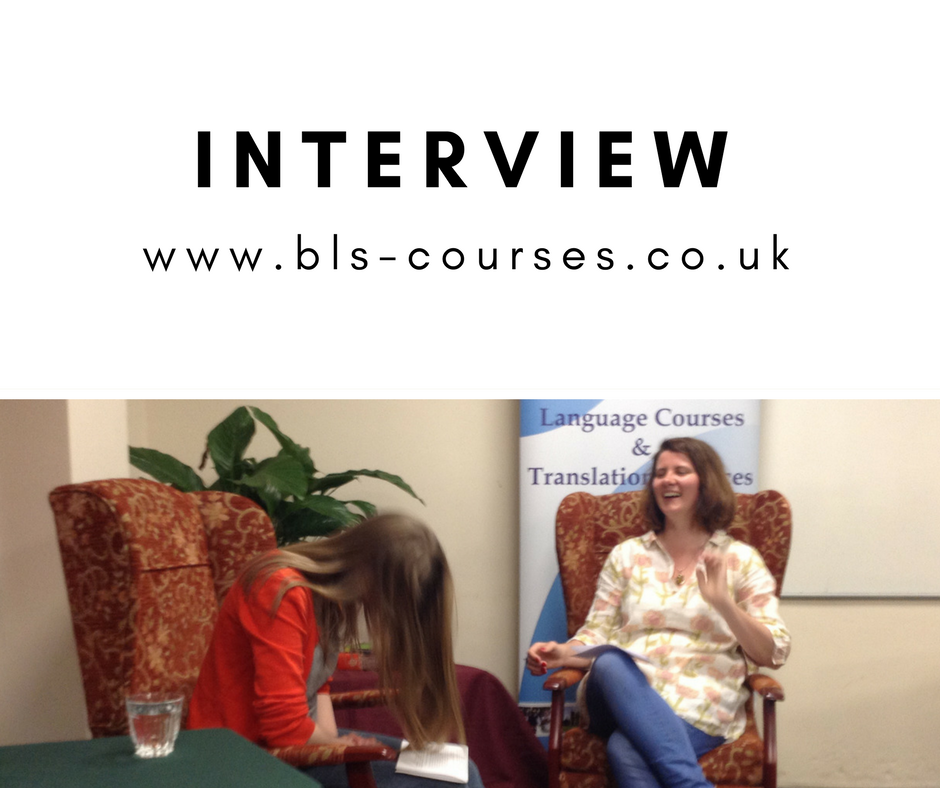
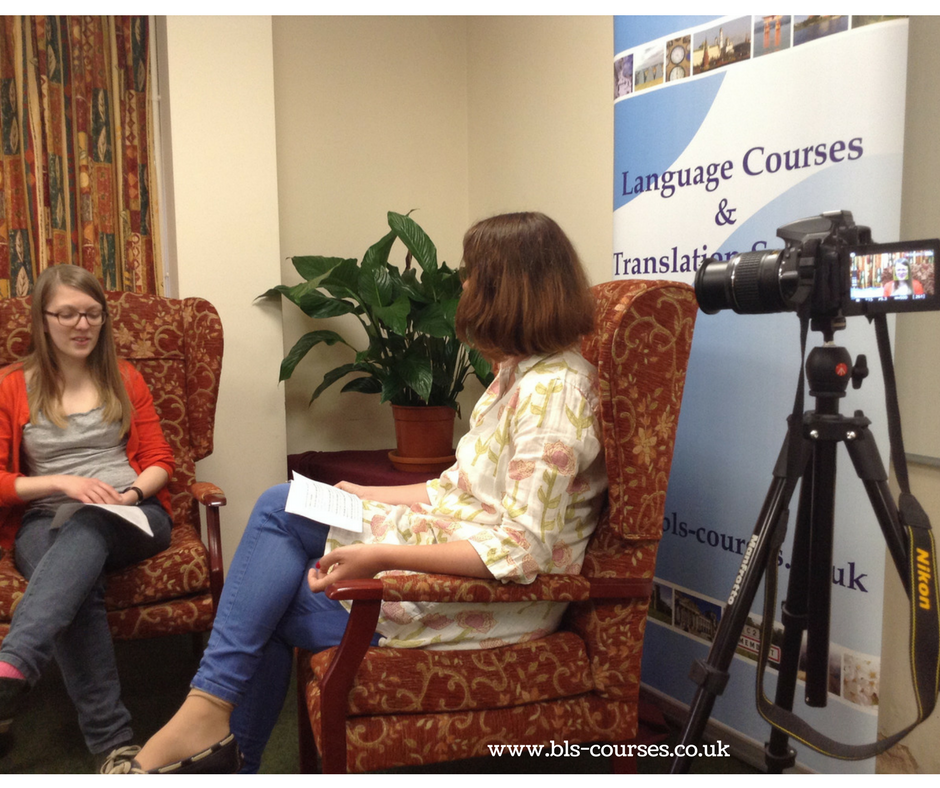
We need your help! Suzannah, our multilingual student speaks 6 languages and we’ve recorded an interview with her speaking them (available on YouTube). But, we need your help with translations from Dutch, French, Italian, Spanish and Polish into English.

Leave your translations here below our blog post and we’ll then add them to our video as subtitles! Good luck 🙂

April 5, 2017

On Languages: The Languages of Belgium

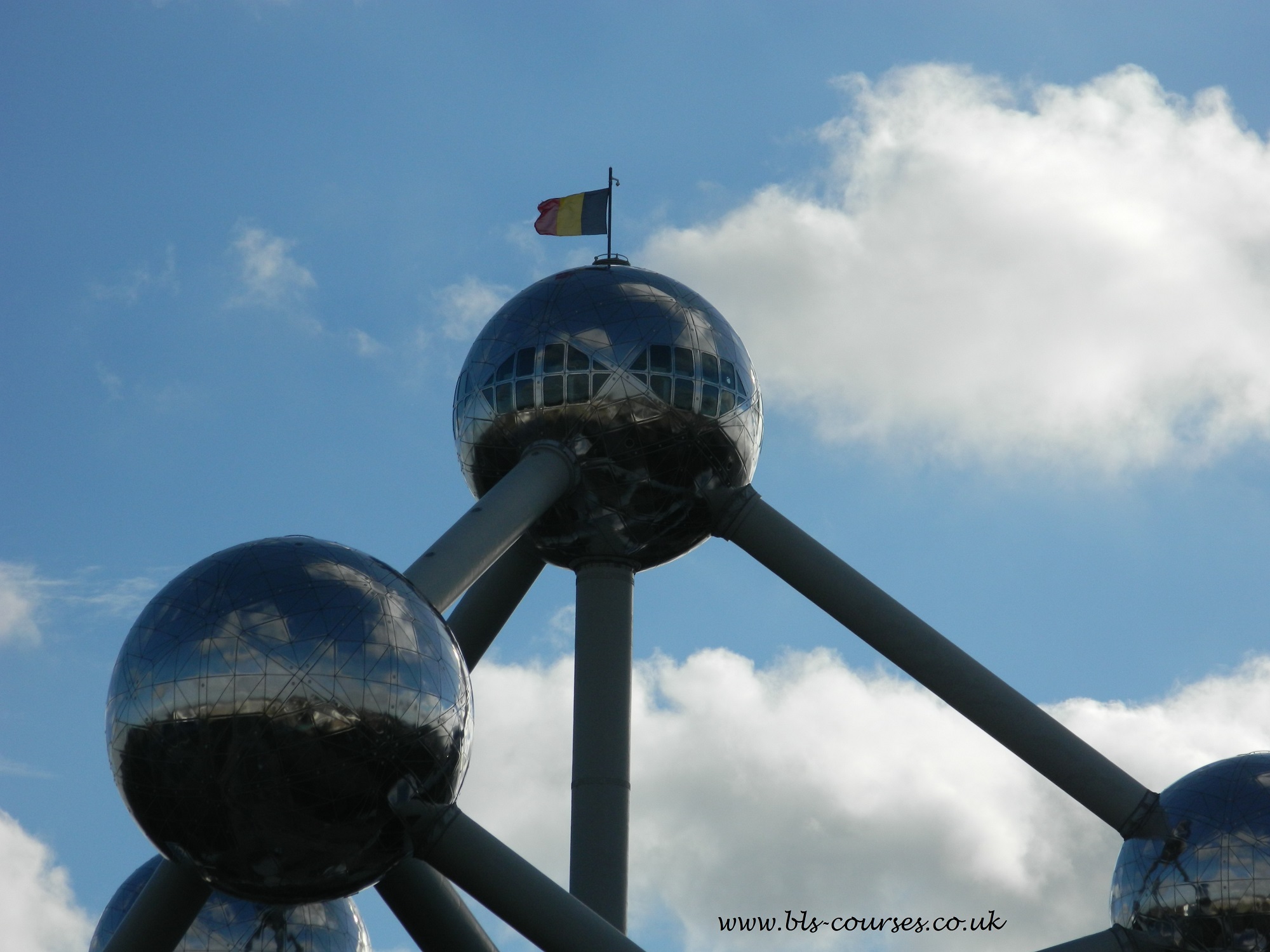
With around 11 million inhabitants over an area of 30,528 square kilometres (11,787 square miles), Belgium is a small, densely-populated country in Western Europe.  It may be small but Belgium has a diverse population and three official languages, Dutch, French, and German.  Its inhabitants also speak a number of non-official, minority languages and dialects as well.  A lot of people in Belgium speak English and it is used as an unofficial language of communication in the Belgian capital, which also happens to be the European capital, Brussels.

DSCN3319

The Belgian Constitution guarantees language freedom in the private sphere. This implies that people can decide themselves which language they wish to use in their household, among friends, in the media, and for cultural, economic, commercial and religious activities. Before the federal (linguistically-defined states) structure and language legislation introduced in the 20th century, French was the only language used by the authorities. Now there is a lot of legislation around Dutch, French and German, although the constitution does not explicitly mention which languages enjoy official status.  Article 4 of the constitution does divide the country into linguistic areas: “The French-speaking area, the Dutch-speaking area, the bilingual area of Brussels Capital and the German-speaking area.”

6.25 million people live in the Flemish Region (Dutch language area), 3.5 million in the Walloon Region (French and German language area) and 1.09 million in the Brussels-Capital Region (bilingual area).  This means that 59% of Belgians belong to the Flemish (Dutch-speaking) Community (Flanders) in the north, 40% to the French-speaking Community (Wallonia in the South and part of Brussels) and 1% to the German-speaking Community (in the Ardennes area).  Alongside these official figures, there are migrants and their children living in the country who speak other languages (as well as one or more of the official languages), and speakers of other Belgian dialects. The capital, Brussels, is located in Flanders but 80% of its inhabitants speak French as their first language.  French is also used as a lingua franca in Brussels, as is English.  All public services and information in Brussels are available in both French and Dutch.  Many road signs and other notices around the rest of Belgium are written in both French and Dutch too.  Like many capital cities, Brussels is actually multilingual, especially as it is the home of many European institutions and there are a lot of foreign officials and diplomats living there.

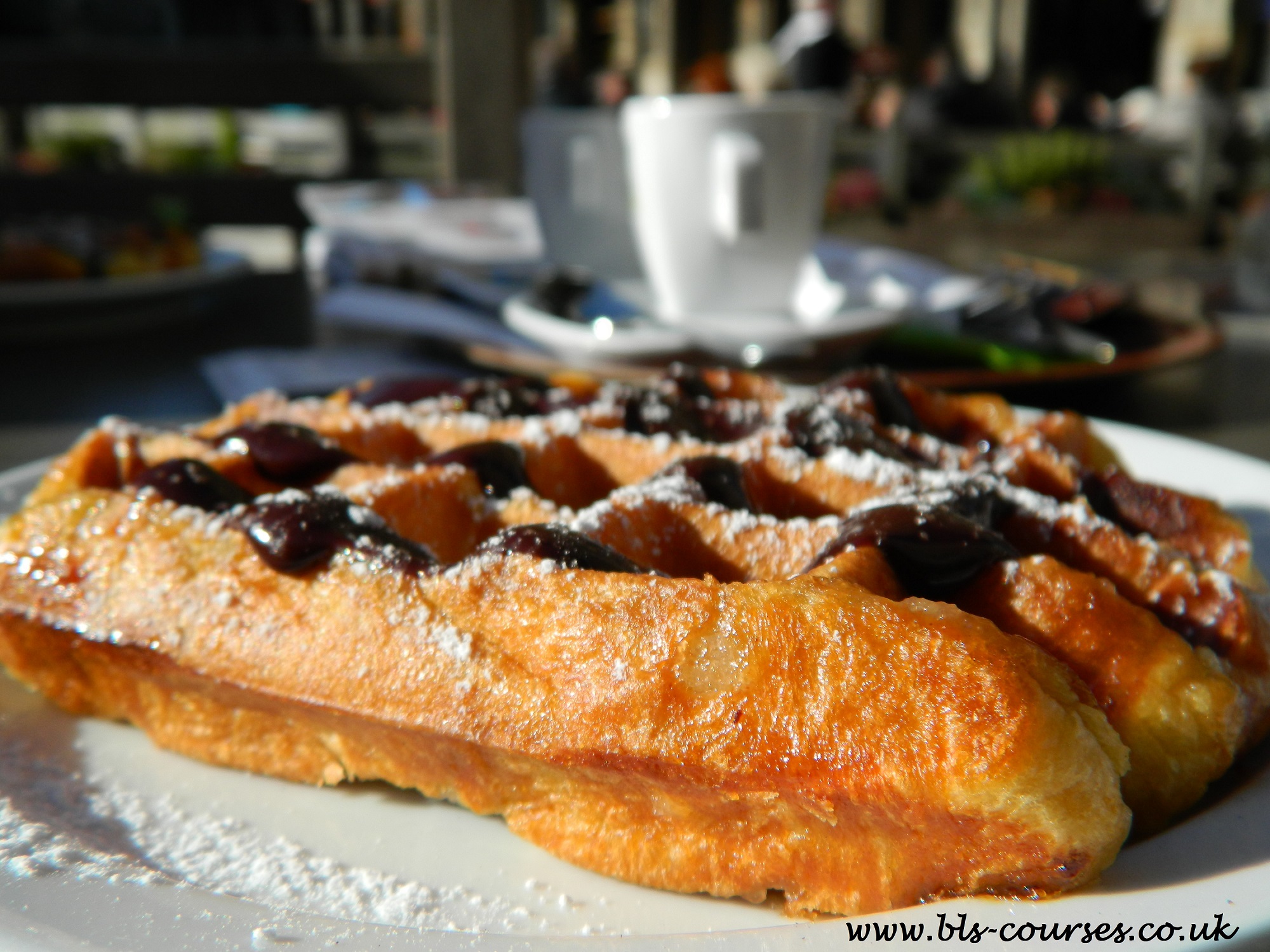
Belgian Waffels 2

The standard form of Dutch used in Belgium is very similar to that spoken in the Netherlands but is often referred to as Flemish.  There are a lot of dialects in Flanders too.  The main ones are Brabantian, West Flemish, East Flemish, Antwerp and Limburgish.  Walloon, a dialect closer to French and mostly spoken by older people in rural areas, is used by 33% of population. Walloon has no official status in Belgium and is not used in education, though there are many evening classes in it.  The majority of the population of Wallonia can understand the language, about a quarter can speak it and a few can write it.  Luxembourgish is spoken by around 0.5% of the population, but the language has no official status, like Picard, Low Dietsch, Lorrain (also called Gaumais locally) and Champenois that are also spoken there.  About 10% of the Belgian population are non-native, and languages spoken include Italian, Spanish, Greek, Arabic and Turkish.  Antwerp, the capital of Flanders, also has one of the few Jewish communities worldwide that still speaks Yiddish as its dominant language.

Words which are unique to Belgian Dutch and Belgian French (i.e. not found in the varieties of Dutch and French spoken in other countries) are called belgicisms.

More information on the languages of Belgium can be found at http://languageknowledge.eu/countries/belgium

Written by Suzannah Young

December 7, 2016

On Languages: Dutch

The Dutch language is a West-Germanic language (others in this family include English, Frisian, German and Luxembourgish) and its use goes back to the fifth century. Modern Dutch (Nederlands) is spoken by about 23 million people as a first language in the European Union —including most of the Netherlands and Flanders in the north of Belgium – and by another 5 million as a second language.  The Dutch Empire took the language around the world from the 17th to mid-20th centuries.  It is the native language of the majority of the population of Suriname, and also holds official status in Aruba, Curaçao and Sint Maarten. There are Dutch-speaking minorities in France, Germany and Indonesia and up to half a million native speakers are spread across the United States, Canada and Australia.

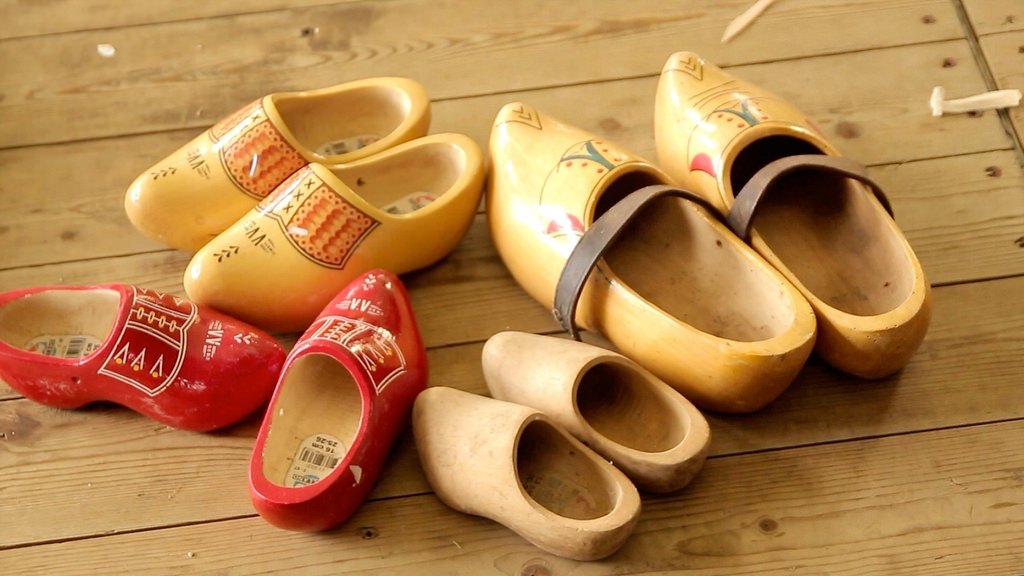
on-languages-dutch

There are several regional variations in spoken Dutch, the most significant of which is Flemish (in Belgium), which is spoken by around ten million people. Standard Dutch (Standaardnederlands or Algemeen Nederlands) is used for public and official purposes, including in schools and universities. A wide variety of local dialects are used in informal situations.

Most Dutch vocabulary is Germanic but also has loans words from Romance languages like French (and Latin).  It has more of these than German but fewer than English.  Because of contact between the Netherlands and Belgium and English-speaking countries throughout history, there are a lot of words in English that are of Dutch origin, especially names for everyday things like fruit and vegetables or colours.  This can make it easier for English speakers to remember Dutch vocabulary because a lot of it is familiar to them.  Some examples of English words of Dutch origin are ‘cookie’, ‘coleslaw’, ‘luck’, ‘mannequin’ or ‘Santa Klaus’.

Read more about the Dutch language on the BBC website and a comprehensive history of the language on the Dutch literature digital library.

How the language works

Dutch spelling is phonetic so you can tell how a word is pronounced by looking at it, and you can spell words easily if you listen to them!  Some sounds are a bit tricky for English speakers to pronounce, especially vowel sounds, but get easier with practice.  Examples are the ‘g’ sound, which is a bit like ‘ch’ in ‘loch’ and ‘ui’, which is a bit like ‘owe’ but not quite!  Learn more about the Dutch alphabet, spelling and pronunciation here.

Dutch grammar is similar to both English and German grammar.  Like English, it is simpler than German grammar, especially as it does not really use cases.  Features shared with German include three genders and a similar word order, such as putting the verb at the end of the sentence.  Learning how to speak Dutch is thought to be easier than learning German for English people because of its simpler grammatical rules.  I wouldn’t go as far as some people do who say that Dutch is the easiest language for English speakers to learn, though.  I think that can also be a potential pitfall because the languages are similar but are not identical, so it can be tempting to use English grammar in Dutch but that doesn’t work!  Also, the supposed simplicity of Dutch is deceptive: there are two articles for three genders (‘het’ for neuter and ‘de’ for masculine and feminine nouns (but you still have to know whether the thing you are talking about is a ‘he’ or a ‘she’)), and there are a few exceptions to rules that you learn.  Also, academic and literary Dutch has a very high register and is quite stylised.

Why learn Dutch?

There are practical incentives for people from the UK to learn to speak Dutch.  The Netherlands is a major trading partner of the UK and there are Dutch and Dutch-speaking businesses in the UK.   The Department for International Trade (DIT), that helps UK-based companies succeed in the global economy, is based in Belgium.  Belgium is the UK’s sixth-largest export market, worth £10 billion a year. The UK is Belgium’s fourth-largest export market with two-way trade worth in the region of £22 billion.  Learning the language can also help you on your travels.  Nearly a million Brits go on holiday to the visit our Netherlands every year and Brussels is reachable from the UK by train (the Eurostar).  For fans of cycling, canals, tulips, chocolate, windmills, beer, and European history, the Netherlands and Belgium are great places to visit.  Dutch and Belgian writers and film-makers also produce some hard-hitting work.

Where can I learn Dutch?

There are many ways you can learn Dutch.  If you want to learn the traditional way, you will find a long list of Dutch textbooks at the European Bookshop.  You can choose from monolingual (Dutch only) or bilingual (Dutch and English) books.  If you like to learn online, you can start with this introductory class on FutureLearn.  There are also lots of free YouTube videos that explain the finer points of the language.  If it’s vocabulary (woordenschat, literally ‘word treasure/riches’) you’re after, Taalklas (language class) is an online series that helps you learn Dutch vocab through videos and exercises.  They also have YouTube videos.  You can also stock up on lexicon using this free online dictionary.  If you prefer classes, some language schools offer Dutch classes.  Lastly, why not look for a language partner, perhaps through the ‘Nederlanders in BristolFacebook page?

Veel plezier! Have fun!

Written by Suzannah Young

February 17, 2016

Learning Languages – My Story

My name is Suzannah I am a PhD student in Translation Studies.  I speak five languages (English, French, Italian, Dutch and Spanish) and am learning a sixth (Polish).  You may ask how or why I have learnt/am learning them and what I use them for.  What I will say is that I use them all regularly and they are all a big part of my life.  Actually, I don’t know what I would do without them.  It may surprise you to know, though, that it wasn’t always like this.  There was a time when I thought I wasn’t going to carry on learning any languages at all.  In the end, my circumstances changed and I did carry on – and I’m very glad I did because it changed my life!  This is my story.

Learning a Language -- My story 2

Beginnings
I started learning French when I was little, thanks to my parents having got me to watch a bilingual video about an alien who comes to Earth and learns about human life…  This video was the same story in French and English.  It was easy to follow in French if you had watched the English version (and even if you hadn’t) and the storyline and learning material was very clearly presented.  The best thing about it was that it was fun – it didn’t feel like a chore and I enjoyed watching it again and again.  I was learning without even realising it!
Another early memory is that whenever we went on holiday, my parents always tried to learn a few words of the local language and encouraged my sister and me to try the food and appreciate the places we visited.  I am very grateful to them for having done this because I believe they gave me a positive attitude to new languages and cultures and made learning about new people and places a fun thing to do.  Of course, being on holiday helped make it fun!  This attitude has definitely stuck with me.

School Time
We had French lessons at school from when I was 11 but I feel we only learnt a few set phrases and weren’t really given a love for the language.  Nevertheless, I found I understood things quite quickly and did receive some encouragement from the teacher.  The problem was, learning a language was not seen as ‘cool’ at my school and I actually hid my talent from my peers and pretended I found it as difficult and boring as they did!
I got a good mark for GCSE French and luckily decided to carry on to AS Level.  I thought I was only going to do a year but, thankfully I had a very dedicated and enthusiastic teacher who encouraged us to nurture our talent and used interesting learning material like films and newspaper articles – real life material that real French people used.  That made it more relevant to us and made us see that it was a living language.  I carried on to A-Level and did well in it.
As A-Level students, we had the opportunity to go and stay with a family in France.  My host mother was a wonderful lady, she was very supportive and was really interested in everything we did.  She introduced me to literature and a theatre group she was involved in.  We are still in touch today (almost 15 years later) and I have visited her numerous times.
I still didn’t think I was going to carry on with French and thought I was going to do English Literature at university.  In the end I didn’t get the grades I needed to do English and decided to defer my university entry for a year and reapply.  That meant I needed something to do for a year. A friend of my sister’s had just done a placement in France and suggested I do the same.  She gave me the details of a language school and I contacted them.  They signed me up for a three-month language course and a work experience placement.  I enjoyed the life at my host family’s house less than the time before but I made some really good friends at the language school.  A lot of them were Chinese and it was fun to learn about their country as well as learning French together.  They even taught me a few words of Mandarin!  At the time it was funny for me to think that we were able to communicate with each other through a language that was neither of our first languages.

University Life
Thanks to this placement, which improved my French a lot, I applied to do French and English Literature at a different University.  I was accepted and spent three years there.  The language learning experience depended on how committed you were to learning – there were resources available but you had to use them on your own initiative – but we did learn a lot about French culture and society, which helped us to understand the background to the language we were learning.
I spent my Erasmus year in Paris, France.  Initially, I started a work placement but didn’t enjoy it so enrolled in a university.  That was one of the best decisions I have ever made.  If I had stayed on the work placement, I may have got disheartened but as I went to university I met a lot of people my age and made life-long friends.  I was lucky enough to meet a group of friends who I spent every day with – you can say I was really immersed in French culture!  It was a bit difficult following lectures in French at first but I had a trusty electronic dictionary which gave me the definitions of words I didn’t know and I soon got up to speed.  My friends and I started a Spanish class together as well, which was a fun experience – learning a language through a language that was not my mother tongue!  In the summer after my Erasmus year, I went to stay with a friend in Madrid and did a language course – for fun.  That was great too because of the amazing people I met from all over the world.  We had to use Spanish to communicate with each other so it really helped us learn.

After Graduation
When I graduated, I wanted to get a job using my languages so I applied for internships in Brussels, Belgium.  I started an internship at a European NGO, where I would be speaking French and English.  It turned out that they needed my Spanish too.  Initially, I thought I was going to stay there for six months (you can see that this is a recurring theme!) but then I was offered a full-time job and ended up staying for six years!
Belgium has three official languages, Dutch, French and German (and an unofficial one, which is English!)  I was curious to know what the signs I could see in Brussels said, so I enrolled on a Dutch course.  I complemented my learning by listening to the radio and reading newspapers that were readily available.
After a few years in Brussels, I met a person who ran a theatre group in Antwerp.  I started going to the theatre group every week, and it was there that I met my partner, who is Italian.  I moved to Antwerp to live with him, which meant that I could practice Dutch all the time.  I also learnt Italian through my partner and with his family.  I had to speak Italian if I wanted to speak to them, and I did want to speak to them, so that was useful!  I found I learnt Italian fairly quickly because it is similar to French and Spanish so I could already understand quite a lot.  We have a lot of Italian friends and I speak to them all in Italian.
While still in Brussels, I met a few Polish people through work.  We became friends and I realised I was interested in learning their language.  When I moved to Antwerp, I decided to enrol on a Polish course, not least because I wanted to meet people in my new town.  I also wanted to see whether I was capable of learning a Slavic language.  I had learnt three Romance languages and a Germanic language so learning Polish was (and still is) a new challenge for me.

Back in the UK
I recently moved back to the UK and have carried on learning Polish.  I am finding it a bit more difficult to learn than it was to learn the other languages I speak.  This may be because I don’t have many people to practice with.  Learning my other languages went quite quickly because I was able to practice with people around me and, in some cases, I had to speak because there was no other option!  I think it is important not to be afraid of making mistakes and just speaking – but I am finding it a bit hard to follow my own advice in Polish at the moment!!

The Last Word
As you can see, my reasons for learning languages have been enthusiastic teachers and a positive attitude to language learning on the one hand and friendships and a desire to have new experiences on the other.  Being in an environment that has allowed me to be exposed to the languages on a regular basis has definitely been beneficial to my learning.  Speaking other languages has allowed me to meet lots of wonderful people but it has also been useful professionally.  For example, I do translation work sent to me through people I have met abroad.  The most important part of language learning for me, though, is by far the friends I have made.
I hope you can have a similarly positive experience with learning languages!

Written by Suzannah Young