Tag Archive: foreign languages

August 26, 2020

Learn a language: Motivation, self-discipline or habit: which factor do you need to succeed in language learning?

“Motivation is what gets you started,

Habit is what keeps you going.” Jim Rohn

When I was learning languages at university, I often came across articles about motivation and language learning; how to keep learners motivated, how to be motivated to keep learning a foreign language, etc. Then in adult life, when I started running a business, the self-discipline became an important factor, worth improving and knowing more about (in relation to language learning and beyond). A few years ago, when preparing an essay on adult language learning, I read a bestselling publication – Brendon Burchard’s High Performance Habitswhich inspired me to explore the idea more and to implement some new habits into my daily life. So which factor plays the most important role when learning languages? Is it motivation, self-discipline or habit?

I think it all starts with motivation, we’re motivated to start doing something new, because we have a goal, a dream, a new job, a new girlfriend, a new holiday destination, an ambition. We need this initial kick to start looking for learning options and immersing ourselves in the new language. However, I don’t think we need continued motivation to succeed, what we need next is self-discipline.

If we have a specific goal in mind, we need to carefully craft a realistic plan which enables us to succeed and achieve the desired goal. How can we be persistent with executing the plan? Then comes self-discipline. It’s an important factor to be organised and successful with your language learning. One important point when talking about self-discipline is not to forget that having a plan doesn’t mean that you need to follow it regardless of the circumstances or outcomes. Let’s imagine that you plan to study one hour every day, but after 15 minutes you’re bored and unfocused. You’re disciplined to have an hourly language session every day, but somehow it doesn’t bring the results. What can you do? You can divide the learning time into smaller modules and learn e.g. 15 minutes in the morning (audio when driving to work), 30 minutes lunch time (listening and speaking) and again 15 minutes in the evening (reading). Now, you need a habit, to make this new plan work long-term.

What are your current habits? Drinking water, eating healthy snacks, brushing teeth, washing hands, exercising, meditating, reading before bed time? Why did you introduce those habits? To make your life better, to have more time, to feel better, to be healthier. It’s precisely the same with having a habit of learning a language daily. You do it every day without questioning it, without being specifically motivated, without any special circumstances and you’re persistent with your routine regardless of the favourable circumstances. You learn languages every day, because you made it your daily habit.

I think it would be interesting to see more research on self-discipline and habit in relation to language learning and, more broadly, to education in general.

What do you think? Which of those factors: motivation, self-discipline or habit, play the most important role when succeeding in language learning? Let me know in the comments below.

Bibliography

Books: The Power of Self-Discipline by Brian Tracy, High Performance Habits by Brendon Burchard and Motivational Strategies in the Language Classroom by Zoltán Dörnyei and video: https://www.youtube.com/watch?v=nD65cL7gn0Y

Kinga Macalla
August 12, 2020

Learning a language: How to maintain your foreign language skills (3 steps)

You have some good foreign language skills and are thinking: how can I maintain these skills long-time? How can I maintain language learning on a daily/regular basis? I’ll share with you today some tips on how to include language learning into your daily routine and ways to maintain this habit long-term.

Follow your interests

I think we learn best if we’re interested / passionate about the learning subject. When we start learning a foreign language, we’re interested in the grammar (oh yes, some people are J) new vocabulary, unusual cultural habits, etc. After some time all of those aspects can become known and more ordinary. To keep the learning process going well, we may need to include our general interests in our language learning routine. For example, I enjoy watching stand-up comedy and cabaret. I usually watch it in Polish or English, but recently I’ve started doing so in Czech (as I want to maintain those language skills). In other words, you can follow your interests in the language you want to maintain.

Just do it

You may analyse, think about it, research about it, but never actually do it! So, one day, just start listening / reading / watching something in the language you want to maintain (one activity). It’s as easy as that. It may not be perfect, you may not be ready, you may not understand much. Don’t worry, just take that first step.

Keep going

Finally, every time you want to read the news, listen to a podcast, or watch a documentary, try to find it the language you want to maintain until it becomes habit and you naturally follow it every time in the language you want to maintain. Now I watch stand-up shows only in Czech & then torture my family by making them join me 😉

To inspire you further, I’ve written about getting back to language learning here and there’s another post by my colleague here I’ve also reviewed a book about maintaining language skills here.

How do you maintain your foreign language skills? What’s your secret method? Please let me know in the comments below.

BTW, Learn more, pay less this summer: What?! A new offer?! Yes!! Taking into account the current global situation, we’ve created a new fee offer: you can claim £5 off when enrolling on our September and Autumn courses and paying £135 or more. The promotional code is bls20. The offer is valid throughout July and August (till 31/08/20). Enrol now and pay less!

Kinga Macalla

March 13, 2019

Spring Has Sprung – The Origin of “Spring” in 12 Different Languages

Although we have had some uncharacteristically warm weather recently, the season on its way in March is actually spring, and the observant among you will have noticed the spring flowers starting to poke their heads above the ground.  To celebrate this new beginning, this blog post looks at the word for “spring” and the origins of these words in the languages you can study at Bristol Language School.  This means so you will be able to talk about the new season in your chosen language and impress your speaking partners with your knowledge of etymology, the origin of words.  As usual, the post is arranged by language in alphabetical order.

Arabic

The Arabic word for “spring” is “الرَّبيع” (al rbye), from the root “ر ب ع‎” (r-b-ʿ). “ربع”‎ means “quarter”.

Chinese

In Mandarin Chinese, “spring” is “春天”, (chūntiān).  It comes from the phono-semantic (mixture of sound and meaning) compound, “形聲”, (tʰjun), made up of “艸” (meaning “grass”), “屯” (the sound duːn, tun, for “sprout, begin to grow, geminate”) and “日” (meaning “sun”).

Czech

In Czech, “spring” is “jaro”, from the Proto-Slavic forms “jaro”, “jarъ”, “jarь”, “jara”, which in turn come from Proto-Indo-European “yōro-” or “yeh₁ro-”, meaning “year, spring”‎.  It is a cognate with the English word “year”, the German “Jahr” ‎(“year”‎), the Latin “hōra” (“hour, time, season”‎) (and many Romance languages have similar words for this), and the Ancient Greek “ὥρα” ‎(hṓra), meaning “year, season”‎.

Dutch

Dutch speakers call “spring” “de lente”, which comes from the Middle and Old Dutch words “lentin” or “lenten”, which in turn are from the Proto-Germanic “*langatīnaz”, a compound of “*langaz” (“long”) + “*tīnaz” (“day”).  It is a cognate with the English “Lent”.  Sometimes “voorjaar” is used too, which literally means “beginning of the year”.

German

In German, “spring” is “die Frühling”, from “früh” (“early”) +‎ “-ling” (“-ness”).  “Lenz” is also used, which is from from the Old High German “lenzo”, itself from Proto-Germanic “*langatīnaz” from “*langaz” (“long”) + “*tīnaz” (“day”) (see “de lente” in Dutch and “Lent” in English).

French

The French word for “spring” is “le printemps”, which is from the Old French “printans”, from “prime tans” ‎(“first time, first season”‎), in turn from the Latin “prīmum tempus”.

Italian

The Italian term for “spring”, “la primavera”, comes from the Vulgar Latin word “*prīmavēra”, which came from the Latin “prīmus” (“first”) + “vēr” (“spring”).   It is similar in Spanish, Portuguese, and other Romance languages.

Japanese

The Japanese character “春” has the same etymology as the Chinese character explained above.  It is pronounced “haru”.

Polish

The Polish word for “spring”, which is “wiosna”, derives from the Proto-Slavic word “*vesna”, meaning “spring” and coming from the name for the Slavic goddess of spring, birth and renewal.

Portuguese

The Portuguese word, “a primavera” is like the Italian, “la primavera”, which comes from the Vulgar Latin word “*prīmavēra”, made from the Latin “prīmus” (“first”) + “vēr” (“spring”).

Russian

The Russian word, “Весна” (vesna) comes from the Proto-Slavic goddess of spring, birth and renewal, “*vesna”.

Spanish

The Spanish word, “la primavera” is like the Italian, “la primavera” and the Portuguese “a primavera”, which all come from the Vulgar Latin word “*prīmavēra”, made from the Latin “prīmus” (“first”) + “vēr” (“spring”).

Suzannah Young

December 19, 2018

“Christmas” in different languages – the meaning behind the words

Christmas is coming, and many of us are excitedly preparing for it.  But beyond the presents, food, family gatherings and decorations, have you ever stopped to wonder where the word “Christmas” comes from, what it really means, and what its meaning is in other languages?  This post looks at the origins of the word for “Christmas” in the languages you can study at BLS.  Many of them are similar, so we will group them by meaning.  We would love to hear more, if you know the word for Christmas in any other languages.  Please add them in the comments if you do.

Nadal / Natal / Natale / Navidad / Boże Narodzenie / Рождества /

The word for “Christmas” in Catalan is “Nadal”.  It comes from the Latin, nātālis [diēs Dominī], or the “birthday of the Lord”.  This is similar in the Portuguese “Natal”, “Natale” in Italian and “Navidad” (similar to the English, “nativity”, the feast celebrating the birth of Jesus Christ”) in Spanish.  The Polish term, “Boże Narodzenie” also means “the holy birth”.  This on its own can be used for “Christmas”, but “Święta Bożego Narodzenia” (“celebration of the holy birth”) is the full version.  The Russian (“С рождеством Христовым!”  “S rozhdyestvom Hristovym!”) has the same root (it means “Congratulations on the birth of Christ!”).  “Merry Christmas” in Chinese is “圣诞快乐(Shèngdàn kuàilè)”, meaning “to be happy at the birth of a saint”.  In Arabic  it is “عيد ميلاد المسيح” (“‘eed milaad al-maseeH”), “celebration of birth of the-Messiah”.

Noël

There is some debate about the origin of the French “Noël” (which also exists in English, without the umlauts (in songs like “The First Noel”)).   The roots of the English word are in the French “noël” anyway, and this may come from the Old French “nael”, deriving from the Latin “natalis”, meaning “birth”, as above.  Other commentators think that it may come from the French “nouvelles”, meaning “news”, as in the news of Christ being born.

Weinachten / Vánoce

The German “Weinachten” comes from Middle High German “zeden wīhen nahten” (“in the holy nights”).  In German, “Weihnachten” can be the singular or plural form.  It is plural in the greetings “Frohe, gesegnete, schöne … Weihnachten” but singular in sentences like “Weihnachten ist ein christliches Fest” (“Christmas is a Christian celebration”.)  The Czech, “Vánoce” is a borrowing from this.

Kerstmis / Christmas / クリスマス

The Dutch “Kerstmis” (or simply “Kerst”) and English “Christmas” come from the same root, the celebration (holy mass) of Christ.  The Japanese version “クリスマス” (“Kurisumasu”) is borrowed from the English.

Suzannah Young

As the festive time is approaching, we would like to wish you all a very Merry Christmas, Veselé Vánoce! / Счастливого Рождества! (Schastlivogo Rozhdestva) / С рождеством Христовым!  (S rozhdyestvom Hristovym!) / Wesołych świąt Bożego Narodzenia! / Feliz Navidad! / Buon Natale! / Joyeux Noël! / Bon Nadal! / Feliz Natal! / Fröhliche Weihnachten! / Zalige Kerstdagen! / Merry Christmas! メリークリスマス (Merīkurisumasu) /圣诞快乐 (Shèngdàn kuàilè) / عيد ميلاد المسيح” (‘eed milaad al-maseeH). We hope that you enjoy your well-deserved break!

With love,

BLS Team

November 28, 2018

How to maintain your language-learning momentum: 5 inspirational self-study tips

The end of the year is fast approaching and we have all got a lot on our plates, juggling work and preparations for family celebrations or New Year festivities.  There will be a break at the end of this BLS term and we will all need to keep up our language practice without the help of lessons.  How can you keep up the momentum when you are learning a language, even if you don’t have a teacher to remind you to do your homework or a group to practise with? How can you keep up your drive to learn for a few weeks flying solo?  This blog post gives you a few tips on how to maintain your language learning momentum when you have to manage it yourself and when you have other commitments too.

Little and Often

This article says: “Language learning is best when broken down into manageable goals that are achievable over a few months.” We fully agree that it is best not to overload yourself and try to read a whole textbook in one sitting.  Our brains learn best when not required to concentrate for long periods of time, and when the knowledge is topped up regularly.  Doing a few minutes of language learning each day and revising things you learnt last week makes sure what you learnt sticks in your head.  Breaking the learning down into manageable chunks means you stay interested and motivated and you don’t lose concentration.  Set yourself small, achievable, short-term goals that you can meet.  Have a routine so that you know how and when to fit in your language learning.  This will make you feel motivated to achieve those goals and give you a sense of achievement when you meet them.  It will also keep the learning to a manageable amount.

Remind Yourself Why You Are Learning

We all have a reason why we wanted to learn our chosen language in the first place – it might be because we have friends who speak that language, a holiday home in the country where that language is spoken or ambitions of moving abroad to find work.  Whatever your motivation, remind yourself of it regularly so you are spurred on to carry on with your learning.  The same article that was quoted above recommends writing down the reasons why you are learning a language and sticking the list to the front of your notebook or folder.  Turn to this in moments of doubt!  You have a goal and you can achieve it.

Remember It’s Fun

In a previous blog post about how to improve your reading skills in another language, we recommended that you read things you enjoy reading in your first language – novels, newspaper articles or recipe books, for example.  This applies equally to your listening and speaking practice – listen and sing along to songs you like or watch films you enjoy and practise the dialogues.  If you do things you enjoy, you will be much more likely to want to continue and the knowledge will stick in your mind.  You don’t want your language learning to be a chore, you want it to be a pleasure!

Travel

If you are able, use your end-of-year holiday time to go to the country where your new language is spoken – what better way to learn enjoyably?  Maybe you have friends you can visit there or perhaps there is a place you have always wanted to explore.  Seize the opportunity and use your language skills while you are abroad.  You will also be hearing the language as it is spoken in real-life situations – which makes it more exciting!

Look Back at Your Progress

You have come a long way and learnt a lot since you started learning your chosen language.  Take a moment to appreciate how much you have achieved and to congratulate yourself on your progress.  This will make you feel motivated to continue because you can see that it is possible!

Have a look at this blog post if you need more inspiration.   And most of all – have fun!

Suzannah Young

March 29, 2017

Interview with Babel Babies

1. What is Babel Babies, who created it and where are you based?

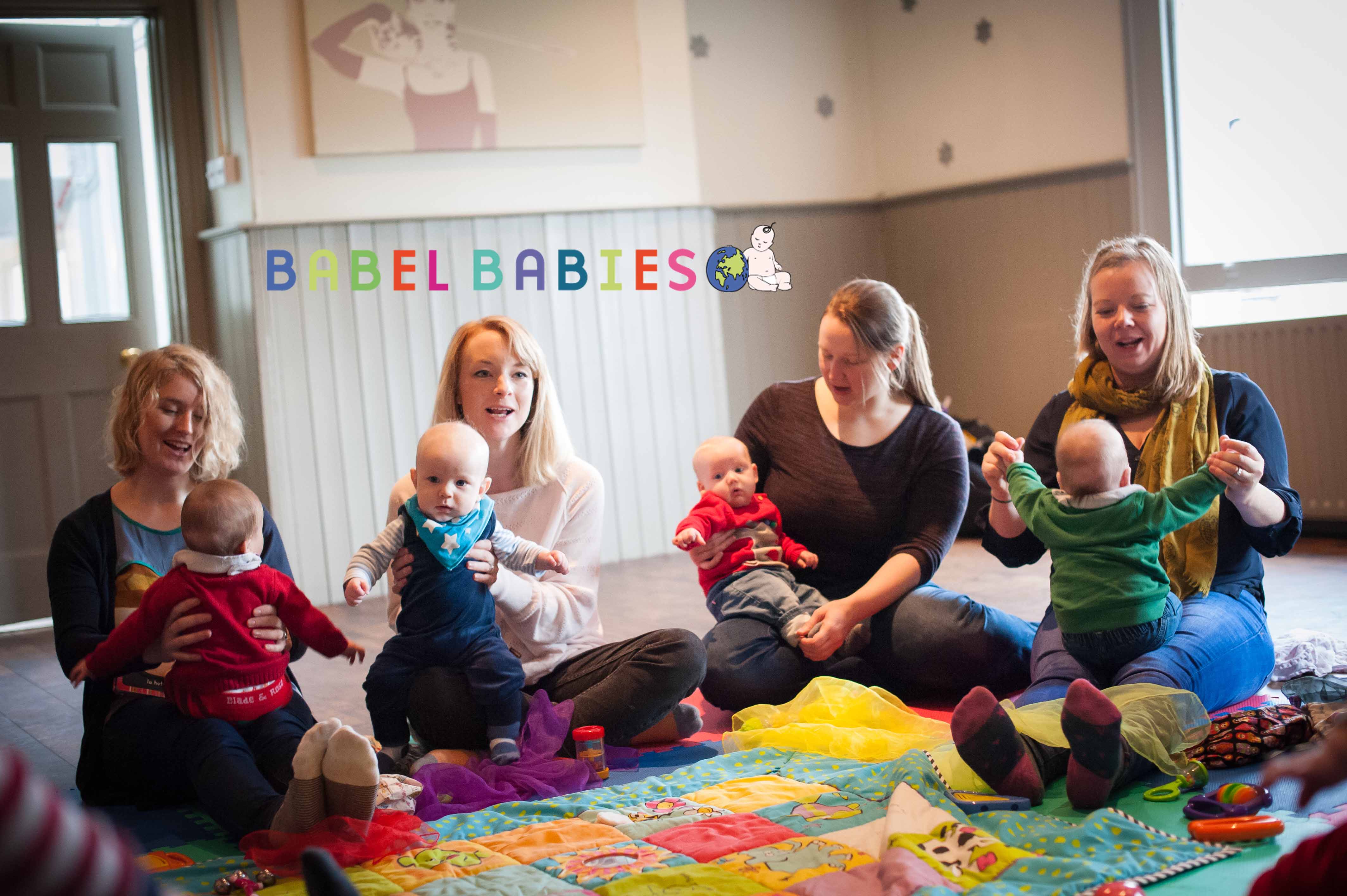
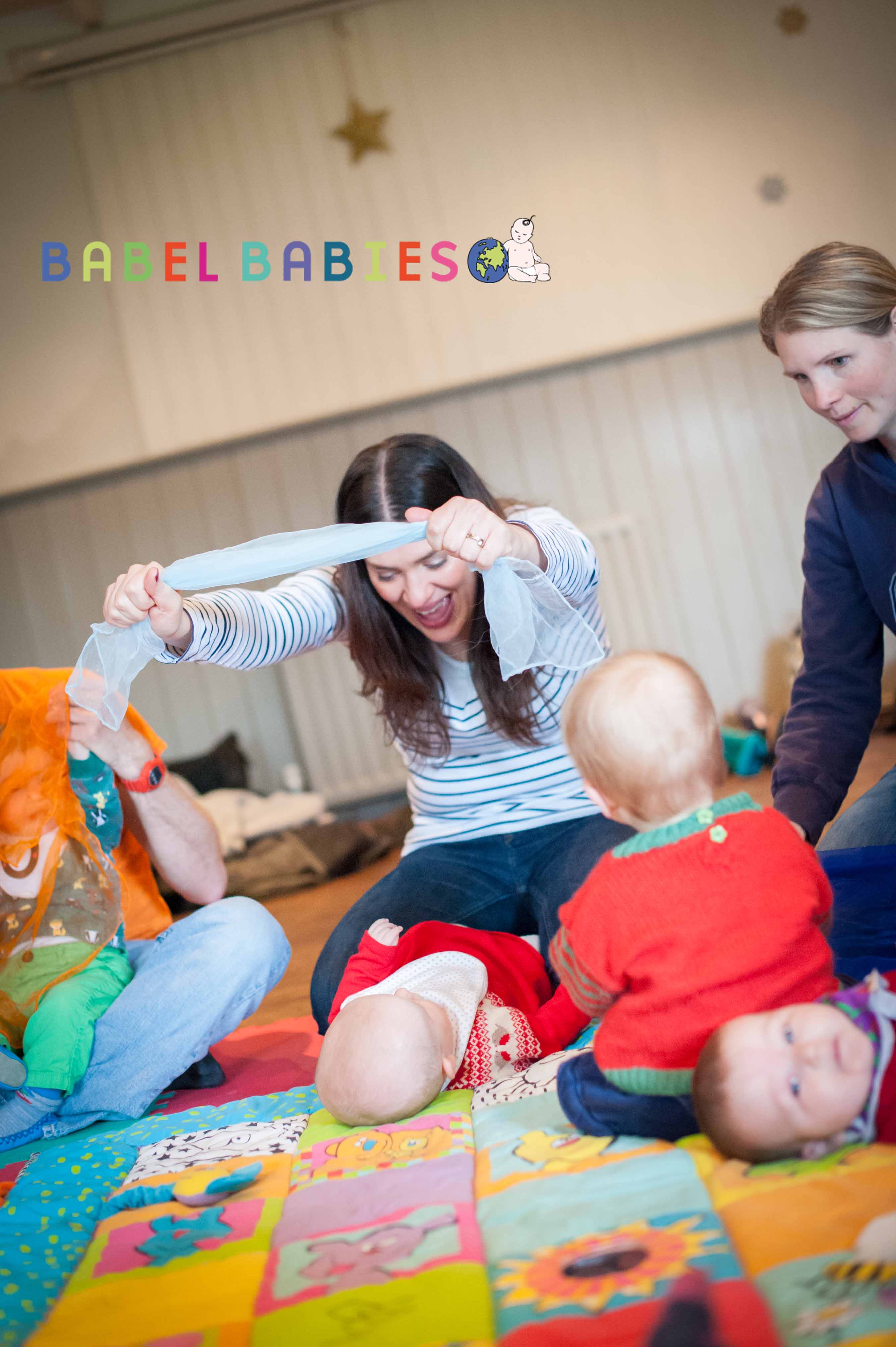
Babel Babies provides multilingual, multisensory music sessions suitable from birth. We explore songs and stories from around the world with our multilingual mascot, Croc Monsieur. We believe it is never too early or too late for parents and children to learn languages together.

Babel Babies started in Cheltenham nearly six years ago when two sleep-deprived mamans, Cate and Ruth said to each other, “Know Twinkle Twinkle in any other languages? I’m so bored of singing it in English!”. As qualified teachers and linguists, they began to introduce new songs and stories in different languages to their children and the idea for Babel Babies was born. In 2012, a mutual friend introduced them to Dominique, fellow linguist and mum, who was based in nearby Bristol. Together, they set up Babel Babies as a limited company and set off on their language revolution. Our sessions currently run in Bristol, Cheltenham and Manchester, but we are looking to expand to new locations in the near future. The world is our oyster!

Babel Babies Singing mums for web

2. What languages do you use in your baby sessions? When is it best for the little ones to start attending the classes? When do children start reacting and singing in foreign languages?

Our sessions are multilingual and we hope to ignite a passion for learning new languages with parents and children alike. We cover French, Italian, German, Spanish, Portuguese, Norwegian, Arabic and Japanese, but that’s by no means an exclusive list. We are always striving to expand our repertoire and include new songs in different languages. We believe that teaching children about other languages and cultures really broadens their horizons and gives them an understanding of the world around them. They have the capacity to learn several languages simultaneously (the majority of children in the world speak two or three languages!) so why not make the most of their incredible abilities?

Babel Babies is suitable from birth. Language learning begins even before birth, and babies recognise their mother tongue when they are born. They are able to hear any sound in any language for most of their first year, and start to tune into the language they hear most after about ten months. If you expose babies to foreign languages and sounds in their first year, they will have a lifelong positive relationship with learning languages as well as a permanent neural map of the languages they were exposed to.

The children react right from the start of Babel Babies. We have had tiny babies, only a few weeks old, stop screaming when they hear a certain song on the CD and older children sing along to “Old MacDonald” in Italian before they know it in English. If you join us at Babel Babies, who knows what your child’s first word may be? It could be hello or thank you in one of the many languages we cover, or even a Japanese croak from our frog song!

3. How do you choose songs in foreign languages? Do you consult native speakers regarding your choices? Do you follow specific websites or watch YouTube videos?

We cover a range of languages between us at Babel Babies and have a great variety of songs as a result. Some are well-known English songs that we have translated, some are traditional songs that our network of friends and family from different countries have taught us, and some we have created ourselves. All of our songs are proof-checked and approved by native speakers and translators and we learn from our own database of recordings and reference materials.

4. Do you speak any foreign languages? How do you to learn to sing in different languages?

Bien sûr! All of our Babel Babies teachers are linguists and it would be a very hard job to do if you didn’t speak any other languages. I studied French, German and Italian at A-Level and went on to study French and Italian at Exeter University. Whilst I was working for a translation agency I was also required to learn Arabic, which I really enjoyed. I have lived in Italy and Switzerland and would love to live abroad again at some point in my life. I am passionate about languages and am always trying to improve and learn new ones. I am lucky enough to have friends and family all over the world and love squeezing in trips to visit them and practice my languages whenever I can.

You don’t have to be a linguist to come along to Babel Babies. We love to encourage complete beginners to come along and try our sessions. The wonderful thing about Babel Babies is that the adults can learn alongside the children. Through music and repetition, the songs very quickly become familiar and it’s wonderful when parents and children can sing languages together.

Babel Babies Peepo for web

5. What are the most challenging and the most rewarding elements to running classes with babies and toddlers?

The children are wonderfully unpredictable at Babel Babies, that’s half of the fun of it all. Being greeted by a room full of eager little faces saying “Ciao” can be one of the most wonderful feelings. From a baby smiling and giggling as you sing, to a toddler repeating the words you teach, I definitely think I have one of the best jobs in the world.

6. What are your future plans? Do you have any projects you would like to work on?

Babel Babies is set to expand this year. We want to share our little language revolution and have Babel Babies sessions running across the country. We want everyone to “Sing languages together, learn languages together and love languages together!”

If you would like to find out more about Babel Babies, or join us for a session in your area, please visit www.babelbabies.com for more information or follow us on Facebook and Twitter.

Great, thank you, we will follow your language revolution eagerly!

February 8, 2017

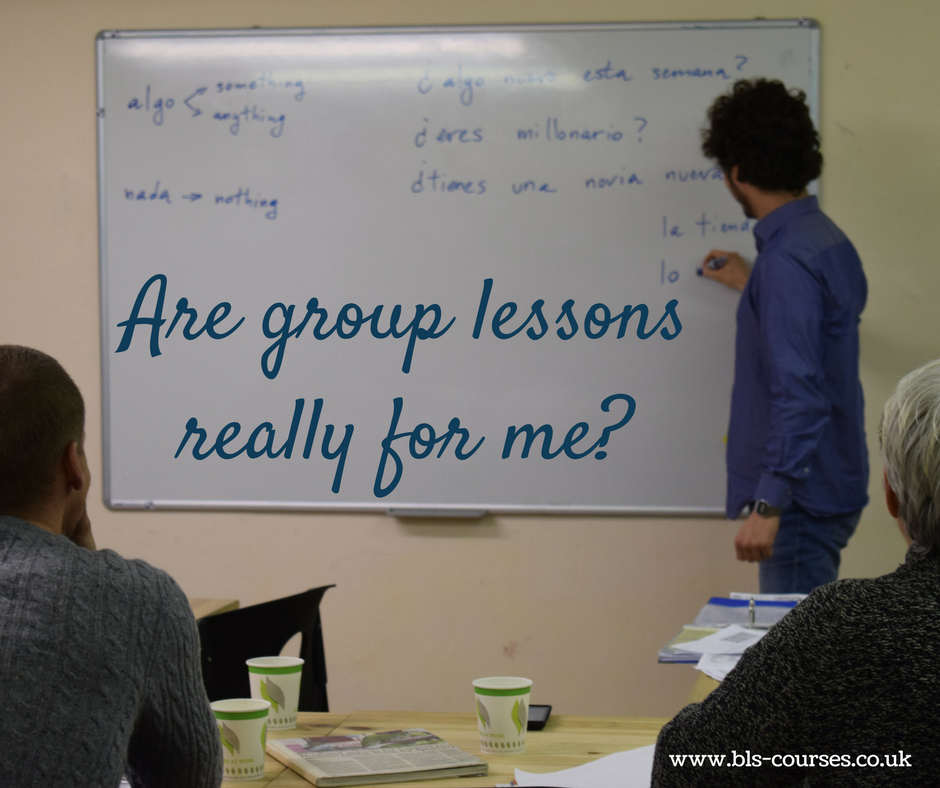
Learning a Language: Are Group Lessons Really for Me?

Are Group Lessons Really for Me_

When we decide we want to learn a new language, we want to find a suitable tutor or a course to guide us through our new learning journey. When is it right to have group lessons? Let me share with you some ideas.

FIRST STEP Let’s learn a new language together! We have more support when attending group lessons: e.g. from class-mates, our tutor or staff members.

ROUTINE We attend lessons regularly, so there is a routine established in our new language learning experience.

COMMUNICATION We communicate with our class-mates and learn new grammar and vocabulary, as well as learning about culture and more.

MOTIVATION If we need some support in maintaining motivation, we have many opportunities to speak and socialise while attending a group course.

TIME Group lessons are usually longer, so we have more opportunities to speak, listen, read and write in a foreign language.

FRIENDS We learn a language and we make friends, as we already share one common interest: learning a new language!

FINANCES Group lessons are usually cheaper, so we can save while studying a foreign language.

PERSONALITY Being competitive, extroverted or social may mean that we’ll be active in using the language more frequently when having group lessons.

language learning is fun.

I believe these might be the common reasons for choosing group lessons. What is your opinion or experience? When do you think we should have group lessons? Please let me know in the comments below.

February 1, 2017

Learning a Language: Is Individual Tuition Really for Me?

Is individual tuition really for me_-1

When we decide we want to learn a new language, we want to find a suitable tutor or a course to guide us through our journey of learning a foreign language. When is it right to have individual lessons? Let me share with you some ideas:

LANGUAGE SPECIFICATION You might want to learn an unusual or specific language, dialect or register, e.g. legal French or business Japanese.

GOAL You might have a specific goal, e.g. you want to sit an exam in 6 months.

TIME You might need to make progress within a time-scale, e.g. you have 3 months to learn communicative Spanish and you want to study every day at 7am.

BUSY You might have a busy work/life schedule, e.g. you only have time very early in the morning or at lunch-time.

TRAVEL You might travel frequently. Travelling may make studying difficult so it is important to plan your lessons in advance.

SELF-STUDY You might only need a little guidance, as you are studying on your own, e.g. help with pronunciation, specific grammar points or detailed questions.

PERSONALITY Being shy, introverted or individualistic may mean that you’ll be more active and you’ll use the language more frequently when having 1-to-1 lessons.

Empower Yourself

I believe these might be the common reasons for choosing individual tuition. What is your opinion or experience? When do you think we should have 1-to-1 lessons? Please let me know in the comments below.

October 26, 2016

Language Learning Tips: Do I have time to learn a foreign language every day?

Do I have time to learn a foreign language every day? Of course, not! But, I think you may change your mind after reading this article, so let me explain.

Impossible possible?
First of all, I’m not talking about spending hours practising every day (although, that would be just perfect!), but about finding ways to include some language practice for as little as 5-10 minutes per day. Secondly, you do not actually need extra time to practise every day. You need to prepare yourself for learning and then follow your daily routine. Thirdly and most importantly, enjoy the whole process from the moment you decide to learn a foreign language to carrying out your everyday practice.

study-every-day-26-10-16

How does it work?

You can follow the 5 steps formula:

1.    Find the time. Think about when you could potentially learn, e.g. while driving a car/commuting, cooking/cleaning/ironing, taking a bath/brushing your teeth, walking, waiting for a meeting/appointment/meal/train/bus, etc… Yes, there are endless possibilities!

2.    Follow your interests. Research the topics that interest you, e.g. cooking (recipes), holiday phrases, music (singers), art (painters), (non-)fiction writing (writers), etc.

3.    Get the resources. Prepare/order/borrow/download books, e-books, audio-books, podcasts, radio programmes, CDs, DVDs, magazines/newspapers, grammar books, flashcards, apps, etc.

4.    Have a weekly plan. Plan what you’re going to do every day, (you can of course review it every week), e.g. on Monday it’s reading (from crime novels to news), Tuesday-listening (radio podcasts, audiobooks), Wednesday-grammar (some relevant exercises), Thursday-speaking (reading aloud or shadowing), Friday-writing (diary, emails), Saturday-watching films (with/without subtitles), Sunday-vocabulary drill (flash cards, dictionary).

5.    Learn EVERY DAY!

IMG_7498ready

If you’re new to language learning or are very busy, I would recommend starting with the simplest routine you can implement and then trying to add new skills. And don’t wait until you think you’re ready, start learning a foreign language now!

If you follow everyday learning or any other routine, let me know more about your methods in the comments below.