Tag Archive: French

February 26, 2020

Learn a language: Can I learn Polish, Czech, French, Russian & Portuguese on YouTube?

Today, I’d like to see if we can improve our language skills via YouTube channels.  I hope to inspire you to use some free resources that are available online. I’ll first focus on the languages that I’m familiar with (Polish, Czech, French and Russian) or plan to learn (Portuguese). Yes, I’m giving myself a new language challenge for the coming 8-12 months: to learn some basic Portuguese. I’ll write a new blog post on my progress soon! Today, I’ll focus on YouTube channels and will provide one or two online resources per language to inspire you to practise your language skills more:

Czech: Basic greetings & Americans speaking Czech

Polish: A smiling intro to Polish greetings and Japanese uni students learning & speaking Polish

French: To listen and learn more street French

Portuguese: Students tend to have a preference whether they wish to study European Portuguese (that one that’s spoken in Portugal) or Brazilian Portuguese (spoken in Brazil).

European Portuguese: Basic Portuguese from the Portuguese

Brazilian Portuguese: To start from scratch & for the joy of listening to the melodic Brazilian Portuguese

Russian: A short & fun intro to basic Russian

These are my findings. What YT channels / podcasts / online resources do you use to improve your language skills in Polish, Czech, French, Portuguese or Russian? Let me know in the comments below.

Kinga Macalla

July 17, 2019

Book review: Le Mot Juste by Imogen Fortes

We read on the back cover: “celebrating the art of the French language”. Beautiful, huh?


Le mot juste is a collection of French words, phrases and quotations with their actual meaning, pronunciation and sometimes also literal translation. I think it’s a good way to refresh one’s French if it’s a bit rusty or to have a useful reference of the borrowed French words, such as la joie de vivre, je ne regrette rien, l’avant-garde, la crème de la crème, cordon bleu or le prêt-à-porter.

My favourite French words:

Un pamplemousse. A grapefruit

Au claire de lune. In the moonlight

Le coup de foudre. Love at first sight (lit. translation: a thunder bolt)

En faire tout un fromage. To make a fuss (lit. translation: to make a whole cheese out of it)

Plus tard ça sera trop tard. Notre vie c’est maintenant. Jacques Prévert (translation: Later will be too late. Life is for living now.)

Nous sommes nos choix. Jean-Paul Sartre (translation: We are our choices.)

Have you read a similar publication in the language you currently learn? Please let me know in the comments below.

Kinga Macalla

March 6, 2019

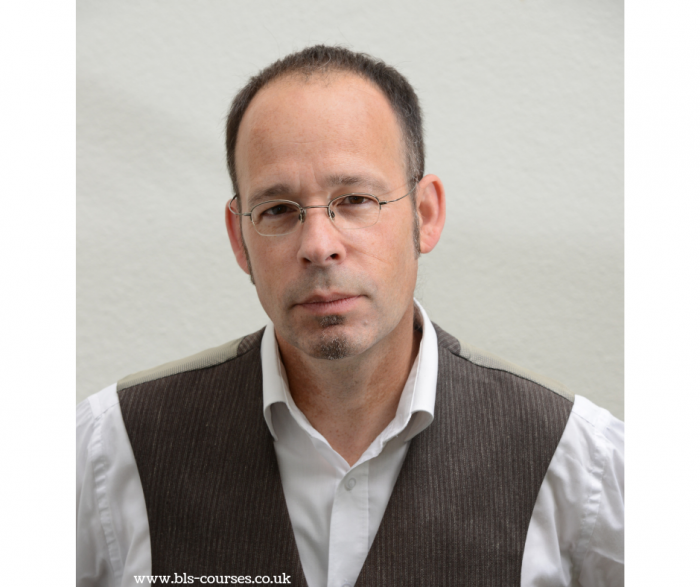
Interview with our French tutor, Jean-Paul Metzger

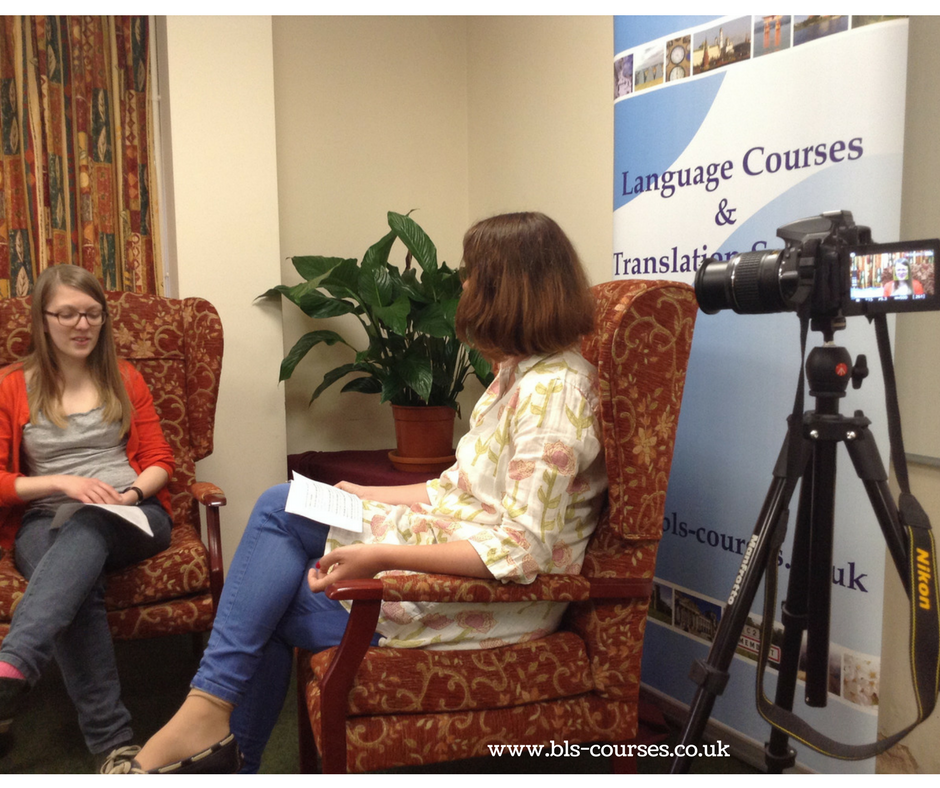
Jean-Paul Metzger, PhD., is not only a wonderful French language tutor at BLS, but also an experienced translator and a passionate composer. He’s also a bilingual who lives in Bristol, UK, and today we have the pleasure of interviewing him!
  1. Hello Jean-Paul. Thank you for taking part in our interview today. Can you tell us a bit more about your educational background, what influenced your career choices and, more specifically, what led you to teaching French?

My educational background is rather atypical of that of a language teacher. Back in the late 1980s in France I graduated from university with a Masters in Computer Science; and years later, as a mature student, I went on to do postgraduate studies in music: first at Exeter University, then at Bristol University where I gained a PhD in Composition in 2014. Although French has not come to feature prominently in my education, I have always been fascinated by the word in general, both from the theoretical perspective (linguistics, semiotics, translations studies) and through the appreciation of literature and poetry.

My career choices as a linguist have been very much influenced by circumstances. I became a freelance translator in the 1990s when, at the time a struggling musician in London, I simply had to seek extra work to pay the rent! I went into it completely untrained and was incredibly lucky: immediately after doing a test piece for an agency I started to get regular work and things snowballed so quickly that, within a year or so, translation had become a full-time occupation. And I loved it. It is something that I continue to enjoy doing today, especially since I am fortunate to often get to work on subject matters which are close to my heart – all things to do with music and the arts in general.

Teaching French started in an even more unpremeditated way. In 2001, shortly after I had moved from London to rural Bampton, in Devon, I was encouraged by some members of the town’s twinning association to give a few lessons at the local café, with for sole qualification the fact that I was the only French guy around! Going into it with zero experience, my first class was a kind of happy chaos involving six or seven students of completely disparate levels. But the whole experience proved very exciting and I was hooked straight away. I went on to set up several classes and gradually acquired experience, learning the do’s and dont’s on the job and slowly discovering the many challenges of the profession. I think there is great value in having had such an empirical approach to language teaching – yes, it takes a lot of work, a good deal of trial and error and a few mishaps, but in the end it is an extremely enriching journey and you are indebted to every student you meet along the way for making you the teacher you become. That is a very precious thing.


  1. What do you find most fascinating when it comes to teaching French?

There are a number of aspects that I find particularly interesting, but one of the most fascinating is witnessing the student’s progress and, with it, how every one comes to gradually adapt and attune what they learn to their own personal style of expression. It is very interesting to see how you can teach the same topic in the exact same way to different people and they all will make something quite different of it. And as a teacher you have to nurture that. In this respect, learning a second language is very much a process of appropriation on the part of the student and I try to stimulate that in various ways – for example, by focusing the attention as much as possible on helping to put right mistakes that hinder the potential to communicate rather than those that simply fail textbook grammatical or syntactical correctness.

Ultimately, and as far as production skills are concerned, it is a matter of encouraging the student not only to speak or write in French but, more fundamentally, to think directly in French – that is, in part, to short-circuit the mental toing and froing between the two languages that is bound to occur in the early stages of learning when either formulating a thought or ‘processing’ what you hear. This is something that, of course, happens very gradually. But there usually is a stage when that firsthand understanding becomes the default mode of perception and the student starts to exploit the language in his/her own individual expressive – and creative – way. It takes a lot of work to get there but it is very much part of the endgame and, after all, what learning a language is all about. Having gone through the process myself when I arrived in England all these years ago helps me to recognise the challenges and difficulties students face throughout that journey.


  1. How do you prepare for your individual and group lessons? Do you have a schedule you follow?

Preparation work goes chiefly into two areas: structure and content. I don’t use a particular course book and devise, instead, all my hand-outs. Over the years I have built a fairly extensive collection of grammar sheets that I am now able to consistently draw upon; these occasionally get tweaked, or even reworked, in response to specific points that might be discussed in class, but they altogether make up a solid and reliable resource. I have also  assembled a stock of written and audiovisual material, mainly from the French press and television, that I can use to support reading and listening activities. I constantly renew that library by keeping on the lookout for suitable topical material in the media. Part of the preparation work in this particular area consists in editing the material for the class so as to not only ensure that it is adapted to the intended level, but also rid it of potential difficulties that carry little or no pedagogic value.

As for structure, I go into every lesson with a reasonably detailed plan and having established what new knowledge I want the students to go away with. A typical lesson revolves around a ‘technical’ element (e.g., a point of grammar, a specific tense, etc.) and some relevant material intended to help develop oral and/or reading skills. Writing is covered as part of the student’s homework, which is usually directly related to the grammatical topic addressed during the lesson. Any homework is assiduously reviewed in class: that is an important component of most of my lessons and is normally scheduled as one of the opening items.

That said, I am always ready to deviate from any schedule in order to react to questions or requests from the students: questions are no less than the lifeblood of any language class and answering them as they come – and as fully as required – takes precedence over sticking to the script, no matter how far off course it may lead.


  1. When it comes to learning foreign languages, what steps can lead to a successful language learning journey?

That is a difficult one to answer, because we are all very different and each learning journey is motivated by a unique set of circumstances. All a teacher can really do is help and guide and channel one’s skills along the way. But in general I think that it is important to constantly keep in mind that you learn a language in order to communicate and express yourself with as much spontaneity as possible, rather than to produce utterances that are always perfectly right and textbook-like. Try therefore to let the language you learn reflect who you are culturally and draw on the tools you have at your disposal to put your message across – in other words, allow your individual vantage point to shape the way you apply what you learn. That means seeking to find, at whichever level you are and within what you are taught in the classroom, how to effect meaning in a way that feels comfortable and satisfying to yourself. I often encourage my students to use and trust their instinct when, say, they stumble on a grammatical point: what feels right to you will more often than not turn out to actually be correct – or, at  least, correct enough!

For many, however, the most daunting aspect of learning a language is getting to grip with the spoken word in real-life settings. This is often the skill where lack of confidence tends to endure, not least because it is something that you can’t quite test yourself against when not in a genuinely immersive environment. Oral comprehension exercises in the classroom can of course help achieve greater proficiency in that area. But it is also a good idea to create as many listening opportunities as possible for yourself outside the class: casually listen to the radio, for instance, when at home or on the go, even for short periods of time, if only to get accustomed to the overall rhythm and musicality of the language you learn – it is then more about trying to recognise speech patterns and typical formulations (such as those associated with, say, asking a question or punctuating a sentence) than aiming to necessarily understand every word that is heard.

In less specific terms, my advice is to be patient, to not be hard on yourself whenever you get it wrong and to value any steps forward, as incremental as they may seem: they all add up to building a greater empathy with the language you learn.


  1. You’ve been living in the UK for many years, how do you maintain your bilingualism?

Teaching French does help… and so does, of course, working as a translator. Not only do these roles keep me in constant touch with the spoken and written word, but they also push me to continually try refining and updating my French lexicon – especially in areas where it evolves relatively quickly, such as new technologies. My translator’s mindset tends to always keep active and I often find myself reflecting on how some wording in English that I happen to come across (say, a slogan on a billboard, a line in a poem, the title of a book) may be translated – or ‘transcreated’ – into French: how to take not just its message but also its undertones, colour, rhythm, from one language to the other. In a headline, for instance, an alliteration will effectively transpose, as a device, into a play on words (“jeu de mots”). This is where bilingualism meets biculturalism – and where it is at its most intellectually enriching: it sometimes feels a privilege to be able to appreciate a novel written in either English or French not only in its original language, but also with all its cultural charge. And that applies, in fact, to virtually all fields of expression, whether creative or not.

Belonging – so to speak – to two different cultures is something that I hold very dear and cultivating that biculturalism, which of course goes far beyond purely linguistic considerations, takes a more deliberate commitment. But that’s another story altogether!


  1. If you could give one piece of important advice to new French language tutors, what would it be? 

Be attentive to your students and keep learning from them.


Thank you, Jean-Paul, it was great to have you as our interview guest. I want to wish you success in all your professional adventures.

Join our French courses or book French individual lessons (with Jean-Paul).
February 21, 2018

The Language Journey – Suzannah’s Story (in 6 Languages)

Hello, my name is Suzannah and I’m a linguist and freelance translator.  In this video, I answer questions about my journey to speaking 6 languages. I give one answer in each of the languages I speak: French, Dutch, English, Polish, Italian and Spanish. Firstly, in French, I talk about how I discovered I had a talent for the language and almost accidentally ended up spending some time in France and eventually studying French at university, which opened the door to me learning other languages – something I never imagined I would be able to do when I was a shy, quiet teenager. Then, in Dutch, I talk about the story behind why I started to learn other languages – mainly out of curiosity and thanks to friendships I made, as well as having the opportunity to live and work abroad.  I then give away a few tips on how to learn a language – or at least I explain what works best for me and how I have gone about learning each language – in English. After that I explain (in Polish) why I chose to learn Polish, my latest language: it came down to friendships again; plus, it was/is a fun challenge for me.  Then, in Italian, I talk about the advantages of speaking and learning different languages and what I like best about being able to speak other languages. Finally, in Spanish I reveal how I keep up my language skills and what I do to practise every day so I don’t forget them!  Bon visionnement! Veel kijkplezier! Happy watching! Bawcie się dobrze! Buona visione! Disfrutéis de la película!

Suzannah Young

We need your help! Suzannah, our multilingual student speaks 6 languages and we’ve recorded an interview with her speaking them (available on YouTube). But, we need your help with translations from Dutch, French, Italian, Spanish and Polish into English.

Leave your translations here below our blog post and we’ll then add them to our video as subtitles! Good luck 🙂

August 2, 2017

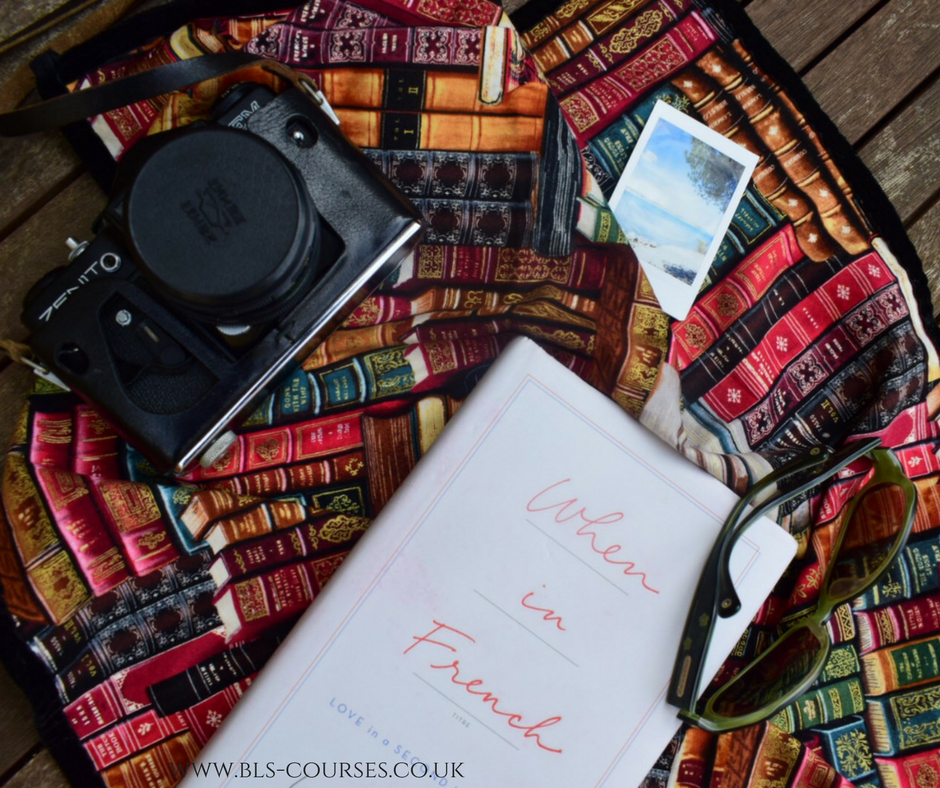
Book review: When in French. Love in a Second Language by Lauren Collins

What a treat for a linguist! I loved every single page for the author’s humour, curiosity, witty observations and passion for languages. It tells the story of an American who moves to London, then to Geneva and then to…? The book is also about communication between languages, countries and cultures. And there are a couple of paragraphs on untranslatable words, too. My favourite quotations are below. When in French is a fantastic read, particularly for bilinguals, linguists, translators, language tutors & learners and for those in love with a foreigner 😉

“Talking to you in English,” he said, “is like touching you with gloves.” P.29

“A language is the only subject you can’t learn by yourself.” P. 143 Lauren Collins

“To be successful at learning a language, one has to undertake a form of time travel, regressing to a childlike state of unembarrassed receptivity, in order to stand a chance of turning into a respectable adult.” P. 144

“Bilinguals overwhelmingly report that they feel like different people in different languages.” P. 187

Written by Kinga Macalla

July 5, 2017

Learning a Language: Learn French with BLS online & FREE!

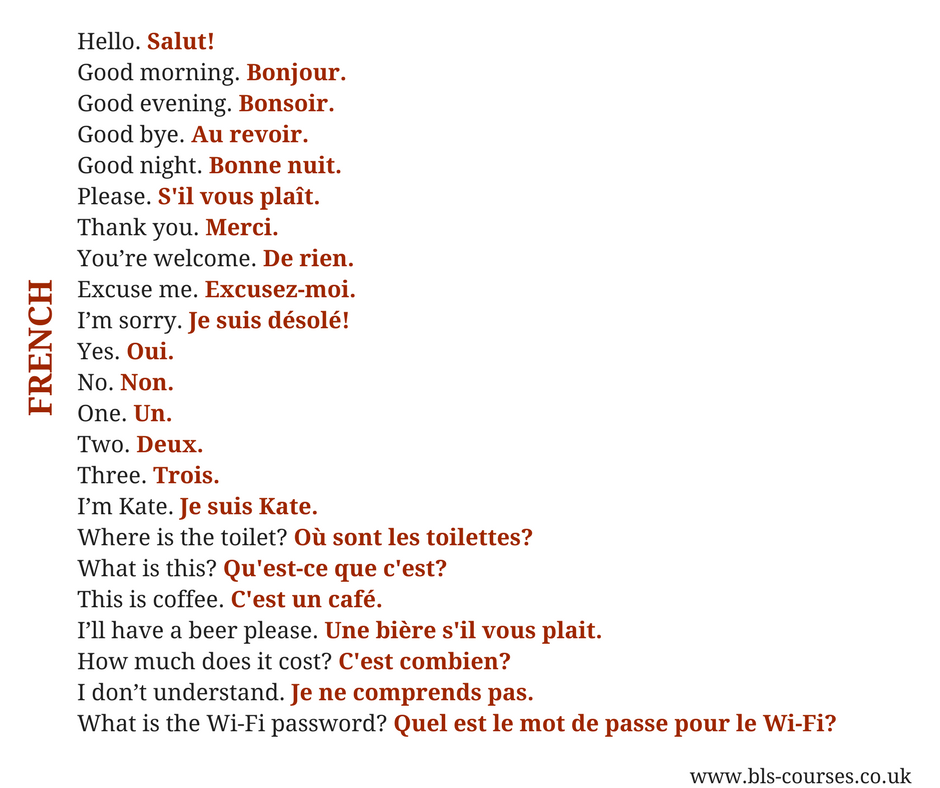
As you remember, we introduced a new series of blog posts where we teach you some useful phrases in different languages. Sounds amazing? And it’s FRENCH today!

Are you planning your summer holiday in the south of France? Do you travel frequently to Paris? Do you dream of exploring French-speaking Africa? If so, we would like you to taste & learn some essential French first. Below you’ll find a list of useful phrases in French (greetings, polite phrases, closed question words, numerals and simple questions & sentences). We also video recorded Marie, our French tutor, to help you with reading, pronunciation and accent (also available on YouTube). We hope you enjoy this series and that you’ll come and learn French with us! Good luck!

Which language would like you like to learn next? Let us know in the comments below.

Written by Kinga Macalla

April 5, 2017

On Languages: The Languages of Belgium

With around 11 million inhabitants over an area of 30,528 square kilometres (11,787 square miles), Belgium is a small, densely-populated country in Western Europe.  It may be small but Belgium has a diverse population and three official languages, Dutch, French, and German.  Its inhabitants also speak a number of non-official, minority languages and dialects as well.  A lot of people in Belgium speak English and it is used as an unofficial language of communication in the Belgian capital, which also happens to be the European capital, Brussels.

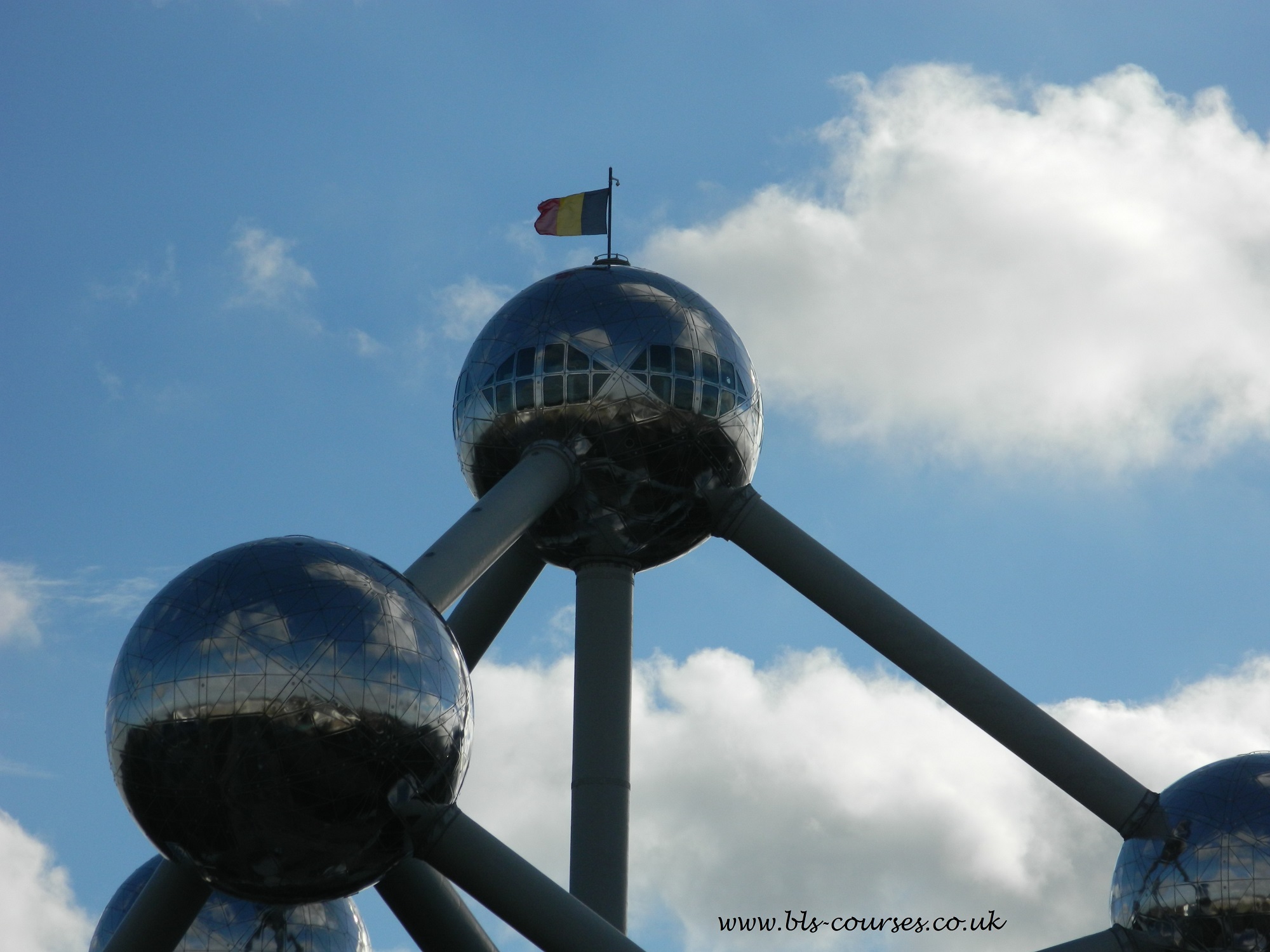
DSCN3319

The Belgian Constitution guarantees language freedom in the private sphere. This implies that people can decide themselves which language they wish to use in their household, among friends, in the media, and for cultural, economic, commercial and religious activities. Before the federal (linguistically-defined states) structure and language legislation introduced in the 20th century, French was the only language used by the authorities. Now there is a lot of legislation around Dutch, French and German, although the constitution does not explicitly mention which languages enjoy official status.  Article 4 of the constitution does divide the country into linguistic areas: “The French-speaking area, the Dutch-speaking area, the bilingual area of Brussels Capital and the German-speaking area.”

6.25 million people live in the Flemish Region (Dutch language area), 3.5 million in the Walloon Region (French and German language area) and 1.09 million in the Brussels-Capital Region (bilingual area).  This means that 59% of Belgians belong to the Flemish (Dutch-speaking) Community (Flanders) in the north, 40% to the French-speaking Community (Wallonia in the South and part of Brussels) and 1% to the German-speaking Community (in the Ardennes area).  Alongside these official figures, there are migrants and their children living in the country who speak other languages (as well as one or more of the official languages), and speakers of other Belgian dialects. The capital, Brussels, is located in Flanders but 80% of its inhabitants speak French as their first language.  French is also used as a lingua franca in Brussels, as is English.  All public services and information in Brussels are available in both French and Dutch.  Many road signs and other notices around the rest of Belgium are written in both French and Dutch too.  Like many capital cities, Brussels is actually multilingual, especially as it is the home of many European institutions and there are a lot of foreign officials and diplomats living there.

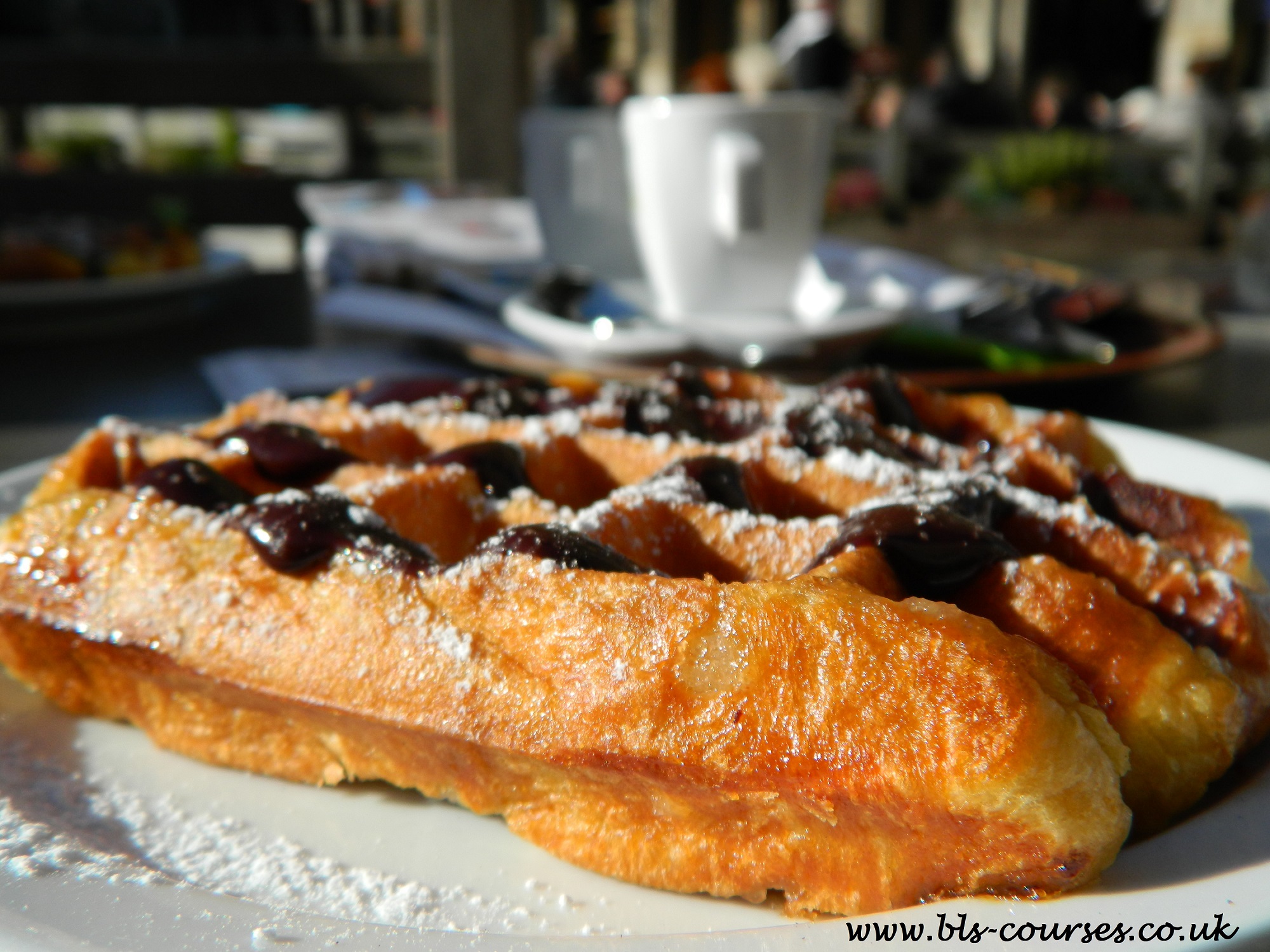
Belgian Waffels 2

The standard form of Dutch used in Belgium is very similar to that spoken in the Netherlands but is often referred to as Flemish.  There are a lot of dialects in Flanders too.  The main ones are Brabantian, West Flemish, East Flemish, Antwerp and Limburgish.  Walloon, a dialect closer to French and mostly spoken by older people in rural areas, is used by 33% of population. Walloon has no official status in Belgium and is not used in education, though there are many evening classes in it.  The majority of the population of Wallonia can understand the language, about a quarter can speak it and a few can write it.  Luxembourgish is spoken by around 0.5% of the population, but the language has no official status, like Picard, Low Dietsch, Lorrain (also called Gaumais locally) and Champenois that are also spoken there.  About 10% of the Belgian population are non-native, and languages spoken include Italian, Spanish, Greek, Arabic and Turkish.  Antwerp, the capital of Flanders, also has one of the few Jewish communities worldwide that still speaks Yiddish as its dominant language.

Words which are unique to Belgian Dutch and Belgian French (i.e. not found in the varieties of Dutch and French spoken in other countries) are called belgicisms.

More information on the languages of Belgium can be found at http://languageknowledge.eu/countries/belgium

Written by Suzannah Young

September 7, 2016

Language learning: Which exam should I take to prove my level?

When you are learning a language, sometimes you want to have something official to show for it, to demonstrate which level you have got up to according to recognised examination bodies.  This can be useful if you are applying for a place at a university, which often require proof of level in the language in which programmes will be taught, if you are applying for a job, if you want to emigrate to a country of acquire citizenship of a country, if you want to teach the language, to add to your CV for later, or just to give yourself the reassurance that you have reached a certain level.  But which exams should you take?  Here is a list of recognised exams and qualifications for a few of the languages we teach at Bristol Language School.

IMG_7453 ready

One good place to start is looking at the list of European Language Certificates, or telc language tests, which are international standardised tests of ten languages, which offers over 70 tests, including general language and vocational examinations and tests for students. All telc language examinations correspond to the Common European Framework of Reference for Languages (CEFR) for listening, reading, speaking and writing. Your BLS teacher can also advise you on which exam to choose.

Arabic – In the UK, you can take a number of GCSEs and iGCSEs (International GCSEs) in Arabic, and the Cambridge International Examinations.  In Europe, you can take the telc in Arabic, or alternatively the European Arabic Language Test, which is based on Level A2 of the Common European Framework of Reference (lower than the telc).  Internationally, there is the Arabic Language Proficiency Test.

French – FLE is the acronym for the Français langue étrangère or “French as a foreign language” test, which is intended for learners of French for cultural or tourism purposes. There is no single test but instead a variety of possible tests used to measure language proficiency of non-francophones in non-francophone countries.  If you wish to study at a French-speaking university, you can take the DELF/DALF, which gives a certificate of your level, and the TCF (Knowledge of French Test), which is required by universities.  There is also the DELF PRO for people wishing to work in French.  People who want to teach French will need to take a different diploma.  More information is available on the French Institute website.  The exams can be taken in Belfast, Birmingham, Cambridge, Cardiff, Edinburgh, Exeter, Glasgow, Jersey, Manchester and York.  There is also the telc in French.

IMG_7454 ready

German – The Zertifikat Deutsch is a test of general German proficiency. The Zertifikat Deutsch für den Beruf (Certificate in German for Professionals) is an internationally recognised examination which tests German language ability for business and professional purposes.  The DSH (Deutsche Sprachprüfung für den Hochschulzugang) is a language proficiency test required for entry to a German university. There is also a German telc.  The Goethe Institut will have all the information you need about German proficiency exams.

Italian – The Certificate of Italian as a Foreign Language (Certificazione di Italiano come Lingua Straniera or CILS) is recognised by the Italian Ministry of Foreign Affairs and is often used to grant acceptance in any Italian university or higher education institution in Italy. There is also an Italian telc.  The Italian cultural institute in London can tell you more.

Japanese – In the UK you can do either GCSE, the International Baccalaureate qualification, a practical language test or the Japanese language proficiency test.  There is also an aptitude test in the Japanese writing system, kanji.  The Japan Foundation has more information.

Mandarin – The Hanyu Shuiping Kaoshi (HSK) is an official examination designed to assess the Chinese language proficiency of non-native speakers from beginners to advanced Level (divided in levels 1-6).  It consists of reading, writing, listening and comprehension.  The London Confucius Institute has more information.

IMG_7498ready

Polish – In the UK, you can take GCSE & A-Level Polish or the Certificate in Polish as a Foreign Language (Polish: Egzaminy Certyfikatowe z Języka Polskiego jako Obcego), are standardised tests of Polish language proficiency for non-native Polish speakers that are currently available in CEFR levels B1-C2.  There is also a Polish telc.

Portuguese – The CAPLE (Centro de Avaliação de Português Língua Estrangeira or Centre for Evaluation of Portuguese as a Foreign Language) issues certificates of proficiency in European Portuguese as a Second language developed by the University of Lisbon.  The test is offered at CEFR levels A1 – C2.  It can be taken in London.  There is also a Portuguese telc.

Russian – The Test of Russian as a Foreign Language (TORFL) is a standardised test supervised by the Russian Ministry of Education and Science.  There is also a Russian telc. The Russian Language Centre has more information.

Spanish – The Diplomas de Español como Lengua Extranjera (English: Diplomas of Spanish as a Foreign Language), or DELE, are official diplomas issued by the Spanish Instituto Cervantes to participants who have passed a standardised test indicating their European Spanish language proficiency. The exam can be taken at the Cervantes Institute in London.  There is also a Spanish telc.

Written by Suzannah Young

August 31, 2016

Language learning: Which language to choose? With helpful videos in six languages

Estimates say that there are up to 7,000 languages spoken in the world today (in around 200 states!).  Some languages have millions of speakers and some have just a few thousand speakers.  But with so many languages to choose from, how do you decide which one to learn?  This blog post gives you a few ideas on how to make the decision.

Does it match your interests?

Have you heard a song that you like in another language and you want to know what it says?  Do you enjoy books by Sándor Márai or Milan Kundera?  Do you like Italian food?  Do you like going on holiday in a particular location?  If you learn a language that is linked to something you enjoy, you are likely to get more out of it and remember it better. If the language has relevance to your life, what you learn will stay with you.

Do you know people who speak it?

Some people are inspired to learn a language because they have friends or partners who speak it.  If you have a partner whose first language is different from your own, think about whether you need to learn it to speak to their family, their parents and siblings, or their friends.  If you go and visit their family, do you want to be able to speak to the people they grew up with? Do you want to be able to go out and interact with local people?  It is also a way to get to know a person better if you understand the language they think in, the language they spent their childhood years speaking.  You can show how much you care about them by learning the language that is dear to them and learning about their culture.  Your partner is also a good person to practice your new-found skills with – they can teach you and correct you and will want to help.

Will it be useful for your work?

Has the company you work for just signed a deal with a German business?  Have you just started importing products from Japan?  Is it going to give you the opportunity to work with your new colleagues if you learn their language?  Could you get new tasks and responsibilitites or even a promotion if you learn it?  Or do you want to look for a new, exciting job? What about one that gives you the opportunity to travel?  If you are looking for a change or a challenge in your career, learning a new language could be the perfect thing for you.

Do you want to move to a new country?

In today’s world, more and more people are emigrating and making a new life in a new country – for work or to have a new experience.  If you want to integrate in the country you wish to move to it is a good idea to learn the language spoken there, and you can give yourself a head start by learning some of it before you leave.  Learning the language will also help you get to know the country, understand the way things work, its politics and its culture.  The transition to life there will be smoother if you already understand some of the language when you get there.

Will it be useful in the future?

Some countries, like India, Bolivia, Morocco or Brazil, have economies that are developing fast and countries that are likely to become politically important on the global stage in the not-too-distant future, like Turkey.  It can be beneficial to learn the languages of those countries to be able to find employment working in or with them in the future.

Do you want to have fun?

Some people just enjoy learning languages, out of intellectual interest or as a challenge.  If you are one of these people, you can pick any language you like – because you like the way it sounds, because you like the look of the alphabet, because you like how logical it is…you name it!
BLS wishes you good luck in your learning, whichever language you choose!

Written by Suzannah Young

July 6, 2016

On Languages: French

One of the most widely-learned and widely-spoken languages in the world is spoken by England’s neighbours across the Channel. Many of us will have learnt some French at school.  The chances are we mostly learnt about France in our lessons.  However, French speakers can be found all over the world, in many countries and on all five continents. With 274 million speakers, French is the 9th most widely spoken language on the planet.  Of those 247 million, 96.2 million are in Africa, making it the continent with the largest number of French speakers, in countries as diverse as Burkina Faso, Djibouti, Rwanda and Morocco.  Many African countries use French as their main international language, as do Vietnam, Laos and Cambodia.  In Europe, French is the 2nd most common mother tongue, and is spoken in Belgium, France, Luxembourg, Monaco, Switzerland, and by some speakers in Italy.  In North America, it is the first language of 7.2 million Canadians and nearly 2 million people in the United States (primarily in Maine and Louisiana).  It is also spoken in Lebanon, and in French overseas territories like Guadeloupe, Martinique and French Polynesia.

French also has an important place in international institutions.  It is one of the official languages of the United Nations (UN), the North Atlantic Treaty Organization (NATO), and the European Union (EU).

On Languages--French 2

Apprendre le français – Learning French
French is a Romance language.  As such, it is similar to Italian, Romanian, Spanish and Portuguese in its vocabulary and grammar.  Its spelling is slightly more difficult than those other languages though, as it has many homophones (words that sound the same but are spelt differently) and silent letters, and it has a some irregular plurals: plurals usually end in ‘-s’ but they can also end in ‘-eux’ and ‘-aux’ (watch out for ‘cheval’ (horse)-‘chevaux’ (horses) vs ‘cheveu’ (a hair)-‘cheveux’ (hair)).

Grammatical differences between French and English are that French uses gendered nouns, so there are nouns like ‘la voiture’ (the car) and ‘le bateau’ (the boat).  Sometimes, the gender of the word changes its meaning, so ‘la tour’ is a tower and ‘le tour’ is a trip around something (like Le Tour de France).  Adjectives take the same gender as the noun, so ‘the blue boat’ is ‘le bateau bleu’ and ‘the blue car’ is ‘la voiture bleue’.

French verbs take different forms depending on the speaker – these are called conjugations.  English only changes its conjugation for the third person (he, she, it) (I walk, you walk, he/she walks, we walk, you all walk, they walk) but French does this for every person (je marche, tu marches, il/elle marche, nous marchons, vous marchez, ils/elles marchent).

French has some different past tenses compared to English, and two auxiliary verbs, avoir and être, which are used to form the past.  The gender of the person has to agree with être verbs.

Parler français – Speaking French
Because French is found in so many different places, there are inevitably many different varieties of the language. There are differences in words, expressions, pronunciation and even grammar.  This page has some videos that show you the differences. You can choose which variety you would like to learn and find examples of it online to help you practice, or you can watch films or listen to the radio.  A good place to listen to different varieties of French is Radio France Internationale, which has presenters and callers from around the world.

If you want to speak like a native French speaker, the chances are you will need to work on your pronunciation.  The French language has quite a few sounds that do not exist in English, such as ‘ʁ’, the guttural ‘r’, which means that you pronounce ‘r’ with your throat rather than at the front of your mouth, and ‘y’, a ‘u’ sound made with your lips pursed.  You may also notice that French people move their mouths a lot when they speak – this is because it is important to articulate when speaking French.  Practise doing this in front of a mirror – and don’t be embarrassed to do it when speaking in public too!

S’ouvrir sur le monde – Embrace the world
Speaking French gives you access to an array of culture – literature, film, music, history, food, philosophy, art, fashion – from all the different places where French is spoken and allows you to travel the world (all five continents, remember).  It also gives you an insight into international politics and, who knows, might even land you a job in one of the European or international institutions!

Written by Suzannah Young