Tag Archive: home-education

November 22, 2023

Book review: The most inspirational books on education and home-schooling

Five years ago, I completed a post-graduate diploma in education at Bristol University. I mostly focused my research on bilingualism and language education. Back then I discovered Ken Robinson and his most famous publication ‘Creative schools’. When we started home-schooling our children two years ago, I was greatly inspired by “Kreda”, a Polish magazine on education and home-schooling (sadly, the print version will be discontinued from September 2023). But recently, I felt this urge to read more on education and home-schooling to get even more inspired and broaden my horizons on these subjects. Here are the books that are a great inspiration to me:

Home Education. Vol. 1. by Charlotte Mason

“The resourcefulness which will enable a family of children to invent their own games and occupations through the length of a summer’s day is worth more in the afterlife than a good deal of knowledge about cubes and hexagons.” (p. 191)

Charlotte Mason’s publication can be treated as a framework for home education. It was written more than a century ago, at the turn of the 20thcentury, so you might think it would represent some old-fashioned values and ideas, but I think her vision is as relevant today. For example, she sees education as an atmosphere, where the child’s natural surroundings, people and things form the home-schooling life together. She also points out the importance of forming habits whether in regard to education, healthy diet, savoir-vivre or having a rest. She writes fondly about the outdoors, nature, foreign languages, music and art. Charlotte Mason references many books (would love to read some of them!) and even provides some detailed instructions on how to teach children to read or write.

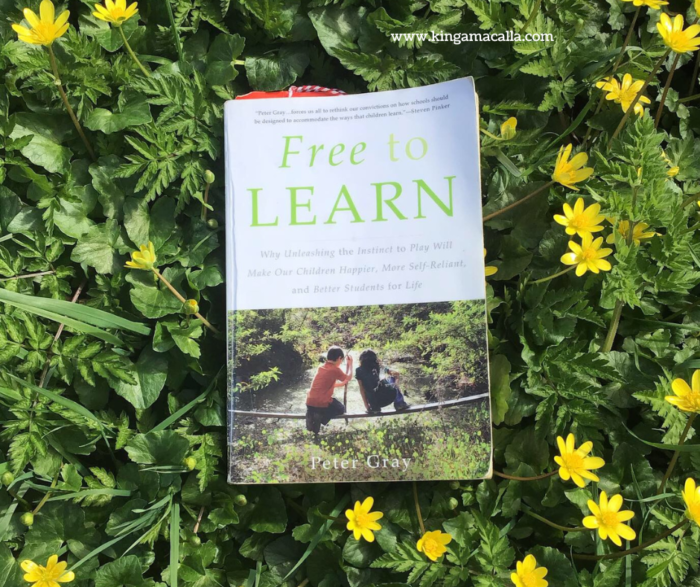
Free to Learn by Peter Gray

“When language play is carried into adulthood, we call it poetry.” (p. 123)

This is a fascinating read on the role of play in children’s education. It’s so well-written that when I read it, it felt more like a detective story than a non-fiction publication. On many different levels it made me sad. When we look at a school’s compulsory system, the obligation to sit and learn, to follow the teacher’s guide, to spend hours indoors and only short breaks outdoors, to be quiet and follow the rules, etc. Why? Because we want our children to succeed, to go to a ‘good’ university, to have a ‘good’ job and a ‘good’ life. But we don’t need to take away this tremendously important learning tool of letting our children play. Our children can still be successful and happy in their adult life. Just some food for thought. I’d make this book compulsory (!) to any parent (before their child/ren starting any form of education). 
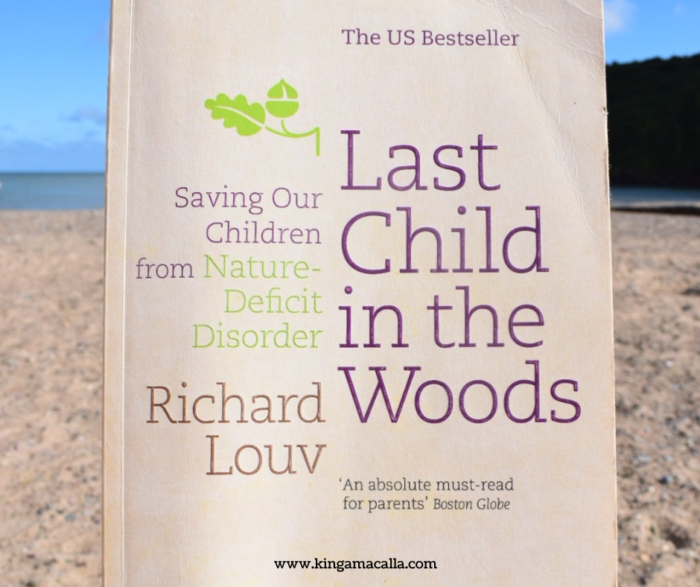
Last Child in the Woods by Richard Louv

“Not everything that can be counted counts and not everything that counts can be counted.” Quote attributed to Albert Einstein

This book is as fascinating and eye-opening as it is sad. It tells some realistic truths about our disconnection from nature, how children no longer play and explore freely the outdoors. It says that the value of knowing and understanding nature is less and less important for schools and universities, even though “[a]ny natural place contains an infinite reservoir of information, and therefore the potential for inexhaustible new discoveries.”. [p. 68] Through his extended research and interviews, Adam Louv not only tries to analyse children’s relationship with nature in the modern times, he also provides solutions on a micro and macroscale. Last Child in the Woods beautifully corresponds with the ideas presented in Free to learn, but obviously with an emphasis on nature. I couldn’t read more than a few short chapters in one go, as I needed time to digest its content. It’s written from an American perspective, but also includes some references to Europe.
What are your most inspirational books on education? Please let me know in the comments below.
October 18, 2023

My home-schooling journey with 3 children in Bristol, UK

When I speak with my friends, many of them (especially those who don’t home-school!) ask me about our home-schooling routine. It makes me think that perhaps more parents might be interested in reading about our home-schooling life, hence today’s post.

We started home-schooling 2.5 years ago. We’re a family of 5: one set of parents and three children aged 8, 4 and 1. The first year was quite difficult, as we didn’t know many other home-schooling families, and our home-schooling life felt a bit lonely. But, it all changed when we joined the first group.

Groups

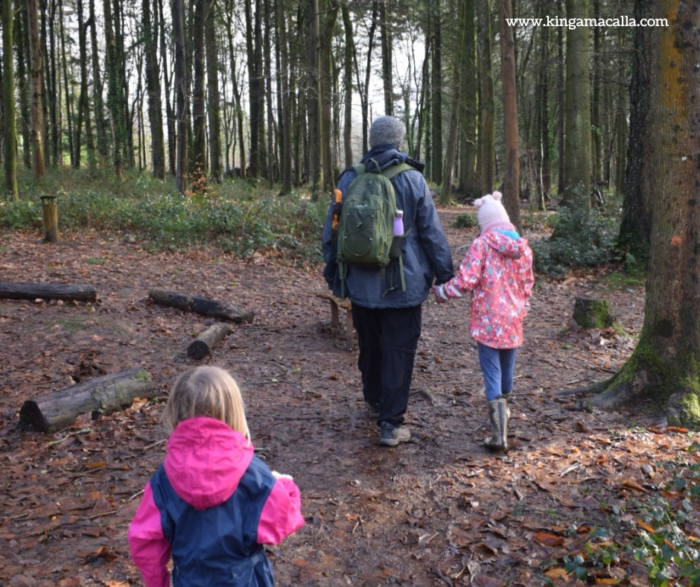
The very first group we joined was a forest school and our daughter has loved going there from day one. We made some friends through it and it became a core social activity of the week. The second one was gymnastics: all my children are full of energy, so I was looking for some physical activity and gymnastics was a great choice. Then we started attending piano lessons, as music is an important part of our curriculum. Lastly, we joined (even though a bit irregularly), a drama club which is a wonderful way to awaken children’s imagination.  We attend it irregularly, because as I don’t drive, it takes us around 1.5-2 hours to get there, one way!

Nature, reading, music and art

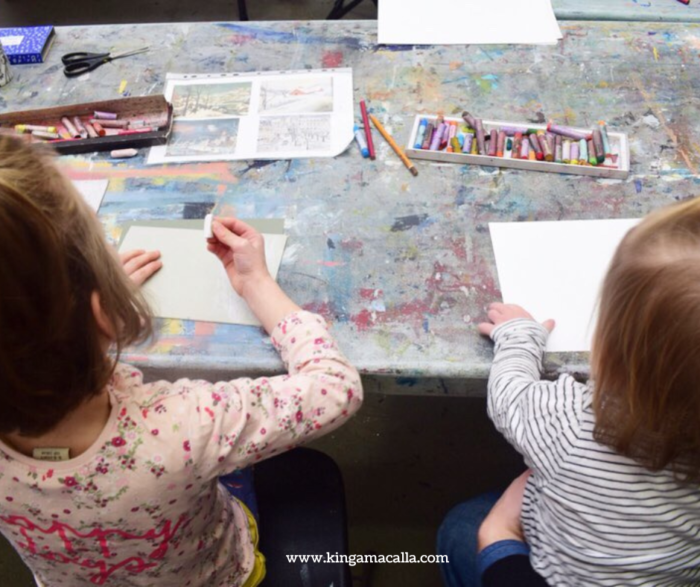
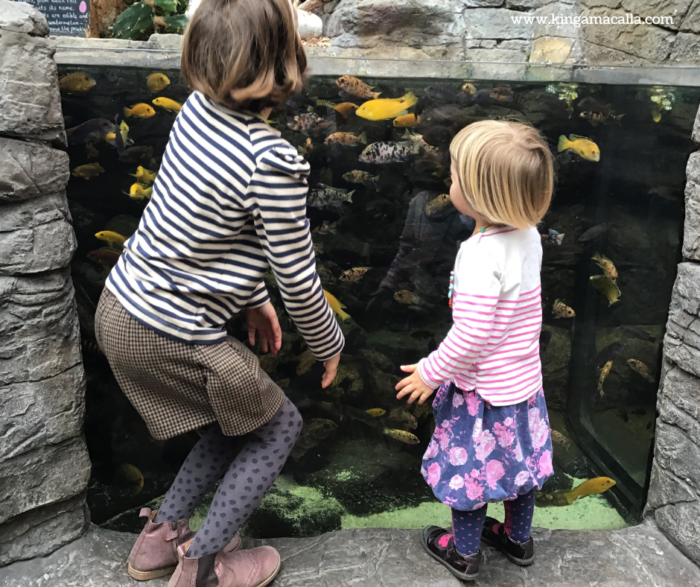
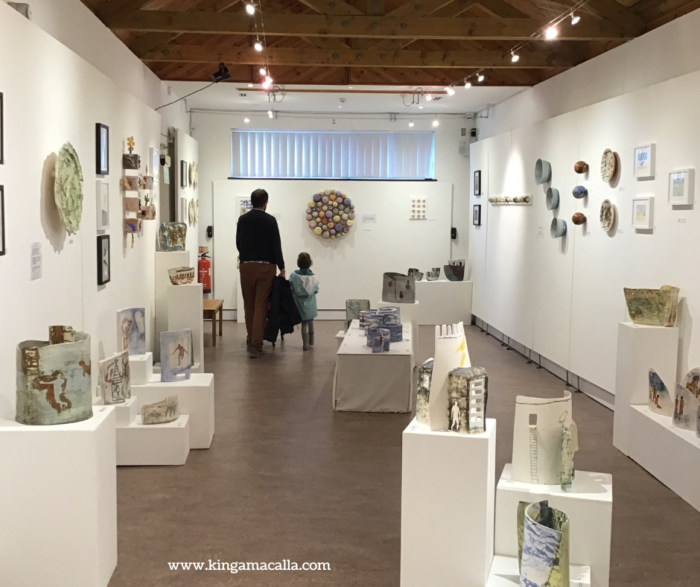
If I needed to describe the key elements of our home-schooling life, it would be: nature, reading, music and art. Nature is present in my children’s lives via forest school, our garden, nature walks and weekend trips. On fine days, we can read a story sitting on our garden’s bench. We read books in two languages every day and go to the library at least once a week. On top of that, we enjoy playing and improvising on different instruments, listening to classical music, children’s tunes or singing songs. It sounds very simple, but I trust it gives them the foundations for an amazing memory, good music taste and awakening their creativity. Music is closely related to art. We all enjoy hands-on crafts, like painting, drawing or postcard making. We also read about painters, analyse their paintings in the albums, visit museums and galleries. My children like playing pretend games and occasionally I overhear them calling themselves van Gogh or Monet (!).

Free play

I feel from the bottom of my heart that free-play is important. I love to quietly observe my children, especially in their free play. I only wish they could have more free play in nature; that’s something I’d like to include more in this academic year.

Bilingualism

Yes, my children are home-schooled and raised bilingually: Polish and English. Even though we’re both Polish, my husband mostly reads in Polish and I mostly read in English. I also use English when our home-schooling context is mainly in English. I think our bilingual routine works well now, but when we started our home-schooling journey, it felt a bit chaotic and confusing, mainly because we all needed to adjust to some language changes.

Books on education

I like reading myself and I’ll be posting a series of short reviews on the books on education that inspired me most. That’s going to be next month!

I think these are my core ideas around home-schooling right now. Would you like to read more about home-schooling here? Please let me know in the comments below if you’d like more content like this, e.g. reading more about our daily routine or how we navigate two languages in our home-schooling life.

April 15, 2020

Bilingualism: How can you home-school children bilingually?

The limits of my language are the limits of my world. Ludwig Wittgenstein

Today, I’m bringing up a subject very relevant to our family: bilingual home-schooling. As schools remain closed, we parents need to educate our children, and those bringing their children up bilingually have an even harder task: to prepare content in two or more languages. Below, I’ll share my tips on how to organise bilingual learning for your children and I’ll also share some inspiring blogs which helped me navigate through this unknown territory of bilingual home-education. I have two children: our older daughter is 5 and a half and our younger is 17 months old, so the below mostly refers to our older daughter.

Where to start?

First, I’d start with the aims. What do you want to achieve in your home-schooling? What are your goals? In our case, we primarily speak Polish at home and we knew English would be the minority language and that we’d use it to accomplish some specific tasks / activities rather than to be used for a prolonged period of time. We receive a weekly timetable from our daughter’s school, so we follow the main points of the agenda and also add some extra-curricular activities. I’ll specify our daily routine below.

How to organise daily routine

We start our day with a healthy breakfast J and then we have some quiet time, e.g. quiet reading or playing. Then we listen to some literacy exercises or do some reading in English before switching to Polish and listening to and singing some songs in Polish. After a short break, we have some creative activities; painting, drawing, Lego model building, etc. During this time we can include numeracy / vocabulary in Polish and English. Then we have a healthy lunch J and playtime with some yoga / exercises, going for a walk or staying in the garden and having some fun together. In the late afternoon, we read aloud in English and Polish or look through some big books to learn some interesting facts about geography, nature, animals (we try to focus on different subjects either periodically or daily). In the evening, we try to encourage our daughter to help with dinner where we can ask our daughter to name some vegetables or do some counting in two languages. As you can see, our daily routine is quite simple and not over-scheduled, there is plenty of room to negotiate some elements (e.g. playing in the garden longer if the weather is nice, etc.) and we don’t always stick to it every day, but it’s good to have it in place as a frame.

How to organise resources

I check the school’s website to see the timetable and self-prepare resources and download audio-recordings. In the UK, Audible have made their stories free of charge, and the phonics website is now available to all. As for creative activities, we re-use some paper/plastic boxes, jars, etc. or use colour paper, play-dough, clay, etc. Spring time is also a good time to introduce some gardening (as we try to do, too!). Our daughter is super-excited to see how her little plants / herbs grow.

Where to find inspiration?

Fortunately, there are many blogs with inspiring content!I found it really useful to get familiar with the ten tips on bilingual home-schooling from Catalina. Here, there are many interesting insights on home-schooling from Virginia Some important questions regarding bilingual home-schooling are answered here. You can find a bilingual daily routine with four children & their mum, Michele Cherie, here. I also recommend this blog for some everyday activities that you may want to include in your daily home-schooling routine (not about bilingual schooling, but I found it so relevant!).

Bonus: Don’t forget about your daily rituals, like lighting a candle before meals or playing some tunes on xylophone before reading time. It makes every day a bit more special.

Please do let me know how you organise your daily routine of bilingual home-schooling and what resources you use. Please leave your comments below.

Kinga Macalla