Tag Archive: Italian

July 4, 2018

Learning a Language: Learn Italian with BLS online & FREE!

As you remember, we introduced a new series of blog posts (see Spanish, French, German & Russian) where we teach you some useful phrases in different languages. Sounds amazing? And it’s ITALIAN today!

Are you planning your beach holiday in Positano? Do you travel frequently to Rome? Do you dream of exploring Sardinia or Sicily? If so, we would like you to taste & learn some essential Italian first. Below you’ll find a list of useful phrases in Italian (greetings, polite phrases, closed question words, numerals and simple questions & sentences). We also video recorded Marika, our Italian tutor, to help you with reading, pronunciation and accent (also available on YouTube). We hope you enjoy this series and that you’ll come and learn Italian with us! Good luck!

Which language would like you like to learn next? Let us know in the comments below.

Kinga Macalla

February 21, 2018

The Language Journey – Suzannah’s Story (in 6 Languages)

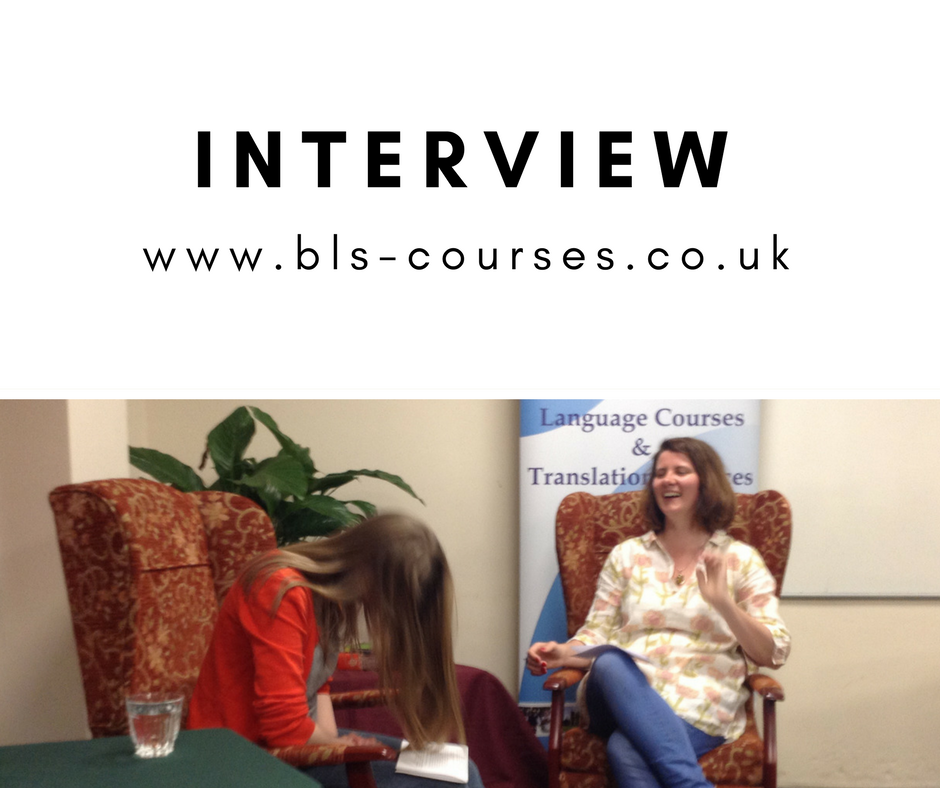
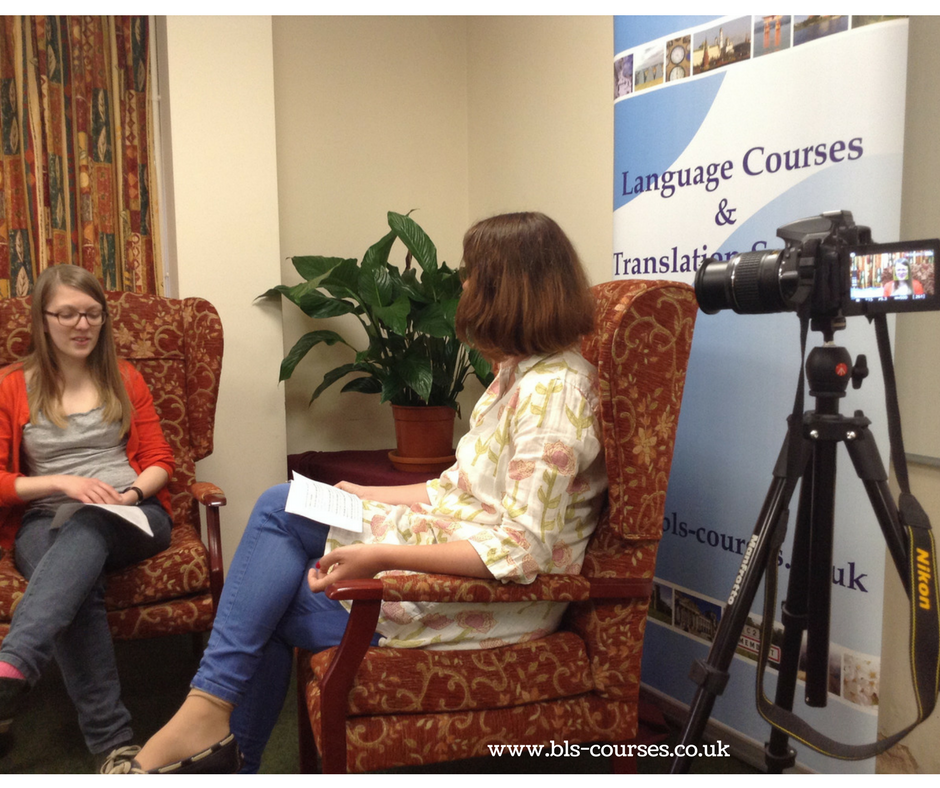
Hello, my name is Suzannah and I’m a linguist and freelance translator.  In this video, I answer questions about my journey to speaking 6 languages. I give one answer in each of the languages I speak: French, Dutch, English, Polish, Italian and Spanish. Firstly, in French, I talk about how I discovered I had a talent for the language and almost accidentally ended up spending some time in France and eventually studying French at university, which opened the door to me learning other languages – something I never imagined I would be able to do when I was a shy, quiet teenager. Then, in Dutch, I talk about the story behind why I started to learn other languages – mainly out of curiosity and thanks to friendships I made, as well as having the opportunity to live and work abroad.  I then give away a few tips on how to learn a language – or at least I explain what works best for me and how I have gone about learning each language – in English. After that I explain (in Polish) why I chose to learn Polish, my latest language: it came down to friendships again; plus, it was/is a fun challenge for me.  Then, in Italian, I talk about the advantages of speaking and learning different languages and what I like best about being able to speak other languages. Finally, in Spanish I reveal how I keep up my language skills and what I do to practise every day so I don’t forget them!  Bon visionnement! Veel kijkplezier! Happy watching! Bawcie się dobrze! Buona visione! Disfrutéis de la película!

Suzannah Young

We need your help! Suzannah, our multilingual student speaks 6 languages and we’ve recorded an interview with her speaking them (available on YouTube). But, we need your help with translations from Dutch, French, Italian, Spanish and Polish into English.

Leave your translations here below our blog post and we’ll then add them to our video as subtitles! Good luck 🙂

September 7, 2016

Language learning: Which exam should I take to prove my level?

When you are learning a language, sometimes you want to have something official to show for it, to demonstrate which level you have got up to according to recognised examination bodies.  This can be useful if you are applying for a place at a university, which often require proof of level in the language in which programmes will be taught, if you are applying for a job, if you want to emigrate to a country of acquire citizenship of a country, if you want to teach the language, to add to your CV for later, or just to give yourself the reassurance that you have reached a certain level.  But which exams should you take?  Here is a list of recognised exams and qualifications for a few of the languages we teach at Bristol Language School.
IMG_7453 ready

One good place to start is looking at the list of European Language Certificates, or telc language tests, which are international standardised tests of ten languages, which offers over 70 tests, including general language and vocational examinations and tests for students. All telc language examinations correspond to the Common European Framework of Reference for Languages (CEFR) for listening, reading, speaking and writing. Your BLS teacher can also advise you on which exam to choose.

Arabic – In the UK, you can take a number of GCSEs and iGCSEs (International GCSEs) in Arabic, and the Cambridge International Examinations.  In Europe, you can take the telc in Arabic, or alternatively the European Arabic Language Test, which is based on Level A2 of the Common European Framework of Reference (lower than the telc).  Internationally, there is the Arabic Language Proficiency Test.

French – FLE is the acronym for the Français langue étrangère or “French as a foreign language” test, which is intended for learners of French for cultural or tourism purposes. There is no single test but instead a variety of possible tests used to measure language proficiency of non-francophones in non-francophone countries.  If you wish to study at a French-speaking university, you can take the DELF/DALF, which gives a certificate of your level, and the TCF (Knowledge of French Test), which is required by universities.  There is also the DELF PRO for people wishing to work in French.  People who want to teach French will need to take a different diploma.  More information is available on the French Institute website.  The exams can be taken in Belfast, Birmingham, Cambridge, Cardiff, Edinburgh, Exeter, Glasgow, Jersey, Manchester and York.  There is also the telc in French.
IMG_7454 ready

German – The Zertifikat Deutsch is a test of general German proficiency. The Zertifikat Deutsch für den Beruf (Certificate in German for Professionals) is an internationally recognised examination which tests German language ability for business and professional purposes.  The DSH (Deutsche Sprachprüfung für den Hochschulzugang) is a language proficiency test required for entry to a German university. There is also a German telc.  The Goethe Institut will have all the information you need about German proficiency exams.

Italian – The Certificate of Italian as a Foreign Language (Certificazione di Italiano come Lingua Straniera or CILS) is recognised by the Italian Ministry of Foreign Affairs and is often used to grant acceptance in any Italian university or higher education institution in Italy. There is also an Italian telc.  The Italian cultural institute in London can tell you more.

Japanese – In the UK you can do either GCSE, the International Baccalaureate qualification, a practical language test or the Japanese language proficiency test.  There is also an aptitude test in the Japanese writing system, kanji.  The Japan Foundation has more information.

Mandarin – The Hanyu Shuiping Kaoshi (HSK) is an official examination designed to assess the Chinese language proficiency of non-native speakers from beginners to advanced Level (divided in levels 1-6).  It consists of reading, writing, listening and comprehension.  The London Confucius Institute has more information.
IMG_7498ready

Polish – In the UK, you can take GCSE & A-Level Polish or the Certificate in Polish as a Foreign Language (Polish: Egzaminy Certyfikatowe z Języka Polskiego jako Obcego), are standardised tests of Polish language proficiency for non-native Polish speakers that are currently available in CEFR levels B1-C2.  There is also a Polish telc.

Portuguese – The CAPLE (Centro de Avaliação de Português Língua Estrangeira or Centre for Evaluation of Portuguese as a Foreign Language) issues certificates of proficiency in European Portuguese as a Second language developed by the University of Lisbon.  The test is offered at CEFR levels A1 – C2.  It can be taken in London.  There is also a Portuguese telc.

Russian – The Test of Russian as a Foreign Language (TORFL) is a standardised test supervised by the Russian Ministry of Education and Science.  There is also a Russian telc. The Russian Language Centre has more information.

Spanish – The Diplomas de Español como Lengua Extranjera (English: Diplomas of Spanish as a Foreign Language), or DELE, are official diplomas issued by the Spanish Instituto Cervantes to participants who have passed a standardised test indicating their European Spanish language proficiency. The exam can be taken at the Cervantes Institute in London.  There is also a Spanish telc.

Written by Suzannah Young
June 1, 2016

On Languages: Italian

Do you want to get a real taste of Italian life, travel around this beautiful country with ease, appreciate its art and architecture and be able to compliment the chef when you try the local delicacies? This guide to learning the language of the Bel Paese should give you a head start.

On Languages--Italian 2

Say what you see
Unlike English, Italian spelling is phonetic. That means that the spelling of a word tells you how to say it (except in a few isolated cases, such as homonyms like ‘pesca’ (fishing) and ‘pesca’ (peach), and of course regional variations). It also means that words that have the same ending will always rhyme. For example, ‘cane’ (dog) and ‘pane’ (bread) will always rhyme (compare with English ‘chalice’, ‘police’ and ‘lice’, to give you an idea!). Italians pronounce every letter in a word, including vowels, so ‘aiuola’ (flowerbed) is a-i-u-oo-l-a and ‘cappello’ (hat) is cap-pel-lo. One thing to watch out for though is the stress pattern in words: in words with two syllables, like freddo (cold) and dito (finger), the stress falls on the first syllable, unless there is an accent on the last syllable to tell you that it is stressed (compare ‘papa’ (Pope) and ‘papà’ (dad)). In longer words, there is no predictable stress pattern, so you will need to learn them.  Uomo avvisato mezzo salvato – forewarned is forearmed!

Articulate!
Italian speakers move their mouths a lot when they are speaking.  They open their mouths wide and form the sounds with their lips – they don’t mumble!  They do this to say the vowel sounds clearly.  Have a go: try pronouncing the Italian letter ‘a’ – you just have to open your mouth wide and say ‘aahh’! Try this with new words you learn – practice pronouncing them in front of the mirror and make sure you get your mouth moving!

Get your hands moving
Anyone who has spent any amount of time in Italy or around Italians will have noticed that Italians move their hands a lot when they talk.  The insider knows that this is not just for emphasis – unlike some languages where speakers have more or less idiosyncratic hand gestures that they use to stress what they are saying, or to try to make it clearer, Italian hand gestures each have an individual meaning.  They are so vital to communication that Bruno Munari even published a (humorous) Supplement to the Italian Dictionary all about hand gestures (the text is available in Italian, English, French and German). You can also find numerous videos on the internet that explain their use. Try and learn a few to make your spoken (and silent) Italian more authentic.

Regional variations
There are many different regional accents in Italian, which means that consonants, vowels and the melody of the phrase change depending on where you are in the country. Most areas, but particularly villages and rural areas, also have a dialect that is different from standard Italian.  Dialects are mostly used at home and with friends, whereas standard Italian is used for more formal occasions and between Italians from different regions so they can understand each other. Read more about regional variations here and read about the use of different expressions here.

Take your pick
Italy has a lot to offer, be it music, art, literature, food, sport, architecture, history, travel or fashion.  Pick your favourite one of these and learn all about it – in Italian!

Written by Suzannah Young

February 17, 2016

Learning Languages – My Story

My name is Suzannah I am a PhD student in Translation Studies.  I speak five languages (English, French, Italian, Dutch and Spanish) and am learning a sixth (Polish).  You may ask how or why I have learnt/am learning them and what I use them for.  What I will say is that I use them all regularly and they are all a big part of my life.  Actually, I don’t know what I would do without them.  It may surprise you to know, though, that it wasn’t always like this.  There was a time when I thought I wasn’t going to carry on learning any languages at all.  In the end, my circumstances changed and I did carry on – and I’m very glad I did because it changed my life!  This is my story.

Learning a Language -- My story 2

Beginnings
I started learning French when I was little, thanks to my parents having got me to watch a bilingual video about an alien who comes to Earth and learns about human life…  This video was the same story in French and English.  It was easy to follow in French if you had watched the English version (and even if you hadn’t) and the storyline and learning material was very clearly presented.  The best thing about it was that it was fun – it didn’t feel like a chore and I enjoyed watching it again and again.  I was learning without even realising it!
Another early memory is that whenever we went on holiday, my parents always tried to learn a few words of the local language and encouraged my sister and me to try the food and appreciate the places we visited.  I am very grateful to them for having done this because I believe they gave me a positive attitude to new languages and cultures and made learning about new people and places a fun thing to do.  Of course, being on holiday helped make it fun!  This attitude has definitely stuck with me.

School Time
We had French lessons at school from when I was 11 but I feel we only learnt a few set phrases and weren’t really given a love for the language.  Nevertheless, I found I understood things quite quickly and did receive some encouragement from the teacher.  The problem was, learning a language was not seen as ‘cool’ at my school and I actually hid my talent from my peers and pretended I found it as difficult and boring as they did!
I got a good mark for GCSE French and luckily decided to carry on to AS Level.  I thought I was only going to do a year but, thankfully I had a very dedicated and enthusiastic teacher who encouraged us to nurture our talent and used interesting learning material like films and newspaper articles – real life material that real French people used.  That made it more relevant to us and made us see that it was a living language.  I carried on to A-Level and did well in it.
As A-Level students, we had the opportunity to go and stay with a family in France.  My host mother was a wonderful lady, she was very supportive and was really interested in everything we did.  She introduced me to literature and a theatre group she was involved in.  We are still in touch today (almost 15 years later) and I have visited her numerous times.
I still didn’t think I was going to carry on with French and thought I was going to do English Literature at university.  In the end I didn’t get the grades I needed to do English and decided to defer my university entry for a year and reapply.  That meant I needed something to do for a year. A friend of my sister’s had just done a placement in France and suggested I do the same.  She gave me the details of a language school and I contacted them.  They signed me up for a three-month language course and a work experience placement.  I enjoyed the life at my host family’s house less than the time before but I made some really good friends at the language school.  A lot of them were Chinese and it was fun to learn about their country as well as learning French together.  They even taught me a few words of Mandarin!  At the time it was funny for me to think that we were able to communicate with each other through a language that was neither of our first languages.

University Life
Thanks to this placement, which improved my French a lot, I applied to do French and English Literature at a different University.  I was accepted and spent three years there.  The language learning experience depended on how committed you were to learning – there were resources available but you had to use them on your own initiative – but we did learn a lot about French culture and society, which helped us to understand the background to the language we were learning.
I spent my Erasmus year in Paris, France.  Initially, I started a work placement but didn’t enjoy it so enrolled in a university.  That was one of the best decisions I have ever made.  If I had stayed on the work placement, I may have got disheartened but as I went to university I met a lot of people my age and made life-long friends.  I was lucky enough to meet a group of friends who I spent every day with – you can say I was really immersed in French culture!  It was a bit difficult following lectures in French at first but I had a trusty electronic dictionary which gave me the definitions of words I didn’t know and I soon got up to speed.  My friends and I started a Spanish class together as well, which was a fun experience – learning a language through a language that was not my mother tongue!  In the summer after my Erasmus year, I went to stay with a friend in Madrid and did a language course – for fun.  That was great too because of the amazing people I met from all over the world.  We had to use Spanish to communicate with each other so it really helped us learn.

After Graduation
When I graduated, I wanted to get a job using my languages so I applied for internships in Brussels, Belgium.  I started an internship at a European NGO, where I would be speaking French and English.  It turned out that they needed my Spanish too.  Initially, I thought I was going to stay there for six months (you can see that this is a recurring theme!) but then I was offered a full-time job and ended up staying for six years!
Belgium has three official languages, Dutch, French and German (and an unofficial one, which is English!)  I was curious to know what the signs I could see in Brussels said, so I enrolled on a Dutch course.  I complemented my learning by listening to the radio and reading newspapers that were readily available.
After a few years in Brussels, I met a person who ran a theatre group in Antwerp.  I started going to the theatre group every week, and it was there that I met my partner, who is Italian.  I moved to Antwerp to live with him, which meant that I could practice Dutch all the time.  I also learnt Italian through my partner and with his family.  I had to speak Italian if I wanted to speak to them, and I did want to speak to them, so that was useful!  I found I learnt Italian fairly quickly because it is similar to French and Spanish so I could already understand quite a lot.  We have a lot of Italian friends and I speak to them all in Italian.
While still in Brussels, I met a few Polish people through work.  We became friends and I realised I was interested in learning their language.  When I moved to Antwerp, I decided to enrol on a Polish course, not least because I wanted to meet people in my new town.  I also wanted to see whether I was capable of learning a Slavic language.  I had learnt three Romance languages and a Germanic language so learning Polish was (and still is) a new challenge for me.

Back in the UK
I recently moved back to the UK and have carried on learning Polish.  I am finding it a bit more difficult to learn than it was to learn the other languages I speak.  This may be because I don’t have many people to practice with.  Learning my other languages went quite quickly because I was able to practice with people around me and, in some cases, I had to speak because there was no other option!  I think it is important not to be afraid of making mistakes and just speaking – but I am finding it a bit hard to follow my own advice in Polish at the moment!!

The Last Word
As you can see, my reasons for learning languages have been enthusiastic teachers and a positive attitude to language learning on the one hand and friendships and a desire to have new experiences on the other.  Being in an environment that has allowed me to be exposed to the languages on a regular basis has definitely been beneficial to my learning.  Speaking other languages has allowed me to meet lots of wonderful people but it has also been useful professionally.  For example, I do translation work sent to me through people I have met abroad.  The most important part of language learning for me, though, is by far the friends I have made.
I hope you can have a similarly positive experience with learning languages!

Written by Suzannah Young