Tag Archive: Language Learning

May 24, 2017

Learning a Language: Learn Spanish with BLS online & FREE!

We would like to introduce a new series of blog posts/videos where we teach you some useful phrases in different languages. Sounds amazing? Let’s start with Spanish!


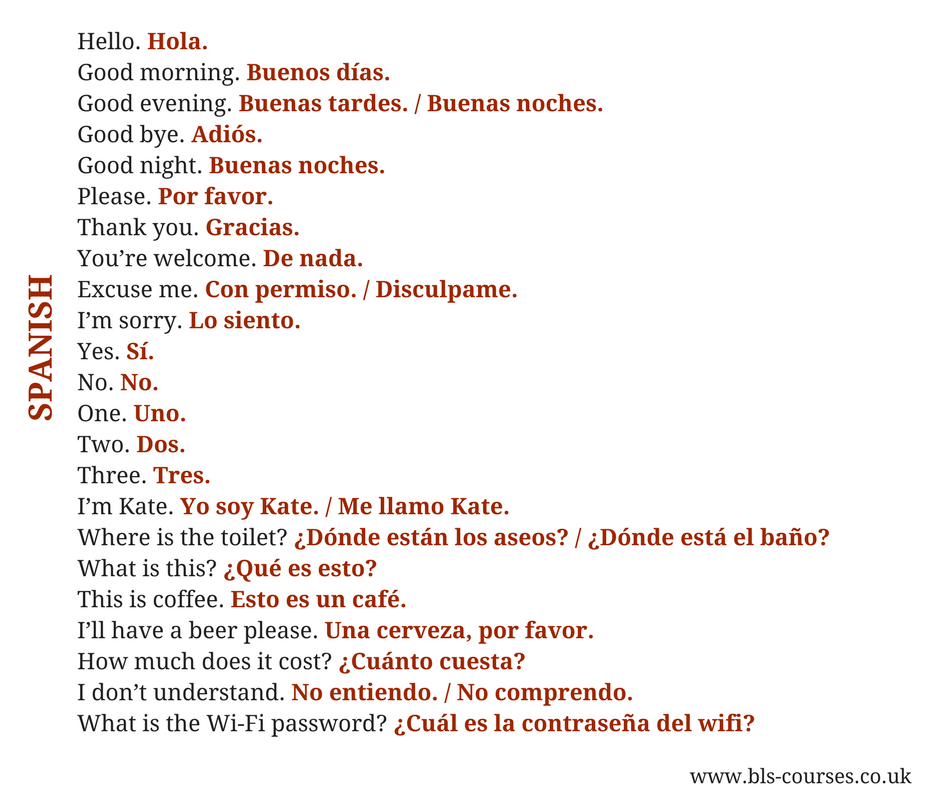
Learning a language -- useful phrases in Spanish 2

Are you planning your summer holiday in Spain? Do you travel frequently to Madrid? Do you dream of exploring South America?

If so, we would like you to taste & learn some essential Spanish first. Below you’ll find a list of useful phrases in Spanish (greetings, polite phrases, closed question words, numerals & simple questions and sentences).

We also video recorded Noelia, our Spanish tutor to help you with reading, pronunciation and accent (available on YouTube).

We hope you’re going to enjoy this series and that you’ll come and learn Spanish with us! Good luck!

learning a language -- useful phrases in Spanish 1

Which language would like you like to learn next? Let us know in the comments below.

Written by Kinga Macalla

May 17, 2017

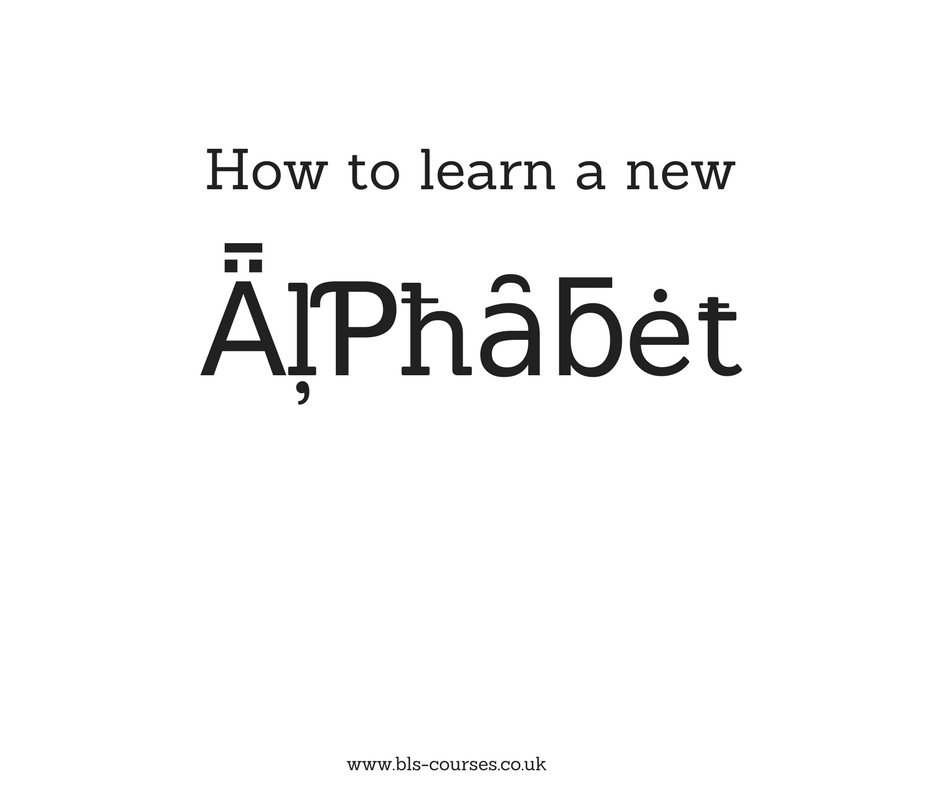
Learning a Language: As easy as ABC? How to learn a new alphabet or writing system

When you learn a new language, you may have to learn to use a new alphabet or writing system too.  An alphabet is a set of letters that is used to write a language.  The letters represent sounds in the spoken language.  Other types of writing systems, that do not use alphabets, use characters that represent syllables or words rather than sounds.  A few of the languages you can learn at BLS (Arabic, Japanese, Mandarin Chinese, Russian) use an alphabet other than the Roman alphabet (the one English is written in) or a different writing system. Even some of the languages that do use the Roman alphabet have characters that are not used in English (e.g. Czech, French, German, Italian, Polish, Portuguese, Spanish).[1]
learning a language -- how to learn a new alphabet

Learning a new alphabet or writing system is not something we are necessarily used to doing (except if you specialise in maths, music or computing, perhaps), but it can be done.  These tips below should give you some pointers on how to go about learning and remembering a new alphabet or writing system.  It may only take a few hours or days to learn the system, actually – but then of course you need to keep practising it to make sure it sticks in your mind!  It is a good idea to try and learn the alphabet or writing system as soon as you can as it will make things easier as you go on.  It is harder to unlearn a substitute system you are using, like transliterating the sounds with an English alphabet that it is to learn the writing system of the language you are learning from the word ‘go’.  The language will make more sense to you as a whole as well if you learn the alphabet that it is written in.

Learn how the writing system works

First things first: familiarize yourself with how the writing system works.  What is different about it? Does it use syllables or consonants and vowels?  Are the vowels written above the letters? Does it connect its letters?  Do you read it horizontally, vertically, left to right or right to left?  This helps you get a feel for the writing system or alphabet and means there shouldn’t be too many surprises when you are learning what the words are.

Associate letter shapes with familiar objects

Try to associate the shapes of letters with familiar objects: some letters may look like letters or numerals in your own alphabet, others may remind you of animals, objects or people. You can use the word association technique we looked at in a previous post to help you think of stories to go with these animals or people to help you remember the sound/word the letter or character represents.  A good example from this webpage is how to memorise the Japanese character の, which is pronounced “no”.  The character looks like a “do not” sign, which you can associate with the phrase “no smoking”, which gives you the “no” sound represented by the character.  This blog post recommends doing this for every character and abandoning ‘romanisation’ (trying to transliterate sounds into the Roman alphabet) altogether.  Actually, in Chinese and Japanese, some of the characters already do this for you, because they developed from trying to represent objects visually anyway.  Sometimes you can recognise what they are, such as the symbol for moon in Mandarin Chinese, 月亮, part of which, 月, is used to write the month of the year (一月 January, 二月 February, 三 月 March, and so on).  The concept of months arose with the cycle of moon phases, so this makes sense.

Also try to see whether letters are similar to each other; this can mean that they have a similar sound.  For example, the sound ‘ga’ in Japanese is represented by the symbol が, which looks like the symbol for ‘ka’(か) with two apostrophes added to it.

Learn a few letters or characters a time

Try to learn the letters or symbols a few at time rather than all in one go.  Try to learn them according to a system as well.  For example, in Japanese, the symbols can be grouped by initial consonant sound, e.g. か(ka), き(ki), く(ku), け(ke), こ(ko) or final vowel sound e.g. か(ka), さ(sa), た(ta), な(na), は(ha), ま(ma), や(ya), ら(ra), わ(wa) and so on.  You can use flash cards or another system to look at the letters, symbols or words repeatedly and remember them.  Try to learn at least one word that uses each letter or character you have learned (this takes longer with a writing system than with an alphabet!).

You should be careful of letters that look like letters in the alphabet you already use but are ‘false friends’, i.e. they look like letters you already know but do not have the same sound. For example, in Russian the following letters look like English letters but are pronounced differently: B = [v], H = [n], C = [s] and P = [r]. As an example, the Russian word ‘PECTOPAH’ means ‘restaurant’ and can be transliterated as RESTORAN.  This can be the case when you learn languages that do use the Roman alphabet too, where the same letters have different sounds.  Have a look at these Italian words as an example: the ‘z’ in ‘zaino’ is pronounced ‘dz’ (‘dzaino’), ‘gli’ is pronounced a bit like ‘lyi’ and the ‘c’ in ‘cena’ is pronounced a bt like ‘ch’ in ‘cheese’ (‘tʃena’), which is not what you might expect from how those letters are pronounced in English.

Write the letters or characters out a hundred times

It really helps you to memorise the letters or characters if you write them out by hand.  Trying to memorise them by looking at them in a book or on a computer screen will not be as effective as if you write them down.  This is because writing engages your brain in a more active way than reading does.  Practice writing the letters as often as possible.  If you find it helpful to learn them by following a pattern, write them down according to that pattern.  Learning the standard way to write the letters: i.e. the shape, direction and order of strokes, will help you to memorise them and help you to write them legibly.  If you can find teaching materials that children use to learn to write at school, that will help a lot.  If the language you are learning uses special paper to teach people to write on, try to get hold of that.  For example, Chinese languages use writing sheets with boxes and grid lines to help you keep the characters to a uniform size and shape.  If you can, take a calligraphy or writing class.  This will help you improve your handwriting and get used to other people’s handwriting and computer fonts.  Getting used to people’s handwriting is useful even if you are not learning a different alphabet as people form letters in different ways in different countries.  Here is an article about how French people learn to write, for example.

Read anything you can get your hands on

Read texts written in the new alphabet as often as you can. Even if you don’t know all the letters or characters yet, you will be able to make out some of the words and to guess the others. Look out for people’s names, place names and loan words from your own language as these can be easy to recognise.  Label things around your home or office in the new alphabet. This will help you recognise key words and phrases.

At first you may have to sound out letters individually before being able to decipher the words.  Later on, you will be able to recognise words by their shapes and will only need to sound out the letters of unfamiliar words. You probably went through the same process when learning to read your native language.  Even writing systems such with Chinese and Japanese characters can be learnt by breaking them down into parts.  Try to read aloud in your new alphabet as often as you can as this will help you get used to the sounds the letters or characters represent.

Online material and apps

There are lots of tips on how to learn new alphabets or writing systems on the internet, such as this forum.  You can find exercises to help you learn too.  There are also several apps specifically for learning and practicing alphabets, and you can even find less common languages there too.

I hope you enjoy learning a new alphabet or writing system and feel proud of your achievement!

[1] E.g. á, à, ä, â, ą, ǎ, ć, ç, é, è, ë, ê, ę, î, ì, ï, ll, ł, ñ, ň, ô, ò, ǒ, ö, ř, ś, ß, ť, û, ù, ü, ú, ǔ, ů, ý, ż, ź, ž.

Written by Suzannah Young
May 10, 2017

Learning a Language: Learning Vocabulary with Word Association Techniques

There are several techniques that can help you learn and remember vocabulary in the language you are learning.  In this post, we will explore techniques that help you remember what a word means by associating it with an image in your mind.  Association links new information with old information stored in your memory.  If you link a word with an image, it can be linked with other information already stored in your memory and so you will remember it better.  For example, to remember a person’s name, you can relate it to a feature of their appearance.  Here are a few more examples of using images to help you remember vocabulary.

learning a language--word association techniques

Linkword Technique

The Linkword mnemonic (memory-aid) technique, developed by Michael Gruneberg, uses an image to link a word in one language with a word in another language. Here are some examples from French vocabulary for English speakers: the word for “rug” or “carpet” in French is “tapis”.  To remember this, the Linkword technique says you should imagine an image of an oriental rug with the picture of a tap woven into it in chrome thread.  “Tap” is found at the beginning of “tapis” so should help you remember the word when you visualise a rug.  Next, the word for “grumpy” is “grognon”, so you should imagine a grumpy man groaning – “groan” sounds like “grognon” so should help you remember it.  Other examples from German and Spanish are: to remember “Raupe” (German for “caterpillar”), you should imagine a caterpillar with a rope around its middle.  To remember the Spanish word for cat, “gato”, you can imagine a cat eating a chocolate cake, or “gateau”.

Visualisation Technique

It is not always necessary to think of words in your own language in the visualisation.  It is also possible to learn vocabulary by associating the word with an image.  This technique uses the idea that when you hear a word, you visualise things that are associated with it in your mind.  For example, when you hear “bird”, you think of what a bird looks like.  When you hear “sweet”, you think of things that taste or smell sweet such as desserts or flowers.  This is how we understand the word’s meaning, according to this technique.

Teachers teaching languages can show students a picture representing the meaning of a word they are trying to teach them.  Otherwise, they can act out the meaning.  They can ask students to think of things that are associated with the word, such as food if the word is “tasty” or a successful or hardworking person if the word is “ambitious” (and abstract concept).  If you are learning by yourself, you can draw pictures of the words you are learning or think about images that the word conjures up.

This visualisation technique can also help you learn connotations of words (ideas or feelings that a word invokes beyond its literal meaning).

The Town Language Mnemonic

An extended example of the visualisation technique is the town language mnemonic developed by Dominic O’Brien.   It is based on the idea that the core vocabulary of a language relates to everyday things – which can typically be found in a town or village. To use this technique, you should choose a town you are familiar with and use objects there as cues to recall images that link to words in your new language.  Here are some examples:

Nouns in the town

Nouns should be associated with locations where you might find them: the word for “book” should be associated with an image in your mind of a book on a shelf in the library. The word for “bread” should be associated with an image of a loaf in a bakery.  Words for vegetables should be associated with a greengrocer’s shop. If there is a farm outside the town it can help you remember the names of animals.

Adjectives in the park

Adjectives should be associated with a park in the town: words like “green”, “small”, “cold”.  People in the park can help you remember adjectives for different characteristics or hair colour or

Verbs in the gym

Verbs can be associated with a gym or playing field. This allows you to make associations for “lift”, “run”, “walk”, “hit”, “eat”, “swim”, “drive”, etc.

Try It Yourself

As well as being powerful tools for learning and memorising vocabulary, these techniques can be fun and can keep you interested in learning new words.  Lists of words can be useful too but images can help jog your memory.  You may remember the words better if you write them on a whiteboard too – you are active and moving around when you do this so your brain is stimulated more than when you are sitting at a desk.  We hope you find these tips useful.  Let us know if they work for you!

Written by Suzannah Young
March 29, 2017

Interview with Babel Babies

1. What is Babel Babies, who created it and where are you based?

Babel Babies provides multilingual, multisensory music sessions suitable from birth. We explore songs and stories from around the world with our multilingual mascot, Croc Monsieur. We believe it is never too early or too late for parents and children to learn languages together.

Babel Babies started in Cheltenham nearly six years ago when two sleep-deprived mamans, Cate and Ruth said to each other, “Know Twinkle Twinkle in any other languages? I’m so bored of singing it in English!”. As qualified teachers and linguists, they began to introduce new songs and stories in different languages to their children and the idea for Babel Babies was born. In 2012, a mutual friend introduced them to Dominique, fellow linguist and mum, who was based in nearby Bristol. Together, they set up Babel Babies as a limited company and set off on their language revolution. Our sessions currently run in Bristol, Cheltenham and Manchester, but we are looking to expand to new locations in the near future. The world is our oyster!

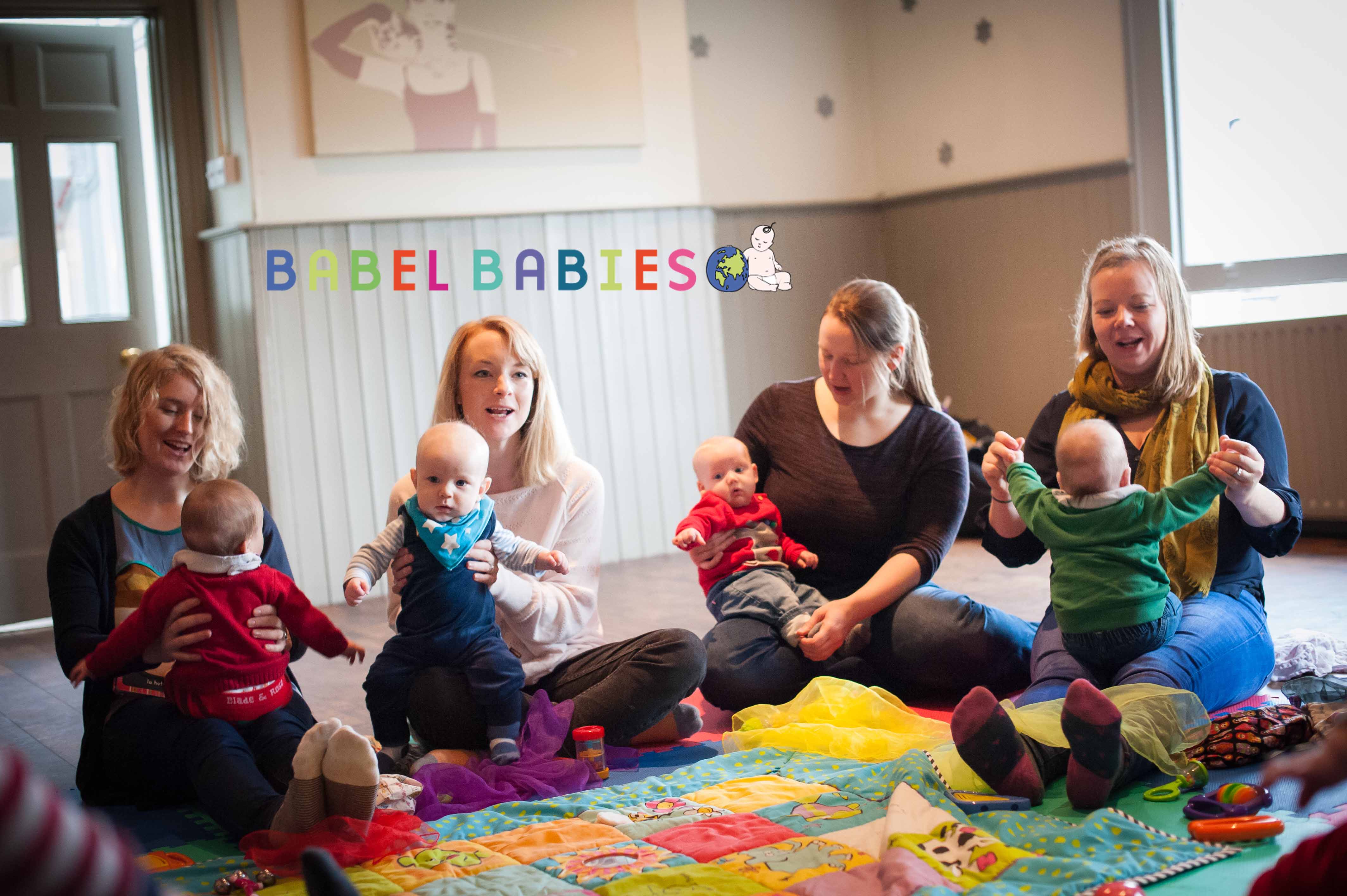
Babel Babies Singing mums for web

2. What languages do you use in your baby sessions? When is it best for the little ones to start attending the classes? When do children start reacting and singing in foreign languages?

Our sessions are multilingual and we hope to ignite a passion for learning new languages with parents and children alike. We cover French, Italian, German, Spanish, Portuguese, Norwegian, Arabic and Japanese, but that’s by no means an exclusive list. We are always striving to expand our repertoire and include new songs in different languages. We believe that teaching children about other languages and cultures really broadens their horizons and gives them an understanding of the world around them. They have the capacity to learn several languages simultaneously (the majority of children in the world speak two or three languages!) so why not make the most of their incredible abilities?

Babel Babies is suitable from birth. Language learning begins even before birth, and babies recognise their mother tongue when they are born. They are able to hear any sound in any language for most of their first year, and start to tune into the language they hear most after about ten months. If you expose babies to foreign languages and sounds in their first year, they will have a lifelong positive relationship with learning languages as well as a permanent neural map of the languages they were exposed to.

The children react right from the start of Babel Babies. We have had tiny babies, only a few weeks old, stop screaming when they hear a certain song on the CD and older children sing along to “Old MacDonald” in Italian before they know it in English. If you join us at Babel Babies, who knows what your child’s first word may be? It could be hello or thank you in one of the many languages we cover, or even a Japanese croak from our frog song!

3. How do you choose songs in foreign languages? Do you consult native speakers regarding your choices? Do you follow specific websites or watch YouTube videos?

We cover a range of languages between us at Babel Babies and have a great variety of songs as a result. Some are well-known English songs that we have translated, some are traditional songs that our network of friends and family from different countries have taught us, and some we have created ourselves. All of our songs are proof-checked and approved by native speakers and translators and we learn from our own database of recordings and reference materials.

4. Do you speak any foreign languages? How do you to learn to sing in different languages?

Bien sûr! All of our Babel Babies teachers are linguists and it would be a very hard job to do if you didn’t speak any other languages. I studied French, German and Italian at A-Level and went on to study French and Italian at Exeter University. Whilst I was working for a translation agency I was also required to learn Arabic, which I really enjoyed. I have lived in Italy and Switzerland and would love to live abroad again at some point in my life. I am passionate about languages and am always trying to improve and learn new ones. I am lucky enough to have friends and family all over the world and love squeezing in trips to visit them and practice my languages whenever I can.

You don’t have to be a linguist to come along to Babel Babies. We love to encourage complete beginners to come along and try our sessions. The wonderful thing about Babel Babies is that the adults can learn alongside the children. Through music and repetition, the songs very quickly become familiar and it’s wonderful when parents and children can sing languages together.

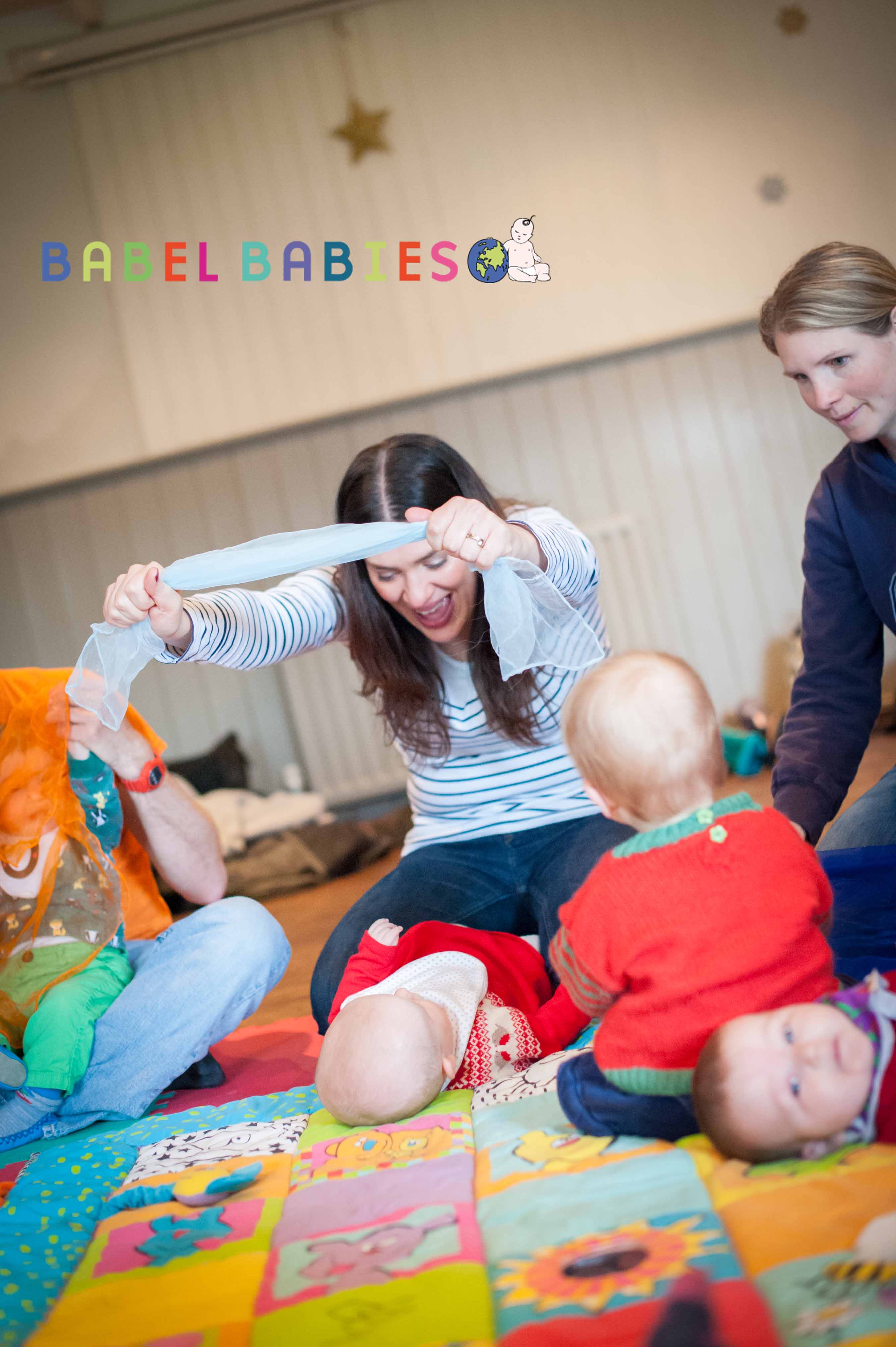
Babel Babies Peepo for web

5. What are the most challenging and the most rewarding elements to running classes with babies and toddlers?

The children are wonderfully unpredictable at Babel Babies, that’s half of the fun of it all. Being greeted by a room full of eager little faces saying “Ciao” can be one of the most wonderful feelings. From a baby smiling and giggling as you sing, to a toddler repeating the words you teach, I definitely think I have one of the best jobs in the world.

6. What are your future plans? Do you have any projects you would like to work on?

Babel Babies is set to expand this year. We want to share our little language revolution and have Babel Babies sessions running across the country. We want everyone to “Sing languages together, learn languages together and love languages together!”

If you would like to find out more about Babel Babies, or join us for a session in your area, please visit www.babelbabies.com for more information or follow us on Facebook and Twitter.

Great, thank you, we will follow your language revolution eagerly!

February 8, 2017

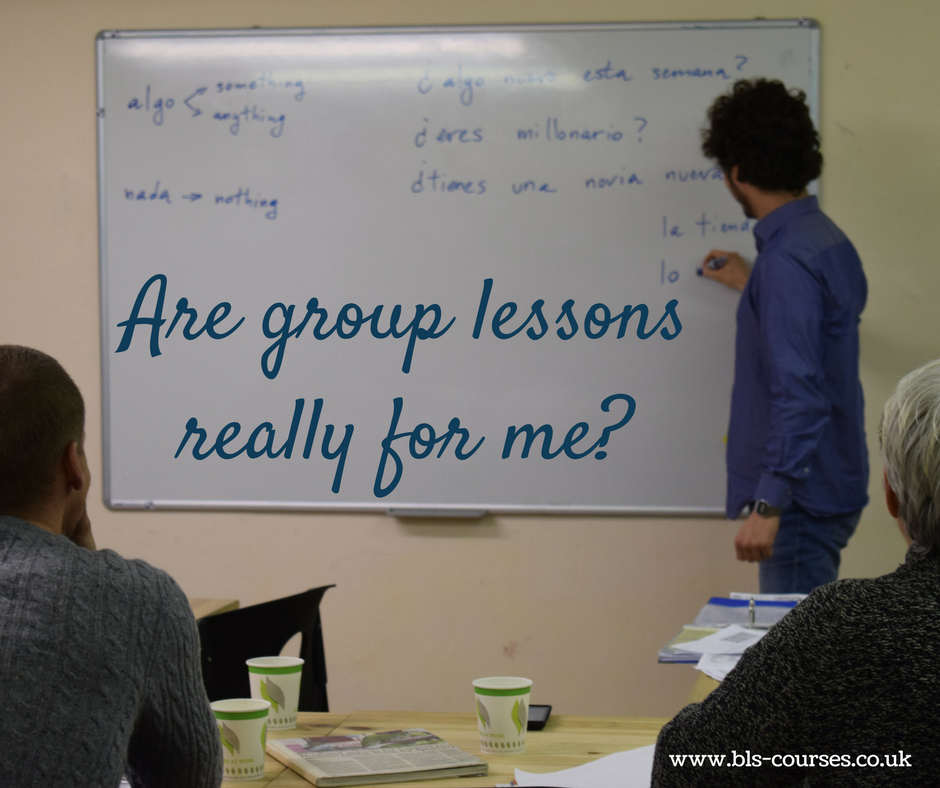
Learning a Language: Are Group Lessons Really for Me?

Are Group Lessons Really for Me_

When we decide we want to learn a new language, we want to find a suitable tutor or a course to guide us through our new learning journey. When is it right to have group lessons? Let me share with you some ideas.

FIRST STEP Let’s learn a new language together! We have more support when attending group lessons: e.g. from class-mates, our tutor or staff members.

ROUTINE We attend lessons regularly, so there is a routine established in our new language learning experience.

COMMUNICATION We communicate with our class-mates and learn new grammar and vocabulary, as well as learning about culture and more.

MOTIVATION If we need some support in maintaining motivation, we have many opportunities to speak and socialise while attending a group course.

TIME Group lessons are usually longer, so we have more opportunities to speak, listen, read and write in a foreign language.

FRIENDS We learn a language and we make friends, as we already share one common interest: learning a new language!

FINANCES Group lessons are usually cheaper, so we can save while studying a foreign language.

PERSONALITY Being competitive, extroverted or social may mean that we’ll be active in using the language more frequently when having group lessons.

language learning is fun.

I believe these might be the common reasons for choosing group lessons. What is your opinion or experience? When do you think we should have group lessons? Please let me know in the comments below.

February 1, 2017

Learning a Language: Is Individual Tuition Really for Me?

Is individual tuition really for me_-1

When we decide we want to learn a new language, we want to find a suitable tutor or a course to guide us through our journey of learning a foreign language. When is it right to have individual lessons? Let me share with you some ideas:

LANGUAGE SPECIFICATION You might want to learn an unusual or specific language, dialect or register, e.g. legal French or business Japanese.

GOAL You might have a specific goal, e.g. you want to sit an exam in 6 months.

TIME You might need to make progress within a time-scale, e.g. you have 3 months to learn communicative Spanish and you want to study every day at 7am.

BUSY You might have a busy work/life schedule, e.g. you only have time very early in the morning or at lunch-time.

TRAVEL You might travel frequently. Travelling may make studying difficult so it is important to plan your lessons in advance.

SELF-STUDY You might only need a little guidance, as you are studying on your own, e.g. help with pronunciation, specific grammar points or detailed questions.

PERSONALITY Being shy, introverted or individualistic may mean that you’ll be more active and you’ll use the language more frequently when having 1-to-1 lessons.

Empower Yourself

I believe these might be the common reasons for choosing individual tuition. What is your opinion or experience? When do you think we should have 1-to-1 lessons? Please let me know in the comments below.

January 25, 2017

Language Learning Tips: How to Use Your Language Skills Daily

What happens to a skill that you don’t use in a while?  You will be familiar with the phrases, “I’m out of practice” or “I’m a bit rusty…”.  It is a well-known fact that if you don’t keep up a skill you can forget it or it won’t come as naturally as it once did.  Well, it’s the same with languages. Any linguist will tell you that it is very important to keep practising your languages, because you can lose fluency very quickly if you don’t.  As they say, ‘use it or lose it’!

So how can you keep up your new language(s), especially if you don’t live in a country where it is/they are spoken?  To keep your skills alive, you should try to use them as often as you can, even every day if possible.  So how do you do that?  Here are a few tips on how to use your new language every day – for the fun of it too, not just to make sure your skills stay intact.


PERFECT-1

Read

You could try to read the news in your chosen language when you start your day or when you have a break, or read a novel in that language before going to bed.  Reading helps keep your vocabulary and grammar intact, and reading aloud helps you keep practising your pronunciation and helps your mouth stay used to making the sounds.  Try and read a variety of different styles so you remember what their registers are like.

Speak

If you want to keep up your speaking, you could join a MeetUp group or a conversation club, or you could look for a language partner online.  Otherwise, you can put up an advert asking for language exchange partners in your community centre or on one of the many Facebook groups for different language communities living in your city (in Bristol there are ‘Italiani a Bristol’, ‘Españoles en Bristol’, ‘Nederlanders in Bristol’, ‘Français à Bristol’, and the list goes on…).

This may sound strange, but another way to keep up your speaking skills is to talk to yourself.  Of course this is not always easy but if you are in the car or in the kitchen, or somewhere else where it’s just you, you can go over what you have to do that day or describe what you can see out of the window (or other things!) out loud to yourself in your chosen language.  You can easily fit this into your daily routine so you don’t need to make extra time to practise.  See our previous post on studying every day for more tips on how to do this.


study every day 26.10.16

Listen

You can listen to your chosen language on the radio when you have things to do around the house.  It is a good way to keep your mind occupied when you are doing things that don’t require language, like hanging the washing out or doing the ironing.  You can also sit down and listen to radio documentaries or the news that require more attention.  You can listen to music as well, which you can also do on your mp3 player whilst out for a jog, or in your car.

Watch

When you relax in the evening you can watch a film in your new language, or if you have a subscription, watch TV in that language.  There are lots of news bulletins, documentaries and interviews to watch online as well.  This is a good way to maintain your listening skills and keep up to date with the latest events in the country (countries) where the language you are learning is spoken.

Contact your friends

Do you have friends who speak your new language?  These days it is very easy to stay in touch with them, by text message, on Facebook or on Skype.  Just drop your friends a message or ring them on Skype to have a quick chat.  If you prefer writing longer texts, you can always write them a letter, which will help you keep up your writing skills.  You can ask your friends to correct you if you like.  And of course, it’s important to stay in touch with your friends, whichever language they speak!

Written by Suzannah Young
December 7, 2016

On Languages: Dutch

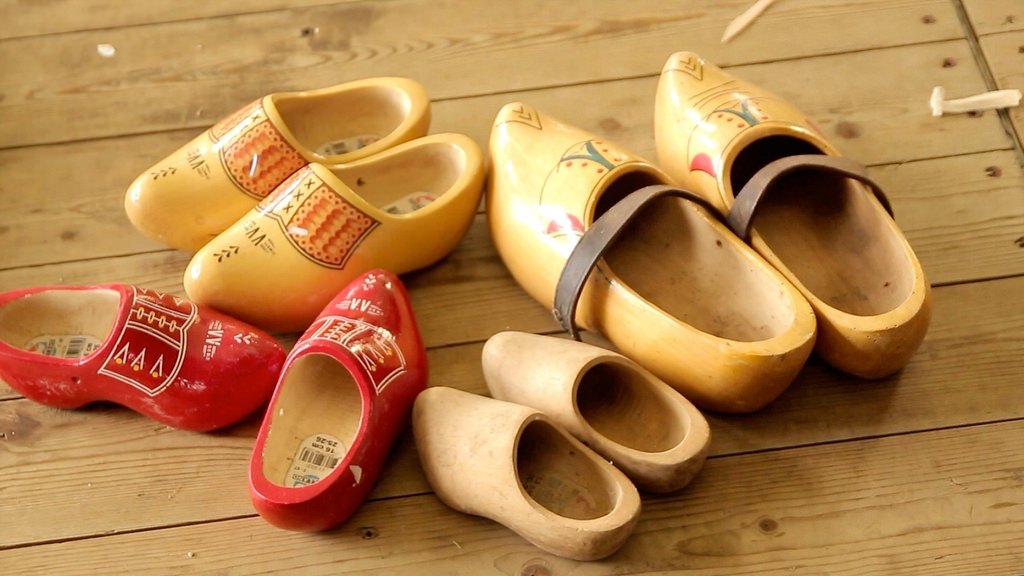
The Dutch language is a West-Germanic language (others in this family include English, Frisian, German and Luxembourgish) and its use goes back to the fifth century. Modern Dutch (Nederlands) is spoken by about 23 million people as a first language in the European Union —including most of the Netherlands and Flanders in the north of Belgium – and by another 5 million as a second language.  The Dutch Empire took the language around the world from the 17th to mid-20th centuries.  It is the native language of the majority of the population of Suriname, and also holds official status in Aruba, Curaçao and Sint Maarten. There are Dutch-speaking minorities in France, Germany and Indonesia and up to half a million native speakers are spread across the United States, Canada and Australia.

on-languages-dutch

There are several regional variations in spoken Dutch, the most significant of which is Flemish (in Belgium), which is spoken by around ten million people. Standard Dutch (Standaardnederlands or Algemeen Nederlands) is used for public and official purposes, including in schools and universities. A wide variety of local dialects are used in informal situations.

Most Dutch vocabulary is Germanic but also has loans words from Romance languages like French (and Latin).  It has more of these than German but fewer than English.  Because of contact between the Netherlands and Belgium and English-speaking countries throughout history, there are a lot of words in English that are of Dutch origin, especially names for everyday things like fruit and vegetables or colours.  This can make it easier for English speakers to remember Dutch vocabulary because a lot of it is familiar to them.  Some examples of English words of Dutch origin are ‘cookie’, ‘coleslaw’, ‘luck’, ‘mannequin’ or ‘Santa Klaus’.

Read more about the Dutch language on the BBC website and a comprehensive history of the language on the Dutch literature digital library.

How the language works

Dutch spelling is phonetic so you can tell how a word is pronounced by looking at it, and you can spell words easily if you listen to them!  Some sounds are a bit tricky for English speakers to pronounce, especially vowel sounds, but get easier with practice.  Examples are the ‘g’ sound, which is a bit like ‘ch’ in ‘loch’ and ‘ui’, which is a bit like ‘owe’ but not quite!  Learn more about the Dutch alphabet, spelling and pronunciation here.

Dutch grammar is similar to both English and German grammar.  Like English, it is simpler than German grammar, especially as it does not really use cases.  Features shared with German include three genders and a similar word order, such as putting the verb at the end of the sentence.  Learning how to speak Dutch is thought to be easier than learning German for English people because of its simpler grammatical rules.  I wouldn’t go as far as some people do who say that Dutch is the easiest language for English speakers to learn, though.  I think that can also be a potential pitfall because the languages are similar but are not identical, so it can be tempting to use English grammar in Dutch but that doesn’t work!  Also, the supposed simplicity of Dutch is deceptive: there are two articles for three genders (‘het’ for neuter and ‘de’ for masculine and feminine nouns (but you still have to know whether the thing you are talking about is a ‘he’ or a ‘she’)), and there are a few exceptions to rules that you learn.  Also, academic and literary Dutch has a very high register and is quite stylised.

Why learn Dutch?

There are practical incentives for people from the UK to learn to speak Dutch.  The Netherlands is a major trading partner of the UK and there are Dutch and Dutch-speaking businesses in the UK.   The Department for International Trade (DIT), that helps UK-based companies succeed in the global economy, is based in Belgium.  Belgium is the UK’s sixth-largest export market, worth £10 billion a year. The UK is Belgium’s fourth-largest export market with two-way trade worth in the region of £22 billion.  Learning the language can also help you on your travels.  Nearly a million Brits go on holiday to the visit our Netherlands every year and Brussels is reachable from the UK by train (the Eurostar).  For fans of cycling, canals, tulips, chocolate, windmills, beer, and European history, the Netherlands and Belgium are great places to visit.  Dutch and Belgian writers and film-makers also produce some hard-hitting work.

Where can I learn Dutch?

There are many ways you can learn Dutch.  If you want to learn the traditional way, you will find a long list of Dutch textbooks at the European Bookshop.  You can choose from monolingual (Dutch only) or bilingual (Dutch and English) books.  If you like to learn online, you can start with this introductory class on FutureLearn.  There are also lots of free YouTube videos that explain the finer points of the language.  If it’s vocabulary (woordenschat, literally ‘word treasure/riches’) you’re after, Taalklas (language class) is an online series that helps you learn Dutch vocab through videos and exercises.  They also have YouTube videos.  You can also stock up on lexicon using this free online dictionary.  If you prefer classes, some language schools offer Dutch classes.  Lastly, why not look for a language partner, perhaps through the ‘Nederlanders in BristolFacebook page?

Veel plezier! Have fun!

Written by Suzannah Young

October 26, 2016

Language Learning Tips: Do I have time to learn a foreign language every day?

Do I have time to learn a foreign language every day? Of course, not! But, I think you may change your mind after reading this article, so let me explain.

Impossible possible?
First of all, I’m not talking about spending hours practising every day (although, that would be just perfect!), but about finding ways to include some language practice for as little as 5-10 minutes per day. Secondly, you do not actually need extra time to practise every day. You need to prepare yourself for learning and then follow your daily routine. Thirdly and most importantly, enjoy the whole process from the moment you decide to learn a foreign language to carrying out your everyday practice.

study-every-day-26-10-16

How does it work?

You can follow the 5 steps formula:

1.    Find the time. Think about when you could potentially learn, e.g. while driving a car/commuting, cooking/cleaning/ironing, taking a bath/brushing your teeth, walking, waiting for a meeting/appointment/meal/train/bus, etc… Yes, there are endless possibilities!

2.    Follow your interests. Research the topics that interest you, e.g. cooking (recipes), holiday phrases, music (singers), art (painters), (non-)fiction writing (writers), etc.

3.    Get the resources. Prepare/order/borrow/download books, e-books, audio-books, podcasts, radio programmes, CDs, DVDs, magazines/newspapers, grammar books, flashcards, apps, etc.

4.    Have a weekly plan. Plan what you’re going to do every day, (you can of course review it every week), e.g. on Monday it’s reading (from crime novels to news), Tuesday-listening (radio podcasts, audiobooks), Wednesday-grammar (some relevant exercises), Thursday-speaking (reading aloud or shadowing), Friday-writing (diary, emails), Saturday-watching films (with/without subtitles), Sunday-vocabulary drill (flash cards, dictionary).

5.    Learn EVERY DAY!

IMG_7498ready

If you’re new to language learning or are very busy, I would recommend starting with the simplest routine you can implement and then trying to add new skills. And don’t wait until you think you’re ready, start learning a foreign language now!

If you follow everyday learning or any other routine, let me know more about your methods in the comments below.

October 19, 2016

How to Stay Motivated While Learning a Foreign Language

I am lucky enough to speak five languages and be learning a sixth.  Part of the reason why I have learnt them is because I have lived in several different countries, but you could say the other part is because I am motivated to learn them.  I enjoy the challenge and the voyage of discovery and I like to learn as much as I can about the place I am in, and that includes the language.  What better way to get to know people than to learn their language? I feel that it is also a sign of respect to learn at least some words in the language of a place you are travelling to: hello, thank you, goodbye, that kind of thing.

People sometimes ask how it is possible to keep up a second (or third, or fourth…) language, especially when you do not live in a country where it is spoken.  The key to doing this is wanting to maintain it – if it is important to you to maintain your skills in that language, then you are already half way there! I personally try to use my languages every day. I will read books and articles in my chosen languages and listen to the radio or watch films.  I try to treat each language equally but it is not always easy, it requires a bit of discipline.  But we all have favourites and I find that I spend a bit more time on my favourite language…

img_7433-ready

There are activities you can do to keep up your language competence, but maintaining your chosen language is also about a state of mind: remind yourself why you learnt it in the first place and why you love it, and you will want to keep on using it.

Here are a few activities you can do to maintain your new language, and tips on how regularly to do them.

Read
If you like to read novels, read novels in your second language.  If you like to keep up to date with the news, read (online) newspapers in the language you have learnt.  If you like cooking, read (online) cookbooks and regale yourself with the delicious goodies you make using your linguistic knowledge!  If you pursue activities that you like, it will be easier to maintain your understanding and it will come more naturally.

IMG_7498ready

Listen
Similarly, listen to the radio or listen to music you like in your chosen language.  This way you will keep your ear tuned in to what people sound like, stay abreast of what is happening in the country of your adopted language and enjoy that great music genre you discovered when you delved deeper into the language you decided to learn and its accompanying cultural artefacts.

Watch
Remind yourself why you love the culture of the country/ies where your chosen language is spoken by watching its/their films and tv shows (these can be found relatively easily on the internet these days; foreign language films can be borrowed from most libraries or bought for a relatively reasonable price at good record stores).

Speak to People
Find a meet-up group near you where people get together to speak the language and, of course, make friends.  Find an online platform where you can speak to language partners on Skype.  Move to a country where they speak your new language… Keeping in contact with people is a sure-fire way of keeping your language skills alive!

img_7537ready

Produce
With this in mind, it is important not just to maintain your passive skills but to maintain your active skills as well.  To this end, you should try to speak the language and write in it as often as you can, to make sure you keep using it.  Perhaps you can write a blog in your chosen language, keep a diary, or write to a pen pal (not as old-fashioned as you might think!).  As the adage goes, use it or lose it!

Routine
If you are the kind of person who likes to stick to routines, and finds structure motivating, then you can decide to dedicate a specific amount of time to doing these activities, like an hour a day, or half an hour of each language each day if you have two new languages on the go.  If not, you can do what you feel like doing and when you feel like doing it, and it won’t feel like a chore to keep up your language(s).

Enjoy
Most of all, keep enjoying your language learning and practising what you have learnt.  That is the key to maintaining motivation and retaining your new-found skills.

See more tips here.

Written by Suzannah Young