Tag Archive: Language Learning

October 12, 2016

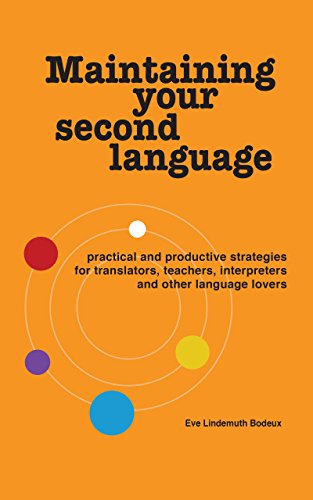
Book Review: Maintaining Your Second Language by Eve Lindemuth Bodeux

maintaining-your-second-language-1

“The big ‘secret’ to improving second language skills is practice.” Eve Lindemuth Bodeux (p. 9)

I became in love with this book from the very first page. The author, Eve Lindemuth Bodeux is an experienced second language user and the content is predominantly based on her own experience. This, I think, is what makes the book so special. As a reader, you want to implement many ideas and tips immediately, as you feel truly inspired by the strategies and techniques presented by Eve Lindemuth Bodeux.

I would need to re-write the whole content to praise it enough, but instead, I am going to introduce the book by one of its first chapters: ‘Define Your Goals’. I think it is important to know why we want to improve our language skills, what we want to achieve, what learning journey we will follow and how much time and energy will be involved in achieving our goals. I have answered the suggested-by-the-author questions for my two languages: Czech and French. It is only the beginning of this fascinating journey of maintaining and improving my language skills, but I have already started working on my Czech and French by watching films, reading out loud and having language exchange meet-ups.

Maintaining your second language is a practical and approachable guidebook for any second-language user, linguist, tutor, translator or language enthusiast. As enthusiastic as I sound I cannot recommend this book enough!

If you know more than one language, how do you maintain your second language skills? What is your favourite activity? Please share your tips in the comments below.

[All quotations and mentions come from Eve Lindemuth Bodeux, Maintaining Your Second Language, Spectacle Book Press, 2016.]

Written by Kinga Macalla

September 7, 2016

Language learning: Which exam should I take to prove my level?

When you are learning a language, sometimes you want to have something official to show for it, to demonstrate which level you have got up to according to recognised examination bodies.  This can be useful if you are applying for a place at a university, which often require proof of level in the language in which programmes will be taught, if you are applying for a job, if you want to emigrate to a country of acquire citizenship of a country, if you want to teach the language, to add to your CV for later, or just to give yourself the reassurance that you have reached a certain level.  But which exams should you take?  Here is a list of recognised exams and qualifications for a few of the languages we teach at Bristol Language School.

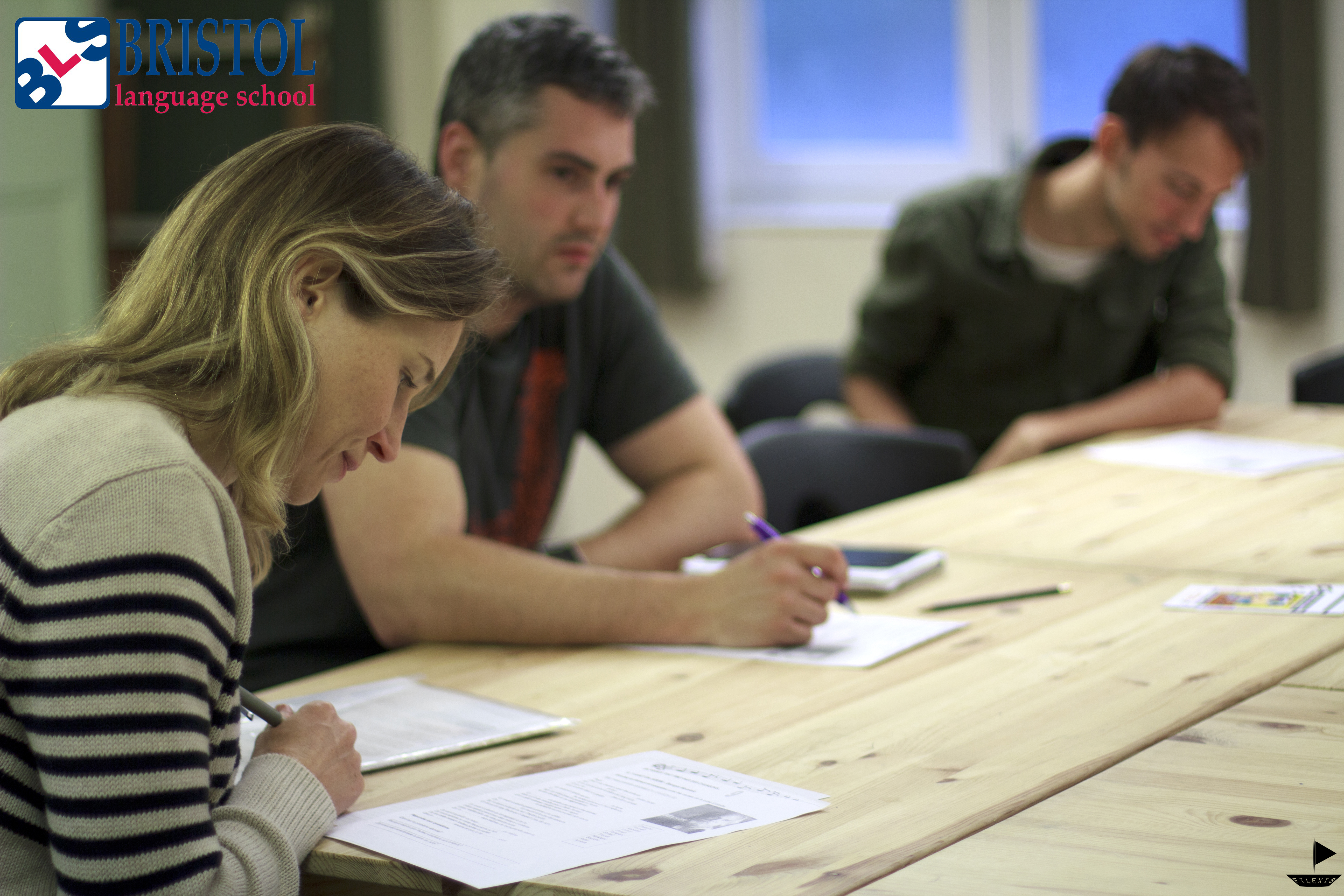
IMG_7453 ready

One good place to start is looking at the list of European Language Certificates, or telc language tests, which are international standardised tests of ten languages, which offers over 70 tests, including general language and vocational examinations and tests for students. All telc language examinations correspond to the Common European Framework of Reference for Languages (CEFR) for listening, reading, speaking and writing. Your BLS teacher can also advise you on which exam to choose.

Arabic – In the UK, you can take a number of GCSEs and iGCSEs (International GCSEs) in Arabic, and the Cambridge International Examinations.  In Europe, you can take the telc in Arabic, or alternatively the European Arabic Language Test, which is based on Level A2 of the Common European Framework of Reference (lower than the telc).  Internationally, there is the Arabic Language Proficiency Test.

French – FLE is the acronym for the Français langue étrangère or “French as a foreign language” test, which is intended for learners of French for cultural or tourism purposes. There is no single test but instead a variety of possible tests used to measure language proficiency of non-francophones in non-francophone countries.  If you wish to study at a French-speaking university, you can take the DELF/DALF, which gives a certificate of your level, and the TCF (Knowledge of French Test), which is required by universities.  There is also the DELF PRO for people wishing to work in French.  People who want to teach French will need to take a different diploma.  More information is available on the French Institute website.  The exams can be taken in Belfast, Birmingham, Cambridge, Cardiff, Edinburgh, Exeter, Glasgow, Jersey, Manchester and York.  There is also the telc in French.

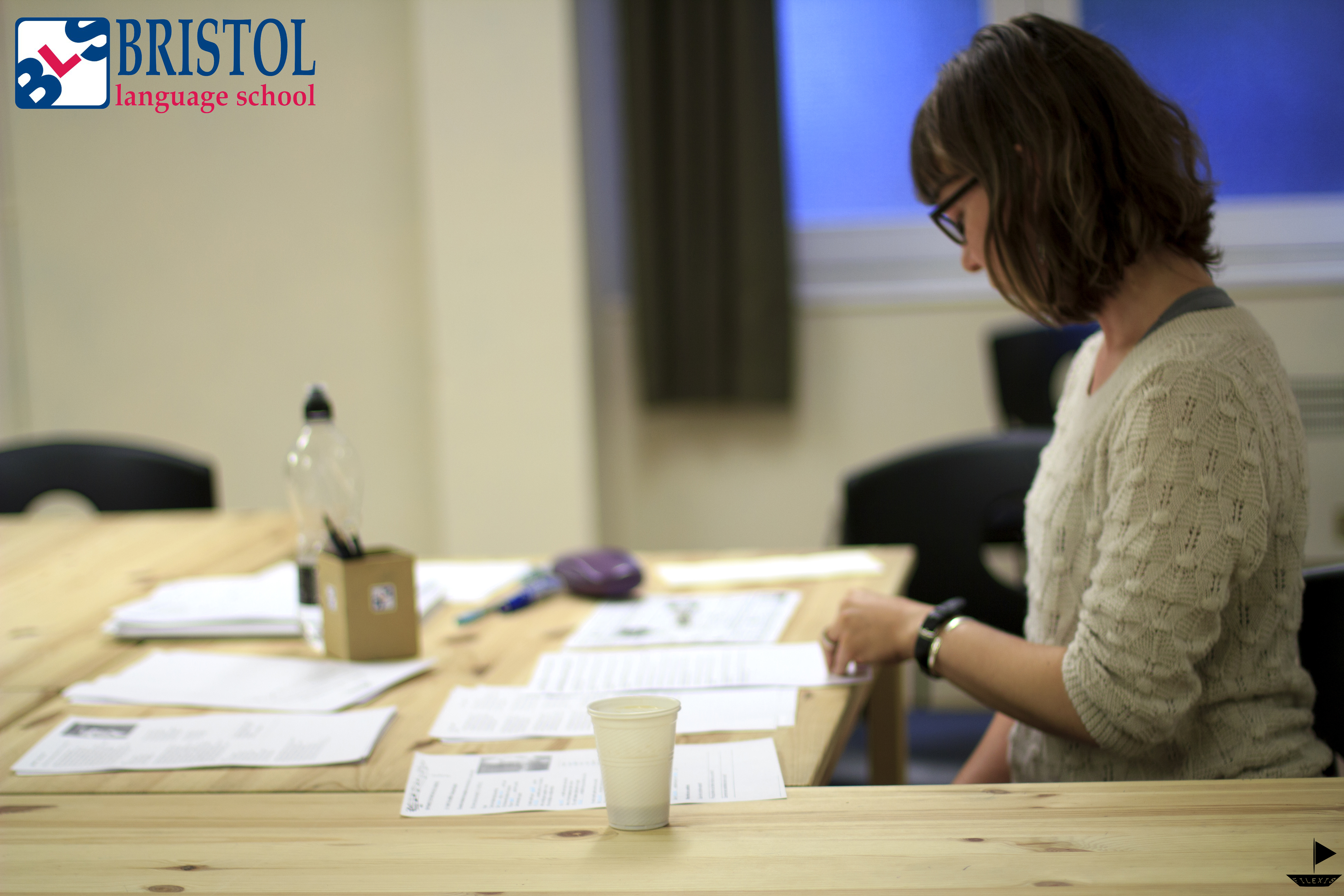
IMG_7454 ready

German – The Zertifikat Deutsch is a test of general German proficiency. The Zertifikat Deutsch für den Beruf (Certificate in German for Professionals) is an internationally recognised examination which tests German language ability for business and professional purposes.  The DSH (Deutsche Sprachprüfung für den Hochschulzugang) is a language proficiency test required for entry to a German university. There is also a German telc.  The Goethe Institut will have all the information you need about German proficiency exams.

Italian – The Certificate of Italian as a Foreign Language (Certificazione di Italiano come Lingua Straniera or CILS) is recognised by the Italian Ministry of Foreign Affairs and is often used to grant acceptance in any Italian university or higher education institution in Italy. There is also an Italian telc.  The Italian cultural institute in London can tell you more.

Japanese – In the UK you can do either GCSE, the International Baccalaureate qualification, a practical language test or the Japanese language proficiency test.  There is also an aptitude test in the Japanese writing system, kanji.  The Japan Foundation has more information.

Mandarin – The Hanyu Shuiping Kaoshi (HSK) is an official examination designed to assess the Chinese language proficiency of non-native speakers from beginners to advanced Level (divided in levels 1-6).  It consists of reading, writing, listening and comprehension.  The London Confucius Institute has more information.

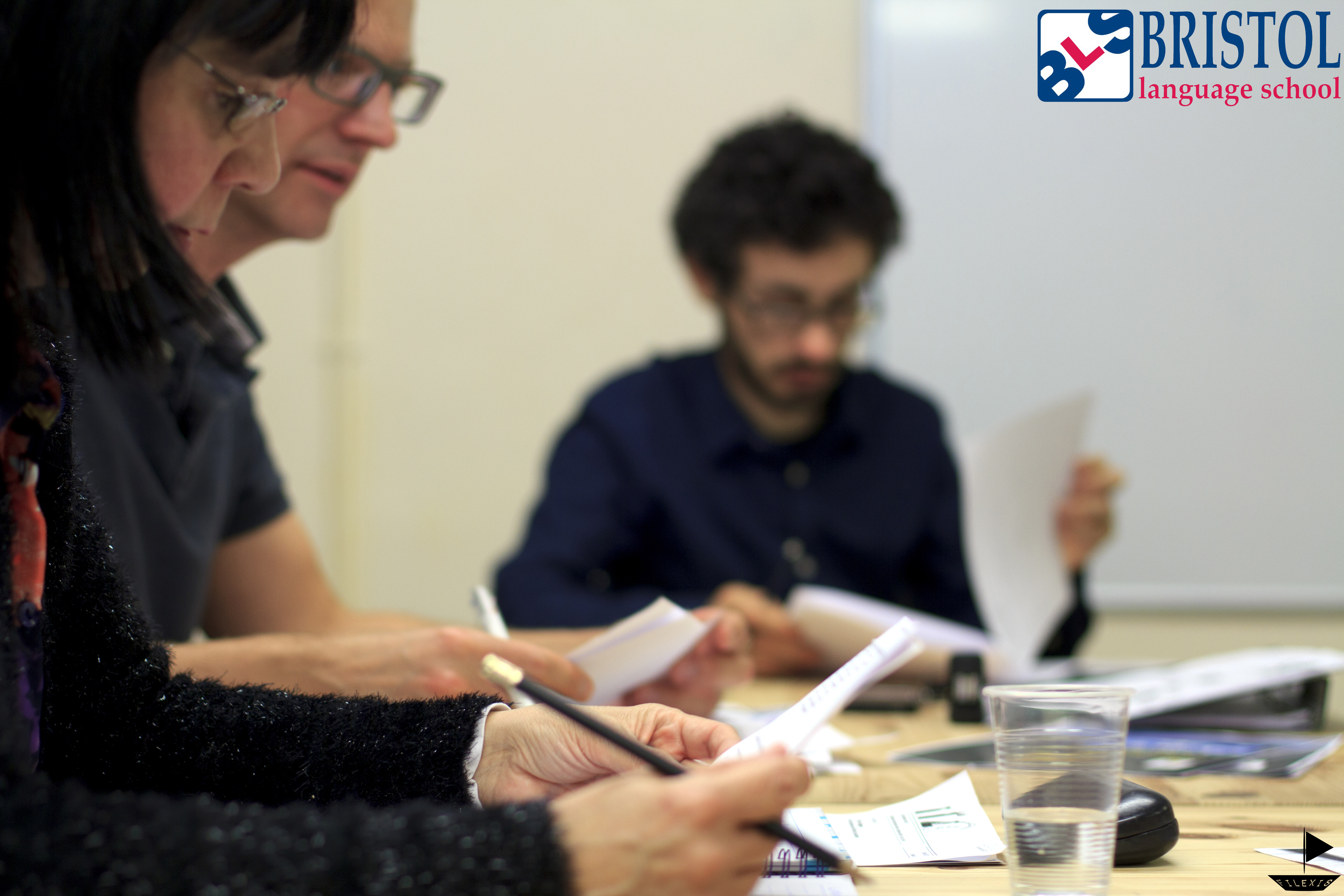
IMG_7498ready

Polish – In the UK, you can take GCSE & A-Level Polish or the Certificate in Polish as a Foreign Language (Polish: Egzaminy Certyfikatowe z Języka Polskiego jako Obcego), are standardised tests of Polish language proficiency for non-native Polish speakers that are currently available in CEFR levels B1-C2.  There is also a Polish telc.

Portuguese – The CAPLE (Centro de Avaliação de Português Língua Estrangeira or Centre for Evaluation of Portuguese as a Foreign Language) issues certificates of proficiency in European Portuguese as a Second language developed by the University of Lisbon.  The test is offered at CEFR levels A1 – C2.  It can be taken in London.  There is also a Portuguese telc.

Russian – The Test of Russian as a Foreign Language (TORFL) is a standardised test supervised by the Russian Ministry of Education and Science.  There is also a Russian telc. The Russian Language Centre has more information.

Spanish – The Diplomas de Español como Lengua Extranjera (English: Diplomas of Spanish as a Foreign Language), or DELE, are official diplomas issued by the Spanish Instituto Cervantes to participants who have passed a standardised test indicating their European Spanish language proficiency. The exam can be taken at the Cervantes Institute in London.  There is also a Spanish telc.

Written by Suzannah Young

August 31, 2016

Language learning: Which language to choose? With helpful videos in six languages

Estimates say that there are up to 7,000 languages spoken in the world today (in around 200 states!).  Some languages have millions of speakers and some have just a few thousand speakers.  But with so many languages to choose from, how do you decide which one to learn?  This blog post gives you a few ideas on how to make the decision.

Does it match your interests?

Have you heard a song that you like in another language and you want to know what it says?  Do you enjoy books by Sándor Márai or Milan Kundera?  Do you like Italian food?  Do you like going on holiday in a particular location?  If you learn a language that is linked to something you enjoy, you are likely to get more out of it and remember it better. If the language has relevance to your life, what you learn will stay with you.

Do you know people who speak it?

Some people are inspired to learn a language because they have friends or partners who speak it.  If you have a partner whose first language is different from your own, think about whether you need to learn it to speak to their family, their parents and siblings, or their friends.  If you go and visit their family, do you want to be able to speak to the people they grew up with? Do you want to be able to go out and interact with local people?  It is also a way to get to know a person better if you understand the language they think in, the language they spent their childhood years speaking.  You can show how much you care about them by learning the language that is dear to them and learning about their culture.  Your partner is also a good person to practice your new-found skills with – they can teach you and correct you and will want to help.

Will it be useful for your work?

Has the company you work for just signed a deal with a German business?  Have you just started importing products from Japan?  Is it going to give you the opportunity to work with your new colleagues if you learn their language?  Could you get new tasks and responsibilitites or even a promotion if you learn it?  Or do you want to look for a new, exciting job? What about one that gives you the opportunity to travel?  If you are looking for a change or a challenge in your career, learning a new language could be the perfect thing for you.

Do you want to move to a new country?

In today’s world, more and more people are emigrating and making a new life in a new country – for work or to have a new experience.  If you want to integrate in the country you wish to move to it is a good idea to learn the language spoken there, and you can give yourself a head start by learning some of it before you leave.  Learning the language will also help you get to know the country, understand the way things work, its politics and its culture.  The transition to life there will be smoother if you already understand some of the language when you get there.

Will it be useful in the future?

Some countries, like India, Bolivia, Morocco or Brazil, have economies that are developing fast and countries that are likely to become politically important on the global stage in the not-too-distant future, like Turkey.  It can be beneficial to learn the languages of those countries to be able to find employment working in or with them in the future.

Do you want to have fun?

Some people just enjoy learning languages, out of intellectual interest or as a challenge.  If you are one of these people, you can pick any language you like – because you like the way it sounds, because you like the look of the alphabet, because you like how logical it is…you name it!
BLS wishes you good luck in your learning, whichever language you choose!

Written by Suzannah Young

July 27, 2016

Language Learning Techniques: Develop your Speaking Skills in Another Language

We hope you found our post on writing skills useful.  This is the last post in the skills development series – and it talks about the most active skill of all, speaking.  Speaking is what most people want to do when they learn a language – it is how you interact with people, and it is the most natural mode of communication. It takes practice but it is very rewarding when you start to speak well in your new language. Here are a few tips to get you speaking fluently.

Speaking 2

Be Patient and Practise
Like babies, when we learn a new language, we start to understand the language we are learning before we start to be able to speak it, and long before we are able to speak it well. It will probably take you longer to master speaking, an active skill, than it does to master the other, receptive (or passive) skills. So remember that speaking takes practice, and the more you do it, the easier it will get.  Don’t be discouraged, and speak as much as you can, to as many people as you can! Don’t be afraid to make mistakes – people do that when speaking their own language, so it is perfectly fine to do it in a language you are learning. You can correct yourself just as you do in your first language.

Read Aloud and Get Active
If you are reading a text in the language you are learning, try reading it aloud.  You will get used to making the sounds and how the language works without having to think about the words first – this is good practice for when you have to speak. This is an exercise children do at school too – but you can make it less daunting by doing it in the comfort of your own home!  You don’t need an audience, unless you are a fan of theatre or slam poetry!  In fact, joining a theatre club that performs in foreign languages is a good way to practice speaking in a fun environment. Joining a multilingual choir is another idea.

Copy What People Say
We learn by imitation, and you can put this into practice in the language you are learning.  Listen to the radio or, better, an online broadcast that you can pause and play back and repeat what you hear people say. This works even better if you have a transcript of what is being said. Then you can hear the word, repeat it and check what it is if you didn’t quite catch the meaning. Time how long it takes you to read the whole transcript and see if it takes the same amount of time as the presenters.

Think of a Topic to Talk About
We speak better when we know what we are talking about, so choose a topic you are familiar with, such as your hobbies or what you did at the weekend, and practice talking about it, gradually saying more each time.  You can look up vocabulary first or draw a mind map to get your brain ready and then speak for a minute to start with and then gradually build up the time you talk for. Try this with different topics until you have built up a good conversation repertoire.

Written by Suzannah Young

July 6, 2016

On Languages: French

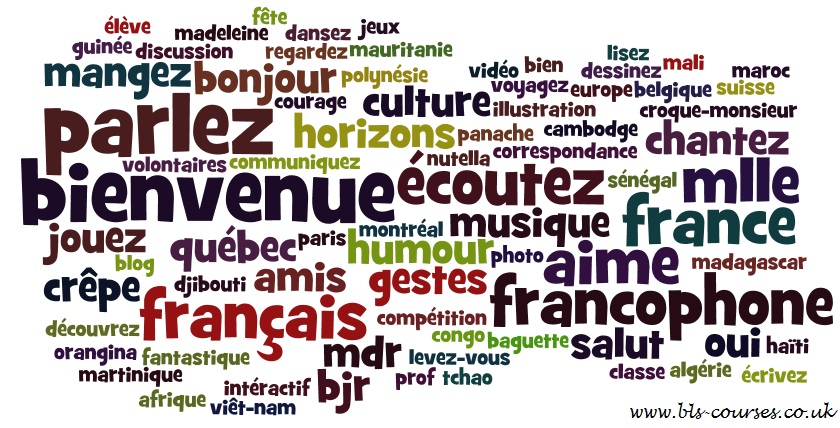
One of the most widely-learned and widely-spoken languages in the world is spoken by England’s neighbours across the Channel. Many of us will have learnt some French at school.  The chances are we mostly learnt about France in our lessons.  However, French speakers can be found all over the world, in many countries and on all five continents. With 274 million speakers, French is the 9th most widely spoken language on the planet.  Of those 247 million, 96.2 million are in Africa, making it the continent with the largest number of French speakers, in countries as diverse as Burkina Faso, Djibouti, Rwanda and Morocco.  Many African countries use French as their main international language, as do Vietnam, Laos and Cambodia.  In Europe, French is the 2nd most common mother tongue, and is spoken in Belgium, France, Luxembourg, Monaco, Switzerland, and by some speakers in Italy.  In North America, it is the first language of 7.2 million Canadians and nearly 2 million people in the United States (primarily in Maine and Louisiana).  It is also spoken in Lebanon, and in French overseas territories like Guadeloupe, Martinique and French Polynesia.

French also has an important place in international institutions.  It is one of the official languages of the United Nations (UN), the North Atlantic Treaty Organization (NATO), and the European Union (EU).
On Languages--French 2

Apprendre le français – Learning French
French is a Romance language.  As such, it is similar to Italian, Romanian, Spanish and Portuguese in its vocabulary and grammar.  Its spelling is slightly more difficult than those other languages though, as it has many homophones (words that sound the same but are spelt differently) and silent letters, and it has a some irregular plurals: plurals usually end in ‘-s’ but they can also end in ‘-eux’ and ‘-aux’ (watch out for ‘cheval’ (horse)-‘chevaux’ (horses) vs ‘cheveu’ (a hair)-‘cheveux’ (hair)).

Grammatical differences between French and English are that French uses gendered nouns, so there are nouns like ‘la voiture’ (the car) and ‘le bateau’ (the boat).  Sometimes, the gender of the word changes its meaning, so ‘la tour’ is a tower and ‘le tour’ is a trip around something (like Le Tour de France).  Adjectives take the same gender as the noun, so ‘the blue boat’ is ‘le bateau bleu’ and ‘the blue car’ is ‘la voiture bleue’.

French verbs take different forms depending on the speaker – these are called conjugations.  English only changes its conjugation for the third person (he, she, it) (I walk, you walk, he/she walks, we walk, you all walk, they walk) but French does this for every person (je marche, tu marches, il/elle marche, nous marchons, vous marchez, ils/elles marchent).

French has some different past tenses compared to English, and two auxiliary verbs, avoir and être, which are used to form the past.  The gender of the person has to agree with être verbs.

Parler français – Speaking French
Because French is found in so many different places, there are inevitably many different varieties of the language. There are differences in words, expressions, pronunciation and even grammar.  This page has some videos that show you the differences. You can choose which variety you would like to learn and find examples of it online to help you practice, or you can watch films or listen to the radio.  A good place to listen to different varieties of French is Radio France Internationale, which has presenters and callers from around the world.

If you want to speak like a native French speaker, the chances are you will need to work on your pronunciation.  The French language has quite a few sounds that do not exist in English, such as ‘ʁ’, the guttural ‘r’, which means that you pronounce ‘r’ with your throat rather than at the front of your mouth, and ‘y’, a ‘u’ sound made with your lips pursed.  You may also notice that French people move their mouths a lot when they speak – this is because it is important to articulate when speaking French.  Practise doing this in front of a mirror – and don’t be embarrassed to do it when speaking in public too!

S’ouvrir sur le monde – Embrace the world
Speaking French gives you access to an array of culture – literature, film, music, history, food, philosophy, art, fashion – from all the different places where French is spoken and allows you to travel the world (all five continents, remember).  It also gives you an insight into international politics and, who knows, might even land you a job in one of the European or international institutions!

Written by Suzannah Young
June 29, 2016

Language Learning Techniques: Develop your Writing Skills in Another Language

We hope you enjoyed our post on how to improve your reading skills in another language. Now we are back with tips on how to work on another skill – writing.  Each language has its own writing conventions for different genres. Practice these and you can write letters to your friends, write business emails, publish an article in a newspaper, keep a blog or even write novels in your new language. Here are a few tips for working on your writing skills.

machine-writing-2

Writing is an Active Skill
Unlike listening and reading, the skills we have looked at already, writing is not just about understanding what is being said to you or the text you have in front of you, it is about producing your own meaning.  Writing is an active skill. This means that you are using your brain actively, using grammar and making sentences.  You will need to practice writing to be able to do it effectively, but it is not impossible to learn!  One tip is to try to think and write in the target language rather than translating in your head or from a first draft.  This will come more naturally with practice.  Improving your writing will also have a knock-on effect on your other skills, as you will learn and remember (even complex) vocabulary better, understand grammatical constructions and become more creative in your chosen language. If you combine your learning tools (reading, listening, writing and speaking), you will engage all your senses in the learning process and therefore learn faster.

Don’t Forget to Read
Reading in your chosen language is a great way to get used to different writing styles that you can bring over into your own writing.  It will help you with sentence construction and spelling, and give you an idea of different writing conventions.  Think about how the texts you are reading are structured and which types of phrases or vocabulary are used in different situations and for different purposes – such as introducing a topic, description, comparisons, conclusions, etc.  Some people also recommend copying out texts to help yourself get better at writing in the language you are learning – it will help you get used to writing those letters in that order and those words in that order.  If you choose to do this, make sure the texts are interesting and you have a relaxing space to do it in and, ideally, a notebook dedicated to this exercise.

Close the Textbook
When you are practising writing, try to write long texts, rather than simply completing gap-filling or translation exercises in your textbook.  Make it personal to you, so it becomes more than answering questions and checking the answers.  Try writing a diary in your new language – write creatively about things you have seen that day, thoughts you have had, perhaps with illustrations.  If you do this you will automatically make the writing a part of you.  Remember, writing is expressive – so use it to write about how you feel.  Don’t worry if you don’t write everything correctly the first time, you can write and re-write your text as much as you like.  Having the diary will also let you see how much progress you have made – compare early entries to later ones to see how far you have come.  You don’t have to show anyone your diary if you don’t want to, but it will have helped you get down what you want to say in the language you are learning.  Of course, if you want to ask a native speaker to check your writing, you can do that too!

Have the Right Tools
If you want to write grammatically correct texts with creative use of vocabulary, remember to have a good dictionary (a monolingual one as well as a bilingual one if you can get your hands on it), a thesaurus to help you develop your knowledge of synonyms and a grammar reference if there is one available in the language you are learning.

Written by Susannah Young

May 25, 2016

Language Learning Techniques: Develop your Reading Skills in Another Language

You may remember our blog post from a few weeks ago on how to improve your listening comprehension skills in a new language.  This week we give you more tips on how to optimise your language learning – this time with advice on how to develop your reading in another language.  Whether you’re choosing what to eat at a restaurant, poring over a newspaper, or following directions on a map, reading is a big part of using your target language.  Working on your reading skills can also help you develop your writing as you learn about written constructions.  Here are a few ideas to help you learn.

Reading skills 2

Read a Lot
Read anything you can get your hands on in your chosen language. Try to read at least one thing in the language you are learning every day. The more you read it, the more familiar the language will become and the easier reading will be.  Reading will help you develop background knowledge about the culture you are studying too, which will help your understanding as well.  You can also read about the culture in your own language, so it becomes familiar to you.

Choose Materials You Find Interesting
You can choose a text type you are familiar with, through your work or hobbies, and read an example in your chosen language, such as a magazine article on motorbikes or a recipe for a typical dish from the country where they speak the language you are learning.  You will know what kind of words will be used, so you will be comfortable with the task.  Choose things you would like to read in your native language. Don’t read things that are boring just because you think you should – it will put you off!  Pick your favourite novel and read the translation in the language you are learning.  You might like to try graded readers as well, as the structures are adapted to learners of the language but they pitch the story to adults rather than children so it is not boring for adult learners.  Reading for pleasure can help your learning immensely – it is not the same as using a textbook which (let’s be honest) can be a bit dry sometimes.

Develop Your Vocabulary – Gradually
The good thing about reading is that you can control how fast you learn.  You can give yourself time to think.
When you first approach a text, read for the gist – identify words you know and work out the general subject.  Look up a few words if you are really stuck on them but don’t dwell on how many words you don’t know and don’t look up all the unfamiliar words you read – it will slow you down.  Instead, underline them to look up later.  Remember, you will be able to understand a lot of the text even if you don’t understand every word.  You can look up the words you underlined when you finish reading.  You can always read the text again once you’ve done that.  As you look up words, build lists of vocabulary by theme.  For example, list everything you find about cooking, sports, the weather or politics.  If you find a verb, look up nouns that go with it, and adjectives.  For example: ‘compter’ in French means ‘to count’, ‘comptable’ is ‘accountant’ and ‘comptabilité’ means ‘accounting’.  In Italian, ‘rabbia’ is ‘anger’, ‘arrabbiarsi’ is ‘to get angry’ and ‘arrabiato’ is ‘angry’.  Most languages will allow you to do this exercise!  You can also find lists of vocabulary to learn on the internet, such as the 1000 words challenge (http://www.speaktothefuture.org/1000-words-challenge/).  Look up synonyms and antonyms of the words you learn to build your vocabulary even more.  If you are a visual learner, draw pictures associated with the words you are learning to help you remember them.  Repeat the words as much as you can so they stick in your head.
Of course, one thing to remember is that you don’t read just in order to learn words. If you read a book you are interested in, you will learn words in context and be more likely to remember them anyway.

Give Yourself Different Reading Tasks
Try different reading tasks to build your ease of reading.  You can time how long it takes you to read a text a few times – you will see how you get faster as your fluency increases.  You can decide to read fast or slow.  You can read a text aloud (this will also help with your pronunciation), in a reading group or in a pair (meet up with someone from your class!)  Come back to texts you have already read to see how much more you understand the second time round!  Listen to the text you are reading – an audiobook or a radio show with a transcript, for example – to hear how native speakers pronounce the words and what the reading aloud style is like in your chosen language.

Bonne lecture! Veel leesplezier! Miłego czytania!

Written by Suzannah Young

March 30, 2016

Language Learning Techniques – How to Develop your Listening Comprehension

We hope you enjoyed our Language Learning experience posts over the past few weeks.

In the posts that follow, we are going to look at different techniques to develop your skills in your chosen language in four different areas: listening, speaking, reading and writing.

This posts gives you a few tips on how to develop your listening comprehension skills. Like any other skill, listening can be developed with practice. Good listening skills also help you improve your speaking skills.

Remember that there are only a few situations when you need to listen hard to and understand every word – like an announcement telling you when your flight is at the airport. Most of the time it’s not necessary to understand everything, so don’t worry if you don’t catch every word.

Another thing to remember is that if you are speaking to someone, you can ask them to repeat something. This is a normal part of speech so will not disrupt the conversation. The important thing to do when listening is…relax (but be active)!

listening skills

Learn Listening By…Listening

A few posts ago, we recommended you immerse yourself in the language you are learning in order to become more familiar with it. So the first thing to do to develop your listening skills is to listen to your chosen language as much as you possibly can. You will be surprised how much you pick up.

You can chose to have the sound on in the background while you are doing something else so as to get used to how the language sounds or you can take part in active listening. The two tasks have different goals.

You can find material to help you develop your listening skills on the radio, on TV or in audio books.

Preparing for Listening

In most conversations you have or situations you experience, you usually know more or less what is going to be talked about, so you know what kinds of words are going to be used. Approach listening exercises by preparing for what you are about to hear: make decisions about what to listen for and what to focus attention on while listening.

Ambient Listening

Listen to the radio thorough your headphones while you are walking or listen to music in your chosen language while you are cooking, doing the housework or relaxing. This will mean you get used to hearing the sounds of the language. It also means that you will not feel stressed when it comes to active listening because you will already be familiar with the sounds of the language.

It is important that this is not your only listening activity. The trick is to combine different types of listening so that you make progress.

Active Listening

There are a number of tasks you can do to practice listening actively – that means listening with a purpose, focusing your attention and listening out for specific details. Active listening requires you to take action based on what you have heard.

  1. Listen for one element in speech patterns rather than listening for meaning: listen for sounds, for tones, for melody, for stress and so on. You can then practise applying these patterns to your speaking.
  2. Pick out as many words as you can without worrying about understanding everything. The more you do this, the more words you will understand each time.
  3. Decide on a topic and try to pick out key words to do with that topic. Write them down so you have a list of topic-specific vocabulary to refer to.
  4. Try to transcribe what you hear. You can pause the audio and go back if you miss something or need to listen to it again. Many online radio programmes have transcripts that you can check yours against.
  5. Read the transcript whilst listening to a radio programme. That way you will be able to hear exactly what the speakers are saying.
  6. Listen to music and read the lyrics. There are lots of music videos online with lyrics that you can read along to.
  7. Listen to the same segment again and again to see how much more you understand each time.

Resources

You can find a lot of listening resources on the internet. If you search for the name of the language you are learning + ‘radio’, you will more than likely be given a list of radio stations you can choose from. Some of the online radio stations have tailored listening exercises for language learners, such as Radio France Internationale (scroll down to ‘Apprendre le français’ or see the Journal en français facile (News Report in Easy French) or Deutsche Welle.

A Word on Vocabulary

In order to develop your listening skills, it is also important that you keep up your on-paper study of vocabulary and grammar too. This will mean you will recognise more of the words in the audio you are listening to.

And, most importantly, have fun!

Written by Suzannah Young

March 2, 2016

On Languages: Polish

What makes Polish SO hard?

It seems that Polish grammar is the one responsible for these rumours! Many people are led to believe that Polish grammar is impossibly complex and simply un-learnable, but truth be told, it follows a set of logical and regular rules.

Warszawa

Let us explain a few of the reasons why some people are put off learning Polish:
• Nouns can have three genders: masculine, female and neuter
• There are seven grammatical cases, which means that each noun and adjective can have seven different endings
• Verbs come in two aspects (English doesn’t have grammatical aspects)
• The pronunciation is just impossible!

Okay, this might sound like a difficult language to learn, but don’t worry. While some things may appear harder, some things are definitely easier. For example:

There are no articles – people who learn English often struggle with when to use “a”, “an”, “the” or nothing at all. In Polish, however, you don’t have to worry about this, you just say the word as it is with no article.
Word order is flexible – the case system means that syntax (that is, the word order within a sentence) is more flexible than in English. You therefore don’t have to worry as much about how to structure your sentences.
Fewer verb tenses – English has 16 grammatical tenses! This is extremely difficult for most non-native speakers. Polish, on the other hand, has only 5 tenses (or 3 tenses and 2 aspects, depends on how you count). This means that what in English can be expressed in three different ways: “I read”, “I am reading” and “I have been reading” in Polish is reduced to a simple “Czytam”.
Lots of vocabulary with Latin roots – you might be surprised by the amount of vocabulary that will be very familiar to you, for example:
Situation – sytuacja
Motivation – motywacja
Conversation – konwersacja etc.
Phonetic alphabet – unlike in English, once you learn the rules, you can look up any word and know how to pronounce it based on its spelling.

As you can see, there are lots of areas where Polish is not so difficult (and perhaps even easier than English!). Yes, it may seem strange and difficult at first due to its phonology (i.e. the system of sounds) and grammatical structures that simply don’t exist in English, such as the case system or verb aspects. However, any language can be learnt with motivation and perseverance, and there will always be elements that won’t have an equivalent in your native language.

Written by Alicja Zajdel

February 17, 2016

Learning Languages – My Story

My name is Suzannah I am a PhD student in Translation Studies.  I speak five languages (English, French, Italian, Dutch and Spanish) and am learning a sixth (Polish).  You may ask how or why I have learnt/am learning them and what I use them for.  What I will say is that I use them all regularly and they are all a big part of my life.  Actually, I don’t know what I would do without them.  It may surprise you to know, though, that it wasn’t always like this.  There was a time when I thought I wasn’t going to carry on learning any languages at all.  In the end, my circumstances changed and I did carry on – and I’m very glad I did because it changed my life!  This is my story.

Learning a Language -- My story 2

Beginnings
I started learning French when I was little, thanks to my parents having got me to watch a bilingual video about an alien who comes to Earth and learns about human life…  This video was the same story in French and English.  It was easy to follow in French if you had watched the English version (and even if you hadn’t) and the storyline and learning material was very clearly presented.  The best thing about it was that it was fun – it didn’t feel like a chore and I enjoyed watching it again and again.  I was learning without even realising it!
Another early memory is that whenever we went on holiday, my parents always tried to learn a few words of the local language and encouraged my sister and me to try the food and appreciate the places we visited.  I am very grateful to them for having done this because I believe they gave me a positive attitude to new languages and cultures and made learning about new people and places a fun thing to do.  Of course, being on holiday helped make it fun!  This attitude has definitely stuck with me.

School Time
We had French lessons at school from when I was 11 but I feel we only learnt a few set phrases and weren’t really given a love for the language.  Nevertheless, I found I understood things quite quickly and did receive some encouragement from the teacher.  The problem was, learning a language was not seen as ‘cool’ at my school and I actually hid my talent from my peers and pretended I found it as difficult and boring as they did!
I got a good mark for GCSE French and luckily decided to carry on to AS Level.  I thought I was only going to do a year but, thankfully I had a very dedicated and enthusiastic teacher who encouraged us to nurture our talent and used interesting learning material like films and newspaper articles – real life material that real French people used.  That made it more relevant to us and made us see that it was a living language.  I carried on to A-Level and did well in it.
As A-Level students, we had the opportunity to go and stay with a family in France.  My host mother was a wonderful lady, she was very supportive and was really interested in everything we did.  She introduced me to literature and a theatre group she was involved in.  We are still in touch today (almost 15 years later) and I have visited her numerous times.
I still didn’t think I was going to carry on with French and thought I was going to do English Literature at university.  In the end I didn’t get the grades I needed to do English and decided to defer my university entry for a year and reapply.  That meant I needed something to do for a year. A friend of my sister’s had just done a placement in France and suggested I do the same.  She gave me the details of a language school and I contacted them.  They signed me up for a three-month language course and a work experience placement.  I enjoyed the life at my host family’s house less than the time before but I made some really good friends at the language school.  A lot of them were Chinese and it was fun to learn about their country as well as learning French together.  They even taught me a few words of Mandarin!  At the time it was funny for me to think that we were able to communicate with each other through a language that was neither of our first languages.

University Life
Thanks to this placement, which improved my French a lot, I applied to do French and English Literature at a different University.  I was accepted and spent three years there.  The language learning experience depended on how committed you were to learning – there were resources available but you had to use them on your own initiative – but we did learn a lot about French culture and society, which helped us to understand the background to the language we were learning.
I spent my Erasmus year in Paris, France.  Initially, I started a work placement but didn’t enjoy it so enrolled in a university.  That was one of the best decisions I have ever made.  If I had stayed on the work placement, I may have got disheartened but as I went to university I met a lot of people my age and made life-long friends.  I was lucky enough to meet a group of friends who I spent every day with – you can say I was really immersed in French culture!  It was a bit difficult following lectures in French at first but I had a trusty electronic dictionary which gave me the definitions of words I didn’t know and I soon got up to speed.  My friends and I started a Spanish class together as well, which was a fun experience – learning a language through a language that was not my mother tongue!  In the summer after my Erasmus year, I went to stay with a friend in Madrid and did a language course – for fun.  That was great too because of the amazing people I met from all over the world.  We had to use Spanish to communicate with each other so it really helped us learn.

After Graduation
When I graduated, I wanted to get a job using my languages so I applied for internships in Brussels, Belgium.  I started an internship at a European NGO, where I would be speaking French and English.  It turned out that they needed my Spanish too.  Initially, I thought I was going to stay there for six months (you can see that this is a recurring theme!) but then I was offered a full-time job and ended up staying for six years!
Belgium has three official languages, Dutch, French and German (and an unofficial one, which is English!)  I was curious to know what the signs I could see in Brussels said, so I enrolled on a Dutch course.  I complemented my learning by listening to the radio and reading newspapers that were readily available.
After a few years in Brussels, I met a person who ran a theatre group in Antwerp.  I started going to the theatre group every week, and it was there that I met my partner, who is Italian.  I moved to Antwerp to live with him, which meant that I could practice Dutch all the time.  I also learnt Italian through my partner and with his family.  I had to speak Italian if I wanted to speak to them, and I did want to speak to them, so that was useful!  I found I learnt Italian fairly quickly because it is similar to French and Spanish so I could already understand quite a lot.  We have a lot of Italian friends and I speak to them all in Italian.
While still in Brussels, I met a few Polish people through work.  We became friends and I realised I was interested in learning their language.  When I moved to Antwerp, I decided to enrol on a Polish course, not least because I wanted to meet people in my new town.  I also wanted to see whether I was capable of learning a Slavic language.  I had learnt three Romance languages and a Germanic language so learning Polish was (and still is) a new challenge for me.

Back in the UK
I recently moved back to the UK and have carried on learning Polish.  I am finding it a bit more difficult to learn than it was to learn the other languages I speak.  This may be because I don’t have many people to practice with.  Learning my other languages went quite quickly because I was able to practice with people around me and, in some cases, I had to speak because there was no other option!  I think it is important not to be afraid of making mistakes and just speaking – but I am finding it a bit hard to follow my own advice in Polish at the moment!!

The Last Word
As you can see, my reasons for learning languages have been enthusiastic teachers and a positive attitude to language learning on the one hand and friendships and a desire to have new experiences on the other.  Being in an environment that has allowed me to be exposed to the languages on a regular basis has definitely been beneficial to my learning.  Speaking other languages has allowed me to meet lots of wonderful people but it has also been useful professionally.  For example, I do translation work sent to me through people I have met abroad.  The most important part of language learning for me, though, is by far the friends I have made.
I hope you can have a similarly positive experience with learning languages!

Written by Suzannah Young