Tag Archive: language teaching

February 13, 2025

Winter timetable at Bristol Language School is ready

Our autumn timetable is ready! Please click the link to enrol on our autumn language courses or see our current offer below:

WINTER LANGUAGE TERM 2026

Arabic 

Beginner Level 1 Course: Course programme

Beginner Level 2 Course: Course programme

Elementary Level 1 Course: Course programme

Elementary Level 6 Course: Course programme

Intermediate Level 9 Course: Course programme

Please click the link to enrol on our autumn language course.

By booking our language course, you agree with our T&C.

Chinese (Mandarin)

Beginner Level 1 Course: Course programme

Beginner Level 2 Course: Course programme

Elementary Level 1 Course: Course programme

Please click the link to enrol on our autumn language course.

By booking our language course, you agree with our T&C.

French

Beginner Level 1 Course: Course programme

Please click the link to enrol on our autumn language course.

By booking our language course, you agree with our T&C.

German

Beginner Level 1 Course: Course programme

Beginner Level 2 Course: Course programme

Elementary Level 2 Course: Course programme

Elementary Level 5 Course: Course programme

Intermediate Level 3 Course: Course programme

Upper-Intermediate Course: Course programme

Please click the link to enrol on our autumn language course.

By booking our language course, you agree with our T&C.

Italian

Beginner Level 1 Course: Course programme

Beginner Level 2 Course: Course programme

Please click the link to enrol on our autumn language course.

By booking our language course, you agree with our T&C.

Japanese 

Beginner Level 1 Course: Course programme

Please click the link to enrol on our autumn language course.

By booking our language course, you agree with our T&C.

Korean 

Beginner Level 1 Course: Course programme

Please click the link to enrol on our autumn language course.

By booking our language course, you agree with our T&C.

Polish

Beginner Level 1 Course: Course programme

Elementary Level 7 Course: Course programme

Intermediate Level 8 Course: Course programme

Please click the link to enrol on our autumn language course.

By booking our language course, you agree with our T&C.

Portuguese

Beginner Level 1 Course: Course programme

Beginner Level 2 Course: Course programme

Elementary Level 1 Course: Course programme

Intermediate Level 5 Course: Course programme

Please click the link to enrol on our autumn language course.

By booking our language course, you agree with our T&C.

Russian

Beginner Level 1 Course: Course programme

Intermediate Level 2 Course: Course programme

Please click the link to enrol on our autumn language course.

By booking our language course, you agree with our T&C.

Spanish

Beginner Level 1 Course: Course programme

Beginner Level 2 Course: Course programme

Elementary Level 1 Course: Course programme

Please click the link to enrol on our autumn language course.

By booking our language course, you agree with our T&C.

Please get in touch if you need your level assessed or you need more information about our language courses: office@bls-courses.co.uk & +44 (0)7938038875.

If you’re interested in individual tuition (general, business or exam preparation), please follow the link.

Thank you for learning languages with Bristol Language School.

BLS Team

May 23, 2018

On teaching: How to improve the language learning experience using the flipped learning model

Don’t bother just to be better than your contemporaries or predecessors. Try to be better than yourself. William Faulkner

In the post-method era, the role of language teachers changed, as did the learners’, who do not receive their knowledge passively, but are instead expected to actively participate in learning. There are many pedagogical innovations that support this notion of student-centred teaching, one of which is flipped learning. The flipped learning method can improve the foreign language learning experience of adult language learners and, in turn, equip students with the right skills to become life-long learners.

Flipped learning means that students are first exposed to material outside of class in the form of homework and then use class time to utilise this in a meaningful way using different forms such as group activities and project-based language learning. In flipped learning approach, students are expected to be active and responsible learners who take care over their home study before becoming actively involved in the lesson by asking questions, critiquing ideas, analysing concepts, giving presentations and taking part in debates. For teachers, the idea of flipped classes is based on designing active, hands-on, creative activities for in-class learning and for students to prepare for such activities at home by reading articles, watching videos or analysing info-graph instructions.

When implementing the flipped learning model and consequently the culture of life-long learning, we may also increase the mastery of our students in the intended subject matter. In his TED talk Let’s teach for mastery – not test scores, Salman Khan, accidental founder of the Khan Academy; an educational site regularly visited by seven million people, presents teaching from a different perspective, in which we as teachers help students to achieve mastery and guide them to develop the right mindset muscle and perseverance. We can achieve this through various factors which are part of flipped learning, for example, individual feedback and support from the teachers, specifically designed activities and the adaptable pace of the lessons. Here, the aim is not to get a good mark, but to truly and authentically learn the subject matter and deeply and meaningfully engage with the topic.

You can learn more about flipped learning, e.g. here.

Have you ever heard about flipped learning? What do you think about this approach? Please let me know in the comments below.

Kinga Macalla

November 22, 2017

Language teaching: What is pragmatics and why is it important when teaching languages?

What is pragmatics?

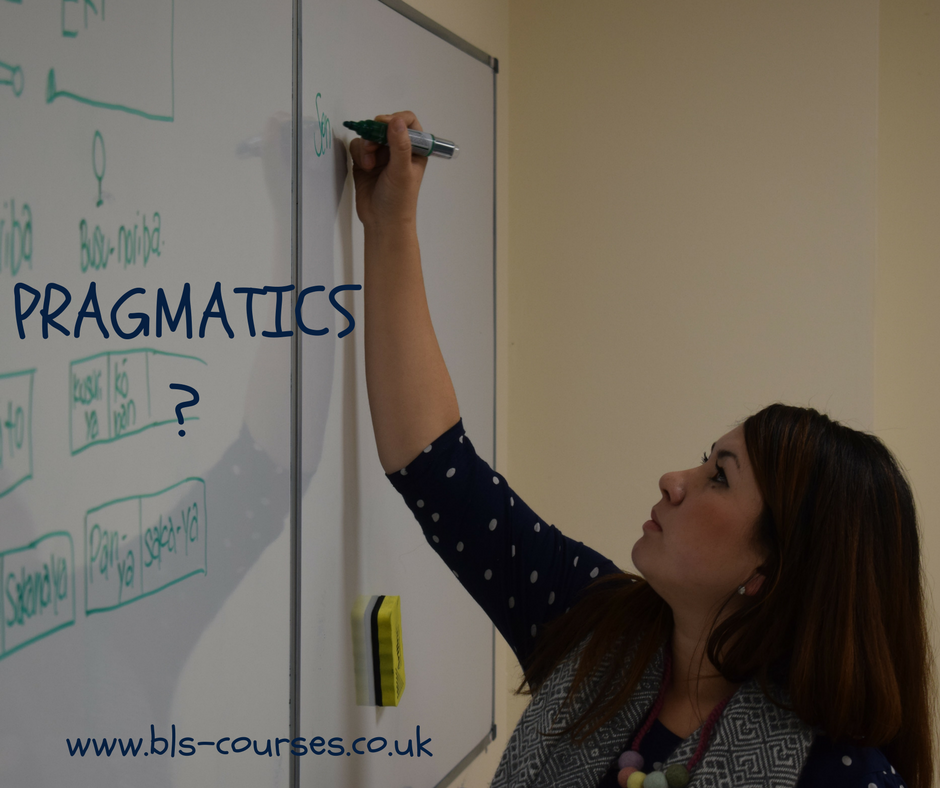
Pragmatics is a language in use, or even better, a meaning in use (the actual use of the language). We need pragmatics to understand how language is used in a specific context and to be able to use it appropriately.

Why is pragmatics important when teaching?

Pragmatics is a set of skills which allow us to know what to say, to whom and how to communicate ones message in a specific context (what, how, whom, and when). By teaching pragmatic language we teach our students how to use the language appropriately, for example when a student learning English is asked “how are you?” in England, do they need to provide a full and detailed description of their recent life or is it enough to shortly answer “All right” or “Not bad”? It seems obvious that the latter is correct, right? Hmm… it depends on the context and who your interlocutor is: if you are a doctor in hospital, your patient may provide a more detailed response which is appropriate given the circumstances. Another example of how to use English appropriately might be politeness, such as when to use “please” in English.

How to teach pragmatic language:

Firstly, I would start with observing and analysing the language that you, your friends and your colleagues use, why you use certain phrases in one context, how you understand hidden meanings and when it is appropriate to use certain phrases when talking to your manager at work. Secondly, you’ll need authentic resources, from podcasts and radio programmes to newspaper articles and documentary films. Thirdly, you’ll need time to find, prepare and make those resources accessible, providing the right context for the topic introduced, e.g. grammar.

I hope I have inspired you to look at teaching from a different perspective. If you’re interested in learning more about pragmatics, I would recommend this article: Paltridge, B. 2012. Discourse and Pragmatics. Chapter 3 in Discourse Analysis: An Introduction (2nd Edition). London: Bloomsbury.

Please let me know in the comments below if you teach pragmatic language and how you prepare your language lessons.

Written by Kinga Macalla

April 19, 2017

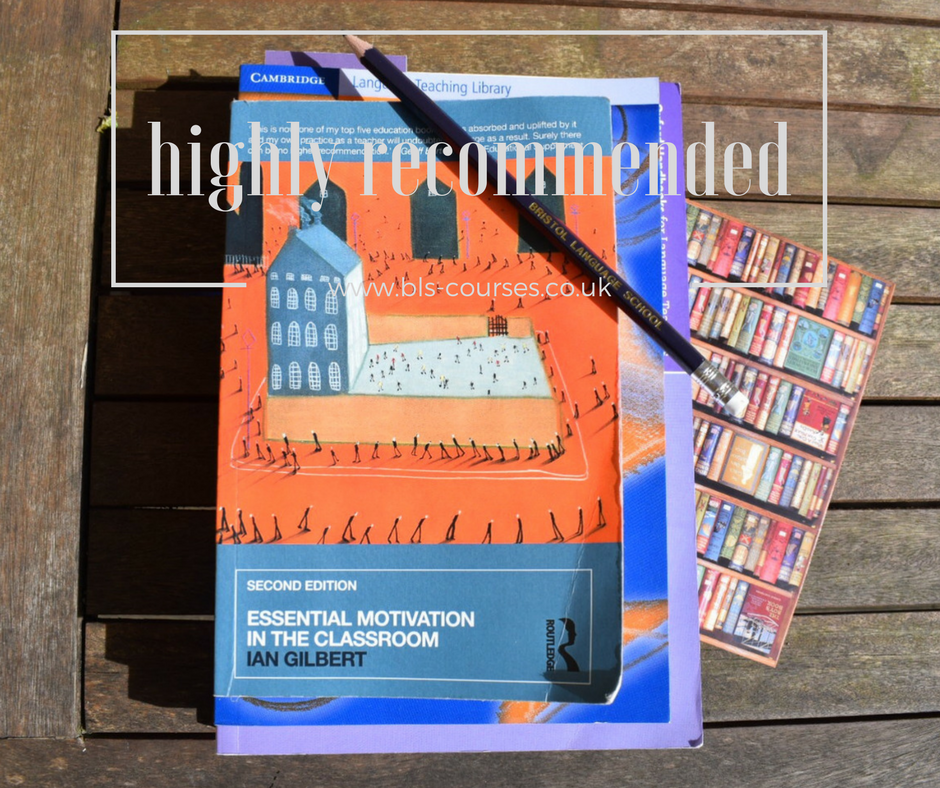
Book Review: Essential Motivation in the Classroom by Ian Gilbert

book review-essential motivation 1

This book is AMAZING! It’s fascinating, thought-provoking, funny and practical. If you want to read one book on motivation, this is the one! It’s a must-read for teachers and students, but I also recommend it for parents, business people, coaches and trainers. It is a guidebook of almost 200 pages into the world of motivation written from many different perspectives. Ian Gilbert talks about topics such as the reasons for being motivated, enthusiasm, IQ, emotional intelligence, MindMaps, learning strategies, lesson planning, delayed gratification, hope, learning through failure, the power of the smile and many more. I love the way this book is written and I know I’m going to read it again and refer to it for quotations and advice.

13-24.04.17

Below, I’ve included some interesting activities for language teachers (see p. 115-9):

  1. ‘See the learning’ strategies: use visuals such as highlighter pens, posters, pictures, videos; ask your students to use cameras on their phones, etc.
  2. ‘Hear the learning’ strategies: ask your students to record their learning on their phone and listen to the recording before going to sleep and after waking up; use music in the classroom, etc.
  3. ‘Do the learning’ strategies: use physical activities in your lessons, ask your students to walk or stand while they’re learning or act out their learning, etc.

Do you have a favourite book on motivation? Please share your recommendations in the comments below.

Written by Kinga Macalla

March 1, 2017

Career Advice: Am I a Potential Language Teacher?

If you love languages or have enjoyed learning a foreign language, you might want to share that enthusiasm and enjoyment with others by training to be a language teacher. You can teach languages at a variety of levels.  You can teach primary or secondary school children, university students or business employees. You can also teach adults who want to learn for fun.  Learning languages broadens learners’ horizons, fosters their tolerance and improves their communication skills.  Language skills also stand learners in good stead when they are applying for higher education or jobs. Globalisation has made learning languages more useful today than it has ever been.  You can help people be a part of that through teaching languages.

career advice is langugae teaching for me

What is teaching languages like as a career?

Language teachers help students learn to converse, read, write and even study in a new language. As well as teaching students about the structure of language (grammar, vocabulary), language teachers may teach students about culture and society in the countries where the language(s) they teach are spoken. They may teach whole courses in a different language. They will use a variety of (often self-produced) teaching resources, various teaching methods and may teach small or large groups.  Language teachers often set up or supervise foreign language clubs and other language-related extra-curricular activities such as trips abroad. They may also have to do admin work.

Teaching methods include group work, discussions, audio-visual materials, role-play and games. Teachers enable students to use language in real-life situations like using public transport, eating at a restaurant, making friends and giving their opinion on a topic. Teachers need to help students get the balance right between ‘fluency’ (the ability to make yourself understood, perhaps with some mistakes) and ‘accuracy’ (using correct grammar, expressions or vocabulary). The most popular languages taught in UK schools are Welsh (in Wales), French, German and Spanish, but others are taught too, depending on the school. These include Arabic, Bengali, Cantonese, Italian, Mandarin, Panjabi, Russian and Urdu.

Depending on which type of educational establishment you work in, as a language teacher you could have a full-time job with contact hours throughout the day or you could teach during the evening.  You would mainly find evening work if you teach at an adult-learning centre or private language school.  Language teachers earn relatively competitive salaries.  Teachers in UK state schools are paid according to their qualifications, experience and responsibilities.  Some teachers supplement their income by teaching privately, marking exams or writing textbooks. They can be employed by a school or work freelance for different schools or businesses.

Outside contact time (teaching in lessons), teachers have lesson preparation time, time for marking pupils’ and students’ work and time for assessing and evaluating their performance through designing tests and writing reports on their progress.  This includes meeting pupils’ parents at parents evenings.

Is teaching languages a career for me?

Teaching languages can be a demanding job but it can also be rewarding.  It is good for people who like personal interaction in their careers.  It can also be flexible, depending on the type of teaching establishment.  You may get the opportunity to teach in other countries.  You could even teach languages online, such as here.

School teachers in the UK teach every weekday for 39 weeks of the year.  Because of the amount of marking required, secondary school teaching has quite long hours and marking can take up some of teachers’ holiday time or evenings and weekends.  Language teachers who work in private schools or at a language agency have variable hours and can decide their own schedule.  Depending on whether they work in a school or privately, teachers may teach in classrooms, in their homes or in cafes or community centres.

While language teachers must have language and teaching skills and certification to prove that, they may also need certain personality traits.  Patience, creativity and ICT skills help produce a productive learning environment for language learners.  Enthusiasm, energy and confidence can make lessons interesting for learners.  Organisational and communication skills can make the job easier.  Of course, it is also good to enjoy sharing knowledge and have an interest in language and culture in general as well as in the specific language you are teaching.

At work, you will be required to conform to school regulations and performance objectives, as well as national curriculum and examination requirements.  You may have to deal with challenging behaviour from students.  As a general rule, you need the authority to direct a group of people.  Teaching adults can be demanding but teaching children is generally more stressful.  You will need to complete a Disclosure and Barring Service (DBS) check if you will be working with children or vulnerable adults.  You may also need to keep track of your finances if you are a freelance teacher.

How do I train to be a language teacher?

If you want to teach languages, you are usually required either to be a native speaker of the language you want to teach or to have a degree in it.  This is because you need to be competent in the language as well as having teaching skills.  You can also prepare to be a language teacher by spending time in countries that speak the language you wish to teach. You could do this by working, volunteering, studying or traveling in a country.  Doing teacher training on the job or working with groups of people can help develop your teaching skills.  Some employment and skills fairs have information about training to teach.

In the UK, if you want to teach languages in state schools, you usually have to gain Qualified Teacher Status through initial teacher training.  There are a few ways to do this.  One way is to do a degree and then do a PGCE (Postgraduate Certificate in Education). Courses are usually one-year full-time and two years part-time.  You could get a bursary or scholarship to do this.  After their PGCE, newly qualified teachers must complete three terms of teaching, usually within one school year.  Some PGCE courses are available as flexible learning.  For example, you could do distance learning with some teaching practice and campus study.  The other way of qualifying is to train in a school after your degree instead of doing a PGCE.  These employment-based routes, where you earn a salary, include School Direct, school-centred initial teacher training and Teach First.

If you don’t have a language degree, or need to refresh your knowledge, you could complete a subject knowledge enhancement course before you start your teacher training.  Once you have started teaching, you will also do continuous professional development training throughout your career.

How do I get a job as a language teacher?

Private language agencies and schools are the biggest employers of language teachers.  You can check local schools listings and contact them directly to see if they have any vacancies.  State school vacancies are also advertised by local authorities and in the local and national press, including The Guardian and The Times Educational Supplement.  They are also available online, such as on www.jobs.ac.uk and other job sites. There are also job boards, such as eTeach.

Where can I find out more?

More information on becoming a language teacher is available from the DfE Get into Teaching website, the Association for Language Learning, UCAS Teacher Training, Careers Wales, My Job Search and PlanIt Plus.  This blog follows a graduate who decided to retrain as a language teacher and talks about the experience of being a language teacher.  It may help you decide whether you should do the same.

Good luck!

Written by Suzannah Young