Tag Archive: Languages

June 29, 2016

Language Learning Techniques: Develop your Writing Skills in Another Language

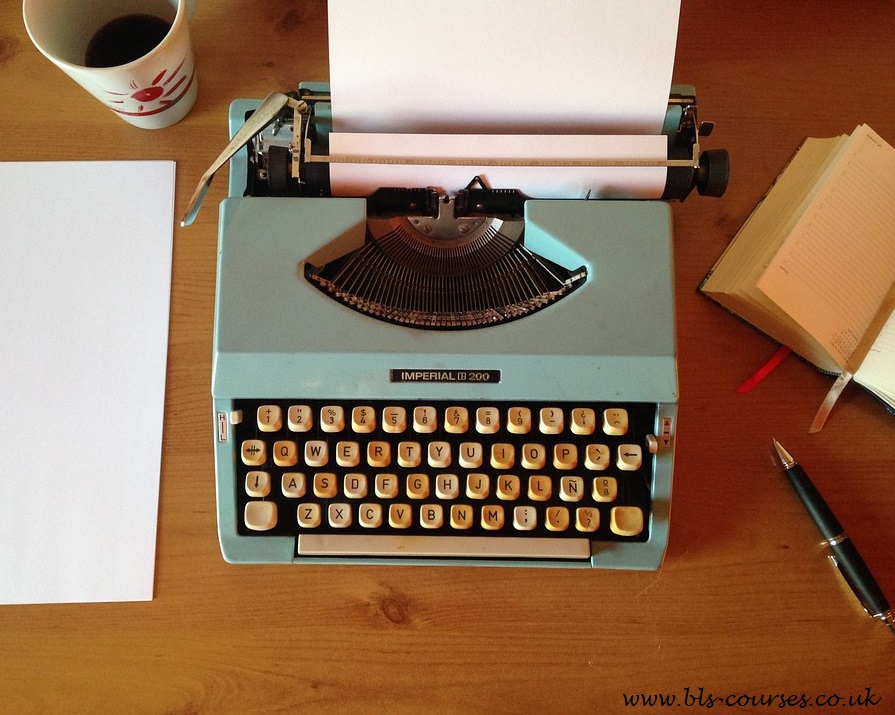
We hope you enjoyed our post on how to improve your reading skills in another language. Now we are back with tips on how to work on another skill – writing.  Each language has its own writing conventions for different genres. Practice these and you can write letters to your friends, write business emails, publish an article in a newspaper, keep a blog or even write novels in your new language. Here are a few tips for working on your writing skills.
machine-writing-2

Writing is an Active Skill
Unlike listening and reading, the skills we have looked at already, writing is not just about understanding what is being said to you or the text you have in front of you, it is about producing your own meaning.  Writing is an active skill. This means that you are using your brain actively, using grammar and making sentences.  You will need to practice writing to be able to do it effectively, but it is not impossible to learn!  One tip is to try to think and write in the target language rather than translating in your head or from a first draft.  This will come more naturally with practice.  Improving your writing will also have a knock-on effect on your other skills, as you will learn and remember (even complex) vocabulary better, understand grammatical constructions and become more creative in your chosen language. If you combine your learning tools (reading, listening, writing and speaking), you will engage all your senses in the learning process and therefore learn faster.

Don’t Forget to Read
Reading in your chosen language is a great way to get used to different writing styles that you can bring over into your own writing.  It will help you with sentence construction and spelling, and give you an idea of different writing conventions.  Think about how the texts you are reading are structured and which types of phrases or vocabulary are used in different situations and for different purposes – such as introducing a topic, description, comparisons, conclusions, etc.  Some people also recommend copying out texts to help yourself get better at writing in the language you are learning – it will help you get used to writing those letters in that order and those words in that order.  If you choose to do this, make sure the texts are interesting and you have a relaxing space to do it in and, ideally, a notebook dedicated to this exercise.

Close the Textbook
When you are practising writing, try to write long texts, rather than simply completing gap-filling or translation exercises in your textbook.  Make it personal to you, so it becomes more than answering questions and checking the answers.  Try writing a diary in your new language – write creatively about things you have seen that day, thoughts you have had, perhaps with illustrations.  If you do this you will automatically make the writing a part of you.  Remember, writing is expressive – so use it to write about how you feel.  Don’t worry if you don’t write everything correctly the first time, you can write and re-write your text as much as you like.  Having the diary will also let you see how much progress you have made – compare early entries to later ones to see how far you have come.  You don’t have to show anyone your diary if you don’t want to, but it will have helped you get down what you want to say in the language you are learning.  Of course, if you want to ask a native speaker to check your writing, you can do that too!

Have the Right Tools
If you want to write grammatically correct texts with creative use of vocabulary, remember to have a good dictionary (a monolingual one as well as a bilingual one if you can get your hands on it), a thesaurus to help you develop your knowledge of synonyms and a grammar reference if there is one available in the language you are learning.

Written by Susannah Young

June 8, 2016

Magazine Review: On Languages, Translation and Travelling

Every month we publish a book review on our blog, but this month I have decided to write about some magazines on languages, translation and travelling that I enjoy reading (and yes, I am an old-fashioned lady, as I only have paper versions of them!). They are all available for subscription in the UK and internationally, but some are only available through membership.

Travelling: National Geographic
A classic. I had to include the NG here. I love their photographs: beautiful, intriguing and fascinating. The content can feed any desire from scientific and factual to artistic, and it is all highly inspiring. Also in the perfect format and size for any lengthy commuting or travelling.

Magazine Review on lang trans travel--NG

Travelling & Languages: Cereal
Elegant. Minimal. Exquisite. A very tasteful read. Bi-annual magazine.

Magazine Review on lang trans travel--Cereal

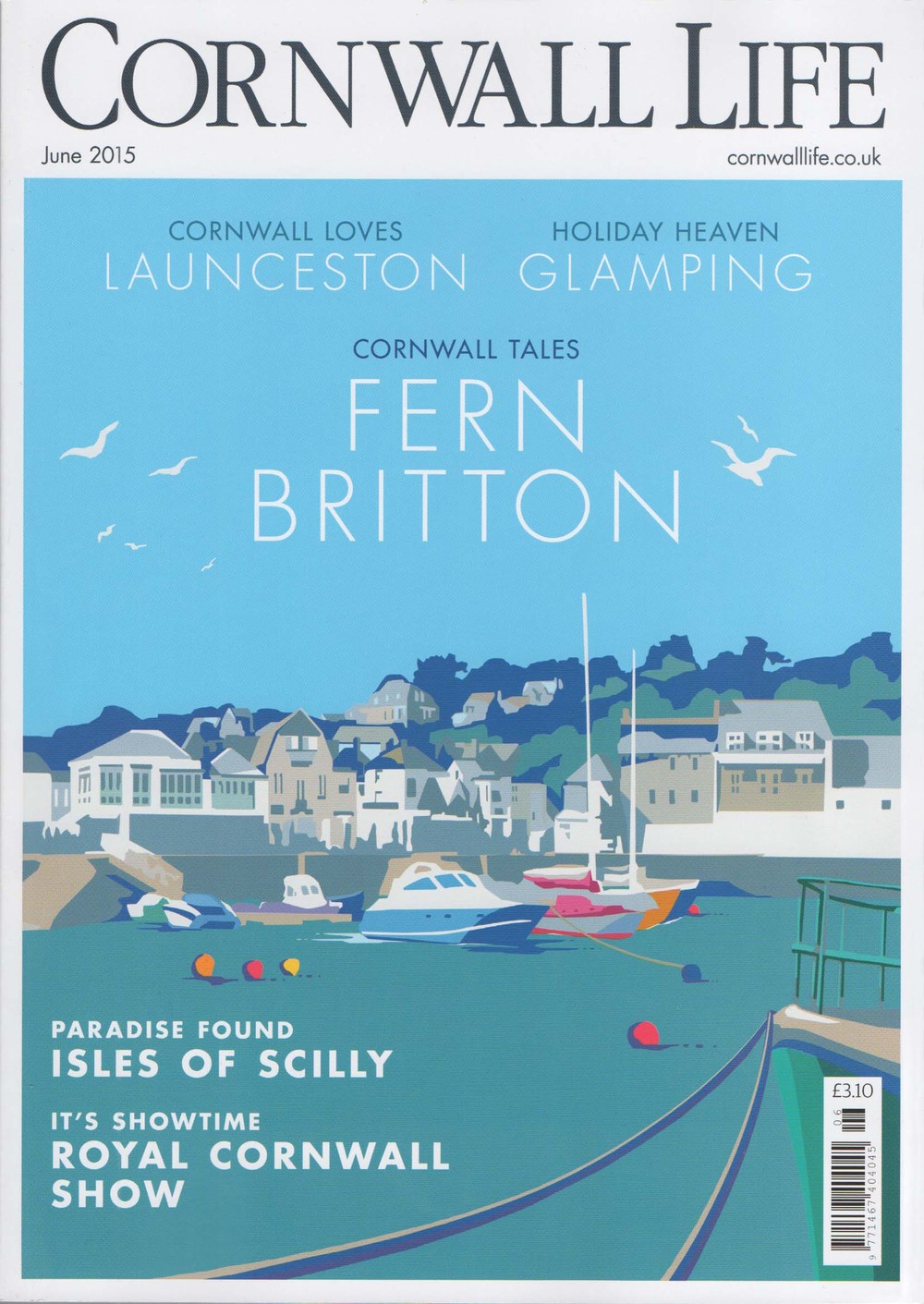
Travelling: Cornwall Life
Inspirational. With my heart soaked under the beauty of Cornwall, I inspire myself monthly by learning about new places to visit, stay, eat or relax.

Magazine Review on lang trans travel--Cornwall Life

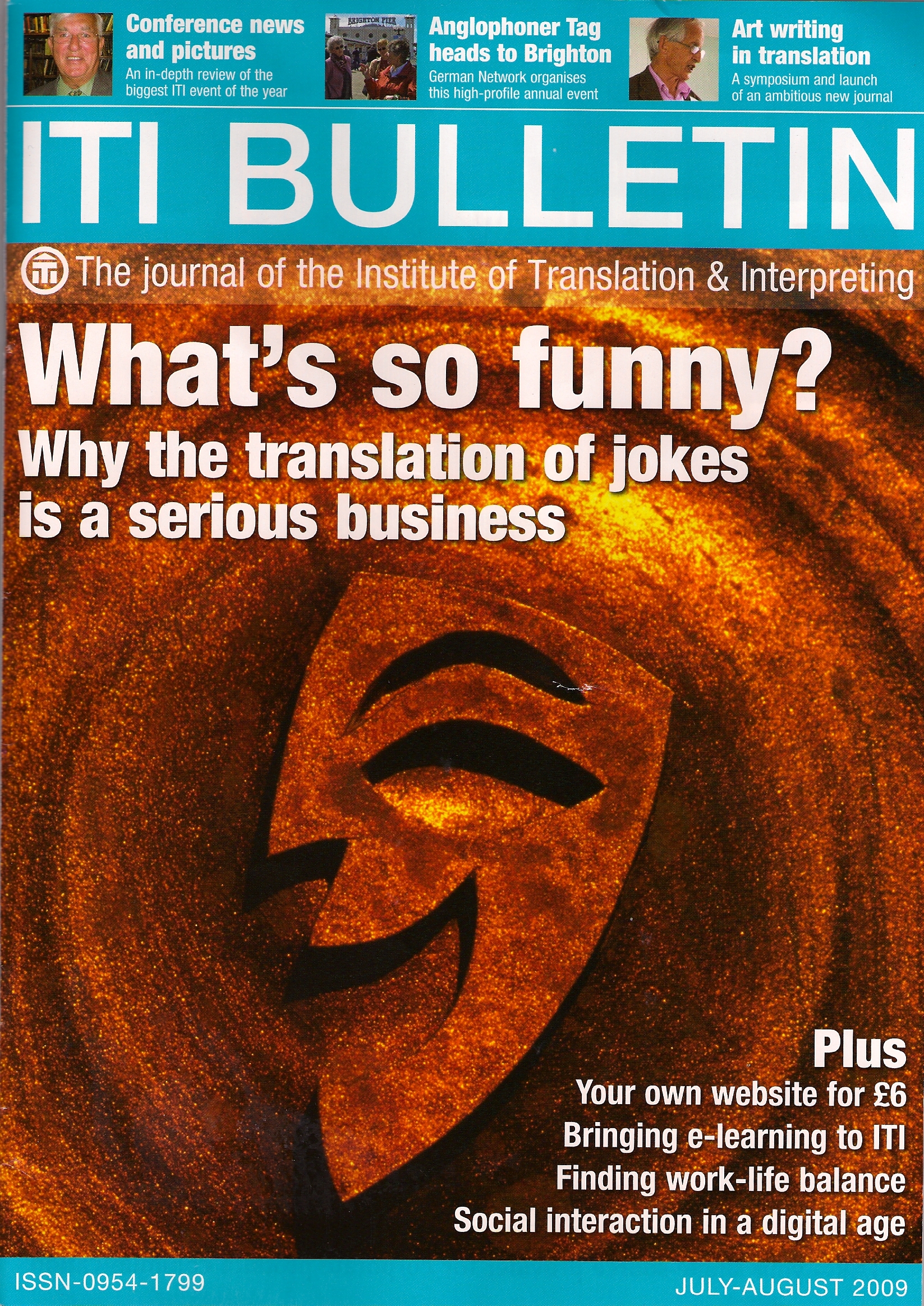
Translation: ITI Bulletin
Practical. When I decided to become a translator, I wanted to learn more about this profession and all the links led to this bi-monthly bulletin published by the Institute of Translation & Interpreting. It is highly informative, with good advice from fellow translators and a wide range of interesting topics (from marketing, finances, networking and website-building to events, workshops and recommended reading). Available only through membership.

Magazine Review on lang trans travel--ITI Bulletin

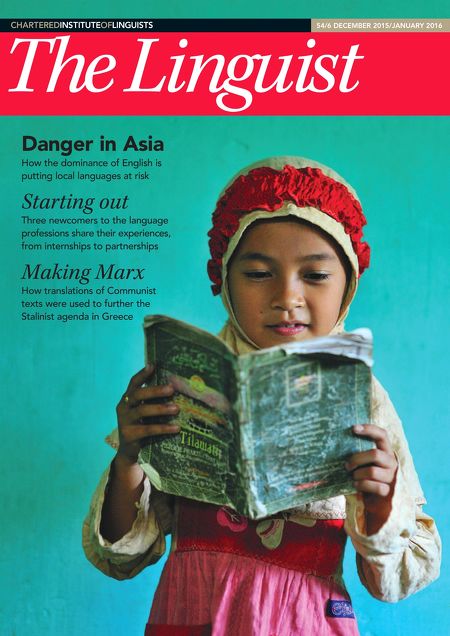
Translation & Languages: The Linguist
All-in-one. There is a good combination of translation-, interpreting-, language-, communication-, education-, linguistic-related topics. It is published bi-monthly by the Charted Institute of Linguists. Available through membership, subscription or online.

Magazine Review on lang trans travel--The Linguist

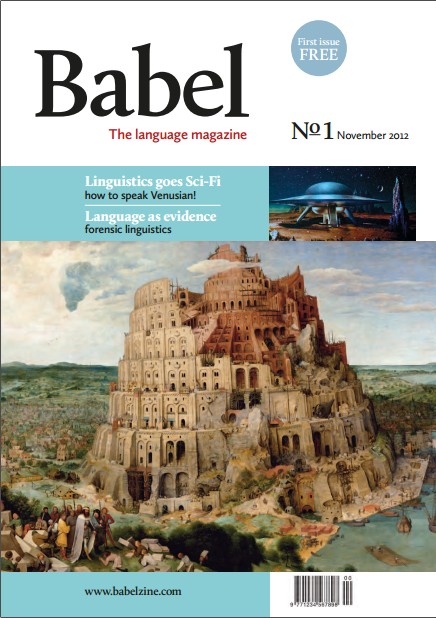
Languages: Babel Magazine
Curiosity. It is a real linguistic pleasure. I think I am often surprised by the articles published here; I mean positively surprised. I have been a subscriber from the very first issue and still enjoy every issue out of 4 published annually.

Magazine Review on lang trans travel--Babel

This is my list. Do you have any favourite magazines or journals on languages, translation and travelling? Please share your favourites in the comments below.

Written by Kinga Macalla

June 1, 2016

On Languages: Italian

Do you want to get a real taste of Italian life, travel around this beautiful country with ease, appreciate its art and architecture and be able to compliment the chef when you try the local delicacies? This guide to learning the language of the Bel Paese should give you a head start.

On Languages--Italian 2

Say what you see
Unlike English, Italian spelling is phonetic. That means that the spelling of a word tells you how to say it (except in a few isolated cases, such as homonyms like ‘pesca’ (fishing) and ‘pesca’ (peach), and of course regional variations). It also means that words that have the same ending will always rhyme. For example, ‘cane’ (dog) and ‘pane’ (bread) will always rhyme (compare with English ‘chalice’, ‘police’ and ‘lice’, to give you an idea!). Italians pronounce every letter in a word, including vowels, so ‘aiuola’ (flowerbed) is a-i-u-oo-l-a and ‘cappello’ (hat) is cap-pel-lo. One thing to watch out for though is the stress pattern in words: in words with two syllables, like freddo (cold) and dito (finger), the stress falls on the first syllable, unless there is an accent on the last syllable to tell you that it is stressed (compare ‘papa’ (Pope) and ‘papà’ (dad)). In longer words, there is no predictable stress pattern, so you will need to learn them.  Uomo avvisato mezzo salvato – forewarned is forearmed!

Articulate!
Italian speakers move their mouths a lot when they are speaking.  They open their mouths wide and form the sounds with their lips – they don’t mumble!  They do this to say the vowel sounds clearly.  Have a go: try pronouncing the Italian letter ‘a’ – you just have to open your mouth wide and say ‘aahh’! Try this with new words you learn – practice pronouncing them in front of the mirror and make sure you get your mouth moving!

Get your hands moving
Anyone who has spent any amount of time in Italy or around Italians will have noticed that Italians move their hands a lot when they talk.  The insider knows that this is not just for emphasis – unlike some languages where speakers have more or less idiosyncratic hand gestures that they use to stress what they are saying, or to try to make it clearer, Italian hand gestures each have an individual meaning.  They are so vital to communication that Bruno Munari even published a (humorous) Supplement to the Italian Dictionary all about hand gestures (the text is available in Italian, English, French and German). You can also find numerous videos on the internet that explain their use. Try and learn a few to make your spoken (and silent) Italian more authentic.

Regional variations
There are many different regional accents in Italian, which means that consonants, vowels and the melody of the phrase change depending on where you are in the country. Most areas, but particularly villages and rural areas, also have a dialect that is different from standard Italian.  Dialects are mostly used at home and with friends, whereas standard Italian is used for more formal occasions and between Italians from different regions so they can understand each other. Read more about regional variations here and read about the use of different expressions here.

Take your pick
Italy has a lot to offer, be it music, art, literature, food, sport, architecture, history, travel or fashion.  Pick your favourite one of these and learn all about it – in Italian!

Written by Suzannah Young

May 25, 2016

Language Learning Techniques: Develop your Reading Skills in Another Language

You may remember our blog post from a few weeks ago on how to improve your listening comprehension skills in a new language.  This week we give you more tips on how to optimise your language learning – this time with advice on how to develop your reading in another language.  Whether you’re choosing what to eat at a restaurant, poring over a newspaper, or following directions on a map, reading is a big part of using your target language.  Working on your reading skills can also help you develop your writing as you learn about written constructions.  Here are a few ideas to help you learn.

Reading skills 2

Read a Lot
Read anything you can get your hands on in your chosen language. Try to read at least one thing in the language you are learning every day. The more you read it, the more familiar the language will become and the easier reading will be.  Reading will help you develop background knowledge about the culture you are studying too, which will help your understanding as well.  You can also read about the culture in your own language, so it becomes familiar to you.

Choose Materials You Find Interesting
You can choose a text type you are familiar with, through your work or hobbies, and read an example in your chosen language, such as a magazine article on motorbikes or a recipe for a typical dish from the country where they speak the language you are learning.  You will know what kind of words will be used, so you will be comfortable with the task.  Choose things you would like to read in your native language. Don’t read things that are boring just because you think you should – it will put you off!  Pick your favourite novel and read the translation in the language you are learning.  You might like to try graded readers as well, as the structures are adapted to learners of the language but they pitch the story to adults rather than children so it is not boring for adult learners.  Reading for pleasure can help your learning immensely – it is not the same as using a textbook which (let’s be honest) can be a bit dry sometimes.

Develop Your Vocabulary – Gradually
The good thing about reading is that you can control how fast you learn.  You can give yourself time to think.
When you first approach a text, read for the gist – identify words you know and work out the general subject.  Look up a few words if you are really stuck on them but don’t dwell on how many words you don’t know and don’t look up all the unfamiliar words you read – it will slow you down.  Instead, underline them to look up later.  Remember, you will be able to understand a lot of the text even if you don’t understand every word.  You can look up the words you underlined when you finish reading.  You can always read the text again once you’ve done that.  As you look up words, build lists of vocabulary by theme.  For example, list everything you find about cooking, sports, the weather or politics.  If you find a verb, look up nouns that go with it, and adjectives.  For example: ‘compter’ in French means ‘to count’, ‘comptable’ is ‘accountant’ and ‘comptabilité’ means ‘accounting’.  In Italian, ‘rabbia’ is ‘anger’, ‘arrabbiarsi’ is ‘to get angry’ and ‘arrabiato’ is ‘angry’.  Most languages will allow you to do this exercise!  You can also find lists of vocabulary to learn on the internet, such as the 1000 words challenge (http://www.speaktothefuture.org/1000-words-challenge/).  Look up synonyms and antonyms of the words you learn to build your vocabulary even more.  If you are a visual learner, draw pictures associated with the words you are learning to help you remember them.  Repeat the words as much as you can so they stick in your head.
Of course, one thing to remember is that you don’t read just in order to learn words. If you read a book you are interested in, you will learn words in context and be more likely to remember them anyway.

Give Yourself Different Reading Tasks
Try different reading tasks to build your ease of reading.  You can time how long it takes you to read a text a few times – you will see how you get faster as your fluency increases.  You can decide to read fast or slow.  You can read a text aloud (this will also help with your pronunciation), in a reading group or in a pair (meet up with someone from your class!)  Come back to texts you have already read to see how much more you understand the second time round!  Listen to the text you are reading – an audiobook or a radio show with a transcript, for example – to hear how native speakers pronounce the words and what the reading aloud style is like in your chosen language.

Bonne lecture! Veel leesplezier! Miłego czytania!

Written by Suzannah Young

May 4, 2016

On Languages: Czech

The Czech language or čeština is a language which may look and sound difficult: the words’ endings can change, vowels with acute signs have a longer pronunciation and words are written with diacritics. BUT, it is a funny sounding language due to its soft pronunciation, with many words you may already know or which may sound familiar: e.g. muzeum, galerie, sestra, tři, robot, Pilsner, Škoda, Bat’a. What’s more, the stress is always on the first syllable and there are only three tenses: the present, the past and the future!

Osudy dobreho vojaka Svejka

The Czech language belongs to the group of Slavonic languages and if you speak Russian, Polish or Croatian, that certainly helps. But, this does not mean that non-Slavonic-language speakers cannot master the language.

In many textbooks, it is said that there are two Czech languages, the standard (spisovná čeština) and the colloquial (obecná čeština). This is a phenomenon that also exists in many other languages: the everyday language is different from the one spoken in formal situations. Yet  in Czech, the difference between the two is indeed visible. If you happen to live in the Czech Republic you can learn it fairly quickly (as you will hear how the natives speak on a regular basis) and if you are living abroad and want to learn Czech for business or to follow the news and read newspapers, then the formal language might be more useful. However, you can always learn both!
Written by Kinga Macalla

March 30, 2016

Language Learning Techniques – How to Develop your Listening Comprehension

We hope you enjoyed our Language Learning experience posts over the past few weeks.

In the posts that follow, we are going to look at different techniques to develop your skills in your chosen language in four different areas: listening, speaking, reading and writing.

This posts gives you a few tips on how to develop your listening comprehension skills. Like any other skill, listening can be developed with practice. Good listening skills also help you improve your speaking skills.

Remember that there are only a few situations when you need to listen hard to and understand every word – like an announcement telling you when your flight is at the airport. Most of the time it’s not necessary to understand everything, so don’t worry if you don’t catch every word.

Another thing to remember is that if you are speaking to someone, you can ask them to repeat something. This is a normal part of speech so will not disrupt the conversation. The important thing to do when listening is…relax (but be active)!

listening skills

Learn Listening By…Listening

A few posts ago, we recommended you immerse yourself in the language you are learning in order to become more familiar with it. So the first thing to do to develop your listening skills is to listen to your chosen language as much as you possibly can. You will be surprised how much you pick up.

You can chose to have the sound on in the background while you are doing something else so as to get used to how the language sounds or you can take part in active listening. The two tasks have different goals.

You can find material to help you develop your listening skills on the radio, on TV or in audio books.

Preparing for Listening

In most conversations you have or situations you experience, you usually know more or less what is going to be talked about, so you know what kinds of words are going to be used. Approach listening exercises by preparing for what you are about to hear: make decisions about what to listen for and what to focus attention on while listening.

Ambient Listening

Listen to the radio thorough your headphones while you are walking or listen to music in your chosen language while you are cooking, doing the housework or relaxing. This will mean you get used to hearing the sounds of the language. It also means that you will not feel stressed when it comes to active listening because you will already be familiar with the sounds of the language.

It is important that this is not your only listening activity. The trick is to combine different types of listening so that you make progress.

Active Listening

There are a number of tasks you can do to practice listening actively – that means listening with a purpose, focusing your attention and listening out for specific details. Active listening requires you to take action based on what you have heard.

  1. Listen for one element in speech patterns rather than listening for meaning: listen for sounds, for tones, for melody, for stress and so on. You can then practise applying these patterns to your speaking.
  2. Pick out as many words as you can without worrying about understanding everything. The more you do this, the more words you will understand each time.
  3. Decide on a topic and try to pick out key words to do with that topic. Write them down so you have a list of topic-specific vocabulary to refer to.
  4. Try to transcribe what you hear. You can pause the audio and go back if you miss something or need to listen to it again. Many online radio programmes have transcripts that you can check yours against.
  5. Read the transcript whilst listening to a radio programme. That way you will be able to hear exactly what the speakers are saying.
  6. Listen to music and read the lyrics. There are lots of music videos online with lyrics that you can read along to.
  7. Listen to the same segment again and again to see how much more you understand each time.

Resources

You can find a lot of listening resources on the internet. If you search for the name of the language you are learning + ‘radio’, you will more than likely be given a list of radio stations you can choose from. Some of the online radio stations have tailored listening exercises for language learners, such as Radio France Internationale (scroll down to ‘Apprendre le français’ or see the Journal en français facile (News Report in Easy French) or Deutsche Welle.

A Word on Vocabulary

In order to develop your listening skills, it is also important that you keep up your on-paper study of vocabulary and grammar too. This will mean you will recognise more of the words in the audio you are listening to.

And, most importantly, have fun!

Written by Suzannah Young

March 2, 2016

On Languages: Polish

What makes Polish SO hard?

It seems that Polish grammar is the one responsible for these rumours! Many people are led to believe that Polish grammar is impossibly complex and simply un-learnable, but truth be told, it follows a set of logical and regular rules.

Warszawa

Let us explain a few of the reasons why some people are put off learning Polish:
• Nouns can have three genders: masculine, female and neuter
• There are seven grammatical cases, which means that each noun and adjective can have seven different endings
• Verbs come in two aspects (English doesn’t have grammatical aspects)
• The pronunciation is just impossible!

Okay, this might sound like a difficult language to learn, but don’t worry. While some things may appear harder, some things are definitely easier. For example:

There are no articles – people who learn English often struggle with when to use “a”, “an”, “the” or nothing at all. In Polish, however, you don’t have to worry about this, you just say the word as it is with no article.
Word order is flexible – the case system means that syntax (that is, the word order within a sentence) is more flexible than in English. You therefore don’t have to worry as much about how to structure your sentences.
Fewer verb tenses – English has 16 grammatical tenses! This is extremely difficult for most non-native speakers. Polish, on the other hand, has only 5 tenses (or 3 tenses and 2 aspects, depends on how you count). This means that what in English can be expressed in three different ways: “I read”, “I am reading” and “I have been reading” in Polish is reduced to a simple “Czytam”.
Lots of vocabulary with Latin roots – you might be surprised by the amount of vocabulary that will be very familiar to you, for example:
Situation – sytuacja
Motivation – motywacja
Conversation – konwersacja etc.
Phonetic alphabet – unlike in English, once you learn the rules, you can look up any word and know how to pronounce it based on its spelling.

As you can see, there are lots of areas where Polish is not so difficult (and perhaps even easier than English!). Yes, it may seem strange and difficult at first due to its phonology (i.e. the system of sounds) and grammatical structures that simply don’t exist in English, such as the case system or verb aspects. However, any language can be learnt with motivation and perseverance, and there will always be elements that won’t have an equivalent in your native language.

Written by Alicja Zajdel

November 24, 2015

Interview with Writer & Illustrator Ella Frances Sanders

As a linguist, I found your book particularly interesting. Was your work linguistically motivated in any way? Do you have an interest in translation?
That’s lovely to hear, thank you! I suppose in retrospect, the book was linguistically motivated without me necessarily realising—but I think Lost in Translation is often picked up by people with no experience in translation, or people who only speak one language, and it was important to me that the book crossed the boundaries and elusiveness that, for a lot of people, sometimes accompany faraway cultures or languages. It was important that people felt able to connect with ideas that came from a place other than the one they grew up in. My own interest in language and translation really grew alongside the book, because everything happened very back-to-front. I wasn’t planning on writing a book, but after a small blog post I wrote on the topic of untranslatable words went viral, it quickly became the plan—when the universe gives you an opportunity that seems far too good to be true, you take it.
ella
 Why did you choose those particular words and languages?
The 52 words in the book were ruthlessly culled from a list of over 200 possibles that I compiled during my frantic research phase (I researched, wrote, and illustrated all the content for the book in less than 3 months). The final words were chosen for various reasons, but most of the time they simply seemed to be universal feelings or emotions, and many had great illustration potential. At one point I wanted to have 52 different languages in the book but ach, German has far too many great ones.


 Do you have a favourite untranslatable word?
I think this depends, and changes. A favourite of mine from the book is the Japanese ‘boketto’, which is to stare vacantly into the distance and not really think of much—I find myself in this position far too frequently. A favourite that isn’t in the book is ‘ayün’, a word from the Mapuche language which literally means ‘dawn’ or ‘rising sun’. It equates to ‘love’ but carries all these nuances about illumination and beauty, and also invokes conscious speaking or action—it’s as complicated as it is beautiful.


 You call yourself a writer out of necessity and an illustrator by accident. Would you like to expand on that?
A long story cut short, my apparent career as an illustrator was not entirely planned, while on the other hand, I have always written things down on paper—stories, life, people. My need to write often feels much more severe than my need to draw, although over time I’ve found that they complement each other wonderfully… more than I had ever hoped. I feel incredibly lucky to be in this position, where I can practice and develop both my great loves together.


 What do you like most about your work? What’s the typical day like for you?
Most of all, I love the flexibility my work gives me in terms of time and location; during the last two years I have lived in Morocco and Switzerland, and have now settled for now in the UK, which is where I grew up. But inks do not travel well on airplanes, and I’ve found this out the hard way, so there are definitely some limitations when it comes to throwing yourself around the globe and keeping your work intact along the way. Sometimes coming and going from the same place is good—I try to note the beauty which lives in the monotony of everyday tasks. As for a typical day, I don’t think there is one. I certainly don’t keep a 9-5 schedule, because some days I want to work late, and other days I want to be up and working before the city has risen. But all days involve some illustration, some writing, some walking, and a lot of tea.


 Can you tell us anything about your second book that you’re currently working on?
Well. I can tell you that it will be a companion of sorts to Lost in Translation, and that they will look splendid together on a bookshelf. It’s different, but in a similar vein linguistically speaking. If things go to plan, the book will go to print at the end of March next year, and then will be out in mid-September. I think I’ll allow myself to start getting excited soon.
Thank you.


To follow Ella’s lovely work visit her website.
If you would like to purchase a copy of Lost in Translation, you can do so here.
Interviewed by Alicja Zajdel
November 4, 2015

Event report: Language Show Live, London

Language Show Live is an annual language conference, considered one of the biggest and most important events in the linguistic circles, bringing together language learners, teachers and professionals. As I am currently in my final year of undergraduate studies and the pursuit of employment is fast approaching, I decided to visit this year’s show, which took place between the 16th and 18th of October. I was only able to attend on the Saturday, so I prepared myself for a busy day, with a long list of seminars to go to and stalls to visit (I even managed to squeeze in a 30 minute Welsh taster class!).
At first I was a little overwhelmed by the enormity of the event, there was so much going on I didn’t know where to start! However, I quickly found my way round and the areas I was interested in. The event was divided into different sections, such as Careers Zone, TEFL Fair, Technology Zone and Primary Languages Base among others. Each section had numerous stalls with representatives of the corresponding institutions, ranging from British Council and the European Commission, to TEFL courses abroad and language resources retailers. It felt like everyone and everything language related were all under the same roof.
I attended multiple seminars, which were divided into three categories based on the topic: Teaching, Translating/Interpreting and TEFL. It was very interesting to find out more about some possible careers such as Public Service Interpreting or translating for the European Union. Hearing from professionals and their personal experiences of the job was a lot more insightful and informative than a simple career profile online. It was also a great opportunity to ask more specific questions. Whatever doubt you had, there sure was someone to answer it!

I would definitely recommend the event and I’m hoping to visit again next year. I believe it’s particularly beneficial for final year language students who are exploring different career options, but also for language professionals, for whom the event is a great networking opportunity.

Next year the Language Show Live will take place from 14th to 16th October 2016.

Written by Alicja Zajdel

October 8, 2015

On Languages: Portuguese

Acordo_ortografico_PT

My adventure with the Portuguese language started almost three years ago, when after six long years of French at school I decided to try something new. Portuguese was definitely that. Even though I already speak Spanish, and was therefore expecting it to be quite similar, I was surprised by how different and well, foreign, it sounded to me at first. The Portuguese I was first introduced to was the European kind, which with its throaty Rs and fricative ʃ[1]and ʒ[2]sounds, can appear somewhat Slavic. It certainly does not resemble the Spanish or Italian pronunciation, perhaps more familiar to most people. However, I embraced this difference straight away, as after all I was after something new. Of course grammatically and lexically Portuguese resembles other Romance languages and having already had some knowledge of two other languages from that group, it was definitely easier to learn Portuguese. I cannot say what it’s like to learn it as your first foreign language.
But let’s backtrack a little. Why did I even start learning Portuguese? It doesn’t seem like the most popular language to learn in Europe, which is a shame, because it’s actually the 6th most spoken language in the world. Of course the biggest contribution to that number is Brazil, with over 200 million native speakers. And here comes another challenge: what’s the difference between the two dialects and which one do I choose?
Generally speaking, European Portuguese (EP) is the older, more traditional variant of the language. It’s characterised by more complex grammar and, of course, many lexical differences. Brazilian Portuguese (BP), having evolved differently with more influence of African and indigenous languages, such as Tupi, is the more exotic and grammar-free sibling. Of course the expression ‘grammar-free’ is used here as an exaggeration, but there are many cases of BP phrases that would be considered ungrammatical in EP. One of the biggest differences is the reduction of the personal pronoun system (I, you, he/she etc.) to just 3 verb forms, which makes learning verb tables a lot easier. The pronunciation is also quite different; BP favours more open vowels and the fricative ʃ and ʒ are reduced to the simple s and z, therefore reducing any resemblance to Slavic languages.
Which dialect is better?
This really is an impossible question as it’s all a matter of taste and individual preferences. I, personally, really like both for different reasons and I try to switch between them, depending on the interlocutor, but it’s not an easy thing to do. If you are considering learning Portuguese (and you should be!), I think you should ask yourself where you will be more likely to use it. If you travel frequently to Portugal and doubt you will venture out as far as Brazil, perhaps that’s something to consider. Of course the Brazilians and the Portuguese can understand each other, so it’s not like you won’t be able to use it in the other country, but misunderstandings do occur at times. Another thing to consider is that BP is a little easier to learn owing to its simpler and less strict grammar rules. So if you are up for a challenge or already have some linguistic experience, perhaps you will be more interested in EP. But if it’s your first attempt at foreign language learning, maybe you will find BP a bit less intimidating. This varies from person to person, so the best thing to do is to just try it and see for yourself. Regardless of which variant you choose, I recommend you learn Portuguese because it’s really fun and the Lusophone (Portuguese-speaking) countries make for some really great holiday destinations! And the satisfaction you will feel when you eventually do master it is totally worth all the work. Boa sorte! 

Written by Alicja Zajdel

Photos courtesy of Alicja Zajdel

[1] As in the words shop, sure or national.

[2] As in the words pleasure or vision.