Tag Archive: multilingualism

September 13, 2017

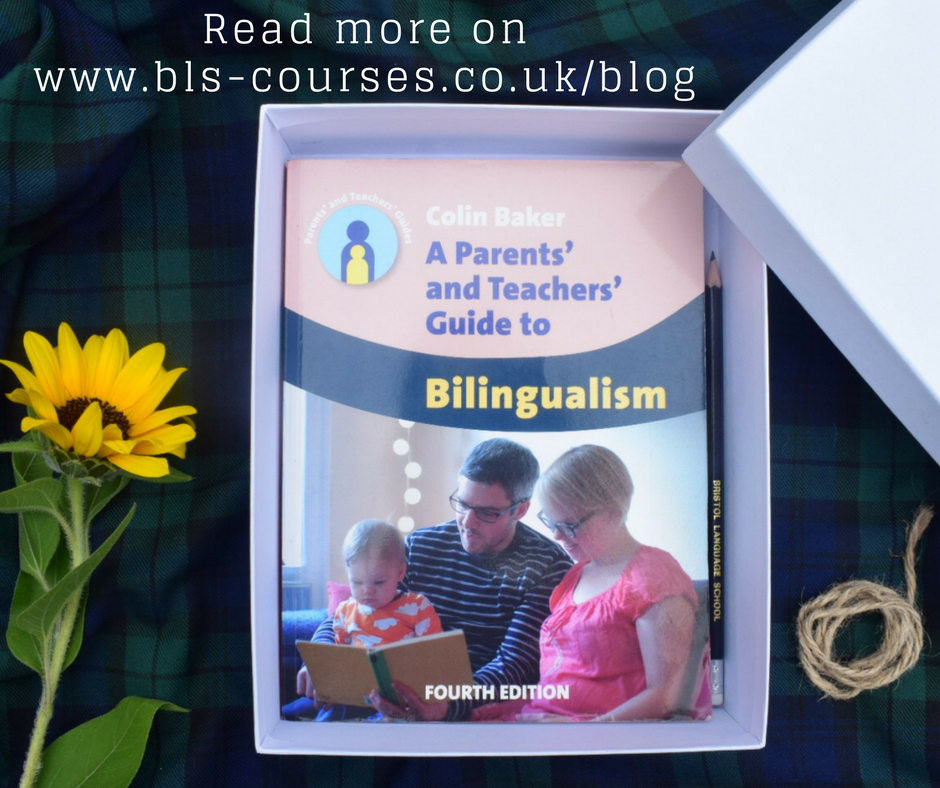
Book review: A Parents’ and Teachers’ Guide to Bilingualism by Colin Baker

“Children are born to become bilinguals and multilinguals.” Colin Baker

This is a bible for any parent, teacher or professional dealing with bilingualism. The book is organised in a question-answer style and also contains some recommendations on further reading. There is no straightforward answer to some of the questions posed; however, the author explains his reasoning and carefully provides advice on the unanswerable questions. Personally, I like the fact that the children’s interests are always put first in this book, and this approach to bilingualism is more relaxed, less strict and gives some room for your child’s own language needs. The guide is divided into 7 sections: Family Questions, Language Development Questions, Questions about Problems, Reading and Writing Questions, Education Questions, Concluding Questions and Glossary. I wouldn’t want to provide any answers here, as I think everybody will look into different topics or queries within the book, but below you will find some examples of the most important questions (in my humble opinion!):

What are the advantages of my child becoming bilingual?

What is the ‘one person – one language’ (OPOL) approach? Is it effective?

How important is it that the child’s two languages are practised and supported outside the home?

What are the most important factors in raising a bilingual child?

Will my child become equally fluent in two languages?

What are the disadvantages of my child becoming bilingual?

My child refuses to use one of his/her languages. What should I do?

How should I help my child to read and write in both languages?

Should my child go to a bilingual school?

What should I look out for in choosing a school for my bilingual child?

Is bilingualism a natural right for any individual?

Overall, I highly recommend A Parents’ and Teachers’ Guide to Bilingualism by Colin Baker. If you’re a bilingual parent, what books or guides would you recommend? Please share your recommendations in the comments below.

Written by Kinga Macalla

February 22, 2017

Online Resources on Bilingualism and Multilingualism

Multilingualism is the use of two or more languages, either by an individual or by a community. There are more people who speak more than one language (multilingual speakers) than there are people who only speak one language (monolingual speakers) in the world.  More than half of all Europeans speak at least two languages.  Speaking two languages is called bilingualism.  Globalisation is making multilingualism more important in today’s world.  Bilingualism and multilingualism are important topics for research and teaching.  Raising bilingual or multilingual children is also an important experience for parents in a bilingual couple.  They may need guidance on how best to go about raising bi- or multilingual children.

A lot of information, for researchers, teachers and parents, is available on the internet.  This blog post gives a list of websites on bilingualism and multilingualism for parents, teachers and researchers and gives an idea of what can be found on each website. A lot of resources can also be found on the Blogging on Bilingualism website, which has a list of blogs on the topic and summarises and evaluates each one.
on bilingualism--ONLINE RESOURCESES

Resources for Parents

Multilingual Parenting

Multilingual Parenting has a blog with tips on how to raise bilingual children, such as “12 things parents raising bilingual children need to know”.  Here are more blogs on the same.

Bilingual Parenting

Bilingual Parenting is a blog that documents a couple’s progress in raising a bilingual child and includes tips, materials and a bookshop.

Bilingualism Matters

Bilingualism Matters is a Centre at the University of Edinburgh, which studies bilingualism and language learning.  Their vision is a society where everyone is aware of and has access to the benefits of multiple languages.  The Centre’s website has news, events and a blog.  It also has a list of resources for Bilingual Families and FAQs.

The Bilingual Advantage

The Bilingual Advantage is a site run by a bilingual researcher, teacher and parent.  It includes resources on bilingualism and blog articles by two bilingual parents.  It has a list of Tips for Bilingual Parents.  The website is available in English and French.

Words for Life

The Words for Life website, which is designed to support parents to help their children develop their language skills, has a list of frequently asked questions about raising bilingual children.

Omniglot

The online encyclopaedia of writing systems and languages, Omniglot, has several pages dedicated to the issue of raising bilingual children: “Raising Bilingual Children: The First Five Steps to Success”; “Raising Bilingual Children: Fact or Fiction?”; “Raising Bilingual Children: The Snags”; “Raising Bilingual Children: The Different Methods to Success”.  They are written by the founder of the Multilingual Children’s Association.

Multilingual Children’s Association

The Multilingual Children’s Association (USA) has a web guide to raising multilingual children. The site is dedicated to kids growing up with multiple languages.  It features expert advice and real world wisdom, parent discussions, tips, resource directory, articles and more.  It hosts a community where parents can ask questions and share thoughts, tips and support.

Bilingual Monkeys

Bilingual Monkeys is a site dedicated to giving ideas and inspiration for raising bilingual kids (without going bananas!).  Its creator has written several books on the subject.  The site includes a list of tips for raising bilingual children.

InCulture Parent

InCulture Parent is a collection of personal experience blogs by parents who are committed to ‘raising global citizens’.  The site includes tips on bilingual parenting.

Bilingual Potential

Bilingual Potential is a consultancy that offers advice to parents on raising bilingual children.

Bilingual Kids Rock

Bilingual Kids Rock celebrates raising bilingual children and includes advice and tips.

General Advice

There is also a lot of general advice out there, such as this article on Quartz, this from the American Speech-Language-Hearing Association, this from the Linguistic Society of America, this from Parenting.com and this in the Huffington Post.

Resources for Teachers

Bilingualism Matters

Bilingualism Matters has a list of resources on English as an Additional Language and ESOL, Modern language teaching: resources and policy and Minority and regional languages in Europe.

Official Languages and Bilingualism Institute

The Official Languages and Bilingualism Institute of Canada strengthens and promotes education and research in the fields of teaching, evaluation and language policy design. It also brings together the University of Ottawa’s experts in official languages and bilingualism in four areas: teaching; research; testing and evaluation and development and promotion.  Its website has a host of resources and information on assessment and development in language learning.

Resources for Researchers

Multilingual Matters

Multilingual Matters is an international, independent publishing house based in Bristol.  It produces publications on bilingualism, second/foreign language learning and sociolinguistics.  BLS previously interviewed Multilingual Matters on our blog.  Read the interview here.

Creative Multilingualism

Creative Multilingualism is a research programme investigating the connection between linguistic diversity and creativity.  It stems from the idea that there is more to languages than the practical. They are also our key medium for self-expression and are at the heart of our identities.  Its website includes resources and events.

Centre for Literacy and Multilingualism (CeLM)

The CeLM aims to generate new insights into the working of the multilingual mind as well as new perspectives on how literacy skills work in monolinguals, bilinguals and multilinguals.  It carries out state-of-the-art empirical research in Education, Linguistics, Modern Languages, Neuroscience and Psychology.  Its website has resources such as Literacy in Monolingual families and Learning modern foreign languages in the UK.  There is also a list of conferences and events.  CeLM @ University of Reading is the host of a new branch of Bilingualism Matters. Bilingualism Matters provides advice and information on child bilingualism to anyone interested or involved with raising, educating and caring for bilingual and multilingual children. It also bridges the gap between researchers and society by presenting recent findings on the advantages of bilingualism on the cognitive and social abilities of the child.

Centre for Research on Bilingualism

Bilingualism and second language acquisition is one of the leading research areas at Stockholm University. Research at the Centre for Research on Bilingualism covers a number offers a wide variety of introductory and advanced courses as well as a full PhD program.

Bilingualism Centre

Located in the bilingual area of North Wales, the Bilingualism Centre at Bangor University focuses on Welsh-English bilinguals as well as offering a springboard into other bilingual communities.  The website has information on events, postgraduate study programmes, collaboration opportunities and resources.

Bilingualism: Language and Cognition

Bilingualism: Language and Cognition is an international peer-reviewed journal focusing on bilingualism from a linguistic, psycholinguistic, and neuroscientific perspective. The aims of the journal are to promote research on the bilingual and multilingual person and to encourage debate in the field.

We hope you find these resources useful, whichever category you use!

Written by Suzannah Young
April 13, 2016

On Multilingualism and Bilingualism: Journals

If you find multilingualism a fascinating subject that you want to explore, you might want to be updated on current research, observations and discussions on the topic. Below you will find a list I have prepared of journals on multilingualism and bilingualism.

International Journal of Multilingualism – focuses on the psycholinguistic, sociolinguistic and educational aspects of multilingual acquisition and multilingualism. It is published quarterly and subscription is available both online and printed (or payable per issue or per article).

On Multilingualism and Bilingualism Magazines and Journals 1

International Journal of Bilingualism – focuses on linguistic, psychological, neurological and social issues with a focus on the linguistic behaviour of bilingual and multilingual individuals. Is it published quarterly and subscription is available both online and printed (or payable per issue or per article).

On Multilingualism and Bilingualism Magazines and Journals 2

International Journal of Bilingual Education and Bilingualism – promotes theoretical and applied research into bilingual education and spreads ideas about initiatives in bilingualism and bilingual education. It is published in 6 issues per year and subscription is available both online and printed (or payable per issue or per article).

On Multilingualism and Bilingualism Magazines 3

Journal of Multilingual and Multicultural Development – covers topics on the sociology and social psychology of language, in language and cultural politics, policy, planning and practice. It is published in 7 issues per year and subscription is available both online and printed (or payable per issue or per article).

On Multilingualism and Bilingualism magazines 4

Bilingual Research Journal. The Journal of the National Association for Bilingual Education – covers bilingualism. It is published quarterly and subscription is available both online and printed (or payable per issue or per article).

On Multilingualism and Bilingualism Magazines 5

Written by Kinga Macalla

March 16, 2016

Interview with Multilingual Matters

Multilingual Matters is an international independent publishing house with lists in the areas of bilingualism, second/foreign language learning, sociolinguistics, translation and books for parents.

Most publishing companies tend to be based in London. Why did you choose Bristol?
The company was originally based in Clevedon where the company’s founders Mike and Marjukka Grover lived. When they retired and their son Tommi Grover became Managing Director we moved our office to Bristol as that’s where the majority of the staff lived.

As your publications are highly specialised, are your staff also experts in the area?
We are not all specialists in applied linguistics and tourism studies, our expertise lies in publishing not the world of academia. All our books are peer reviewed by academics working in the field to ensure that the content is accurate and appropriate.

Are all your publications written by academics or are other professionals also considered?
The majority of our books are written by academics but we do publish a small number of books aimed at parents and teachers, some of which are written by non-academics. These books are usually for a more general audience and are more accessible to the general reader. The most popular of these titles is A Parents’ and Teachers’ Guide to Bilingualism by Colin Baker which is a guide for parents bringing up their children with more than one language or teachers working with multilingual children.

Do you organise any events, such as meetings with authors or discussion forums?
We don’t tend to organise our own events but we attend a number of conferences every year where we meet with authors and often we participate in a publisher session where we advise academics, particularly younger postgraduates, on the process of academic publishing and how to get their research published.

What would you say are the most interesting aspects of working in publishing?
Working for a small independent publisher allows for a lot of variety and flexibility that isn’t always possible in bigger publishers. It’s also great to work with the same people over several years so you can build good relationships – both with colleagues in the office and authors in the academic world.

How has the publishing sector changed in the era of e-books?
People have been saying for decades that the increasing popularity of ebooks will cause the death of the print book but so far that hasn’t happened although we are selling fewer print books and more ebooks all the time. More university libraries are purchasing electronic content for students and many of our customers prefer to read books on a tablet or e-reader rather than in print these days. However, we’re pretty sure that the print book isn’t going to disappear any time soon!

Thank you!

Multilingual Matters -- photo

Interviewed by Bristol Language School  
Photo courtesy of Multilingual Matters

March 9, 2016

Book Review: Growing up with Three Languages by Xiao-Lei Wang

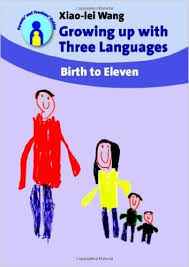
Raising children bilingually sounds challenging enough, but trilingually? Xiao-Lei Wang and her husband decided to teach their children their heritage languages: Chinese and French, while living in the USA. They were very serious about this project and gave their full attention and creativity to make it work for their boys who are now trilingual! Xiao-Lei Wang described their experience in the book Growing up with Three Languages. Birth to Eleven and says that one of the motives behind this publication was the lack of successful examples of multilingual upbringing practises. By writing this book Xiao-Lei Wang wanted to help parents discover the possibilities of raising multilingual children. This is not to say that the task in itself was somehow easy and without difficulty or frustration, rather it was overall an enjoyable and rewarding process.

Growing up with three languages

Growing up with Three Languages was recommended to me by a friend who is planning to raise her daughter trilingually and found some of the book’s guidelines very useful. I particularly enjoyed its style, case studies, real-life examples, friendly reader approach and long lists of resources. I would point out however that the addition of an all-in-one bibliography would have been useful.

The author highlights a number of key factors on the process of raising children trilingually. Firstly , if we are planning to raise our children multilingually, we must ask ourselves a number of questions: from our reasons and motives, practicalities and teaching methods to our children’s names (yes, that is important, too!) and then deciding whether they should be going to a supplementary school or not. Secondly, let’s make the whole process as interesting, enjoyable and also positively challenging as we can, so that it does not feel like a chore both for us and for our little ones. Thirdly, we should not forget that communication should always be the most important priority and that language learning is a life-long process (I certainly agree with this!).

I would definitely recommend this book to any parent who is planning to raise their children multilingually, and it is an undeniably helpful resource for those whose heritage languages are Chinese or French.

Written by Kinga Macalla