Tag Archive: Polish

February 17, 2016

Learning Languages – My Story

My name is Suzannah I am a PhD student in Translation Studies.  I speak five languages (English, French, Italian, Dutch and Spanish) and am learning a sixth (Polish).  You may ask how or why I have learnt/am learning them and what I use them for.  What I will say is that I use them all regularly and they are all a big part of my life.  Actually, I don’t know what I would do without them.  It may surprise you to know, though, that it wasn’t always like this.  There was a time when I thought I wasn’t going to carry on learning any languages at all.  In the end, my circumstances changed and I did carry on – and I’m very glad I did because it changed my life!  This is my story.

Learning a Language -- My story 2

Beginnings
I started learning French when I was little, thanks to my parents having got me to watch a bilingual video about an alien who comes to Earth and learns about human life…  This video was the same story in French and English.  It was easy to follow in French if you had watched the English version (and even if you hadn’t) and the storyline and learning material was very clearly presented.  The best thing about it was that it was fun – it didn’t feel like a chore and I enjoyed watching it again and again.  I was learning without even realising it!
Another early memory is that whenever we went on holiday, my parents always tried to learn a few words of the local language and encouraged my sister and me to try the food and appreciate the places we visited.  I am very grateful to them for having done this because I believe they gave me a positive attitude to new languages and cultures and made learning about new people and places a fun thing to do.  Of course, being on holiday helped make it fun!  This attitude has definitely stuck with me.

School Time
We had French lessons at school from when I was 11 but I feel we only learnt a few set phrases and weren’t really given a love for the language.  Nevertheless, I found I understood things quite quickly and did receive some encouragement from the teacher.  The problem was, learning a language was not seen as ‘cool’ at my school and I actually hid my talent from my peers and pretended I found it as difficult and boring as they did!
I got a good mark for GCSE French and luckily decided to carry on to AS Level.  I thought I was only going to do a year but, thankfully I had a very dedicated and enthusiastic teacher who encouraged us to nurture our talent and used interesting learning material like films and newspaper articles – real life material that real French people used.  That made it more relevant to us and made us see that it was a living language.  I carried on to A-Level and did well in it.
As A-Level students, we had the opportunity to go and stay with a family in France.  My host mother was a wonderful lady, she was very supportive and was really interested in everything we did.  She introduced me to literature and a theatre group she was involved in.  We are still in touch today (almost 15 years later) and I have visited her numerous times.
I still didn’t think I was going to carry on with French and thought I was going to do English Literature at university.  In the end I didn’t get the grades I needed to do English and decided to defer my university entry for a year and reapply.  That meant I needed something to do for a year. A friend of my sister’s had just done a placement in France and suggested I do the same.  She gave me the details of a language school and I contacted them.  They signed me up for a three-month language course and a work experience placement.  I enjoyed the life at my host family’s house less than the time before but I made some really good friends at the language school.  A lot of them were Chinese and it was fun to learn about their country as well as learning French together.  They even taught me a few words of Mandarin!  At the time it was funny for me to think that we were able to communicate with each other through a language that was neither of our first languages.

University Life
Thanks to this placement, which improved my French a lot, I applied to do French and English Literature at a different University.  I was accepted and spent three years there.  The language learning experience depended on how committed you were to learning – there were resources available but you had to use them on your own initiative – but we did learn a lot about French culture and society, which helped us to understand the background to the language we were learning.
I spent my Erasmus year in Paris, France.  Initially, I started a work placement but didn’t enjoy it so enrolled in a university.  That was one of the best decisions I have ever made.  If I had stayed on the work placement, I may have got disheartened but as I went to university I met a lot of people my age and made life-long friends.  I was lucky enough to meet a group of friends who I spent every day with – you can say I was really immersed in French culture!  It was a bit difficult following lectures in French at first but I had a trusty electronic dictionary which gave me the definitions of words I didn’t know and I soon got up to speed.  My friends and I started a Spanish class together as well, which was a fun experience – learning a language through a language that was not my mother tongue!  In the summer after my Erasmus year, I went to stay with a friend in Madrid and did a language course – for fun.  That was great too because of the amazing people I met from all over the world.  We had to use Spanish to communicate with each other so it really helped us learn.

After Graduation
When I graduated, I wanted to get a job using my languages so I applied for internships in Brussels, Belgium.  I started an internship at a European NGO, where I would be speaking French and English.  It turned out that they needed my Spanish too.  Initially, I thought I was going to stay there for six months (you can see that this is a recurring theme!) but then I was offered a full-time job and ended up staying for six years!
Belgium has three official languages, Dutch, French and German (and an unofficial one, which is English!)  I was curious to know what the signs I could see in Brussels said, so I enrolled on a Dutch course.  I complemented my learning by listening to the radio and reading newspapers that were readily available.
After a few years in Brussels, I met a person who ran a theatre group in Antwerp.  I started going to the theatre group every week, and it was there that I met my partner, who is Italian.  I moved to Antwerp to live with him, which meant that I could practice Dutch all the time.  I also learnt Italian through my partner and with his family.  I had to speak Italian if I wanted to speak to them, and I did want to speak to them, so that was useful!  I found I learnt Italian fairly quickly because it is similar to French and Spanish so I could already understand quite a lot.  We have a lot of Italian friends and I speak to them all in Italian.
While still in Brussels, I met a few Polish people through work.  We became friends and I realised I was interested in learning their language.  When I moved to Antwerp, I decided to enrol on a Polish course, not least because I wanted to meet people in my new town.  I also wanted to see whether I was capable of learning a Slavic language.  I had learnt three Romance languages and a Germanic language so learning Polish was (and still is) a new challenge for me.

Back in the UK
I recently moved back to the UK and have carried on learning Polish.  I am finding it a bit more difficult to learn than it was to learn the other languages I speak.  This may be because I don’t have many people to practice with.  Learning my other languages went quite quickly because I was able to practice with people around me and, in some cases, I had to speak because there was no other option!  I think it is important not to be afraid of making mistakes and just speaking – but I am finding it a bit hard to follow my own advice in Polish at the moment!!

The Last Word
As you can see, my reasons for learning languages have been enthusiastic teachers and a positive attitude to language learning on the one hand and friendships and a desire to have new experiences on the other.  Being in an environment that has allowed me to be exposed to the languages on a regular basis has definitely been beneficial to my learning.  Speaking other languages has allowed me to meet lots of wonderful people but it has also been useful professionally.  For example, I do translation work sent to me through people I have met abroad.  The most important part of language learning for me, though, is by far the friends I have made.
I hope you can have a similarly positive experience with learning languages!

Written by Suzannah Young
August 19, 2014

Interview with Translator Antonia Lloyd-Jones

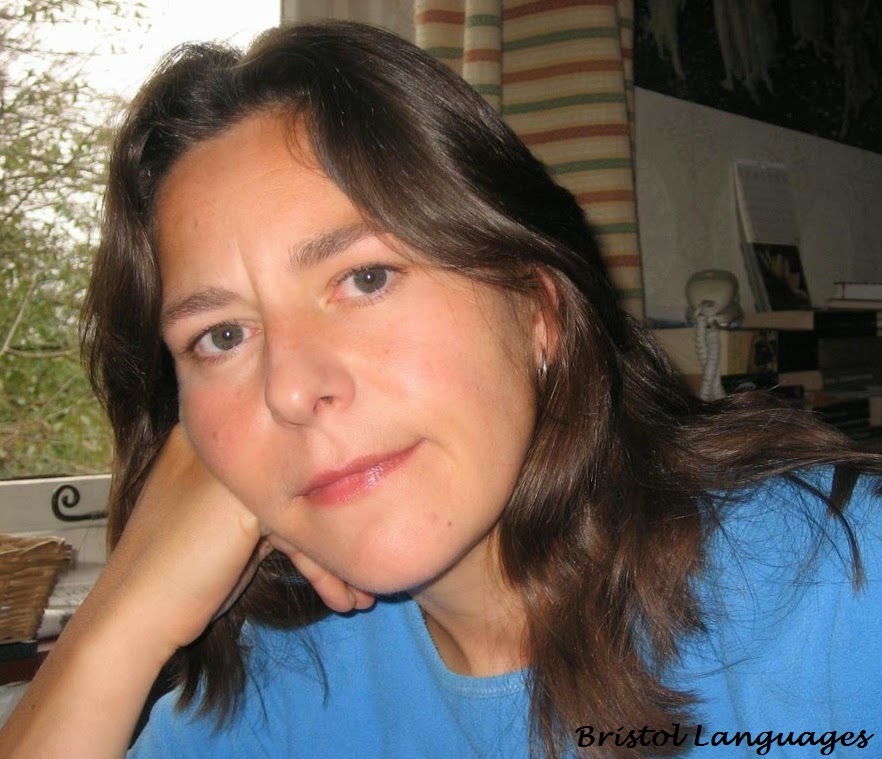
Antonia Lloyd-Jones is a full-time translator of Polish literature, and a double winner of the Found in Translation award. She has translated several works by some of Poland’s leading contemporary novelists, including Paweł Huelle and Olga Tokarczuk. Her most recent publications include Kolyma Diaries, a travel book by Jacek Hugo-Bader (Portobello Books) and Gottland: Mostly True Stories from Half of Czechoslovakia by Mariusz Szczygieł (Melville House). Her other translation projects include crime fiction, poetry, essays, and books for children. Besides working as a translator, Antonia is also a mentor for the BCLT’s Emerging Translators’ Mentorship Programme and a Translators Association committee member.

Antonia Lloyds Jones

1. Is it true that the main reason why you learned Polish had dark curly hair and was seven feet tall?
That’s a tall story – the truth is that he was six foot three.

2. The Polish language is considered to be one of the most difficult. How did you manage to master it?
I’m always sceptical when I hear Polish defined as “one of the most difficult languages”. Compared with what, and from whose perspective? In some ways Polish is a very easy language; for instance, once you know what sound each letter represents, the words aren’t difficult to spell, because all the letters are pronounced – unlike in English, where simply the word “enough” is enough to show how fiendishly difficult the spelling can be. Polish tenses are much simpler than English ones too. And those innocent little words “a” and “the” are very challenging to most students of English. So what is a difficult language?
I mainly taught myself Polish, but after studying Russian for ten years, at school and university. I also have a background in Latin and Ancient Greek, which provide a great basis for learning any other Indo-European language. I suspect that an ability to learn languages is partly an animal thing – like being good at music, or drawing – some people are born with it and find it easier than others do. There are plenty of linguists in my family, so perhaps I inherited a talent for languages. I’m sure I chose to study Russian because my father, who was a linguistic genius, didn’t know any, so he could be proud of me without correcting me every second word. Although when I started learning Polish, from my Anglophone perspective Russian seemed similar enough to be very helpful to me, the two languages have long since totally diverged in my mind, and I no longer think of them as having much in common.

3. What place in Poland do you visit most? Have you ever thought about moving there permanently?
As I write this, I am in Warsaw, a city I very much enjoy. Mostly I come here, or to Kraków, occasionally Gdańsk or Wrocław, mainly because those are the places where I know people. But in January for instance I will be in Łódź to help research a book for an American author of Polish-Jewish origin. I wish I had more opportunities to go to the Polish countryside, and the smaller towns, as there are so many fascinating and beautiful places to see. I have never thought of moving to Poland permanently; these days I have family commitments in Britain, but who knows? Perhaps one day I will.

4. Do you have a favourite word? Either in English or Polish.
Not really, though sometimes my favourite word is the very last one in the book I’m translating, simply because reaching it means finishing the project. But of course like many non-Poles, I can’t help liking the word źdźbło, which seems absurdly complicated for something meaning a blade of grass. People who know no Polish at all find it truly alarming. I have a favourite Hungarian word, which is zongora, meaning a piano – it sounds just right.

5. After years of working as a translator, are you able to pinpoint some key differences between the two languages? Perhaps the lack of an equivalent for a certain word or in the vocabulary range for a certain topic.
I could say that Polish uses more impersonal structures than English, or that its word order is much more flexible, but different languages are like different countries, the product of different experiences that result in different mentalities. So in a way everything is untranslatable, and translation is simply our best resort, short of learning the other language. But equally I could say that everything is translatable, there’s no lack of equivalents, or ways of rendering the same thing in another language.

6. The translator’s role is usually not limited to the translation itself, translators often act as cultural ambassadors for the country. What do you find most satisfying about this job?
I like being involved in promotional events with the authors whose work I translate, because it gives me the opportunity to talk to them, and often to have adventures with them. Knowing them in person and spending time with them professionally is highly enjoyable, and also contributes to my better understanding of how they write and how they think about their work. It also gives me the chance to go to inspiring literary festivals and to meet other translators and writers. I think being an advocate for the literature you translate is an important part of a translator’s job – once they’re published, the books need promotion, and it can only be in the translator’s interest to encourage people to read them.

7. How much time per day do you usually dedicate to translation?
Like any self-employed person, I spend most of the day doing my job, from first thing in the morning to late at night. Being freelance means that you have to be disciplined about getting work done, and about generating work too. If you mean every aspect of translation, then I spend my entire working day on it; if you mean actually sitting over a Polish text and putting it into English, it depends on my workload and schedule. If I am working on a particular book, there is usually a set number of pages that I aim to complete each day, but of course as the deadline approaches, and I start to get behind, the number of pages increases.

8. You don’t see much Polish literature on the shelves of British bookstores. Is it difficult to interest publishers and readers in Polish authors?
The first part of your question answers the second. It is very difficult. Publishers and bookshops have to be business-like – they’re not charities, they have to make a profit. Unfortunately Polish literature isn’t at the top of most people’s shopping list. It has to compete with the huge number of books published in English (over ten times as many as in Polish) and also with an increasing number of other translated literatures. I often ask British or American people if they can remember the name of any Polish author whose work they have read in translation, and they look sheepish as they rack their brains to think of one, but I tell them I won’t be surprised if they can’t. Occasionally someone mentions Wisława Szymborska, Czesław Miłosz, Stanisław Lem or Ryszard Kapuściński, but that’s about it. But if I ask myself when I last read a book translated from, let’s say, Greek, I can’t come up with an answer. (And I do read lots of translations.)
In this situation, where Polish literature has very few opportunities to be published in English, I think it is vital to focus on the very best books – there’s no point in trying to promote commercial Polish literature on the English-language market, which is already saturated with its own popular books. Instead it is best to save the few available slots for the best works that make a real contribution to world literature.

9. Literary translation is considered the lowest paid field of translation and it is often a second job, for example for literature professors. Is it possible to make a living from translating books alone?
I suppose I am living proof that it is possible to survive as a literary translator alone, but it is an unreliable source of income. Translation is slow work, paid by the number of words or pages, not by the hour. One of my colleagues once estimated that we’d be better off working at McDonald’s. My income comes from a wide range of jobs, not just book-length translations, but lots of much shorter ones, occasional teaching and writing, public events, book reports and so on. If I hadn’t had a sensible job in the past that earned me a high salary, I would have a much harder life now, but as it is I have my own flat and don’t have to worry about rent. That said, I do have to work hard to pay the bills. Luckily, in Britain the rates paid for literary translation are generally higher than in many other countries.

10. You are a mentor for emerging translators within the project run by the British Centre for Literary Translation. What would be your main advice for a future professional?
Apart from “don’t give up the day job unless you have a rich and generous partner”, my main piece of advice is to read as much good literature written in or translated into English as possible. Read, read, read. And when you’re translating, imagine there are two people in the room with you: the author and the reader. You must never forget either of them.

Thank you for your time and very best of luck with your future plans!
Q. prepared by Joanna Michta
Q. translated by Alicja Zajdel
Photo courtesy of Antonia Lloyd-Jones