Tag Archive: russian

February 26, 2020

Learn a language: Can I learn Polish, Czech, French, Russian & Portuguese on YouTube?

Today, I’d like to see if we can improve our language skills via YouTube channels.  I hope to inspire you to use some free resources that are available online. I’ll first focus on the languages that I’m familiar with (Polish, Czech, French and Russian) or plan to learn (Portuguese). Yes, I’m giving myself a new language challenge for the coming 8-12 months: to learn some basic Portuguese. I’ll write a new blog post on my progress soon! Today, I’ll focus on YouTube channels and will provide one or two online resources per language to inspire you to practise your language skills more:

Czech: Basic greetings & Americans speaking Czech

Polish: A smiling intro to Polish greetings and Japanese uni students learning & speaking Polish

French: To listen and learn more street French

Portuguese: Students tend to have a preference whether they wish to study European Portuguese (that one that’s spoken in Portugal) or Brazilian Portuguese (spoken in Brazil).

European Portuguese: Basic Portuguese from the Portuguese

Brazilian Portuguese: To start from scratch & for the joy of listening to the melodic Brazilian Portuguese

Russian: A short & fun intro to basic Russian

These are my findings. What YT channels / podcasts / online resources do you use to improve your language skills in Polish, Czech, French, Portuguese or Russian? Let me know in the comments below.

Kinga Macalla

October 2, 2019

Series review: Better Than Us (Russian: Лучше, чем люди), Netflix

Better Than Us is set in Russia, in the near-future, where humanoid robots are being used to serve humans as cleaners and manual workers. A Chinese company creates a “bot” called Arisa (played by Paulina Andreeva), a bot which can understand human emotion – but also doesn’t follow the Three Laws of Robotics. In short, she can kill.


Russian robotics manufacturer Viktor Toropov buys the prototype Arisa, and intends to use it to cement his company’s place at the top of the robotics industry. There’s only one problem – Arisa escapes and bonds with a young girl, Sonya. Then follows a roller-coaster of a ride as Toropov tries to reclaim the fugitive bot, by any means necessary. Throw into the mix a group of anti-A.I. extremists, Arisa’s evolution as she starts to experience emotions of her own, and Sonya’s family’s private drama, and you have a series which stands head-and-shoulders above your standard sci-fi fare.
I personally give it a 9/10!

Darren Cameron

August 1, 2018

I moved to Russia with my family for 6 months. Interview with BLS Russian Tutor, Natalia

Natalia is one of BLS’s Russian language tutors, who moved to Russia last year to live there with her family for 6 months. I interviewed her to find out more about her experience of living abroad. The interview is available on YouTube. We had great fun recording it (or actually re-recording it as, by accident, we lost our first video and needed to re-record it! We didn’t complain, though, because we had so much fun doing it again!). What did we talk about? We talked about where they lived in Russia, how they packed for their 6-month relocation, how they organised their lives in Russia, what surprised them most, and whether or not Natalia is missing her Russian life now. Curious to find out more? Click the link here to watch the whole interview. Enjoy!!!

Do you have a similar experience, please let us know about your temporary move to a new country in the comments below.

Kinga Macalla

March 7, 2018

Learning a Language: Learn Russian with BLS online & FREE!

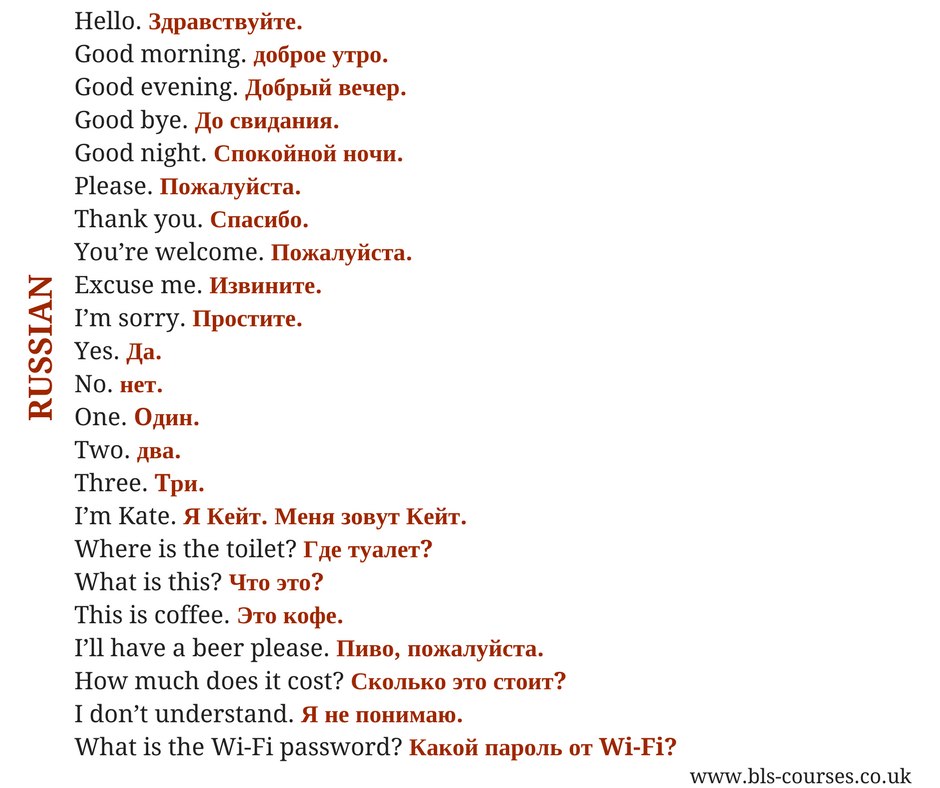
As you remember, we introduced a new series of blog posts (see Spanish, French & German) where we teach you some useful phrases in different languages. Sounds amazing? And it’s RUSSIAN today!

Are you planning your ski holiday in Sochi? Do you travel frequently to St Petersburg? Do you dream of exploring Russian-speaking Ukraine or Georgia? If so, we would like you to taste & learn some essential Russian first. Below you’ll find a list of useful phrases in Russian (greetings, polite phrases, closed question words, numerals and simple questions & sentences). We also video recorded Anna, our Russian tutor, to help you with reading, pronunciation and accent (also available on YouTube). We hope you enjoy this series and that you’ll come and learn Russian with us! Good luck!

Which language would like you like to learn next? Let us know in the comments below.

Kinga Macalla

January 4, 2017

On Languages: Russian

What do we know about the Russian language?

Russian is the 5th most widely spoken language in the world with 277 million speakers. Russia itself has 142 million native speakers and is the world’s largest country. Russian is one of the six official languages of the United Nations. Due to the size of the Soviet Union a significant part of the world understands Russian.

Russian comes from the Slavic group of the Indo-European languages. Russian, Ukrainian and Belorussian languages form the East Slavic part of this group.
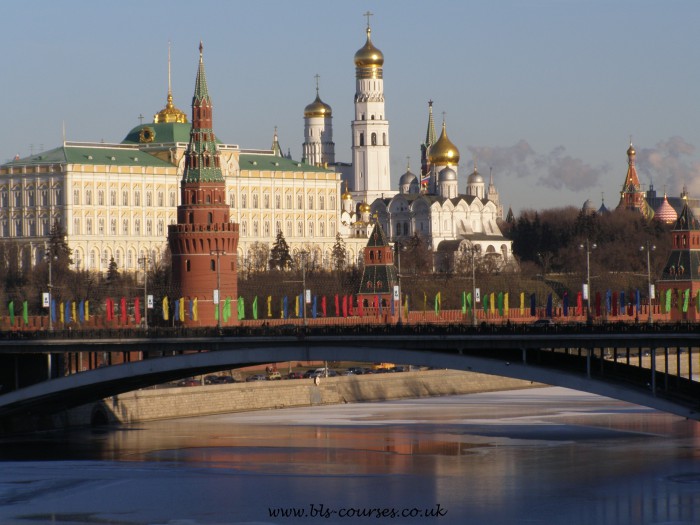
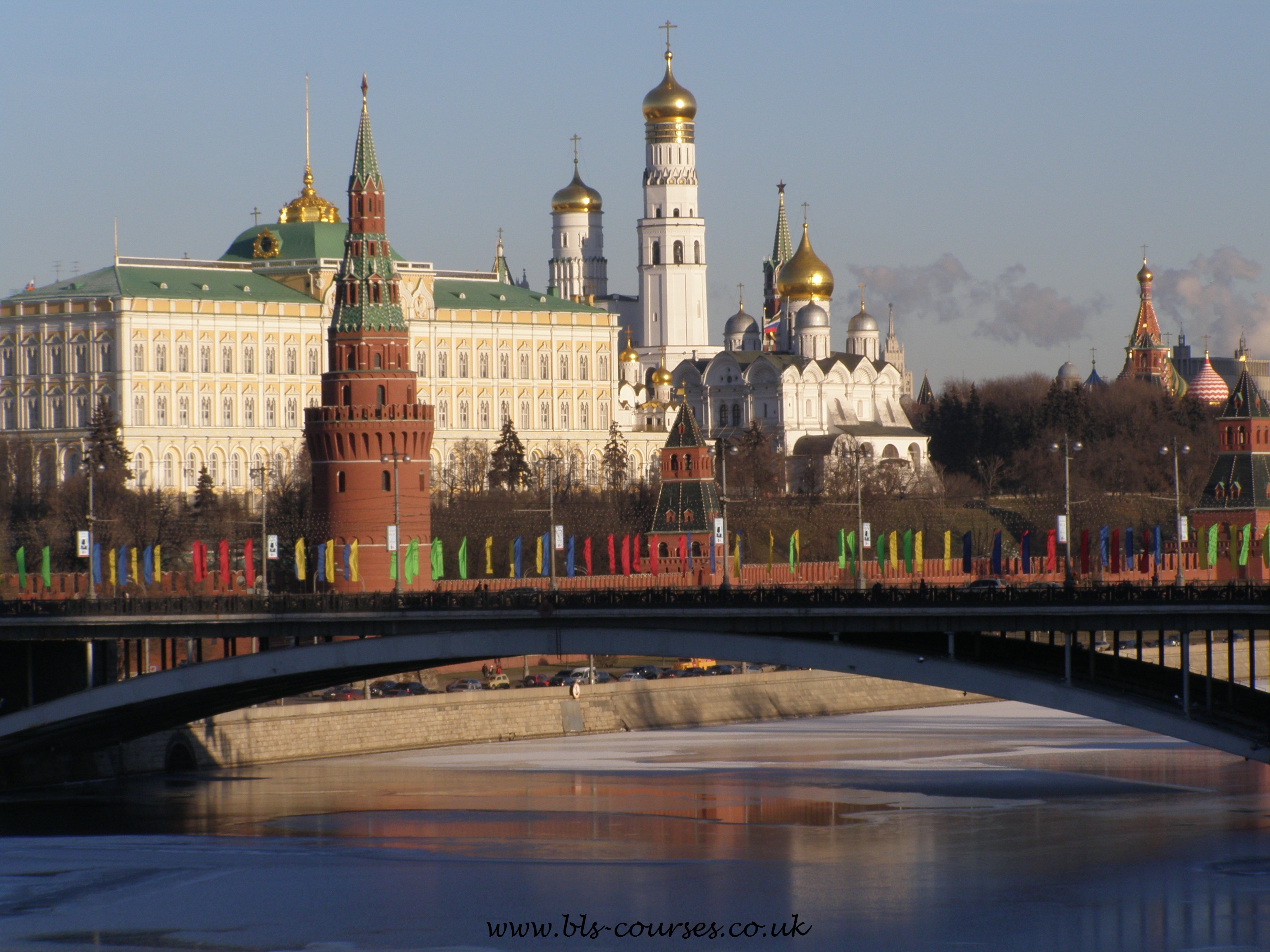
OLYMPUS DIGITAL CAMERA

The difficulties of learning Russian

The difficulties of learning Russian alphabet are often exaggerated. Though the Cyrillic alphabet is based on Greek, it still has a resemblance to Latin. There are 33 letters in the Russian alphabet, most of which are pronounced and read in words the same way as they are in the alphabet. You will be surprised how easily you can read Russian aloud once you have mastered the alphabet.

Russian words have one stressed syllable. The stressed syllable is longer and articulated more tensely than the unstressed ones. Unstressed vowels in Russian lose their full value.  An unstressed word without any syllable accented will still be perfectly correct and understood, especially when spoken by a foreigner.
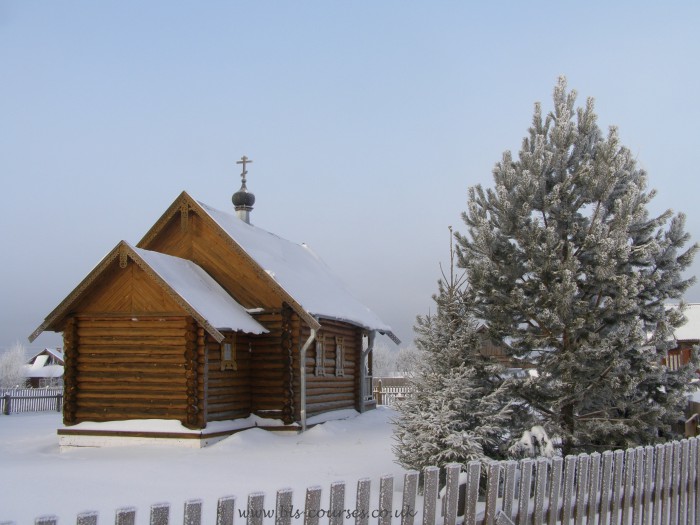
OLYMPUS DIGITAL CAMERA

A little bit about Grammar

  • Russian nouns have 3 genders: masculine, feminine and neuter, which are distinguished by the gender endings
  • there is no article in Russian: “the table” and “a table” are both translated “стол”
  • auxiliary verbs are hardly used in Russian, the present tense of “to be” is not used as it is in English, for example: He is here– Он тут
  • Russian is a language with a case system. Nouns appear in different cases, indicated by different endings, according to the role they fulfil in the sentence. There are 6 cases in Russian: nominative, accusative, genitive, dative, instrumental and prepositional.
  • Each verb in Russian is conjugated based on person, number, tense and gender

It is important to know that the main difference between Russian and other languages is in the way of thinking: in the philosophy of the language. Understanding the mechanism of developing the language structure, including Russian word-building based on the semantic connection within groups of words which bind themselves to various aspects of life helps to reveal the philosophy of Russian and other Slavonic languages. Once this is understood, the language is not difficult.

Start reading as much as you can as soon as you master the alphabet.

Russian literature is best read in Russian to gain the full benefit of the richness of the language. Dostoevsky (Crime and Punishment), Tolstoy (War and Peace), Pushkin (Eugene Onegin), Gogol (The Nose) and Chekhov (The Cherry Orchard) are all writers of international prominence and form just a small selection of the great Russian writers.

Written by Natalia Adkins