Tag Archive: Spain

January 17, 2018

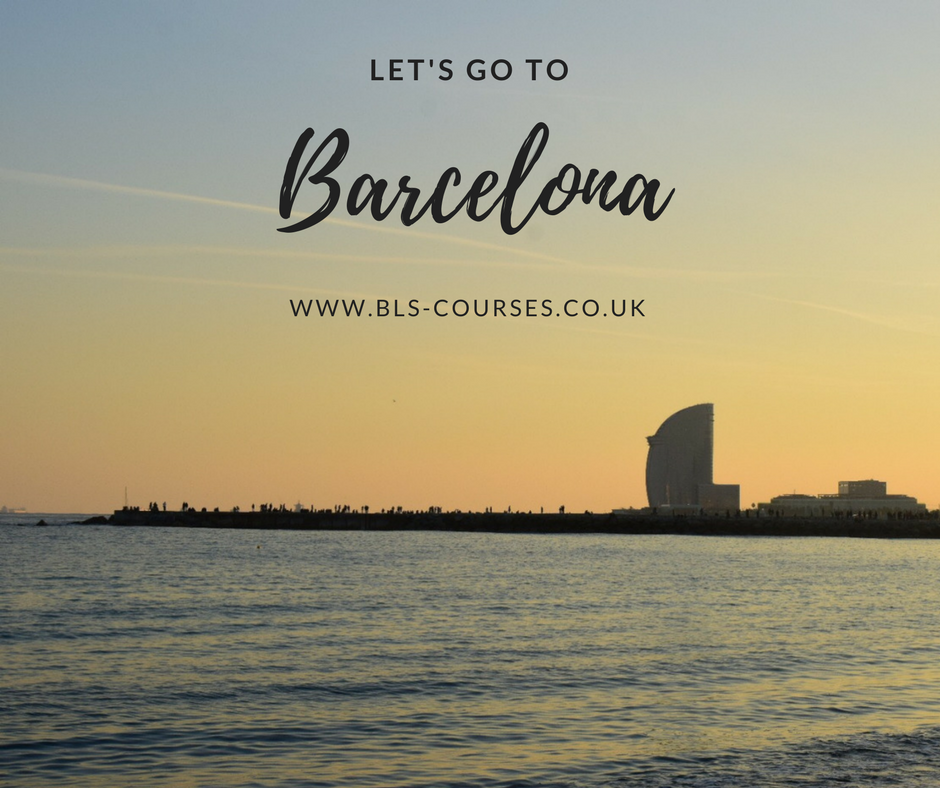
Travelling Corner: Weekend in Barcelona

Barcelona is a city located in Cataluña, Spain. It’s full of tourists, palms, parrots, bilingual signs (in Catalan & Spanish) and beautiful weather! It can be visited the whole year round, but I would recommend late Autumn, Winter or early Spring as the best time to embrace its beauty and colours. It’s a relatively expensive city, so be prepared for slightly higher prices, especially in cafes and shops. But, if you want to experience heaven on Earth and still not to spend all your savings, here are my tips for you!

Beach

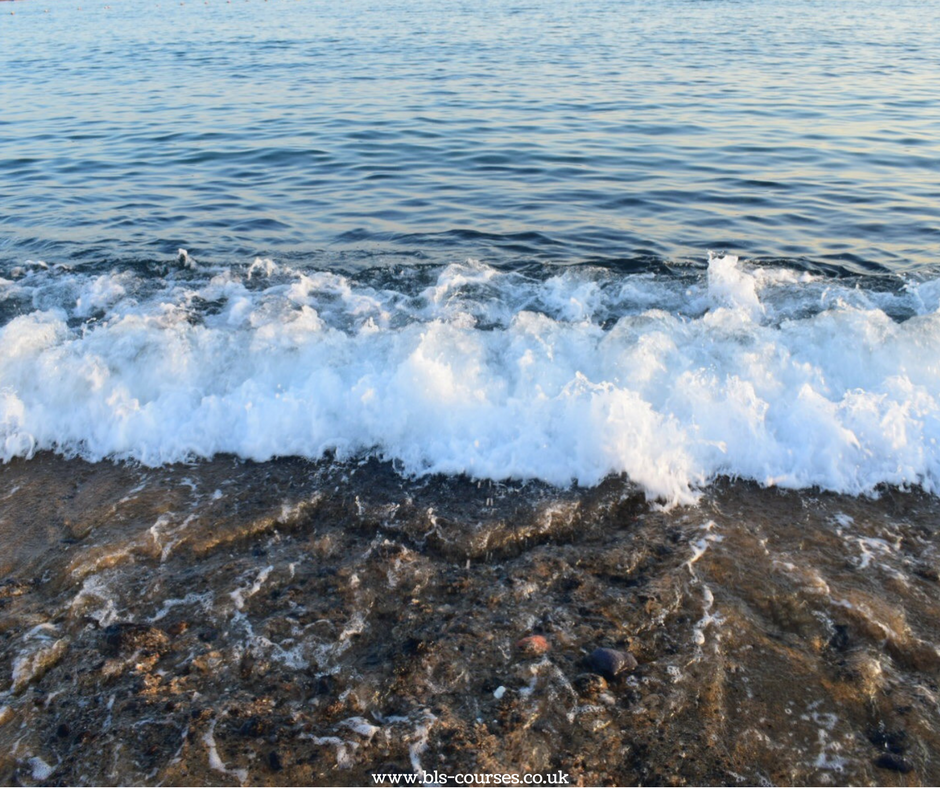
Oh, the beach! It’s long and sandy. I visited the beach every day in the late afternoon, when the sun was setting and the colours in the sky were changing into pink and purple and the boats were sailing back to the port. People were reading, talking, walking, smiling, laughing, playing, exercising, jogging and of course, swimming. It was an experience in its own, beautiful and peaceful.
Parc de la Ciutadella

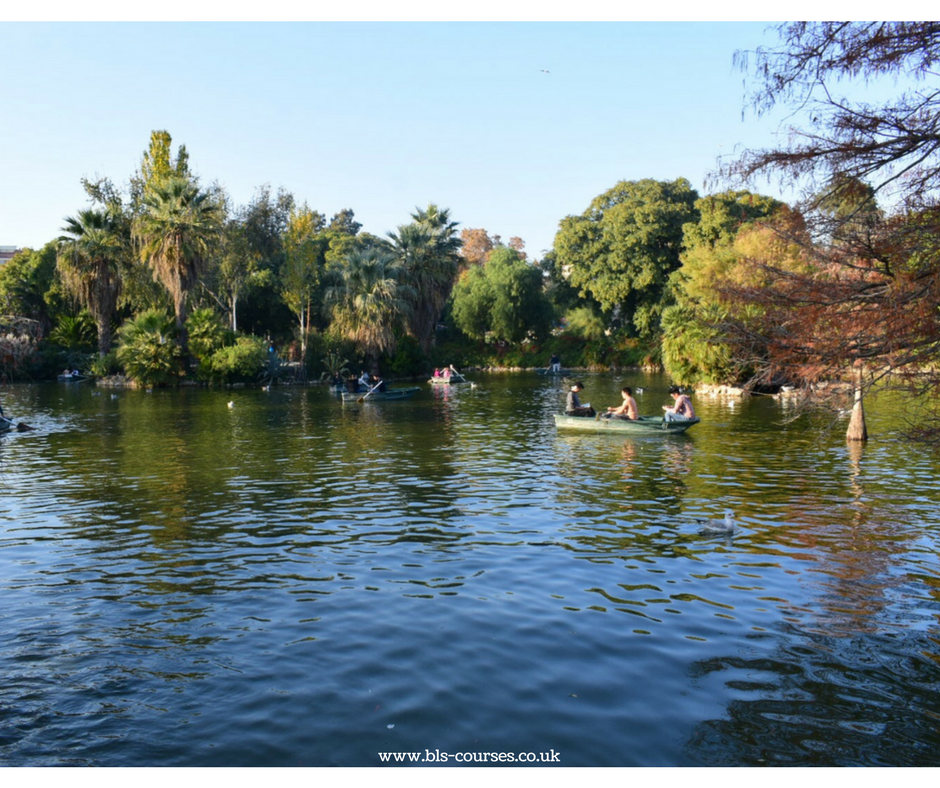
A beautiful green area in Barcelona. It’s located not far away from the triumphant Arc de Triomf and has many beautiful trees, palms and ponds, as well as a zoological garden. When the city gets quite busy, it’s a good idea to come here for a lunch break or to relax on the grass.
Catedral de Barcelona

The cathedral is a fine example of gothic style: monumental and impressive. Entrance is not free, but you can always join the religious service (especially when vising on Sunday) to see the beautiful gothic interiors (but photographs are not permitted then).

Barri Gòtic

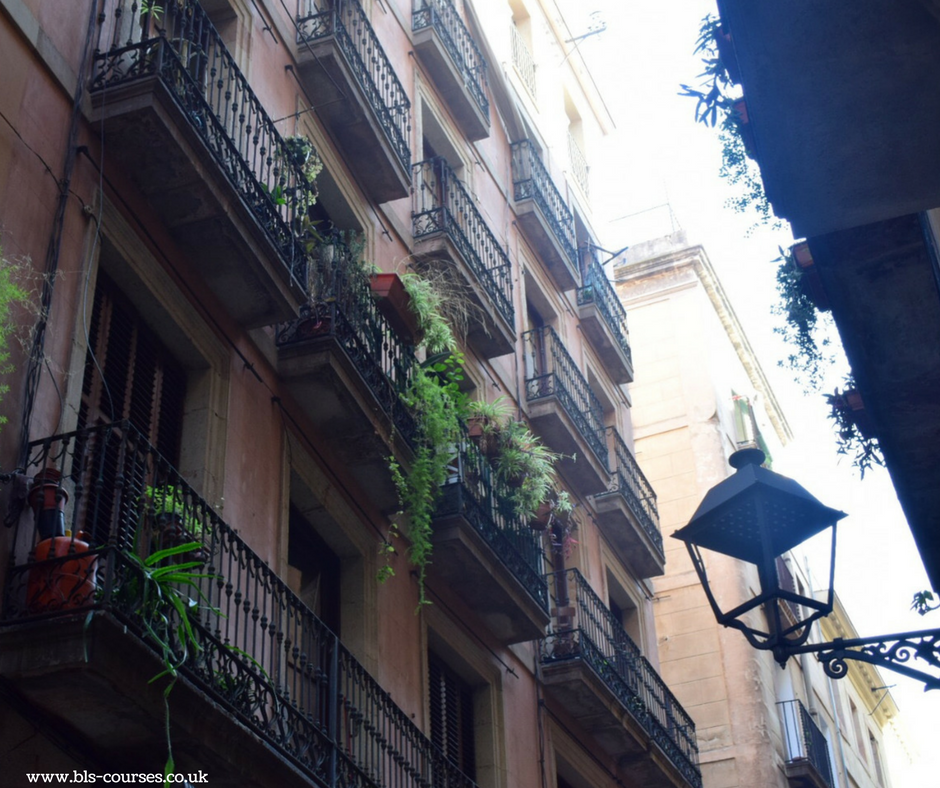
The Gothic quarter is at the heart of the old town in Barcelona. Narrow streets and very high buildings (with flowers on the balconies), tiny squares with fountains, cafes & restaurants, galleries & museums, tiny shops & bakeries. It’s a very eclectic combination of the old and new which gives you a unique flavour of the old town. I had a very medieval feeling when I walked those tiny streets, especially after dark.
Caj Chai

As you know (if you read this blog), I rarely go out to eat when travelling. The only exception I make is (obviously) a tea break. When visiting Barcelona, I went to a tea room called Caj Chai. It’s located in the Gothic quarter and is a specialised tea room which serves various types of tea: white, green, back or herbal. For me, it was a wonderful experience, slow and aromatic.
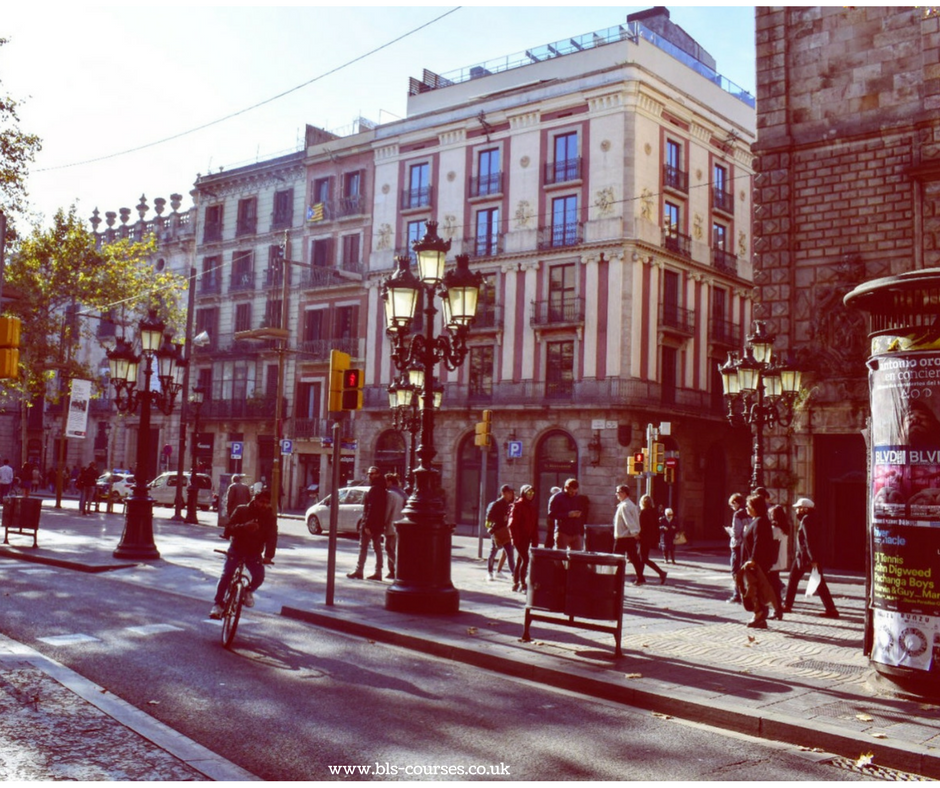
What are your memories from Barcelona? Let me know in the comments below.

Written by Kinga Macalla

December 19, 2015

Christmas around the world

A few examples of Christmas traditions from around the world!

ITALY
Unlike in any other country, Christmas presents are delivered by Befana, an old witch, who visits all Italian children in the night of 5th January, travelling the country on her broomstick. Being a good housekeeper, some say she will sweep the floor before she leaves. To some the sweeping meant sweeping away of the problems of the year. The child’s family usually leaves a small glass of wine and a plate of regional food for the Befana.
Another interesting tradition is Lancio dei Ciocci, which consists of throwing old crockery out the window at midnight on New Year’s Eve, symbolising the riddance of old negativity and evil. It is also common to leave doors and windows open in order to let good spirits in.

POLAND
Christmas in Poland, just like in many European countries, is celebrated on the 24th of December, known as Wigilia. It is a tradition to prepare twelve dishes, one for each of the apostles that accompanied Jesus during the Last Supper. As meat is banned on Christmas Eve, fish dishes are served instead, the most typical being karp. It is not uncommon to find one swimming in somebody’s bathtub in the days leading up to Christmas!
Before the dinner, families share Christmas wishes and opłatek (similar to a communion wafer), which is served on a small pile of hay, referring to the stables in which Jesus was born.

GERMANY
Germans are famous worldwide for their Christmas markets and advent calendars, but they also have some lesser known traditions. In some part of Germany, children write to the Christkind (‘the Christ child’), a traditional giver of gifts. In Nürnberg a young girl is chosen each year to participate in a parade as the Christkind. She wears a long white and gold dress, has blond hair and wears a gold crown and sometimes also wings, like an angel. She is responsible for the official opening of the Christmas market and visits old people’s homes and hospitals during the Advent.

FRANCE
The 6th of January is celebrated in France as Fête des Rois (Day of the Kings). A flat almond cake is eaten called Gallete des Rois in Northern France and Gâteu des Rois in the South of the country. A small charm is placed inside the cake and the person who finds it has to either buy a beverage for everyone around the table or offer to host the next king cake at theirs. This can extend the festivities through all of January!

SPAIN
Christmas celebrations in Spain start on the 22nd of December, with the launch of Sorteo de Navidad, a Christmas lottery, which takes place every year and is broadcasted on national television. There are long queues at the ticket selling points, even as early as a month before! After all, everybody is hoping to win the main price, El Gordo, literally ‘the fat one’.
On New Year’s Eve, during the countdown to midnight, twelve grapes are eaten, one for each stroke of the clock: that’s one grape per second! They represent the twelve months of the year and are meant to bring happiness in the upcoming year.

Winter 2015

On this note, we would like to wish you all a very Merry Christmas! No matter how and where you spend it, we hope that it will be a time of rest, spent with family and friends. We would also like to wish you all the best in the New Year, let it be a year filled with love and happiness.
See you in January 2016! 

Written by Alicja Zajdel

September 10, 2015

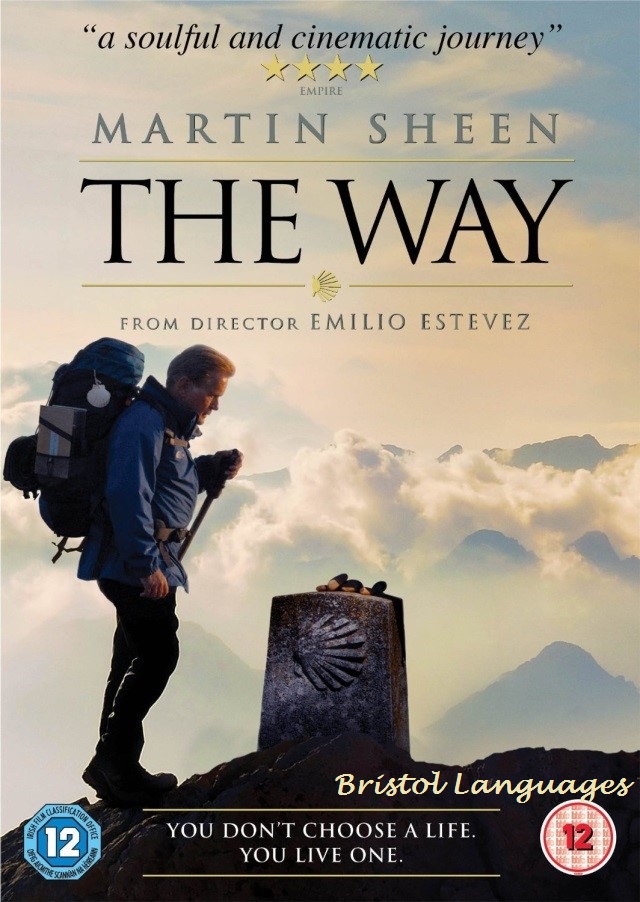
Film Review: Santiago’s Path in “The Way”

Some weeks ago we were talking in class about the cities called Santiago in the world, such as Santiago de Cuba, Santiago de Chile and Santiago de Compostela (Spain). All of them have something in common: the Spanish language. For the sake of geographical proximity, although unknown to me, I will focus on the last one: Santiago de Compostela. The main reason why people know the city is because of Santiago’s pilgrimage route, known as Camino de Santiago, which runs along the north of Spain and has been walked for centuries. It takes between one and two months during which we can explore new places, enjoy the breathtaking landscapes, meet interesting people, discover new flavors and realize what we are capable. During the class conversation appeared the title of a film, The Way, an American and Spanish co-production, directed by Emilio Estévez and starring Martin Sheen.

The Way

The protagonist, Tom Avery, is a widowed ophthalmologist, who finds out that his son, Daniel, has died at the beginning of the route in the French Pyrenees. The relationship between the father and son wasn’t very close, because the first didn’t understand the lifestyle of his offspring. The last time they spoke on the phone, just before the journey, the son told him: “you don’t choose a life, you live one”. After the news of his son’s tragic death, Tom travels to France to collect the remains, and there he decides to walk the route with Daniel, each in a different world.

The film is not characterized by action scenes or sudden plot twists, but it concentrates on some Spanish topics, such as bulls, gypsies and typical foods like pinchos. The main characters are an Irishman who walks the way to lose weight, a Canadian woman who hides the fact that her husband was abusive and seems to have the purpose of quitting smoking and a writer looking for inspiration for his next book. At first, Tom shows no interest in making friends, not even engaging in conversations with fellow travelers. He only thinks of reaching the goal and scattering his son’s ashes along the way until they arrive to Galicia. There, having completed his journey, he releases the rest of the ashes into the Cantabrian Sea. He also puts his son’s name on the completion certificate awarded to each pilgrim in Santiago.

Besides the beautiful landscapes of northern Spain, several debates are presented in the film. What is the reason to begin the journey to Santiago de Compostela? Some people do it for religious reasons, others to find inspiration or as a means of meditation, others do it just for the challenge or to experience something different. Some even do the journey with a banal reason to quit smoking or to lose weight. Unlike the original travelers who used to make the journey with no help, nowadays many people choose to complete the pilgrimage on bike or use the help of modern technology. I think that the Camino should be a time to disconnect from everything to allow us to refocus on what it is important in life.

From my perspective, I think every day there are fewer people who have faith and belief in God. I would like to travel these sandy paths, crossing the refreshing rivers, but mostly I would like to have a suitable environment for meditation to regain the faith I lost some time ago. It is incredible how as the years pass, the religious origins are lost, forgotten, yet we keep the traditions and festivities. In my opinion we should be more concerned with the origins and reasons of celebrations, to understand better our roots and direct the society toward fellowship, kindness, empathy and understanding.

I cannot comment about the experience yet, but I can say the film made me even more interested to arrive in front of the Cathedral of Santiago de Compostela having found my inner peace, sticking my victory flag in the Galician land.

Written by Mireya Sevillano
Edited by Alicja Zajdel

March 31, 2015

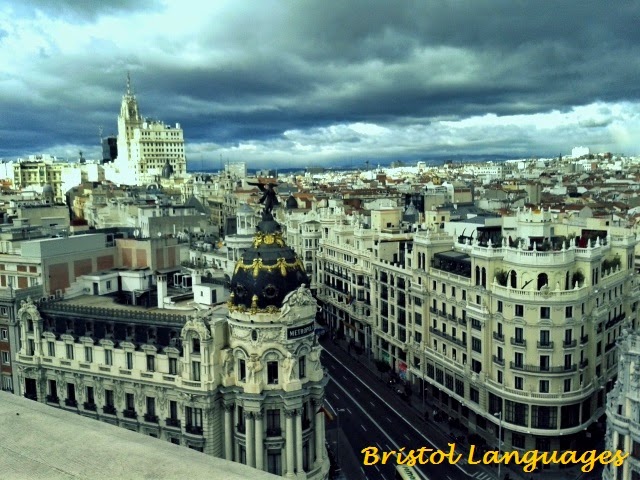
Third Year Abroad: Study placement in Madrid

As part of my degree programme in languages, the third year is spent abroad, either on a work or study placement. It is undoubtedly the part of the course that students look forward to the most and often describe as ‘the best year of their life’. I have just started my second placement in Porto, but looking back on the first semester I had spent in Madrid, I’m not sure if those are the words I would use.

Madrid 1

So far, I think my experiences would be better described as an emotional rollercoaster. Moving to a different country all by yourself is both exciting and scary; I have been alternating between feeling like I’m on a neverending holiday to thinking I’ve been sent into exile. There are times when you’re on a trip, exploring a beautiful new place with the sun shining and sipping sangria in the shade of palm trees. But other times you are in your room, on Skype with friends and family, and all of the sudden the magical bubble bursts and you feel more alone than ever. How is it possible to keep falling from one extreme to another?

The truth is, that even though sometimes I feel like packing my suitcase and going home, I wouldn’t change my experience for anything else. Living abroad alone, although sometimes frustrating and confusing, teaches you so much about yourself. You become so much more independent and learn to cope with the strangest, most ridiculous situations life throws at you. I can guarantee that every person who has done the Year Abroad will come back with so many incredible stories. So far, my experiences have included arguing with a Spanish police officer, going on a trip with an old people’s home and having to explain what a kettle is, an invention the Spaniards apparently aren’t familiar with. These things would never happen at home and they really push you out of your comfort zone.

In terms of language practise, being forced to use a foreign language at a daily basis expands your linguistic abilities really quickly. I was really surprised, that although I already had a good level of Spanish, I found myself lacking all the basic vocabulary, such as names of kitchen utensils or other everyday objects. I guess it’s things you don’t usually learn in classes, but once you move abroad they become essential. You’re also forced to think and answer quicker, often being asked things on the spot. I have found that if you hesitate and don’t give the impression of being confident, often people will just speak to you in English or not at all.

Overall, I think it’s important to know that the Year Abroad can be hard, but on the whole it’s a really worthwhile experience. Just studying a foreign language and culture is never the same as actually experiencing it firsthand. I have learnt so much this year, but also realised that sometimes I know very little (I still don’t understand how to make the bed the Portuguese way!). But I think all the struggles of the Year Abroad are worth it in the end, when you get to come back home speaking a foreign language and feeling proud of everything you have achieved.

Written by Alicja Zajdel
Photos courtesy of Alicja Zajdel