Tag Archive: interview

December 4, 2019

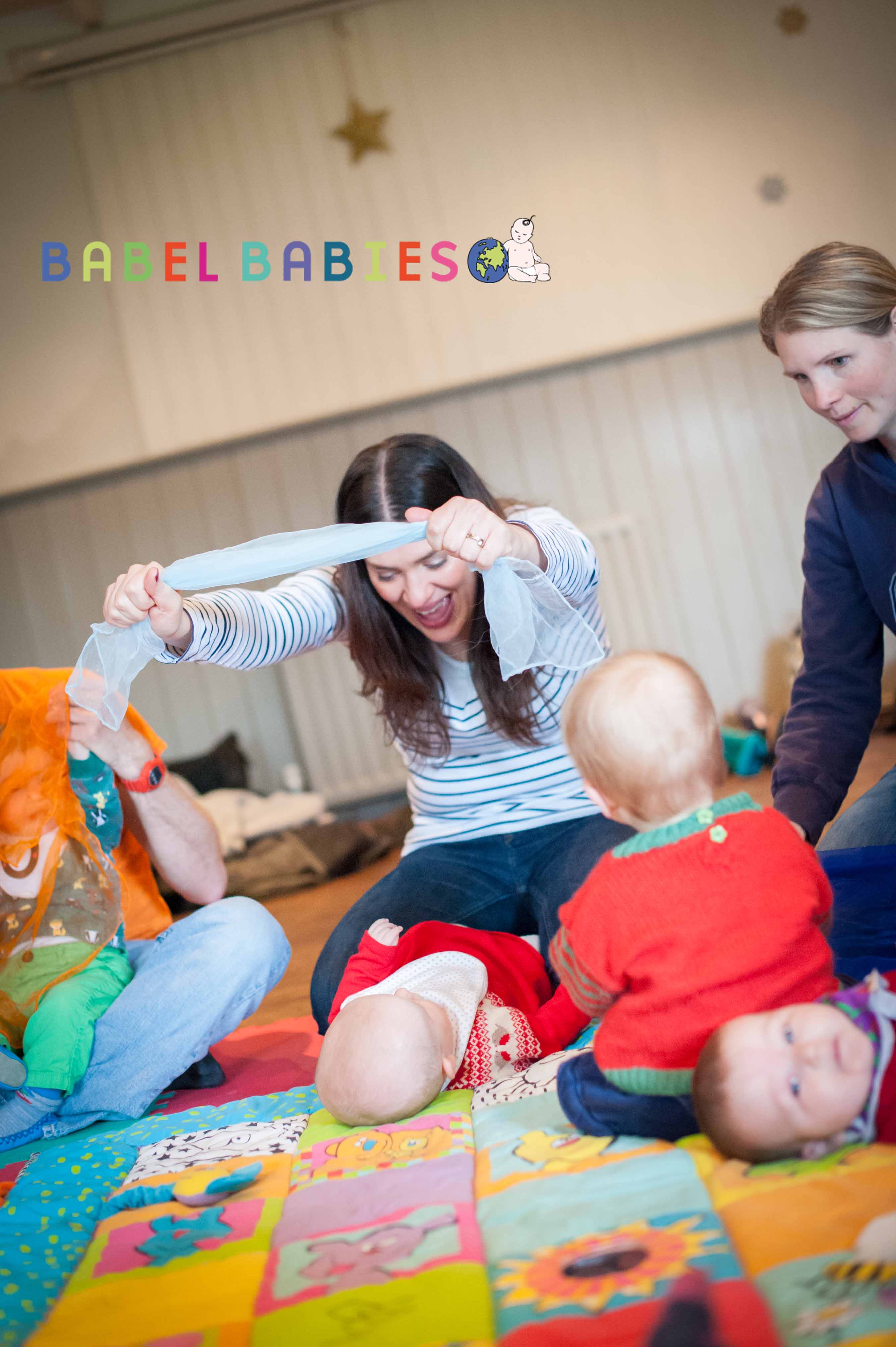
Interview with Cate Hamilton, co-founder of Babel Babies

Cate Hamilton is a linguist, teacher, mum, entrepreneur and co-founder of the popular Babel Babies. Hello Cate, thank you for being our interview guest today. You’re a great advocate for learning languages. What’s your educational background? When was your passion for languages born?

I learned French and German at school, and went to Oxford University to study English and French. I remember being on a ferry to France with my parents as a young child and thinking that my brother and I had discovered a secret language when we heard French for the first time. I must have been about six! I have always loved words and collected dictionaries. My parents actively encouraged reading and exploring new languages, and their attitude was just to have a go. I enjoyed my school exchanges in France and Germany and really just like talking to people. It’s great to be able to make new friends and see the world from different perspectives. My pen-friends from 22 years ago are still good friends and it’s amazing to see our children playing together across their different languages.

Have you always professionally worked with languages? What are your current language-related projects?

I trained as a secondary French and English teacher, working in inner city Glasgow schools. I then moved to Cheltenham when we started our family and I co-founded Babel Babies with my friend Ruth Kemp. Since 2011 I’ve been working with local families and early years settings, encouraging them to sing languages together. We now have classes running in Bristol too, and have helped thousands of families discover languages from all around the world. We sing songs in French, German, Spanish, Italian, Portuguese, Arabic, Russian, Norwegian, Japanese, Korean, Welsh and English. It’s multilingual music, and I love introducing people to linguistics through music. It’s Languages with a Capital L. I’ve now got a podcast, The Language Revolution, where I talk about talking with guests ranging from neuroscientist Dr Thomas Bak to linguist Professor David Crystal. Language is the thread through all of human experience, and I’d love to help weave it back into the fabric of the school curriculum, especially in primary and early years. I also help coordinate the International Day of Multilingualism on 27th March, the date on the Rosetta Stone. If you’d like to get involved, check out the #multilingualisnormal hashtag on Twitter and join the conversation.

How did you discover your entrepreneurial talent? Have you always known you had it? How did you come up with the idea to start a business? What inspired/motivated you?

I’ve always admired entrepreneurs and free thinkers. I guess I’m a revolutionary at heart! I’ve worked on lots of start-ups from my teenage years onwards, from magazines to companies (I now run three of them). I had a stint organising networking events for entrepreneurs before I started teacher training. I remember thinking ‘I could do that’ and just needed an idea. The idea came when I had my first baby and realised that language is a process that starts even before birth. I’ve married up my love of the research and education side of linguistics with my entrepreneurial spirit to create novel solutions to the UK languages crisis. I’m on a mission to change UK attitudes to foreign languages, and all my projects are working towards that in some way.

You inspire families to introduce foreign languages to their children at a very young age. Why is it beneficial to be exposed to languages as babies/toddlers?

Someone once told me I was silly for doing languages before babies could speak, but the speaking part is really just the icing on the cake: the two years before that (including the last few months of pregnancy) are when babies are absorbing language rapidly and getting ready to say their first words. They have it all in their heads and have absorbed the grammar (just listen to a baby’s intonation – they know how to form sentences!) before they utter those magic first words.

Babies are natural linguists because they need to communicate with their caregivers and communities. It’s a survival mechanism really, and part of how we have evolved as a species. Far from birth being ‘too early’ to introduce languages, the UK actually starts language education far too late. Babies can recognise their mother tongue at birth, notice when a new language is introduced even when they are just hours old, and they can hear any sound in any language for most of their first year. They are processing new things at light speed, with billions of new synaptic connections per second. Whether they hear one, two, three or even more languages around them, babies are not confused. They simply process what they are exposed to, learn who will respond to which language, and soon enough they will work out how to get what they want from the people around them by communicating in the language that is most effective for their purpose. So if that means they need Italian to speak to papà, Japanese for mummy, and English at school to do so, they will learn them all. Multilingual is normal for most children around the world. It’s more unusual to speak only one language, and English monolingualism is the exception rather than the rule. Attitudes to languages are cemented in the early years – I think it’s vital to give children a positive first foray into foreign languages, whatever their backgrounds.

I know you’re a mum to three children, how do you balance your professional and family life?

Babel Babies is my second of four babies! My children have grown up with it, and they are the inspiration for it. It’s far more flexible to be my own boss than to work full time in school environment. I can pick up the children every day and go to all their school activities, and if that means I need to do some work in the evenings then I do. Being an entrepreneur means I’m passionate to the point of obsessive about my work – it’s not work really, since I love it and think about it all the time. The children are my testers of new songs and books, and new ideas. I discovered bullet journalling in 2017 and am so passionate about it that I run occasional workshops on how to get started. It’s a life-changing organisational technique and a bit like having a PA. Have a look at my Instagram @cateh_inc if you’d like to know more about it.

Do you raise your children multilingually? Do you encourage them to learn foreign languages?

The children are my inspiration for the whole idea of Babel Babies, and when my first son was born I immediately knew that I wanted to encourage him to love languages, and maybe skip the hard work of trying to learn to roll his Rs in French. However, as a new mum, I had lots to figure out and speaking French all the time felt strangely not like me. We settled on singing and reading lots of books in French, but also in Italian and Portuguese, and any other languages that take our fancy. I then had two more children, and over time we have turned them into keen linguists. My eldest son is fascinated with languages and how they are similar/different to each other, and loves code-breaking new alphabets like Arabic and Russian; my middle child is amazing at accents and loves connecting with people – she’s amazing; and my youngest has probably had the most exposure to French as I was far more confident speaking to him in French with five years of Babel Babies already under my belt when he was born. Now he’s four and says, ‘No Mummy, don’t say it in French, say it in Normal!’ so we have a period of resistance, but he still knows how to respond when I say something in French. They all love exploring new languages. I’m excited to see where they go with it as they grow! I used to think that not having raised bilingual kids was a failure, but actually I’m super proud of their positive attitudes towards languages and they are genuinely interested. They make up new languages in their games all the time.

How many foreign languages do you know? How do you maintain your language skills?

I know French, bien sûr, and then probably Italian is my next most fluent. I tend to translate from French into Italian rather than English to Italian when I’m speaking, so I sometimes wade into the middle of a sentence before I’ve really got a clue what the verb is going to be! It’s often quite amusing to see what my brain does. I did two years of night school in Portuguese with my husband and we travelled around Portugal for a month, so my Portuguese is okay. I also have German to a reasonable level, and my best friend’s mother is German so I’ve heard quite a lot of it. I read stories and sing songs in at least ten languages, and I just have languages on the brain all the time. I always study languages together, rather than monolingually, so I’m currently learning Spanish, Portuguese and Italian all at once. I sometimes use Duolingo, but mostly it’s reading aloud, and always singing. I get myself an ohrwurm and stick with it until I have mastered the words.

We’re a language school, do you remember your favourite language teacher? What was so special about their teaching?

Mr Harrison was my German teacher at secondary and he was legendary. He was so passionate and enthusiastic, and hilarious sometimes (oh those modal verbs lessons!) He made languages come to life. I am eternally grateful for his encouragement and would love to see what he thinks of Babel Babies and The Language Revolution. Danke schön, Herr Harrison!

Thank you, Cate, it was great to have you as our interview guest. We want to wish you success in all your professional and language adventures.

Photos courtesy of Cate Hamilton

March 6, 2019

Interview with our French tutor, Jean-Paul Metzger

Jean-Paul Metzger, PhD., is not only a wonderful French language tutor at BLS, but also an experienced translator and a passionate composer. He’s also a bilingual who lives in Bristol, UK, and today we have the pleasure of interviewing him!

  1. Hello Jean-Paul. Thank you for taking part in our interview today. Can you tell us a bit more about your educational background, what influenced your career choices and, more specifically, what led you to teaching French?

My educational background is rather atypical of that of a language teacher. Back in the late 1980s in France I graduated from university with a Masters in Computer Science; and years later, as a mature student, I went on to do postgraduate studies in music: first at Exeter University, then at Bristol University where I gained a PhD in Composition in 2014. Although French has not come to feature prominently in my education, I have always been fascinated by the word in general, both from the theoretical perspective (linguistics, semiotics, translations studies) and through the appreciation of literature and poetry.

My career choices as a linguist have been very much influenced by circumstances. I became a freelance translator in the 1990s when, at the time a struggling musician in London, I simply had to seek extra work to pay the rent! I went into it completely untrained and was incredibly lucky: immediately after doing a test piece for an agency I started to get regular work and things snowballed so quickly that, within a year or so, translation had become a full-time occupation. And I loved it. It is something that I continue to enjoy doing today, especially since I am fortunate to often get to work on subject matters which are close to my heart – all things to do with music and the arts in general.

Teaching French started in an even more unpremeditated way. In 2001, shortly after I had moved from London to rural Bampton, in Devon, I was encouraged by some members of the town’s twinning association to give a few lessons at the local café, with for sole qualification the fact that I was the only French guy around! Going into it with zero experience, my first class was a kind of happy chaos involving six or seven students of completely disparate levels. But the whole experience proved very exciting and I was hooked straight away. I went on to set up several classes and gradually acquired experience, learning the do’s and dont’s on the job and slowly discovering the many challenges of the profession. I think there is great value in having had such an empirical approach to language teaching – yes, it takes a lot of work, a good deal of trial and error and a few mishaps, but in the end it is an extremely enriching journey and you are indebted to every student you meet along the way for making you the teacher you become. That is a very precious thing.


  1. What do you find most fascinating when it comes to teaching French?

There are a number of aspects that I find particularly interesting, but one of the most fascinating is witnessing the student’s progress and, with it, how every one comes to gradually adapt and attune what they learn to their own personal style of expression. It is very interesting to see how you can teach the same topic in the exact same way to different people and they all will make something quite different of it. And as a teacher you have to nurture that. In this respect, learning a second language is very much a process of appropriation on the part of the student and I try to stimulate that in various ways – for example, by focusing the attention as much as possible on helping to put right mistakes that hinder the potential to communicate rather than those that simply fail textbook grammatical or syntactical correctness.

Ultimately, and as far as production skills are concerned, it is a matter of encouraging the student not only to speak or write in French but, more fundamentally, to think directly in French – that is, in part, to short-circuit the mental toing and froing between the two languages that is bound to occur in the early stages of learning when either formulating a thought or ‘processing’ what you hear. This is something that, of course, happens very gradually. But there usually is a stage when that firsthand understanding becomes the default mode of perception and the student starts to exploit the language in his/her own individual expressive – and creative – way. It takes a lot of work to get there but it is very much part of the endgame and, after all, what learning a language is all about. Having gone through the process myself when I arrived in England all these years ago helps me to recognise the challenges and difficulties students face throughout that journey.


  1. How do you prepare for your individual and group lessons? Do you have a schedule you follow?

Preparation work goes chiefly into two areas: structure and content. I don’t use a particular course book and devise, instead, all my hand-outs. Over the years I have built a fairly extensive collection of grammar sheets that I am now able to consistently draw upon; these occasionally get tweaked, or even reworked, in response to specific points that might be discussed in class, but they altogether make up a solid and reliable resource. I have also  assembled a stock of written and audiovisual material, mainly from the French press and television, that I can use to support reading and listening activities. I constantly renew that library by keeping on the lookout for suitable topical material in the media. Part of the preparation work in this particular area consists in editing the material for the class so as to not only ensure that it is adapted to the intended level, but also rid it of potential difficulties that carry little or no pedagogic value.

As for structure, I go into every lesson with a reasonably detailed plan and having established what new knowledge I want the students to go away with. A typical lesson revolves around a ‘technical’ element (e.g., a point of grammar, a specific tense, etc.) and some relevant material intended to help develop oral and/or reading skills. Writing is covered as part of the student’s homework, which is usually directly related to the grammatical topic addressed during the lesson. Any homework is assiduously reviewed in class: that is an important component of most of my lessons and is normally scheduled as one of the opening items.

That said, I am always ready to deviate from any schedule in order to react to questions or requests from the students: questions are no less than the lifeblood of any language class and answering them as they come – and as fully as required – takes precedence over sticking to the script, no matter how far off course it may lead.


  1. When it comes to learning foreign languages, what steps can lead to a successful language learning journey?

That is a difficult one to answer, because we are all very different and each learning journey is motivated by a unique set of circumstances. All a teacher can really do is help and guide and channel one’s skills along the way. But in general I think that it is important to constantly keep in mind that you learn a language in order to communicate and express yourself with as much spontaneity as possible, rather than to produce utterances that are always perfectly right and textbook-like. Try therefore to let the language you learn reflect who you are culturally and draw on the tools you have at your disposal to put your message across – in other words, allow your individual vantage point to shape the way you apply what you learn. That means seeking to find, at whichever level you are and within what you are taught in the classroom, how to effect meaning in a way that feels comfortable and satisfying to yourself. I often encourage my students to use and trust their instinct when, say, they stumble on a grammatical point: what feels right to you will more often than not turn out to actually be correct – or, at  least, correct enough!

For many, however, the most daunting aspect of learning a language is getting to grip with the spoken word in real-life settings. This is often the skill where lack of confidence tends to endure, not least because it is something that you can’t quite test yourself against when not in a genuinely immersive environment. Oral comprehension exercises in the classroom can of course help achieve greater proficiency in that area. But it is also a good idea to create as many listening opportunities as possible for yourself outside the class: casually listen to the radio, for instance, when at home or on the go, even for short periods of time, if only to get accustomed to the overall rhythm and musicality of the language you learn – it is then more about trying to recognise speech patterns and typical formulations (such as those associated with, say, asking a question or punctuating a sentence) than aiming to necessarily understand every word that is heard.

In less specific terms, my advice is to be patient, to not be hard on yourself whenever you get it wrong and to value any steps forward, as incremental as they may seem: they all add up to building a greater empathy with the language you learn.


  1. You’ve been living in the UK for many years, how do you maintain your bilingualism?

Teaching French does help… and so does, of course, working as a translator. Not only do these roles keep me in constant touch with the spoken and written word, but they also push me to continually try refining and updating my French lexicon – especially in areas where it evolves relatively quickly, such as new technologies. My translator’s mindset tends to always keep active and I often find myself reflecting on how some wording in English that I happen to come across (say, a slogan on a billboard, a line in a poem, the title of a book) may be translated – or ‘transcreated’ – into French: how to take not just its message but also its undertones, colour, rhythm, from one language to the other. In a headline, for instance, an alliteration will effectively transpose, as a device, into a play on words (“jeu de mots”). This is where bilingualism meets biculturalism – and where it is at its most intellectually enriching: it sometimes feels a privilege to be able to appreciate a novel written in either English or French not only in its original language, but also with all its cultural charge. And that applies, in fact, to virtually all fields of expression, whether creative or not.

Belonging – so to speak – to two different cultures is something that I hold very dear and cultivating that biculturalism, which of course goes far beyond purely linguistic considerations, takes a more deliberate commitment. But that’s another story altogether!


  1. If you could give one piece of important advice to new French language tutors, what would it be? 

Be attentive to your students and keep learning from them.


Thank you, Jean-Paul, it was great to have you as our interview guest. I want to wish you success in all your professional adventures.

Join our French courses or book French individual lessons (with Jean-Paul).

December 5, 2018

Interview with Christina Andersen on bilingualism

Hello Christina, shall we start with a short introduction? Can you say a few words about yourself?

My name is Christina and I am Danish. I lived in Denmark for the first 21 years of my life but I’d always felt drawn to England. I moved to the UK with the hope of practising my English and of course having a bit of adventure When I was 21.
I lived with 2 Danish friends in Birmingham for two years then when I was 23 I went to visit a friend in Bristol and met my now husband Ed and for the next 13 years beautiful Bristol was my home.
It was never in my plans to stay in the UK but after buying a house, setting up a gym, having two children and getting married it was never in my plans to leave.
We created and amazing life with lots of friends and clients and some businesses that we really loved.
In 2017 my dad became very sick with cancer, he had had it for 3 years but now it looked like he was losing the fight.
We decided to visit him and my mum in their home just north of Copenhagen, while we were there we were walking on the beach and talking about what life would be like if we moved to Denmark.
We decided to give it ago because we wanted to be closer to my mum as we knew she would be alone soon, but we also wanted to bring our kids up with more freedom, more nature and more time with us.
100 days after that walk on the beach we were in Denmark ready for a new adventure. We are now just over one year in and truly identifying as a bilingual family.

You’re a bilingual family now living in Denmark, can you tell us more about the languages your family speak and how you approach bilingualism on a daily basis?

We speak English and Danish as a family now. It never really materialised in the UK despite my efforts. Now a year into our Denmark adventure and the girls (4 and 7) are both bilingual.
I think to say we have an approach would be an over statement. We speak which ever language fits at the time. My husband is trying to learn Danish from apps but without attending classes it’s hard to speak Danish for an adult. The Danes are so good at English that they tend to switch as soon as then notice you’re English. When my mum visits she will only talk to the girls in Danish which is really nice.

How did you come up with the decision to have a bilingual family? Was it a natural consequence or rather a thought-through process?

When I knew I was going to have children with Ed I was definitely keen to have a bilingual family. I think it is such an advantage. I think it goes much deeper than just words. I think when you learn a new language, especially at a young age you learn about different cultures and different labels and different approaches to the world. I think it provides a way of seeing the world that you cannot teach in any other way. I wish more schools would teach languages from the beginning.

Bilingualism is a wonderful gift, what benefits do you see in bringing up your children bilingually?

I have to step outside of proud mum for a minute here I think. My girls are both incredibly kind, thoughtful, happy, they know what they want and they are both a calming influence on the children around them. I both see this and am told it often by teachers and friends.
With all of that said I really couldn’t say that this is due to our parenting, their lovely teachers at Silverhill school in Winterbourne, there lovely teachers here in Copenhagen or their bilingualism. It’s likely a combination of all of the above and no doubt a bit of luck too.

Bilingualism is also a complex phenomenon, what are the biggest challenges you face as a bilingual family?

I’m not sure we have encountered any challenges. My husband Ed often needs a translation or gets a little left out sometimes but I think he would say that’s sometimes and inventive and sometimes a blessing.

What’s one piece of advice you’d give to future parents wanting to have a bilingual family?

I’m not sure I see myself as qualified to give advice. Something I know from health coaching that I have applied to bringing up my children is, you can’t force, shame, or discipline your children into habits. If you want it to happen it has to be fun.

Many thanks for taking time to be our interview guest today, Christina. Where can we find you online?

You can find my on
My website: www.mumsgetfit.co.uk
Facebook: https://www.facebook.com/mumsgetfit/
Instagram: https://instagram.com/p/BqqFNVmnVHl/

Photos: Lidia from Visuable

November 7, 2018

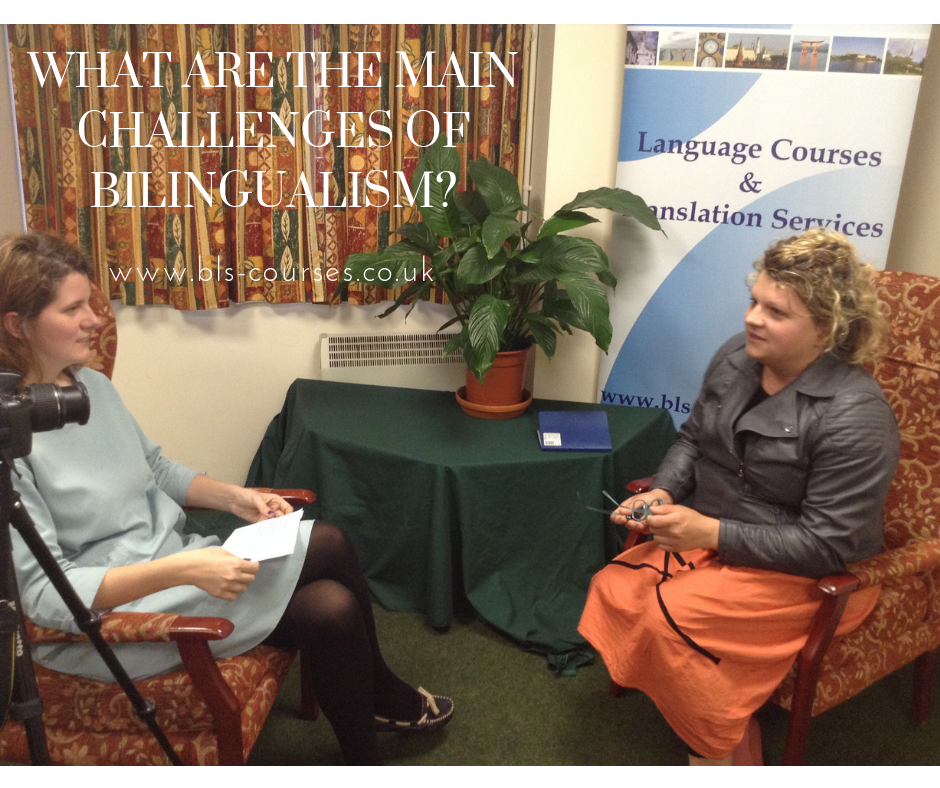
What are the main challenges of bilingualism? How can you keep both languages balanced? (5)

Some time ago, we introduced a new series of video interviews and online interviews which are devoted to the subject of bilingualism. We find the topic of bilingualism fascinating and we want to discuss some of the issues and benefits linked with being bilingual, as well as many other bilingualism-related topics. If you have any ideas or questions related to bilingualism, let us know in the comments below.

Today, in our fifth YT video, we attempt to answer  the question “What are the main challenges of bilingualism? How can you keep both languages balanced?”. Our special guest is Łucja Miniewska, an expert on bilingualism both academically (she holds an MSc in Bilingualism) and practically (she’s a mum of two bilingual children). Please click the link to watch our YT video.

Kinga Macalla

October 3, 2018

How do you start? What would be your key tips for parents wanting to raise their children bilingually?(4)

Three months ago, we introduced a new series of video interviews and online interviews which are devoted to the subject of bilingualism. We find the topic of bilingualism fascinating and we want to discuss some of the issues and benefits linked with being bilingual, as well as many other bilingualism-related topics. If you have any ideas or questions related to bilingualism, let us know in the comments below.

Today, in our fourth YT video, we attempt to answer  the question “How do you start? What would be your key tips for parents wanting to raise their children bilingually?”. Our special guest is Łucja Miniewska, an expert on bilingualism both academically (she holds an MSc in Bilingualism) and practically (she’s a mum of two bilingual children). Please click the link to watch our YT video.

Kinga Macalla

September 5, 2018

What are the main benefits of a bilingual upbringing? (3)

Two months ago, we introduced a new series of video interviews and online interviews which are devoted to the subject of bilingualism. We find the topic of bilingualism fascinating and we want to discuss some of the issues and benefits linked with being bilingual, as well as many other bilingualism-related topics. If you have any ideas or questions related to bilingualism, let us know in the comments below.

Today, in our third YT video, we attempt to answer  the question “What are the main benefits of a bilingual upbringing?”. Our special guest is Łucja Miniewska, an expert on bilingualism both academically (she holds an MSc in Bilingualism) and practically (she’s a mum of two bilingual children). Please click the link to watch our YT video.

Kinga Macalla

August 1, 2018

I moved to Russia with my family for 6 months. Interview with BLS Russian Tutor, Natalia

Natalia is one of BLS’s Russian language tutors, who moved to Russia last year to live there with her family for 6 months. I interviewed her to find out more about her experience of living abroad. The interview is available on YouTube. We had great fun recording it (or actually re-recording it as, by accident, we lost our first video and needed to re-record it! We didn’t complain, though, because we had so much fun doing it again!). What did we talk about? We talked about where they lived in Russia, how they packed for their 6-month relocation, how they organised their lives in Russia, what surprised them most, and whether or not Natalia is missing her Russian life now. Curious to find out more? Click the link here to watch the whole interview. Enjoy!!!

Do you have a similar experience, please let us know about your temporary move to a new country in the comments below.

Kinga Macalla

February 21, 2018

The Language Journey – Suzannah’s Story (in 6 Languages)

Hello, my name is Suzannah and I’m a linguist and freelance translator.  In this video, I answer questions about my journey to speaking 6 languages. I give one answer in each of the languages I speak: French, Dutch, English, Polish, Italian and Spanish. Firstly, in French, I talk about how I discovered I had a talent for the language and almost accidentally ended up spending some time in France and eventually studying French at university, which opened the door to me learning other languages – something I never imagined I would be able to do when I was a shy, quiet teenager. Then, in Dutch, I talk about the story behind why I started to learn other languages – mainly out of curiosity and thanks to friendships I made, as well as having the opportunity to live and work abroad.  I then give away a few tips on how to learn a language – or at least I explain what works best for me and how I have gone about learning each language – in English. After that I explain (in Polish) why I chose to learn Polish, my latest language: it came down to friendships again; plus, it was/is a fun challenge for me.  Then, in Italian, I talk about the advantages of speaking and learning different languages and what I like best about being able to speak other languages. Finally, in Spanish I reveal how I keep up my language skills and what I do to practise every day so I don’t forget them!  Bon visionnement! Veel kijkplezier! Happy watching! Bawcie się dobrze! Buona visione! Disfrutéis de la película!

Suzannah Young

We need your help! Suzannah, our multilingual student speaks 6 languages and we’ve recorded an interview with her speaking them (available on YouTube). But, we need your help with translations from Dutch, French, Italian, Spanish and Polish into English.

Leave your translations here below our blog post and we’ll then add them to our video as subtitles! Good luck 🙂

September 27, 2017

Interview with Polish & English Singer Katy Carr

Even though you only lived in Poland for the first few years of your life, this experience has obviously had a great impact on you. Do you think of yourself as Polish?

🙂 I am very proud to have Polish blood and so pleased that my Polish heritage has become a huge inspiration for my music and creativity. Poland and Polish people worldwide are my inspiration and I never want to be separated from them for such a long period ever again. I loved writing my albums Paszport and Polonia and I look forward to more Polish inspired musical projects.


In what ways, do you think this dual identity has enriched you? Are there any disadvantages?

🙂 I love being British and Polish and I see only happiness from being enriched by two nations. I have two sets of heritage to draw upon for my musical creativity and this only adds not only to the richness of my own life experience but also to my audiences. Sharing the wealth of knowledge and the friendship between Great Britain and Poland is my huge passion. I look forward to meeting many more people through my music in the forthcoming years.


You sing in both languages, but do you use Polish in your everyday life? Is it difficult to maintain it?

🙂 I love speaking in the Polish language. It is a beautiful yet very difficult language to master with 7 cases and many declensions. I still have a lot to learn! I speak to the Polish Veterans of WWII and the Siberian Survivors in Polish but also to the younger Polish generations who have either just arrived in the UK or who are making their lives here. I am fascinated by how strong and resilient the Polish community is and this only adds to my fascination and love of the Polish language and her history.
Listen to my song Wojtek for the two languages in harmony together 🙂 Official music video for Wojtek (the Soldier Bear) by Katy Carr – YouTube


Where did the idea of singing in Polish come from? Does it help you reconnect with your heritage?
🙂 I started my rediscovery of Poland through writing a song called Kommander’s Car about the infamous escape of Kazik Piechowski, Polish boy scout from Auschwitz on June 20th 1942. When I wrote my song, I was desperate to make links with my Polish heritage but it was very difficult to make a connection. It is only through my music that I came to gain access to the Polish People and Poland that I know today. I owe everything to my music and songs that helped me carve a route to discover and share the rich and diverse history of Poland which is a wonderful and glorious nation.
Listen to Kommander’s Car: 
20th June 1942 – 20th June 2017 marks Kazik’s 75th Anniversary of his escape.


You tour both in the UK and in Poland. Do you notice a difference between the audiences? Do you have a preference? 😉
🙂 I love performing to all audiences worldwide. Recently I have visited the countries that gave refuge to the exiled Polish community after WWII. Poland was the only Allied nation to fall behind the Iron Curtain. Poles in these circumstances were not given access to Poland and were known as ‘Aliens’ – exempt from ever entering Poland again – mainly because Poland had been given over to Totalitarian Communist Rule after the Yalta Conference meeting of Hitler, Stalin and Churchill in February 1945- known as the Western Betrayal of Poland. The outcomes of the conference were kept secret but it meant many hundreds of thousands of Allied Polish military troops were left without homes after WWII. I named my recent album after the brave people of Polonia – the Latin name for Poland and dedicated it to friendship between Polish pianist and composer (later President of Poland 1919) Ignacy Paderewski and Sir Edward Elgar – the English composer who wrote a Symphonic Prelude called ‘Polonia’ dedicated to raising money for the Poles who were without a country in 1915. (Poland was erased off the map of Europe between 1795 and 1918).


We are very impressed with your knowledge of Polish history! Would you say that being away from your country of origin has actually made you more patriotic and interested in the nation’s past?
🙂 History does matter as learning about it can hopefully help future generations learn from the mistakes of the past. Unfortunately history does repeat itself and we as human beings on this little water planet continue to engage in wars and gross cruelty and suffering today which in my opinion is completely unacceptable especially during the 21st Century, which is supposed to be the age of Light. I weep at the idea that children and families are starving from hunger everyday or who are enslaved in cruelty across the planet. I would say that learning about Poland’s past has encouraged me to make connections with other communities and nations to help people worldwide raise their confidence and realise their dreams. My dream is to make people happy through my music and I hope I continue to do so for many years to come.
Interviewed by Alicja Zajdel & Bristol Language School


March 29, 2017

Interview with Babel Babies

1. What is Babel Babies, who created it and where are you based?

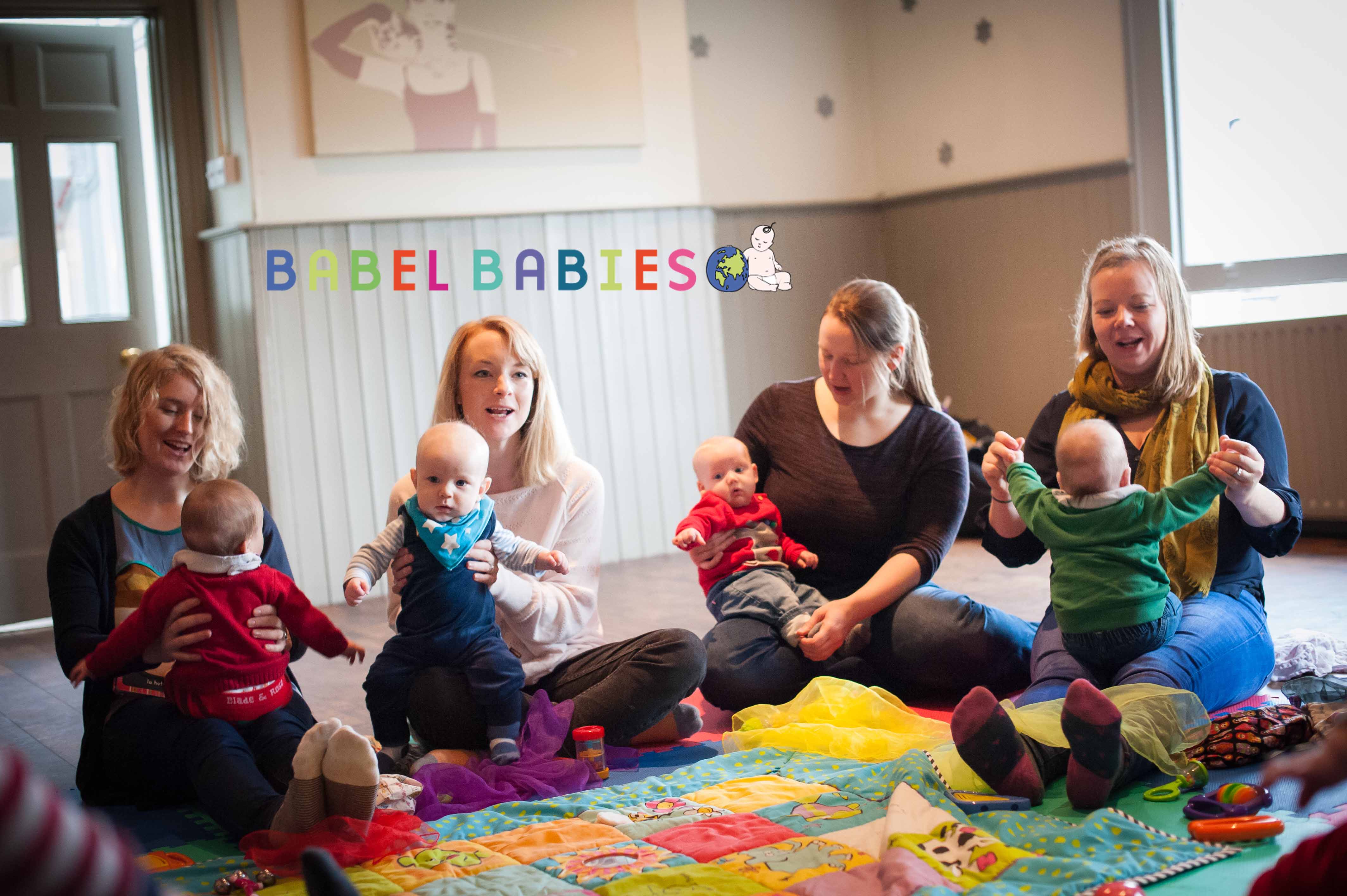
Babel Babies provides multilingual, multisensory music sessions suitable from birth. We explore songs and stories from around the world with our multilingual mascot, Croc Monsieur. We believe it is never too early or too late for parents and children to learn languages together.

Babel Babies started in Cheltenham nearly six years ago when two sleep-deprived mamans, Cate and Ruth said to each other, “Know Twinkle Twinkle in any other languages? I’m so bored of singing it in English!”. As qualified teachers and linguists, they began to introduce new songs and stories in different languages to their children and the idea for Babel Babies was born. In 2012, a mutual friend introduced them to Dominique, fellow linguist and mum, who was based in nearby Bristol. Together, they set up Babel Babies as a limited company and set off on their language revolution. Our sessions currently run in Bristol, Cheltenham and Manchester, but we are looking to expand to new locations in the near future. The world is our oyster!

Babel Babies Singing mums for web

2. What languages do you use in your baby sessions? When is it best for the little ones to start attending the classes? When do children start reacting and singing in foreign languages?

Our sessions are multilingual and we hope to ignite a passion for learning new languages with parents and children alike. We cover French, Italian, German, Spanish, Portuguese, Norwegian, Arabic and Japanese, but that’s by no means an exclusive list. We are always striving to expand our repertoire and include new songs in different languages. We believe that teaching children about other languages and cultures really broadens their horizons and gives them an understanding of the world around them. They have the capacity to learn several languages simultaneously (the majority of children in the world speak two or three languages!) so why not make the most of their incredible abilities?

Babel Babies is suitable from birth. Language learning begins even before birth, and babies recognise their mother tongue when they are born. They are able to hear any sound in any language for most of their first year, and start to tune into the language they hear most after about ten months. If you expose babies to foreign languages and sounds in their first year, they will have a lifelong positive relationship with learning languages as well as a permanent neural map of the languages they were exposed to.

The children react right from the start of Babel Babies. We have had tiny babies, only a few weeks old, stop screaming when they hear a certain song on the CD and older children sing along to “Old MacDonald” in Italian before they know it in English. If you join us at Babel Babies, who knows what your child’s first word may be? It could be hello or thank you in one of the many languages we cover, or even a Japanese croak from our frog song!

3. How do you choose songs in foreign languages? Do you consult native speakers regarding your choices? Do you follow specific websites or watch YouTube videos?

We cover a range of languages between us at Babel Babies and have a great variety of songs as a result. Some are well-known English songs that we have translated, some are traditional songs that our network of friends and family from different countries have taught us, and some we have created ourselves. All of our songs are proof-checked and approved by native speakers and translators and we learn from our own database of recordings and reference materials.

4. Do you speak any foreign languages? How do you to learn to sing in different languages?

Bien sûr! All of our Babel Babies teachers are linguists and it would be a very hard job to do if you didn’t speak any other languages. I studied French, German and Italian at A-Level and went on to study French and Italian at Exeter University. Whilst I was working for a translation agency I was also required to learn Arabic, which I really enjoyed. I have lived in Italy and Switzerland and would love to live abroad again at some point in my life. I am passionate about languages and am always trying to improve and learn new ones. I am lucky enough to have friends and family all over the world and love squeezing in trips to visit them and practice my languages whenever I can.

You don’t have to be a linguist to come along to Babel Babies. We love to encourage complete beginners to come along and try our sessions. The wonderful thing about Babel Babies is that the adults can learn alongside the children. Through music and repetition, the songs very quickly become familiar and it’s wonderful when parents and children can sing languages together.

Babel Babies Peepo for web

5. What are the most challenging and the most rewarding elements to running classes with babies and toddlers?

The children are wonderfully unpredictable at Babel Babies, that’s half of the fun of it all. Being greeted by a room full of eager little faces saying “Ciao” can be one of the most wonderful feelings. From a baby smiling and giggling as you sing, to a toddler repeating the words you teach, I definitely think I have one of the best jobs in the world.

6. What are your future plans? Do you have any projects you would like to work on?

Babel Babies is set to expand this year. We want to share our little language revolution and have Babel Babies sessions running across the country. We want everyone to “Sing languages together, learn languages together and love languages together!”

If you would like to find out more about Babel Babies, or join us for a session in your area, please visit www.babelbabies.com for more information or follow us on Facebook and Twitter.

Great, thank you, we will follow your language revolution eagerly!