Tag Archive: Language Learning

March 7, 2018

Learning a Language: Learn Russian with BLS online & FREE!

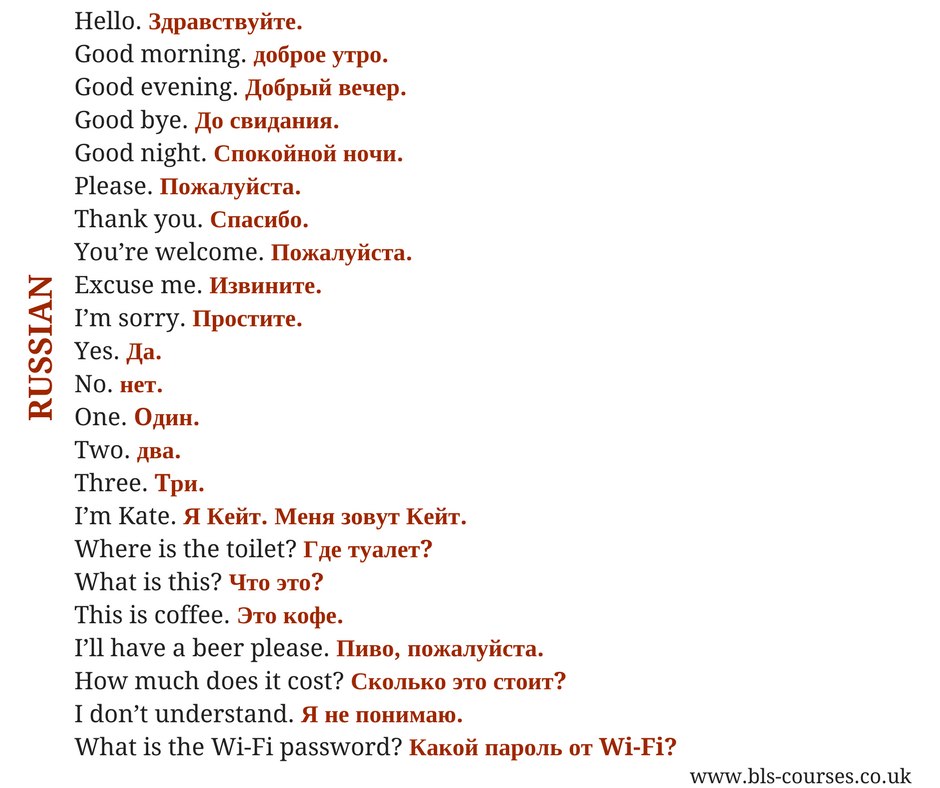
As you remember, we introduced a new series of blog posts (see Spanish, French & German) where we teach you some useful phrases in different languages. Sounds amazing? And it’s RUSSIAN today!

Are you planning your ski holiday in Sochi? Do you travel frequently to St Petersburg? Do you dream of exploring Russian-speaking Ukraine or Georgia? If so, we would like you to taste & learn some essential Russian first. Below you’ll find a list of useful phrases in Russian (greetings, polite phrases, closed question words, numerals and simple questions & sentences). We also video recorded Anna, our Russian tutor, to help you with reading, pronunciation and accent (also available on YouTube). We hope you enjoy this series and that you’ll come and learn Russian with us! Good luck!

Which language would like you like to learn next? Let us know in the comments below.

Kinga Macalla

November 8, 2017

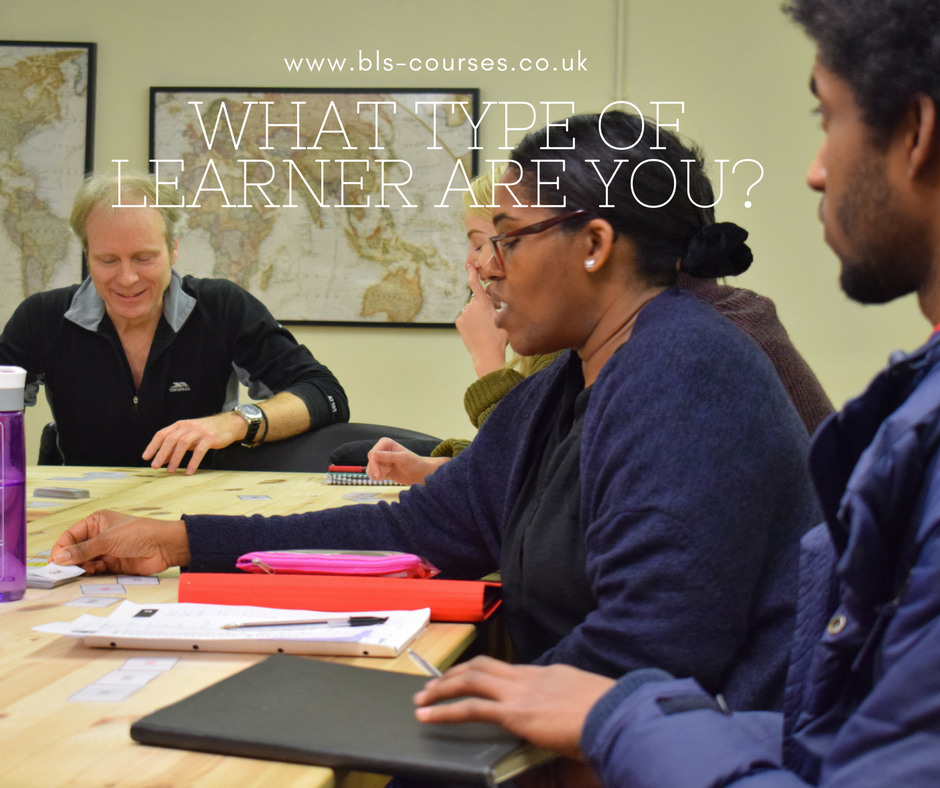
Language learning–pleasant and fun? Yes, absolutely, if you know what type of learner you are!

Everyone can learn a new skill, and everyone can learn a new language – but did you know that different people learn in different ways?  Not all people’s learning techniques are the same.  The type of learner you are depends on how your brain is wired.  The categories of learner are: visual learner, auditory learner, kinaesthetic learner.  A visual learner learns best if they see something written down or represented visually; an auditory learner retains information best if they hear it and a kinaesthetic learner (from ‘kinaesthesia’: the awareness of the position and movement of the parts of the body by means of sensory organs in the muscles and joints) is a hands-on learner or someone who learns through manual tasks or movement.  You might already know what kind of learner you are or you might recognise yourself in one (or more) of the learner profiles as we explore how to harness them in order to learn languages below.

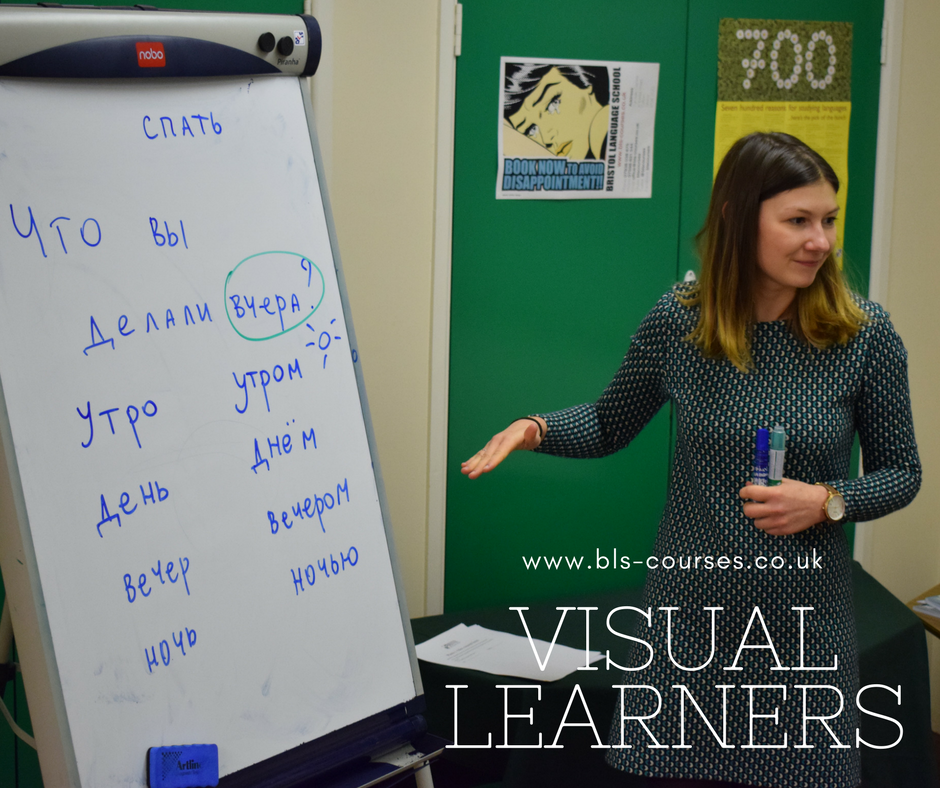
Visual Learners

If you are a visual learner, you will remember things best if you have seen them represented visually.  There are a number of ways you could make use of this concept in order to learn a language.  If you are listening to a text you could write out the words or read the transcription so you see the words as they are read out.  You could draw a spider diagram of related words, e.g. with ‘dairy’ in the middle and ‘cheese’, ‘eggs’, ‘milk’ stemming off from the middle.  You could draw a table and put different categories of words (nouns, verbs, adjectives) in the different columns.  You could write out words in different colours so the image of them sticks in your mind.  You could use flash cards to learn and remember vocabulary – writing them out yourself or buying a set in a bookshop – or finding them or creating them online.  You could even draw pictures to represent words – concrete ones like a picture of a lemon to help you remember ‘lemon’ or an abstract picture such as those artists use to represent untranslatable words (you can also use them for words that have literal translations!).  You could also do this in the opposite way – creating images out of words that relate to their meanings, such as these.

Auditory Learners

If you are an auditory learner, you need to hear something in order to learn it.  You will learn a language best if you listen to it or speak it regularly.  You could listen to songs in your chosen language or listen to the radio or audio books.  Make a playlist of your favourite songs in your chosen language.  You could practise pronouncing words or read books aloud to make sure you hear the words as you read them.  You could join a conversation club, look for a language partner in your town or online or join a choir that sings songs in your chosen language.  You could watch films in order to practise your listening skills.  If you need to learn vocabulary, record yourself reading out the words and listen to the recording several times a week.  If you need to learn the spellings of words, sound out each letter and then read out the word as a whole.  If you have exercises to complete in a book, read them out as you fill them in.

Kinaesthetic Learners

If you are a kinaesthetic learner, you will learn things best if you use your hands to help you learn them or if you undertake a learning task whilst moving around.  A useful way of learning verb endings for a kinaesthetic learner could be to write them on building blocks and then work at piecing the words together to make different tenses of the same verb.  You could get a set of words or phonemes to stick on your fridge and have fun writing sentences or whole stories with them.  If you want to move your whole body and not just your hands, you could listen to an audio book in your chosen language whilst you are going for a run or working out at the gym.  Or you could join a drama group in your chosen language – speaking the words whilst acting a part will help you combine the words with their associated actions.

All-rounder

Of course, some people have more than one learning style or learn best when two or even three of these styles are combined.  If you think this might be you, don’t hesitate to give it a go.

Why not find out, and share what kind of learner you are – and your experiences of language learning – in the comments?

Written by Suzannah Young

October 4, 2017

On Languages: Japanese

Japanese (日本語 [nihõŋɡo]) is the ninth most widely spoken language in the world.  It is the official language of Japan, which has a population of over 125 million people.  There are also around 2.5 million people of Japanese origin, many of whom speak Japanese as their first language, living in the Americas, particularly Brazil and the United States (Hawaii).  There is also an expatriate presence in major cities such as London, New York and Paris.  Japan is one of the world’s leading industrial powers and Japanese language services have become extremely important in social and business settings.

Much about the roots of the Japanese language is unclear.  There are debates about which other languages Japanese is related to and it only seems certain that it is a member of the Japonic language family, which includes the Japanese language spoken on the main islands of Japan and the Ryukyuan languages spoken in the Ryukyu Islands.  Little is known of the language’s prehistory, or when it first appeared in Japan. Chinese documents from the 3rd century recorded a few Japanese words, but longer texts did not appear until the 8th century.  Old Japanese vocabulary was influenced by Chinese.  Late Middle Japanese (1185–1600) saw changes brought it closer to the modern language, as well as the first appearance of European loanwords.  Portuguese, Dutch and Spanish words, such as “pan” (bread) and “igirisu” (the UK), from the Portuguese “po” and “ingles” arrived during the 16th and 17th centuries, when missionaries and merchants started to visit the country.  Following the end in 1853 of Japan’s self-imposed isolation, the flow of loanwords from European languages increased, especially English loanwords. These include “teburu” (table), “biru” (beer), “gurasu” (glass), “aisu” (ice), “takushi” (taxi) and “hoteru” (hotel).

How Japanese works

Word order in Japanese is normally subject–object–verb.  Sentence structure starts with the topic and then gives a comment about the topic.  It uses particles (small words) to mark the grammatical function of words, such as ‘wa’ (topic marker), ‘ga’ (new information).  This means they function like cases in other languages.  For example, これは本です。(‘kore wa hon desu’) = ‘This is a book’.  A longer example is 私はブリストル に 住んでいます (‘Watashi wa Bristol (Burisutoru) ni sundeimasu’).  A literal translation into English would be ‘I (topic) Bristol (in) reside’).  Thus Japanese, like many other Asian languages, is often called a topic-prominent language, which means it has a strong tendency to indicate the topic separately from the subject, and that the two do not always coincide. The sentence Zō wa hana ga nagai (象は鼻が長い) literally means, “As for elephant(s), (the) nose(s) (is/are) long”. The topic is zō “elephant”, and the subject is hana “nose”.

Particles are used at the end of sentences to add impact (‘ne’), or make questions (‘ka’) as well.  Questions can have the same structure as statements, but with intonation rising at the end.  In the formal register, the question particle -ka is added. For example, ii desu (いいです) “It is OK” becomes ii desu-ka (いいですか。) “Is it OK?”.

Nouns do not change with number or gender, and there are no articles (‘the’ or ‘a/an’).  Verbs do change with the tense, of which there are two: past and present (or non-past), which is used for the present and the future.  For verbs that represent an ongoing process, the -te iru form indicates a continuous (or progressive) aspect, similar to the suffix ing in English.  Verb conjugations are also used for voice (active or passive), but not the person the verb is are referring to.

Japanese has a grammatical system to express politeness and formality. Broadly speaking, there are three main politeness levels in spoken Japanese: the plain form (“kudaketa”), the simple polite form (“teinei”) and the advanced polite form (“keigo”).  It also has a system of honorific language, where verbs and vocabulary change to indicate the relative status of the speaker, listener and persons mentioned.  Their status is determined by a variety of factors including job and age.  The person in the lower position is expected to use a polite form of speech, whereas the other might use a more plain form.  Japanese people often use titles of the person referred to where pronouns would be used in English. For example, when speaking to one’s teacher, it is appropriate to use sensei (先生, teacher), but inappropriate to use ‘anata’ (‘you’). This is because ‘anata’ is used to refer to people of equal or lower status, and one’s teacher has higher status.  Strangers in Japan will speak to each other politely.  Most nouns in the Japanese language may be made polite by the addition of o- or go- as a prefix. o- is generally used for words of native Japanese origin, whereas go- is affixed to words of Chinese derivation. In some cases, the prefix has become a fixed part of the word, and is included even in regular speech, such as gohan ‘cooked rice; meal.’ Such a construction often indicates deference to either the item’s owner or to the object itself.  Even if you don’t have the language skills, a softening of the voice, a discreet awareness of the other person’s personal space and undemonstrative body language go a long way when it comes to courtesy and showing respect.  Read more about honorific speech here.

Writing Japanese

The Japanese writing system has three different sets of character: Kanji (several thousand Chinese characters) and Hiragana and Katakana (syllabaries with 46 characters each).  The adaptation of Chinese characters during the sixth to ninth centuries A.D. developed the language. By the 12th century, hiragana and katakana were created out of kanji, providing the Japanese new freedom in writing their native language.  Today, Japanese is written with a mixture of the three.  Hiragana are used for words without kanji representation, for words no longer written in kanji, and also following kanji to show conjugational endings.  Katakana, like hiragana, are a syllabary; katakana are primarily used to write foreign words, plant and animal names, and for emphasis. For example, “Australia” has been adapted as Ōsutoraria (オーストラリア), and “supermarket” has been adapted and shortened into sūpā (スーパー).  Japanese texts can be written in horizontal rows left to right, or in traditional Japanese style, i.e. in vertical columns from the right to the left side of the page.

Can I learn Japanese?

Japanese is considered a difficult language to learn for speakers of European languages.  Some difficulties are learning to master the Japanese writing system.  Unless you are already familiar with Chinese characters (kanji), many years of study are necessary to achieve complete literacy.  Japanese students learn about 2000 kanji until the end of junior high school and continue to learn more until the end of their school careers. The two syllabaries Hiragana and Katakana (together about 100 signs), however, can be memorized quickly time.  Another difficulty can be the existence of honorific speech: the fact that a person’s speech can vary depending on the situation and the person. A student of Japanese has to become familiar with Japanese society and customs in order to understand the detailed rules of the different levels of speech.

However, compared to many European languages, basic Japanese grammar is relatively simple. There are not the complicating factors of gender articles and plurals, and conjugation rules for verbs and adjectives are almost entirely free of exceptions.  Nouns are not declined at all, but always appear in the same form.  This makes the language relatively easy for students starting out.

You may also have a head start when learning Japanese because it has a lot of foreign loan words, especially from English.  (外来語 [gairaigo] – ‘words from outside’ are not limited to nouns, they can be adjectives too.  The word for ‘TV’ is テレビ [terebi], サンドイッチ [sandoitchi] is ‘sandwich’, ‘bread’ is パン [pan] from the Portuguese word ‘pão’ and part-time worker is アルバイト [arubaito], from the German ‘Arbeit’, work.  You have probably heard a lot of Japanese words aleady too.  A lot of Japanese words have been absorbed into English.  See how many of these words you recognise (many thanks to An Idiot Lost in Japan for these!):

Origami

Sake

Karaoke

Sumo

Tsunami

Sushi

Haiku

Sashimi

Teriyaki

Anime

Manga

Kimono

Samurai

Ninja

Bonsai

Wasabi

Shogun

Karate

Judo

Sensei

Zen

Geisha

Emoji

Koi

Sudoku

Futon

Nintendo

Where can I learn Japanese?

You can learn Japanese at Bristol Language School.  We offer group and one-to-one lessons at all levels.

There is also a lot of information about learning Japanese on the Bristol Japan Club website.  There are also teaching and learning resources on the Japan Foundation website.  This kanji dictionary with sound can help you learn to recognise and write Japanese characters.  If you want to listen to Japanese, you can try these Japanese podcast lessons from the Japan Broadcasting Corporation, NHK.  To practice reading, you can go to asahi.com, one of Japan’s leading newspapers.

You can also find out where to buy books for learning Japanese here.  You can find websites to help you with learning Japanese and other Online Resources here.  Nihongo o Narau – Learn Japanese is a free online Japanese course.  Digital Dialects’ Japanese Games are interactive games for learning the Japanese language.  There are also Mobile Apps for iPhone, iPad, Android phones and tablets.  If you want to learn for travel, use this guide to Japanese Phrases for Travellers, with a pronunciation guide.  Plus, this Glossary for Learners is a quick reference guide to the essential elements of Japanese.

In the United Kingdom, study of the Japanese language is supported by the British Association for Japanese Studies.  The Japanese government provides standardized tests to measure spoken and written comprehension of Japanese for second language learners; the most prominent is the Japanese Language Proficiency Test (JLPT), which features five levels of exams.  The JLPT is offered twice a year.

Good luck!

Written by Suzannah Young
September 20, 2017

Easy Ways to Improve Your Reading Skills in a Foreign Language

Reading is a key skill to develop when you are learning a new language.  Reading in another language makes us comfortable with the words and grammar used in that language.  Seeing words written down helps us remember them.  You can improve your reading and understanding skills – and your writing and speaking skills if you emulate what you read – by reading regularly in your new language.  There are also ways to make your reading more effective.  We will explore a few of these in this blog post.

Quality or Quantity?

If you read for pleasure and you read often, this is known as ‘extensive reading’. You read a lot and want to enjoy the story.  Usually people read for pleasure in their mother tongue, and this reading is radically different from the reading exercises found in foreign language textbooks.  In a textbook, you read short texts, often extracts from a longer text, and you study them in depth to try and understand every word.  This is ‘intensive reading’.  Both extensive and intensive reading are useful and help you address different areas of language learning.  But reading newspapers, novels, magazine articles, recipes – anything you can get your hands on – helps you familiarise yourself with the natural way of writing in that language and will improve your fluency in the language.  This is different from what you get in a textbook.

Don’t panic!

In our mother tongue, we use “micro-skills” to help us read, such as skim reading to get the gist of a passage, scanning through a long document to find specific information, reading quickly if it is for enjoyment or reading every word slowly and carefully when reading an important document.  Studies show that we abandon most of these reading skills we have developed in our mother tongue when reading in a foreign language, and focus on trying to understand every word.  This means that when we come across unknown words, we get frustrated because we don’t understand.

Instead, we should use the same skills we have gained in our first language – and not be afraid of not understanding every word.  There are times when you don’t know a word in a text you are reading in your mother tongue, but you don’t let it spoil your enjoyment of the text as a whole – you just move on.  If it is important to the general understanding of the text, you might look it up, or you might try to work out the meaning from the context.  These same skills can be used when reading in a new language.  The important skill is reading the text as a whole and not stopping to focus on something difficult unless it is absolutely necessary – because you can only get an understanding of text as a whole when you have read the whole thing!  You will also want to read more and learn more if you enjoy reading as an activity – otherwise you won’t want to do it.  Not understanding a word now does not mean you will never understand it, so just accept that you do not know it now and move on.

Working it out

There are ways to work out the meaning of a word you are stuck on, or you can look it up later.  Here are a few different ways of dealing with a word you don’t know:

  • See if the word looks in any way familiar. It may be a cognate with a word in your language and so you can work out the meaning.
  • Read the sentence several times. Using the context of the sentence and the wider context of the story, try to guess the meaning of the word.
  • Make a note of the word and check its meaning later.
  • Sometimes, you might find a verb that you recognise but not know the meaning of the specific conjugation (e.g. hablar, hablarán, hablase in Spanish). If you can still understand the gist of the sentence, it is ok to carry on reading and look the conjugation up later.
  • Sometimes, there will be words that keep coming up. If they are essential to your understanding then it is ok to look them up, but if you do this very frequently it will interrupt the flow of your reading.

(Source: http://www.iwillteachyoualanguage.com/reading-in-a-foreign-language/)

 Stick to what you know

If you are learning to read in another language, it can be helpful to read things that you are already familiar with in your own language.  You can read children’s books or novels you have read before and know the story of.  If you are interested in reading news articles, there are some websites that have the same article in several language versions (such as Café Babel) – so you can read your native language version first and then read the same thing in your new language.  This means you can work out things you don’t immediately recognise in the new language because you already know what the article is about.  This will help you develop your understanding and improve your vocabulary.

Resources

There are many websites that list newspapers in other languages, specially selected for learners of that language.  You can find these by searching.  You can also find some foreign language newspapers in your local library.  Finding novels and short stories online might be more difficult, but you can borrow these from most libraries or buy them from bookshops or online booksellers.

Happy reading! Bonne lecture! Buona lettura! Veel leesplezier! Qué disfrutéis de la lectura! Miłej lektury! Wir wünschen Ihnen eine gute Lektüre!

Written by Suzannah Young
September 6, 2017

Learning a Language: Learn German with BLS online & FREE!

As you remember, we introduced a new series of blog posts (see Spanish & French) where we teach you some useful phrases in different languages. Sounds amazing? And it’s GERMAN today!

Are you planning your ski holiday in Switzerland or Austria? Do you travel frequently to Berlin? Do you dream of exploring German-speaking Namibia in Africa? If so, we would like you to taste & learn some essential German first. Below you’ll find a list of useful phrases in German (greetings, polite phrases, closed question words, numerals and simple questions & sentences). We also video recorded Victoria, our German tutor, to help you with reading, pronunciation and accent (also available on YouTube). We hope you enjoy this series and that you’ll come and learn German with us! Good luck!

Which language would like you like to learn next? Let us know in the comments below.

Written by Kinga Macalla

August 2, 2017

Book review: When in French. Love in a Second Language by Lauren Collins

What a treat for a linguist! I loved every single page for the author’s humour, curiosity, witty observations and passion for languages. It tells the story of an American who moves to London, then to Geneva and then to…? The book is also about communication between languages, countries and cultures. And there are a couple of paragraphs on untranslatable words, too. My favourite quotations are below. When in French is a fantastic read, particularly for bilinguals, linguists, translators, language tutors & learners and for those in love with a foreigner 😉

“Talking to you in English,” he said, “is like touching you with gloves.” P.29

“A language is the only subject you can’t learn by yourself.” P. 143 Lauren Collins

“To be successful at learning a language, one has to undertake a form of time travel, regressing to a childlike state of unembarrassed receptivity, in order to stand a chance of turning into a respectable adult.” P. 144

“Bilinguals overwhelmingly report that they feel like different people in different languages.” P. 187

Written by Kinga Macalla

July 26, 2017

Learning a Language: A Fast and Efficient Way to Learn and Remember More Vocabulary

There are quite a few techniques you can use to help you learn and remember vocabulary in a new language.  In a previous post, we explored how to remember words by associating them with an image in your mind.  In this post, we look at how to associate words with other words to help you understand new words and remember them too.  You can associate words through their spelling – how they look – or their sound.

The type of association we are going to look at is recognising cognates. Cognates are words in different languages that have the same linguistic root.  If you know a word in one language, it is likely that you will recognise and understand a cognate word in another language.  For example, the English word ‘father’, is cognate with the German word of the same meaning ‘Vater’ and the Latin word ‘pater’.  Learning to pick up on these words is a good way to expand your vocabulary in the language that you are learning.  It is a quick way to learn a lot of vocabulary, and can save you memory space for learning words that are not related to ones you know and therefore more difficult to remember!  Even words that do not have the same meaning but have similar meanings can help you remember them.  For example, ‘fiume’ in Italian, that means ‘river’, looks and sounds a bit like the English word ‘flume’, so you can remember that it has something to do with water and flowing… a river!

For English speakers, recognising cognates can be an efficient way of learning words in languages related to German and French, because English vocabulary draws heavily from both of those languages.  That means that an English speaker might recognize cognates from the Romance languages (e.g. Spanish, French, Italian, Portuguese and Romanian) as well as Germanic languages (e.g. German, Dutch, Flemish, and Danish).  English shares a lot of cognate words with Romance languages because many of the words in these languages have Latin or Greek roots.  For example, the Greek term ‘astir’, ‘star’, gave rise to ‘astronomy’ and ‘astronaut’, that are ‘astronomía’ and ‘astronauta’ in Spanish.  This can even be the case in languages that seem opaque to English speakers at first glance.  Polish, for example, has a lot of words with Latin and Greek roots, such as ‘cenzura’ (‘censorship’), ‘epidemia’ (‘epidemic’) and ‘katastrofa’ (‘catastrophe’).  Read more about Latin and Greek cognates in this teaching resource (it discusses using cognates to help Spanish speakers learn English but the principle is the same for English speakers learning Spanish).  The resource also gives a useful list of Spanish/English cognates.

Many languages are related to each other (some scholars would argue that all languages are related), so this means that the more languages you speak, the more you will start recognising cognate words with words you already know in another language.  This is one reason why it is easier to learn a new language when you already speak more than one language.

Borrowings

Another easy way to learn more vocabulary in a new language is to recognise words that have been directly or partially ‘borrowed’ from another language.  Asian languages like Korean, Chinese or Japanese may have fewer Latin/Greek/German derived cognates with English than Romance languages do, but what they do have are ‘borrowings’ from English.  Sometimes they will be direct loan words with no change, or they will have been changed slightly to fit in with that language’s system.  This can include changing the meaning of the English word, creating new phrases using English words that do not exist in English or abbreviating an English word where abbreviated versions do not exist in English.  This can of course occur in European languages as well: there are lots of English loan words in German, for example, such as ‘Party’, ‘Baby’, ‘Basement’ and in Polish, such as ‘grejpfrut’ (‘grapefruit’) and ‘ksero’ (‘photocopier’ (from ‘Xerox’)).  Italians use them too, such as ‘una fiction’ which means a TV drama.

How to learn new vocabulary through recognising cognates

When you are reading a text in the language you are learning, circle all the words you think could be cognates of your first language or other languages you know.  Look these up to confirm their meaning.  Look at the differences as well as the similarities between the words (spelling, pronunciation).  Write lists of cognates that share a common prefix, e.g. ‘kurs’ (‘course’), ‘kurier’ (‘courier’), ‘kursor’ (‘cursor’), ‘kursywa’ (‘cursive’) in Polish, or a common theme, e.g. ‘grafico’ (‘graph’), ‘fotografo’ (‘photographer’), ‘fotografia’ (‘photograph’), ‘fonografo’ (‘phonograph’), ‘iconografia’ (‘iconography’), ‘monografia’ (‘monograph’), ‘autografo’ (‘autograph’), ‘calligrafia’ (‘calligraphy’) in Italian (the theme is ‘writing’, ‘-graphos’ (Greek)).  Of course, this grouping exercise also works with cognates within languages.  For example, when you know that ‘high’ or ‘tall’ in Polish is ‘wysoki’ and that words ending in ‘ość’ usually mean -ness or -dom, you can work out that ‘wysokość’ is ‘height’.  Similarly, you know that ‘żyć’ means ‘to live’, so you can remember that ‘życie’ is ‘life’ and ‘żywy’ is the adjective ‘living’.  Finally, you know that ‘sen’ is ‘sleep’, so you can work out that ‘senny’ means ‘sleepy’.

What to watch out for

Sometimes, cognates can share one meaning but the cognate in your new language might have another meaning as well.  For example, asistir in Spanish means to assist but also to attend.  Watch out for these and try to remember the additional meaning as well.  There are also false cognates, that look the same or similar but have different meanings, such as the word ‘embarazada’ in Spanish that means ‘pregnant’, rather than ‘embarrassed’.  There are many more true cognates than there are false cognates, though, so learning cognates is always useful.

Enjoy putting this trick to good use and see your vocabulary grow!

Written by Suzannah Young

July 5, 2017

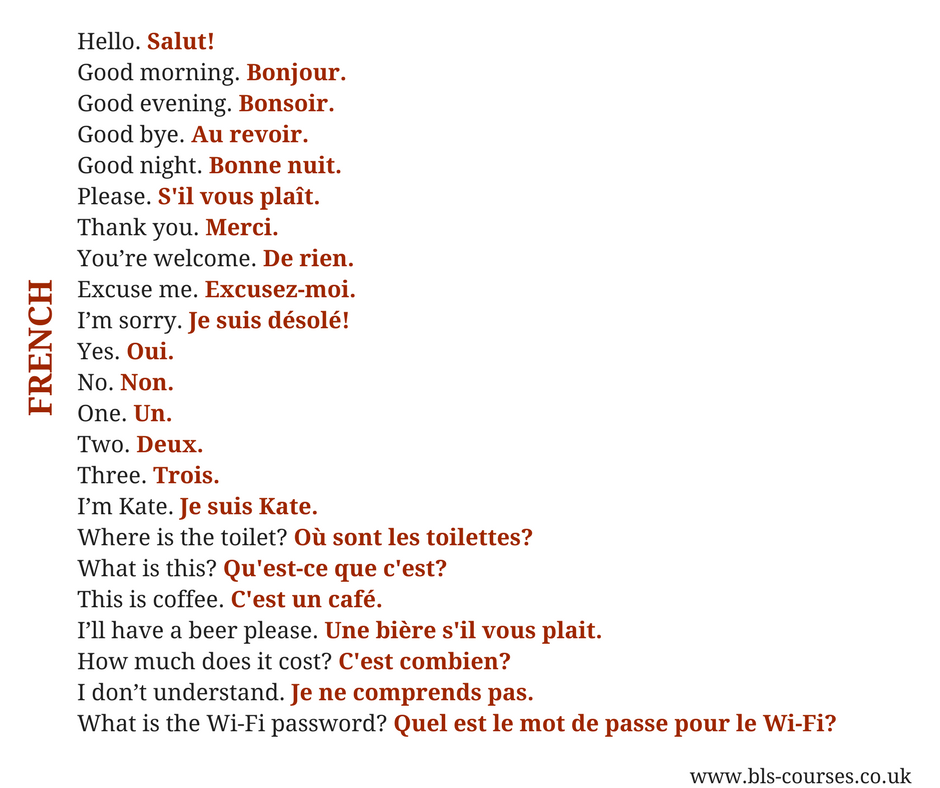
Learning a Language: Learn French with BLS online & FREE!

As you remember, we introduced a new series of blog posts where we teach you some useful phrases in different languages. Sounds amazing? And it’s FRENCH today!

Are you planning your summer holiday in the south of France? Do you travel frequently to Paris? Do you dream of exploring French-speaking Africa? If so, we would like you to taste & learn some essential French first. Below you’ll find a list of useful phrases in French (greetings, polite phrases, closed question words, numerals and simple questions & sentences). We also video recorded Marie, our French tutor, to help you with reading, pronunciation and accent (also available on YouTube). We hope you enjoy this series and that you’ll come and learn French with us! Good luck!

Which language would like you like to learn next? Let us know in the comments below.

Written by Kinga Macalla

June 21, 2017

Learning a Language: Learn Vocabulary Faster with 6 Fun Games

We published an article on how to learn vocabulary around a month ago, but I wanted to explore the topic even further and give you some more motivation and ideas on how to learn vocabulary.

There are many techniques you can use to learn vocabulary through reading, listening, moving around and being serious, crazy or creative. You can choose your favourite technique or you can mix & match them. Below, you’ll find 6 games which will help you learn vocabulary faster and have fun at the same time. Let’s get started!


Cards—to learn and revise vocabulary, sentences or grammar

Write a new word, sentence or fragment of grammar on one side of a piece of card with a picture or the translation into your first language on the other. Create a pile of cards and start memorising new words. When you think you have learnt them all, test yourself. Start again each time you make a mistake.


Match the halves—to revise the spelling of a list of words

First, write out a list of words you want to learn. Next, make a second list showing the beginning of each word and a third list with the end of each word. The endings in the third list must be in a different order from the beginnings. Cover up your list of complete words. Look at the other two lists and try to write all the words in full. Say the words to yourself as you write them. Compare your new list with the original list to make sure that your words are correct.


Different groups of words—to revise different topics

Organise the words into different categories and then write your groups of words. If you write the words on cards, it makes it easier to move them around into different groups. Can you explain the logic of your groups?


Mind map—to revise sets of words or phrases relating to a topic

In mind maps your ideas spread all over the page. You can connect ideas and group them. You can colour them and make the lines thick or thin and the bubbles big or small depending on how important the ideas are to you and how you feel about them.


Write a crazy story—to help you revise and remember words

Put all the words you want to remember into a story. Make it a crazy story and then you will remember the story and the words.


Be dramatic—to remember words or phrases

Try saying ordinary words and phrases in a dramatic way.


All the above examples come from a great handbook called Games for Language Learning by Andrew Wright, David Betteridge & Michael Buckby. If you would like to explore the topic of language learning techniques further, I highly recommend reading the book. By the way, what is your favourite language learning game? Please share your ideas in the comments below.

Written by Kinga Macalla

June 14, 2017

700 Reasons to Learn a Language: Do Businesses Need Languages?

Today, I would like to share with you some reasons businesses should consider investing in language learning education. I wouldn’t narrow it to those businesses who export or trade internationally; moreover, the below examples are mainly related to the international and tourist fields.

It’s obvious that languages play an important role in international business, but I think that their role is crucial on every level of business: from selling and negotiations to writing a website or proposal.

Below, you’ll find 7 quotations which were first published in articles and books, such as Language Learning Journal, Business Communication Across Borders and English as a Global Language. The complete list of extracts and their original sources can be found on the LLAS website. (Sadly, the LLAS Centre for Languages, Linguistics and Area Studies has now ended its activities, but you can still access their content.)

“One in every five British exporters (Statistics from Metra Martech) knows it is losing overseas business through its inability to overcome language and cultural differences”


 “You are far more likely to gain your customer’s respect and to be able to play a controlling part in business negotiations if you are able to communicate directly in his/her language.”


“With the numbers of foreign visitors coming to the UK, it is obvious that those who work in tourist-related industries really ought to have some knowledge of languages. A good service can only really be delivered to foreign visitors if there are people on hand who can understand what they have to say and are happy to converse with them in their language, and not just in English”


“In line with ‘softer’ approaches of modern business theory, the importance of human communication is increasingly stressed. Language, including foreign language – is seen as key to such communication and real interchange”


“Failure to ‘culturally adapt’ sales and marketing material is a major cause of cross-cultural miscommunication. Moreover, companies which have successfully mastered adaptation have usually done so by adopting a ‘language’ or communication strategy in the first place”


“15% of the firms involved in a Language Advantage survey in 2001 recognise that they have lost business because of the language skill factor or cultural barriers. One individual even claimed to have lost half a million pounds of business per year because of it”


“Buy in your native language, sell in the customer’s language”


Quite powerful, don’t you think? Do you use languages in your business when trading internationally? Do you have international staff members? Please share your comments below.

Written by Kinga Macalla