“If I had to limit my advice on healthier living to just one tip, it would be simply to learn how to breathe better.” Andrew Weil
As we’re approaching the end of 2024, I think I’m brave to say that if there is one book you read in 2025, let it be Breath by James Nestor. For your health, well-being and overall sanity. Yes, I’m serious. I read it a few months ago, but waited for the right (aka free!) moment to put together this short review, as I wanted to recommend this book to you. I found this publication fascinating: from knowledge of the past, interesting experiments, scientific facts to practical advice. While reading the book I was becoming more and more aware of my own breath, and I slowly started re-discovering the beauty of breathing. To introduce any changes into my breathing practice sounded so simple, but in reality, it was and still is much more challenging. I’m not going to share more details about this book, as I don’t want to spoil the pleasure of reading it yourself, and discovering the story behind our own breath.
As I’m publishing my words in December, I’m taking this opportunity to wish you a wonderful and calm Christmas, and a most prosperous New Year, 2025! Thank you for reading my blog and let’s meet here in 2025!
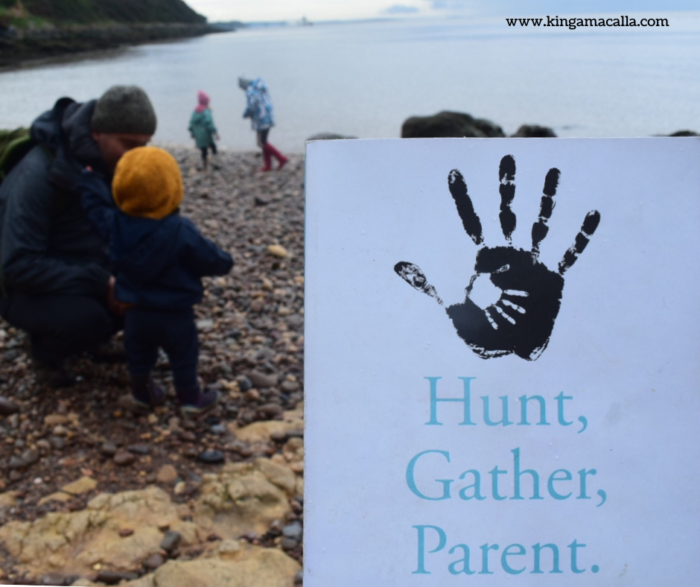
I saw this book recommended on one of the parenting channels and for some reason, I felt it was going to be an interesting read. I wasn’t disappointed. In a way, it presents a sad picture, because it shows that something as natural as being a parent has become a struggle. These days, I have a feeling that many parents could relate to the author’s parenting struggles and the overwhelming feeling of helplessness. When reading Doucleff’s publication, I went back to my favourite books which I read years ago, e.g. to Jean Liedloff and TheContinuum Concept. In the first chapter of TheContinuum Concept, we read about the author’s reaction and how she felt shame by the fact that in the US, women feel inadequate bringing up their children, unless they read a book written by a strange male. [p. 14] The second book I went back to was Siblings without Rivalry by Adele Faber and Elaine Mazlish. In this publication, we find so many examples where adult parents still feel so much pain because of their own childhood and how they were raised.
Now, let’s go back to Hunt, Gather, Parent. Why had this book been written? As you can guess, because of the mother’s struggles and her difficult life where her beloved little daughter became her enemy. The author was so desperate to find a solution to her own parenting struggles that she decided to embark upon a mission to find the answer. She visited some hunter-gatherer cultures where parents build a relationship with their children based on cooperation, trust and personalised needs. [p. 7] She visited a Maya village in Mexico, an Inuit village of Kugaaruk in Canada and a Hadzabe village in Tanzania. With each visit, she made some inspiring observations which changed the way she parented herself. In the Maya community, she found the most flexible and cooperative children; in the Inuit community, it was the emotional intelligence of the parents and grandparents and finally; in the Hadzabe community, it was the autonomy and courage of the children.
The book also contains some wise words from members of the community. We read that:
“In Maya culture, there’s a belief that everybody has a purpose (…)” [p. 76]
“When you yell at children, they stop listening.” [p. 145]
“With the !Kung hunter-gatherers in southern Africa, the word for ‘learning’ and ‘teaching’ is the same (n!garo), and parents will often use the phrase ‘She’s teaching/learning herself’ while a child is trying to figure out how to do something. Why interrupt their learning?” [p. 252]
For me, one of the most beautiful stories was the peaceful birth story of the Inuit mum. I also enjoyed learning about a special word for a kiss for the Inuit children called a kunik; this is when you put your nose against the child’s cheek and sniff their skin. [p. 145] However, the element that I didn’t like or understand much was about parenting through scary stories (I need to research this more!).
The book definitely made me think about my own parenting style and the parenting styles present in Western culture. Have you read this book or a similar one? Please let me know in the comments below.
If you remember my book review of Zen: The Art of Simple Living, I mentioned in it that this book was my bedtime story. The same actually happened with another publication by Masuno. Don’t Worry was also my bedtime read, as it made me calm and positive before falling asleep.
The book is divided into 5 parts with 48 short chapters and is beautifully illustrated. Each chapter can be treated as a little prompter to meditate and reflect on some important life matters, e.g. about being gracious, cherishing the morning, going with the flow, making good connections and being a good listener, as well as more practical / fundamental topics like money, aging, illness and death.
Here are some of my favourite words of wisdom:
“It’s okay to feel down, but get yourself up again soon” [p. 55]
“Words possess awesome power” [p. 97]
“Your turn will surely come around” [p. 100]
“You be you, and let others be themselves” [p. 114]
“The more you’re able to forgive, the happier you’ll be” [p. 180]
I’m taking this opportunity to wish you a wonderful and calm Christmas and a most prosperous New Year of 2024! Thank you for reading my blog and let’s meet back in January!
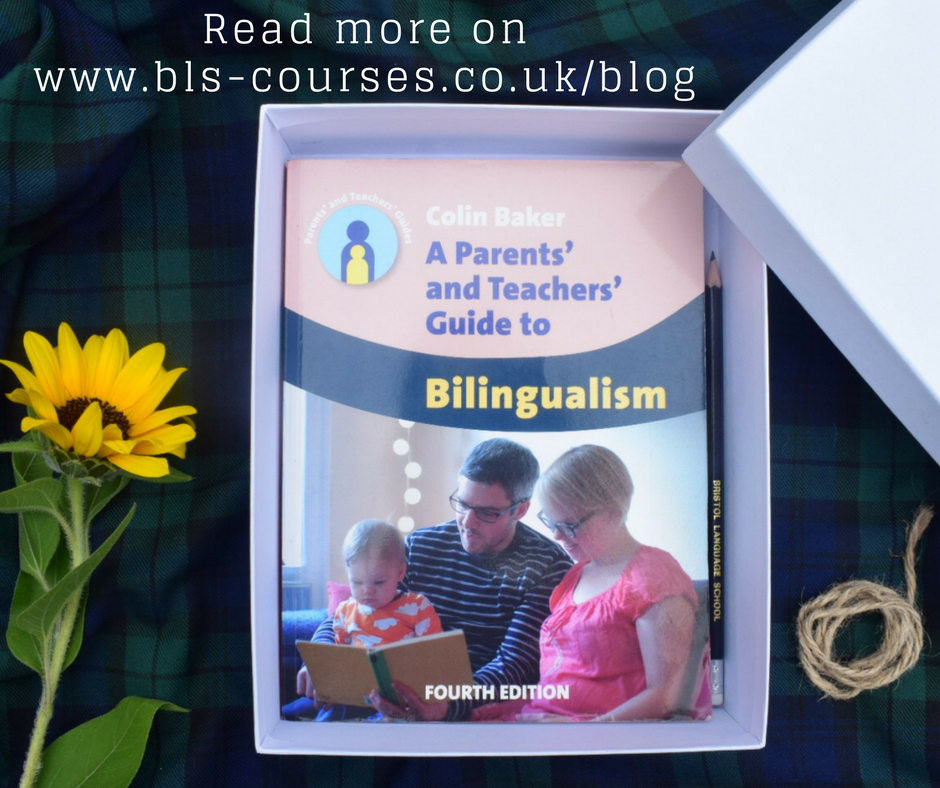
“Children are born to become bilinguals and multilinguals.” Colin Baker
This is a bible for any parent, teacher or professional dealing with bilingualism. The book is organised in a question-answer style and also contains some recommendations on further reading. There is no straightforward answer to some of the questions posed; however, the author explains his reasoning and carefully provides advice on the unanswerable questions. Personally, I like the fact that the children’s interests are always put first in this book, and this approach to bilingualism is more relaxed, less strict and gives some room for your child’s own language needs. The guide is divided into 7 sections: Family Questions, Language Development Questions, Questions about Problems, Reading and Writing Questions, Education Questions, Concluding Questions and Glossary. I wouldn’t want to provide any answers here, as I think everybody will look into different topics or queries within the book, but below you will find some examples of the most important questions (in my humble opinion!):
What are the advantages of my child becoming bilingual?
What is the ‘one person – one language’ (OPOL) approach? Is it effective?
How important is it that the child’s two languages are practised and supported outside the home?
What are the most important factors in raising a bilingual child?
Will my child become equally fluent in two languages?
What are the disadvantages of my child becoming bilingual?
My child refuses to use one of his/her languages. What should I do?
How should I help my child to read and write in both languages?
Should my child go to a bilingual school?
What should I look out for in choosing a school for my bilingual child?
Is bilingualism a natural right for any individual?
Overall, I highly recommend A Parents’ and Teachers’ Guide to Bilingualism by Colin Baker. If you’re a bilingual parent, what books or guides would you recommend? Please share your recommendations in the comments below.
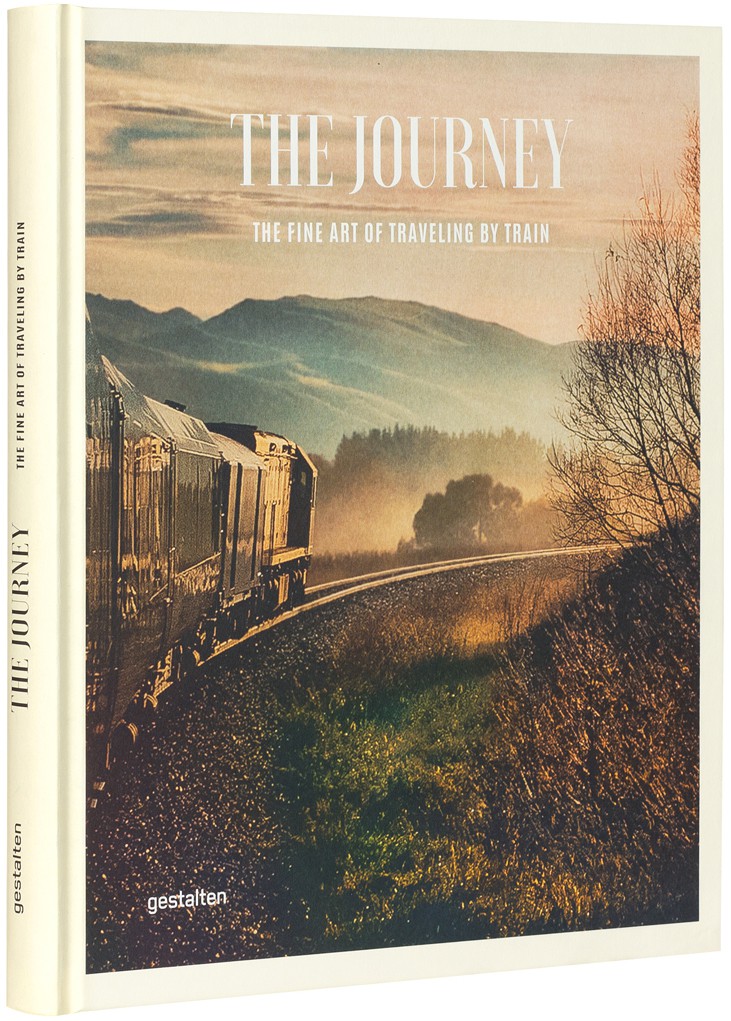
A beautifully photographed album of the world’s luxury and local long- and short-distance train journeys. Since reading Closely Watched Trains (Ostře sledované vlaky) by Bohumil Hrabal, I have become inspired by the romantic and sentimental vibes associated with trains and train stations, to such an extent that I now even live by a train station. I must confess, I simply adore this publication. It gives a precise overview of the most magical train routes in the world. The photographs accompanying each train journey are astonishing. You can definitely taste the flavour of each of the routes, which include the Venice Simplon-Orient-Express, The Belmond Royal Scotsman, the Glacier Express, El Transcantabrico, the Trans-Siberian Railway, Kyushu Seven Stars, the Eastern & Oriental Express, Royal Rajasthan on Wheels, California Zephyr, Hurricane Turn, the Royal Canadian Pacific, Belmond Hiram Bingham, La Trochita, The Blue Train, The Royal Livingston Express, the Tazara Railway, La Micheline, The Ghan, the TranzAlpine and many more.
It is a nice read for long, slow wintry evenings (but be careful: after reading it, you may become inspired to book train tickets straight away!). It could also be an excellent idea for a Christmas present.
Do you like travelling by train? What is your favourite route? Please let me know in the comments below.
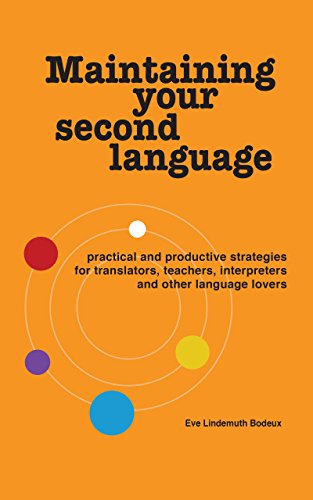
“The big ‘secret’ to improving second language skills is practice.” Eve Lindemuth Bodeux (p. 9)
I became in love with this book from the very first page. The author, Eve Lindemuth Bodeux is an experienced second language user and the content is predominantly based on her own experience. This, I think, is what makes the book so special. As a reader, you want to implement many ideas and tips immediately, as you feel truly inspired by the strategies and techniques presented by Eve Lindemuth Bodeux.
I would need to re-write the whole content to praise it enough, but instead, I am going to introduce the book by one of its first chapters: ‘Define Your Goals’. I think it is important to know why we want to improve our language skills, what we want to achieve, what learning journey we will follow and how much time and energy will be involved in achieving our goals. I have answered the suggested-by-the-author questions for my two languages: Czech and French. It is only the beginning of this fascinating journey of maintaining and improving my language skills, but I have already started working on my Czech and French by watching films, reading out loud and having language exchange meet-ups.
Maintaining your second language is a practical and approachable guidebook for any second-language user, linguist, tutor, translator or language enthusiast. As enthusiastic as I sound I cannot recommend this book enough!
If you know more than one language, how do you maintain your second language skills? What is your favourite activity? Please share your tips in the comments below.
[All quotations and mentions come from Eve Lindemuth Bodeux, Maintaining Your Second Language, Spectacle Book Press, 2016.]
I decided to fulfil my dream of visiting the British sub-tropical archipelago, the Isles of Scilly, located around 30 miles off the coast of Cornwall. You can read more about my travelling experience here and today I want to share with you what inspired me to visit the Isles and what reading souvenirs I brought back home.
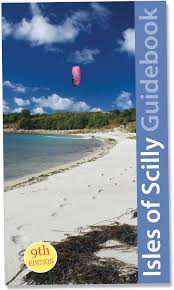
Isles of Scilly Guidebook
Essential. I walked everywhere with this guidebook. I had an older edition I had bought in a charity shop which was thinner than the more updated ones. If you want to purchase the latest publication, you can do so on the ferry Scillonian III or on the Isles.
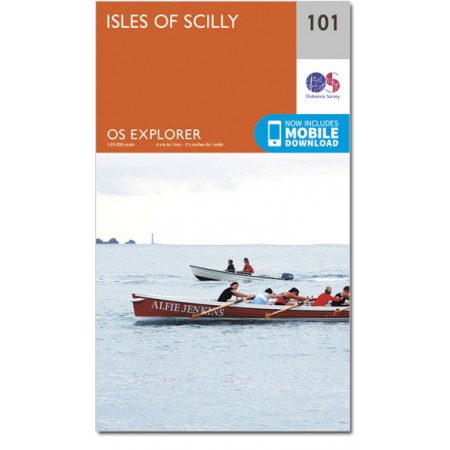
OS Explorer Isles of Scilly (101)
Additional touch. To be honest, I did not use the OS map that much, the above guidebook was all I needed when visiting the Isles.
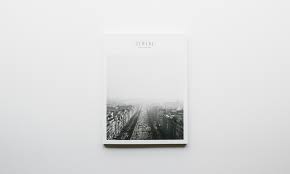
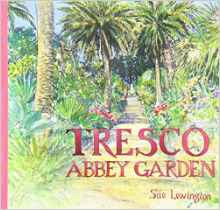
Cereal Vol. 5
Inspiring. Tresco Abbey Garden, birds, photo essay. Beautiful.
The Rough Guide to Devon & Cornwall
Practical. There is a chapter devoted to the Isles of Scilly worth reading, but I would not carry it to the Isles.
Drawings by Sue Lewington
Artistic. I bought two books of her drawings, A Week on Scilly and Sketches of Scilly. Sue lived on St. Martin’s for nearly 8 years. You can easily get her drawings on the Isles, too.
Times Remembered. A Scillonian’s Story by Gladys Perkins
Local history. I bought a memorial written by a Scillonian, Gladys Perkins after visiting St. Martin’s Island. The book was advertised in the windows of most houses on St. Martin’s, since the author was born and is still living on this very Island!
Do you have any favourite guidebooks or fiction writing on the Scilly Isles? Please share your recommendations in the comments below.
I enjoy reading and learning new interesting (arte-)facts about Cornwall. Even though I try to pack my days with as many steps to walk and as many places to visit as possible, there is always time for reading and time to discover new publications on this topic. Below are my essentials:
Walking
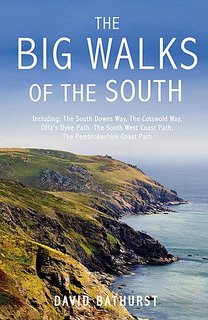
I am usually equipped with OS maps which help me to locate myself, measure distances, or check if a beach disappears under a high tide. I find them very useful, but I also follow my own desires if I find an interesting path or if I just go for a walk without a precise destination in mind. Many years ago in a local charity bookshop I bought the walking guidebook called The Big Walks of the South by David Bathurst. Each path (the book includes The South West Coast Path, The Cotswold Way, and The Pembrokeshire Coast Path amongst others) is divided into manageable shorter walks and described with great precision. There are also mentions of places worth visiting. I rarely carry it with me, but I often read the relevant section before leaving home.
Sea + Food + Sleep
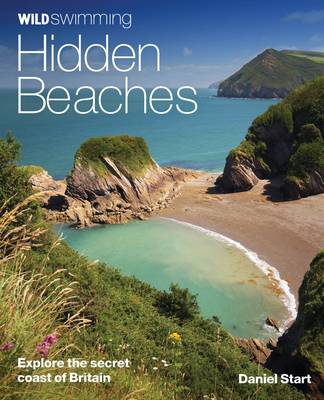
Cornwall is the land of many beautiful and secret beaches which I would not have been fortunate enough to discover without these two guidebooks: Wild Swimming. Explore The Secret Coastof Britain by Daniel Start and Wild Guide. Devon, Cornwall and the South West by Daniel Start, Tania Pascoe and Jo Keeping. The latter can also take you on a voyage of discovery of hidden places, local food and campsites. Both guidebooks are very easy to follow and contain many beautiful photos, maps, road directions and short descriptions. Even though they are quite heavy to carry, they are two of my most useful essentials when it comes to travelling to Cornwall.
Art + Science
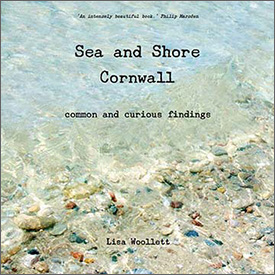
My most recent discovery is Sea and Shore Cornwall. Common and Curious Findings by Lisa Woollett. The book combines science and art and the result is breathtaking. There are beautiful descriptions, poems, Cornish words, micro- and macro-photos. I enjoy reading its inspiring content on the beach (and trying to identify some of my findings!) and then looking at its lovely pictures when I get home. Here is one of my favourite discoveries/quotations from the book:
“equinoctial tides
If we exclude the influence of the winds, the biggest tides of the year come after the full and new moons closest to the spring and autumn equinoxes. There are times when the Earth is the closest to the sun and so the combined pull of sun and moon together is strongest. They are known as equinoctial tides”
[Lisa Woollett, Sea and Shore Cornwall. Common and Curious Findings, Zart Books, 2014, p. 74.]
You may remember our blog post from a few weeks ago on how to improve your listening comprehension skills in a new language. This week we give you more tips on how to optimise your language learning – this time with advice on how to develop your reading in another language. Whether you’re choosing what to eat at a restaurant, poring over a newspaper, or following directions on a map, reading is a big part of using your target language. Working on your reading skills can also help you develop your writing as you learn about written constructions. Here are a few ideas to help you learn.
Read a Lot
Read anything you can get your hands on in your chosen language. Try to read at least one thing in the language you are learning every day. The more you read it, the more familiar the language will become and the easier reading will be. Reading will help you develop background knowledge about the culture you are studying too, which will help your understanding as well. You can also read about the culture in your own language, so it becomes familiar to you.
Choose Materials You Find Interesting
You can choose a text type you are familiar with, through your work or hobbies, and read an example in your chosen language, such as a magazine article on motorbikes or a recipe for a typical dish from the country where they speak the language you are learning. You will know what kind of words will be used, so you will be comfortable with the task. Choose things you would like to read in your native language. Don’t read things that are boring just because you think you should – it will put you off! Pick your favourite novel and read the translation in the language you are learning. You might like to try graded readers as well, as the structures are adapted to learners of the language but they pitch the story to adults rather than children so it is not boring for adult learners. Reading for pleasure can help your learning immensely – it is not the same as using a textbook which (let’s be honest) can be a bit dry sometimes.
Develop Your Vocabulary – Gradually
The good thing about reading is that you can control how fast you learn. You can give yourself time to think.
When you first approach a text, read for the gist – identify words you know and work out the general subject. Look up a few words if you are really stuck on them but don’t dwell on how many words you don’t know and don’t look up all the unfamiliar words you read – it will slow you down. Instead, underline them to look up later. Remember, you will be able to understand a lot of the text even if you don’t understand every word. You can look up the words you underlined when you finish reading. You can always read the text again once you’ve done that. As you look up words, build lists of vocabulary by theme. For example, list everything you find about cooking, sports, the weather or politics. If you find a verb, look up nouns that go with it, and adjectives. For example: ‘compter’ in French means ‘to count’, ‘comptable’ is ‘accountant’ and ‘comptabilité’ means ‘accounting’. In Italian, ‘rabbia’ is ‘anger’, ‘arrabbiarsi’ is ‘to get angry’ and ‘arrabiato’ is ‘angry’. Most languages will allow you to do this exercise! You can also find lists of vocabulary to learn on the internet, such as the 1000 words challenge (http://www.speaktothefuture.org/1000-words-challenge/). Look up synonyms and antonyms of the words you learn to build your vocabulary even more. If you are a visual learner, draw pictures associated with the words you are learning to help you remember them. Repeat the words as much as you can so they stick in your head.
Of course, one thing to remember is that you don’t read just in order to learn words. If you read a book you are interested in, you will learn words in context and be more likely to remember them anyway.
Give Yourself Different Reading Tasks
Try different reading tasks to build your ease of reading. You can time how long it takes you to read a text a few times – you will see how you get faster as your fluency increases. You can decide to read fast or slow. You can read a text aloud (this will also help with your pronunciation), in a reading group or in a pair (meet up with someone from your class!) Come back to texts you have already read to see how much more you understand the second time round! Listen to the text you are reading – an audiobook or a radio show with a transcript, for example – to hear how native speakers pronounce the words and what the reading aloud style is like in your chosen language.
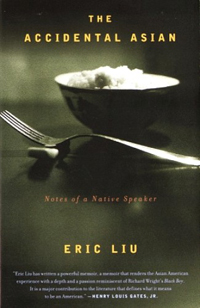
Eric Liu is a monolingual American whose Chinese parents emigrated to the USA and lived there for the rest of their lives. In Liu’s memoir, The Accidental Asian, he presents a series of essays on ethnic identity, assimilation and “Chinese-ness ”. He chose topics that are particularly close to him, to his experience and to his unique family and life situation.
I found the extracts devoted to the Chinese language really fascinating. Eric Liu is not bilingual; he speaks and understands some Chinese, but not fluently. In fact, he expresses his surprise in the book at how little he could understand his Chinese grandmother, Po-Po. We also learn that he is unable to read a Chinese memorial book about his father’s life. I suppose his complete assimilation had its price: he lost this common skill binding him to his family and ancestors.
I would definitely recommend this book to any parent who is hesitating as to whether to raise their child multilingually and also to anyone who is interested in multilingualism, multiculturalism and “Chinese-ness”.