Tag Archive: Teaching

October 10, 2018

Book review: Teach like Finland. 33 Simple Strategies for Joyful Classrooms by Timothy D. Walker

Once, I walked into [the] first grade classroom at my Helsinki school, and I found tiny children with real needles in their hands. It was especially scary, because I couldn’t find [the teacher] initially. Timothy D. Walker

Flow is being completely involved in an activity for its own sake. The ego falls away. Time flies. Every action, movement, and thought follows inevitably from the previous one, like playing jazz. Mihaly Csikszentmihalyi

In 2001, Finland shocked the world when its pupils achieved the highest scores on the Programme for International Student Assessment (PISA), a set of tests evaluating critical-thinking skills in maths, science and reading. What was their secret? – I wanted to know. My query lead me to a book by Timothy Walker, Teach like Finland, where he walks the readers through the Finnish schooling system from an insider’s perspective, him being a teacher in Finland.

When we read the book, we come across many surprising facts, e.g. in Finland, pupils have frequent breaks, short school days, light homework, long holidays and little standardised testing. We also learn that the education system finds it important to invest in certain values, such as well-being (recharging, physical activity, simplicity, playing outside/in the wild), belonging (building strong relationships with the pupils, having fun and celebrating with the pupils, banishing bullying), autonomy (valuing freedom, getting to know pupils’ passions, planning with the students, demanding responsibility), mastery (the importance of teaching the essentials, leveraging technology, implementing some music elements, preparing summative assessments, discussing grades with the pupils), mind-set (enjoying the teaching process and then the holiday time, collaborating with other teachers, welcoming experts). The last two sub-chapters talk about time-off (vacate on vacation) and about joy of teaching, and I find both of those topics essential if one wants to implement any of the suggested strategies. Taking time off to recharge is crucial if we want to be more productive and enjoy our work, and joy of teaching (learning) means that we’re not only passionate about what we’re doing, but we actually enjoy the process of teaching (learning), which makes us happy.

I think the focus in Finnish schools is more on developing different life skills (e.g. mindfulness, interpersonal relationships and self-awareness) than concentrating only on their academic achievements. At the same time, this education system is deeply rooted in Finnish culture and heritage, which may mean that implementing it in another country may not be as successful (worth checking?). However, through making small changes and amending our teaching styles or our approaches to teaching, we may experiment to see if the Finnish approach (or parts of it) can work in our teaching/learning setting.

The book is a fascinating publication for those who are involved in the education system: teachers, scholars, policy makers… but also for parents, if they wish to learn more about the Finnish teaching and learning style.

Have you read any interesting publications on the Finnish education system or other countries’ education systems? Please let me know in the comments below.

Kinga Macalla

September 12, 2018

On teaching: Visual media in modern textbooks

In modern times, as a consequence of advertising and the invention of the Internet, we are often exposed to visual media, such as images, videos, infographic designs, emoji, colours or fonts.

If we compare two textbooks, one published in 1978 and one in 2010, the difference will be visible immediately, the latter is colourful, with photos, drawings, various tables and colour-coded grammar points, and it has CDs attached to it. The same will happen when we compare historical and modern dictionaries, magazines or newspapers.

When working with textbooks or newspapers, it’s becoming important to analyse (when preparing for lessons and with students) not only words, but also other modes, images, info-graphs and designs. Why is it so important? All those modes can have various functions and each mode can be significant, even if its presentation is marginal. The multimodal (= all different modes) approach can lead to questioning the status quo, to discussions on ideologies, gender inequalities, difficult historical events or globalisation and, consequently to improving students’ critical thinking and analytical skills. Multimodal analysis can also influence teachers’ choice of learning material for their students and language tutors can be more aware of the hidden meaning within the multimodal texts. Multimodality can also be a tool to inspire students to create or engage in multimodal activities that can potentially allow students to question their linguistic identities.

The above gives us some indication as to the importance of interpreting not only the verbal discourse, but also the visual. This can be applied to all teaching material, textbooks, online resources, as well as paper magazines or newspapers.

What’s your experience in conducing multimodal analysis of your teaching material? Let me know in the comments below.

Kinga Macalla

January 10, 2018

Language teaching: What teaching resources are available for British Business English?

When I used to work as an English teacher, I always had a problem finding good teaching resources for my lessons in British English for business. The textbooks I had were written in American English which didn’t make my work any easier 😉

I recently came across the following titles: Market Leader series for A1-C2 levels (with Financial Times content as advertised on their website) and Business Benchmark (Cambridge University Press) which is a three-level Business English course for business exams or for general business English courses. There are also many articles, press releases, reports, blog posts or online brochures available on the website of London Chambers of Commerce and Industry.

Do you teach business English or English for specific purposes? What teaching resources do you use? Please let me know in the comments below.

Written by Kinga Macalla

November 22, 2017

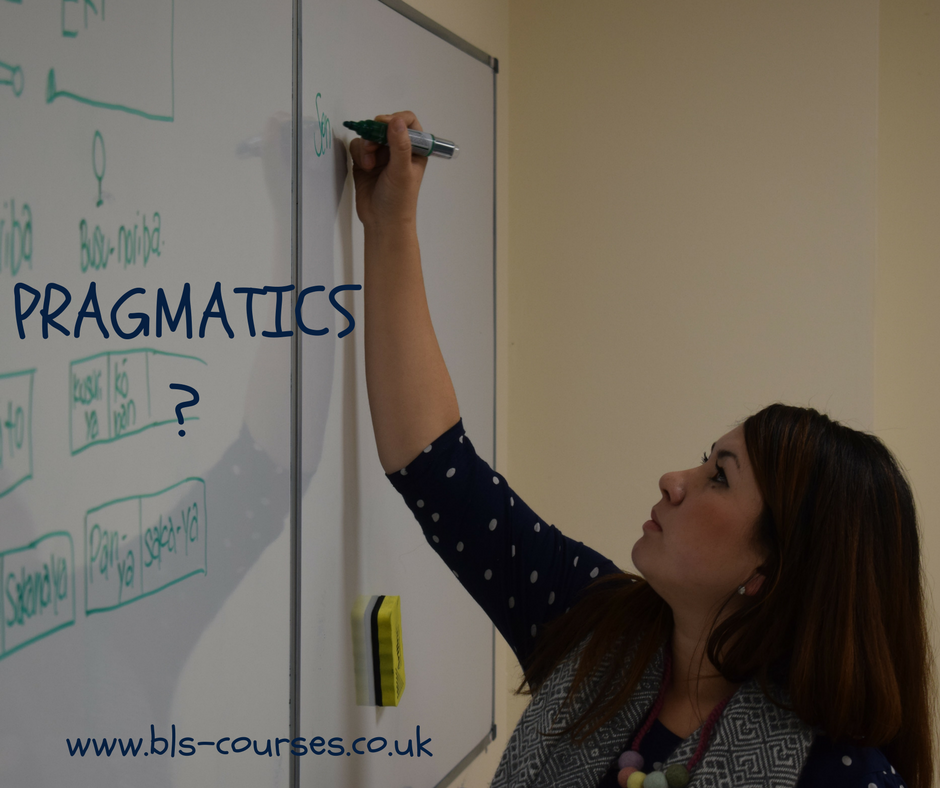
Language teaching: What is pragmatics and why is it important when teaching languages?

What is pragmatics?

Pragmatics is a language in use, or even better, a meaning in use (the actual use of the language). We need pragmatics to understand how language is used in a specific context and to be able to use it appropriately.

Why is pragmatics important when teaching?

Pragmatics is a set of skills which allow us to know what to say, to whom and how to communicate ones message in a specific context (what, how, whom, and when). By teaching pragmatic language we teach our students how to use the language appropriately, for example when a student learning English is asked “how are you?” in England, do they need to provide a full and detailed description of their recent life or is it enough to shortly answer “All right” or “Not bad”? It seems obvious that the latter is correct, right? Hmm… it depends on the context and who your interlocutor is: if you are a doctor in hospital, your patient may provide a more detailed response which is appropriate given the circumstances. Another example of how to use English appropriately might be politeness, such as when to use “please” in English.

How to teach pragmatic language:

Firstly, I would start with observing and analysing the language that you, your friends and your colleagues use, why you use certain phrases in one context, how you understand hidden meanings and when it is appropriate to use certain phrases when talking to your manager at work. Secondly, you’ll need authentic resources, from podcasts and radio programmes to newspaper articles and documentary films. Thirdly, you’ll need time to find, prepare and make those resources accessible, providing the right context for the topic introduced, e.g. grammar.

I hope I have inspired you to look at teaching from a different perspective. If you’re interested in learning more about pragmatics, I would recommend this article: Paltridge, B. 2012. Discourse and Pragmatics. Chapter 3 in Discourse Analysis: An Introduction (2nd Edition). London: Bloomsbury.

Please let me know in the comments below if you teach pragmatic language and how you prepare your language lessons.

Written by Kinga Macalla

April 19, 2017

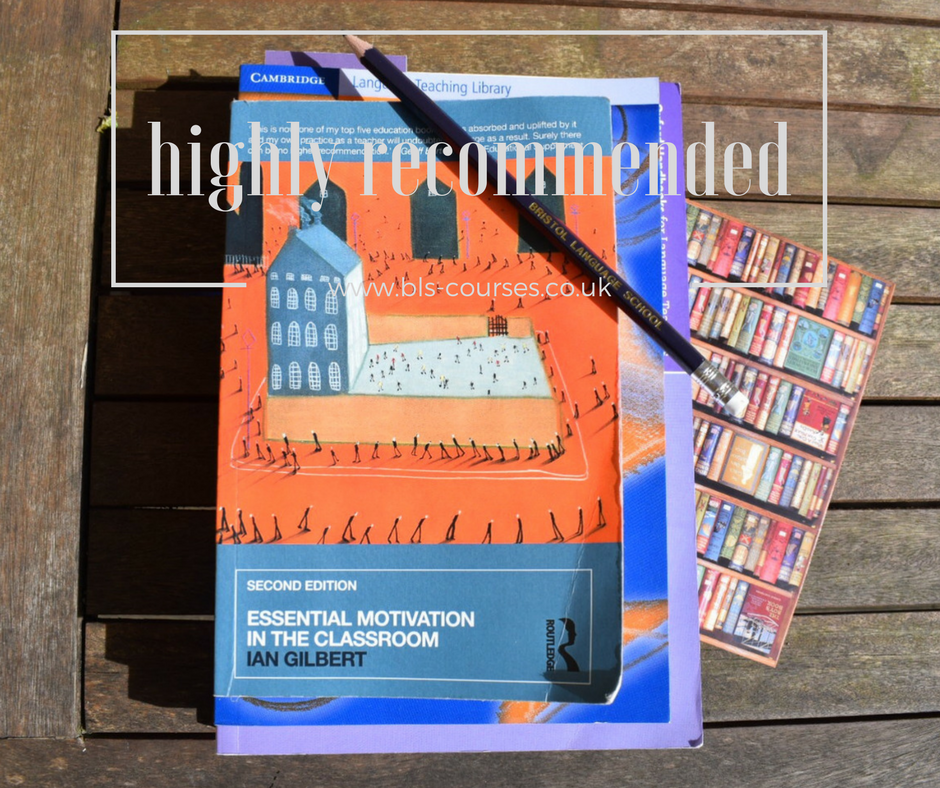
Book Review: Essential Motivation in the Classroom by Ian Gilbert

book review-essential motivation 1

This book is AMAZING! It’s fascinating, thought-provoking, funny and practical. If you want to read one book on motivation, this is the one! It’s a must-read for teachers and students, but I also recommend it for parents, business people, coaches and trainers. It is a guidebook of almost 200 pages into the world of motivation written from many different perspectives. Ian Gilbert talks about topics such as the reasons for being motivated, enthusiasm, IQ, emotional intelligence, MindMaps, learning strategies, lesson planning, delayed gratification, hope, learning through failure, the power of the smile and many more. I love the way this book is written and I know I’m going to read it again and refer to it for quotations and advice.

13-24.04.17

Below, I’ve included some interesting activities for language teachers (see p. 115-9):

  1. ‘See the learning’ strategies: use visuals such as highlighter pens, posters, pictures, videos; ask your students to use cameras on their phones, etc.
  2. ‘Hear the learning’ strategies: ask your students to record their learning on their phone and listen to the recording before going to sleep and after waking up; use music in the classroom, etc.
  3. ‘Do the learning’ strategies: use physical activities in your lessons, ask your students to walk or stand while they’re learning or act out their learning, etc.

Do you have a favourite book on motivation? Please share your recommendations in the comments below.

Written by Kinga Macalla

March 1, 2017

Career Advice: Am I a Potential Language Teacher?

If you love languages or have enjoyed learning a foreign language, you might want to share that enthusiasm and enjoyment with others by training to be a language teacher. You can teach languages at a variety of levels.  You can teach primary or secondary school children, university students or business employees. You can also teach adults who want to learn for fun.  Learning languages broadens learners’ horizons, fosters their tolerance and improves their communication skills.  Language skills also stand learners in good stead when they are applying for higher education or jobs. Globalisation has made learning languages more useful today than it has ever been.  You can help people be a part of that through teaching languages.

career advice is langugae teaching for me

What is teaching languages like as a career?

Language teachers help students learn to converse, read, write and even study in a new language. As well as teaching students about the structure of language (grammar, vocabulary), language teachers may teach students about culture and society in the countries where the language(s) they teach are spoken. They may teach whole courses in a different language. They will use a variety of (often self-produced) teaching resources, various teaching methods and may teach small or large groups.  Language teachers often set up or supervise foreign language clubs and other language-related extra-curricular activities such as trips abroad. They may also have to do admin work.

Teaching methods include group work, discussions, audio-visual materials, role-play and games. Teachers enable students to use language in real-life situations like using public transport, eating at a restaurant, making friends and giving their opinion on a topic. Teachers need to help students get the balance right between ‘fluency’ (the ability to make yourself understood, perhaps with some mistakes) and ‘accuracy’ (using correct grammar, expressions or vocabulary). The most popular languages taught in UK schools are Welsh (in Wales), French, German and Spanish, but others are taught too, depending on the school. These include Arabic, Bengali, Cantonese, Italian, Mandarin, Panjabi, Russian and Urdu.

Depending on which type of educational establishment you work in, as a language teacher you could have a full-time job with contact hours throughout the day or you could teach during the evening.  You would mainly find evening work if you teach at an adult-learning centre or private language school.  Language teachers earn relatively competitive salaries.  Teachers in UK state schools are paid according to their qualifications, experience and responsibilities.  Some teachers supplement their income by teaching privately, marking exams or writing textbooks. They can be employed by a school or work freelance for different schools or businesses.

Outside contact time (teaching in lessons), teachers have lesson preparation time, time for marking pupils’ and students’ work and time for assessing and evaluating their performance through designing tests and writing reports on their progress.  This includes meeting pupils’ parents at parents evenings.

Is teaching languages a career for me?

Teaching languages can be a demanding job but it can also be rewarding.  It is good for people who like personal interaction in their careers.  It can also be flexible, depending on the type of teaching establishment.  You may get the opportunity to teach in other countries.  You could even teach languages online, such as here.

School teachers in the UK teach every weekday for 39 weeks of the year.  Because of the amount of marking required, secondary school teaching has quite long hours and marking can take up some of teachers’ holiday time or evenings and weekends.  Language teachers who work in private schools or at a language agency have variable hours and can decide their own schedule.  Depending on whether they work in a school or privately, teachers may teach in classrooms, in their homes or in cafes or community centres.

While language teachers must have language and teaching skills and certification to prove that, they may also need certain personality traits.  Patience, creativity and ICT skills help produce a productive learning environment for language learners.  Enthusiasm, energy and confidence can make lessons interesting for learners.  Organisational and communication skills can make the job easier.  Of course, it is also good to enjoy sharing knowledge and have an interest in language and culture in general as well as in the specific language you are teaching.

At work, you will be required to conform to school regulations and performance objectives, as well as national curriculum and examination requirements.  You may have to deal with challenging behaviour from students.  As a general rule, you need the authority to direct a group of people.  Teaching adults can be demanding but teaching children is generally more stressful.  You will need to complete a Disclosure and Barring Service (DBS) check if you will be working with children or vulnerable adults.  You may also need to keep track of your finances if you are a freelance teacher.

How do I train to be a language teacher?

If you want to teach languages, you are usually required either to be a native speaker of the language you want to teach or to have a degree in it.  This is because you need to be competent in the language as well as having teaching skills.  You can also prepare to be a language teacher by spending time in countries that speak the language you wish to teach. You could do this by working, volunteering, studying or traveling in a country.  Doing teacher training on the job or working with groups of people can help develop your teaching skills.  Some employment and skills fairs have information about training to teach.

In the UK, if you want to teach languages in state schools, you usually have to gain Qualified Teacher Status through initial teacher training.  There are a few ways to do this.  One way is to do a degree and then do a PGCE (Postgraduate Certificate in Education). Courses are usually one-year full-time and two years part-time.  You could get a bursary or scholarship to do this.  After their PGCE, newly qualified teachers must complete three terms of teaching, usually within one school year.  Some PGCE courses are available as flexible learning.  For example, you could do distance learning with some teaching practice and campus study.  The other way of qualifying is to train in a school after your degree instead of doing a PGCE.  These employment-based routes, where you earn a salary, include School Direct, school-centred initial teacher training and Teach First.

If you don’t have a language degree, or need to refresh your knowledge, you could complete a subject knowledge enhancement course before you start your teacher training.  Once you have started teaching, you will also do continuous professional development training throughout your career.

How do I get a job as a language teacher?

Private language agencies and schools are the biggest employers of language teachers.  You can check local schools listings and contact them directly to see if they have any vacancies.  State school vacancies are also advertised by local authorities and in the local and national press, including The Guardian and The Times Educational Supplement.  They are also available online, such as on www.jobs.ac.uk and other job sites. There are also job boards, such as eTeach.

Where can I find out more?

More information on becoming a language teacher is available from the DfE Get into Teaching website, the Association for Language Learning, UCAS Teacher Training, Careers Wales, My Job Search and PlanIt Plus.  This blog follows a graduate who decided to retrain as a language teacher and talks about the experience of being a language teacher.  It may help you decide whether you should do the same.

Good luck!

Written by Suzannah Young

March 30, 2016

Language Learning Techniques – How to Develop your Listening Comprehension

We hope you enjoyed our Language Learning experience posts over the past few weeks.

In the posts that follow, we are going to look at different techniques to develop your skills in your chosen language in four different areas: listening, speaking, reading and writing.

This posts gives you a few tips on how to develop your listening comprehension skills. Like any other skill, listening can be developed with practice. Good listening skills also help you improve your speaking skills.

Remember that there are only a few situations when you need to listen hard to and understand every word – like an announcement telling you when your flight is at the airport. Most of the time it’s not necessary to understand everything, so don’t worry if you don’t catch every word.

Another thing to remember is that if you are speaking to someone, you can ask them to repeat something. This is a normal part of speech so will not disrupt the conversation. The important thing to do when listening is…relax (but be active)!

listening skills

Learn Listening By…Listening

A few posts ago, we recommended you immerse yourself in the language you are learning in order to become more familiar with it. So the first thing to do to develop your listening skills is to listen to your chosen language as much as you possibly can. You will be surprised how much you pick up.

You can chose to have the sound on in the background while you are doing something else so as to get used to how the language sounds or you can take part in active listening. The two tasks have different goals.

You can find material to help you develop your listening skills on the radio, on TV or in audio books.

Preparing for Listening

In most conversations you have or situations you experience, you usually know more or less what is going to be talked about, so you know what kinds of words are going to be used. Approach listening exercises by preparing for what you are about to hear: make decisions about what to listen for and what to focus attention on while listening.

Ambient Listening

Listen to the radio thorough your headphones while you are walking or listen to music in your chosen language while you are cooking, doing the housework or relaxing. This will mean you get used to hearing the sounds of the language. It also means that you will not feel stressed when it comes to active listening because you will already be familiar with the sounds of the language.

It is important that this is not your only listening activity. The trick is to combine different types of listening so that you make progress.

Active Listening

There are a number of tasks you can do to practice listening actively – that means listening with a purpose, focusing your attention and listening out for specific details. Active listening requires you to take action based on what you have heard.

  1. Listen for one element in speech patterns rather than listening for meaning: listen for sounds, for tones, for melody, for stress and so on. You can then practise applying these patterns to your speaking.
  2. Pick out as many words as you can without worrying about understanding everything. The more you do this, the more words you will understand each time.
  3. Decide on a topic and try to pick out key words to do with that topic. Write them down so you have a list of topic-specific vocabulary to refer to.
  4. Try to transcribe what you hear. You can pause the audio and go back if you miss something or need to listen to it again. Many online radio programmes have transcripts that you can check yours against.
  5. Read the transcript whilst listening to a radio programme. That way you will be able to hear exactly what the speakers are saying.
  6. Listen to music and read the lyrics. There are lots of music videos online with lyrics that you can read along to.
  7. Listen to the same segment again and again to see how much more you understand each time.

Resources

You can find a lot of listening resources on the internet. If you search for the name of the language you are learning + ‘radio’, you will more than likely be given a list of radio stations you can choose from. Some of the online radio stations have tailored listening exercises for language learners, such as Radio France Internationale (scroll down to ‘Apprendre le français’ or see the Journal en français facile (News Report in Easy French) or Deutsche Welle.

A Word on Vocabulary

In order to develop your listening skills, it is also important that you keep up your on-paper study of vocabulary and grammar too. This will mean you will recognise more of the words in the audio you are listening to.

And, most importantly, have fun!

Written by Suzannah Young

June 14, 2014

Welcome to Bristol Languages!

Welcome to Bristol Languages, a blog run by language enthusiasts. We are linguists: translators, interpreters, language tutors, travellers, language learners and university students who decided to embark upon this fascinating journey of writing a blog, as we want to understand better the genius that each language represents (Humboldt) and explore the different world views that every language expresses (Sapir-Whorf).

We want to share with you our interests and by publishing here, we want to inform you about interesting language events and worth-reading books, give you practical learning tips and conduct interviews with passionate linguists.
We hope you will find our blog interesting. Enjoy reading!
(Bristol) Languages Enthusiasts
Pencils