Tag Archive: book review

December 10, 2025

Book review: My winter reading list (winter 2025/26)

I read these books over the last few months. It’s an eclectic choice, but I think they might be perfect reading companions for the long winter evenings, or can be given as a Christmas gift for your loved one(s). The list was supposed to be longer with another three books, but I only managed to read these two. Also, there is my book review of Fluent Forever on the school’s blog. I hope to add the other three books soon and will update you about it.

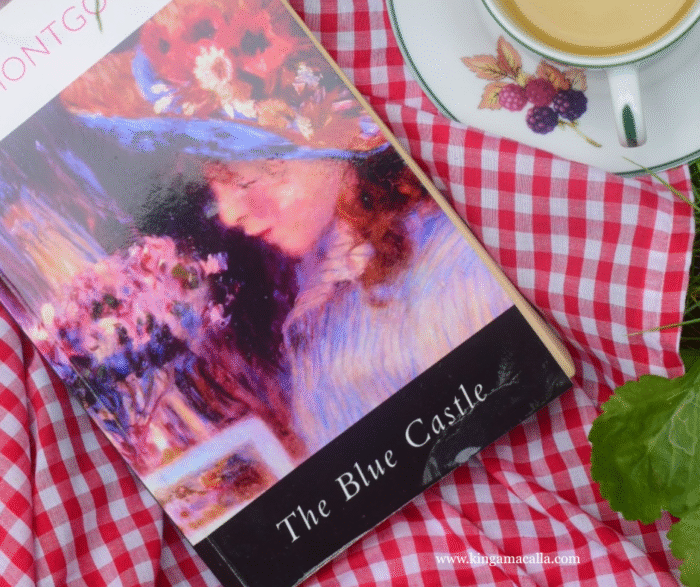
The Blue Castle by L. M. Montgomery

If you have read Anne of Green Gables, you’ll love this book too. It takes us back in time, but the topics it touches (to some extent) are as relevant today as they were 10 decades ago. Uneasy family relationships, staying true to oneself, expressing one’s own thoughts and feelings, choosing to live to one’s own values. But, at the same time, it’s a heart-warming story, romantic and dreamy. I read it in a couple of evenings, as I was so curious to know how it all ends. A beautiful story.     

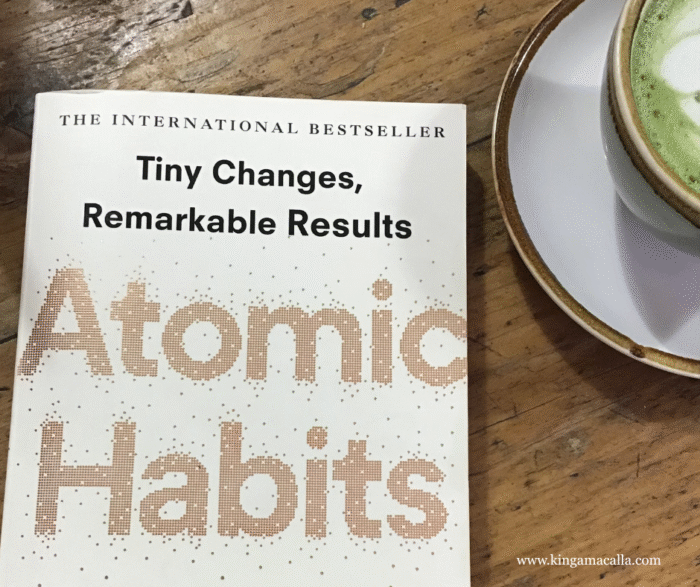
Atomic Habits by James Clear

“The greatest threat to success is not failure but boredom.” James Clear

When I ordered Atomic Habits at the library, I was number 146 in a long list of waiting readers, and eventually I got my copy after half a year. Once I read it, I understood why I had to wait so long: it’s a life-transforming read. Honestly, if you only read one book in 2026, let it be Atomic Habits. (Btw, last year I recommended Breath, have you read it?). Atomic Habits shows a different way of looking at motivation, goals and habits. I knew habits played an important role in our everyday life, but this book is solid proof of it. The book guides you through the process of building good habits and eliminating the bad ones. One of my favourite points is that you can start (very!) small. If you want to read books, start reading one page a day. That’s it! Just one page and see where it takes you after a while, especially when you start enjoying your short reads. And finally, a reminder if you progress too slowly: “Complaining about not achieving success despite working hard is like complaining about an ice cube not melting when you heated it from twenty-five to thirty-one degrees. Your work was not wasted, it is just being stored. All the action happens at thirty-two degrees.”

TBC…

October 22, 2025

Book review: What we read together bilingually in Polish and English (2025)

We read books in Polish and English and we have several of the same books in both languages, either because of available translations in those languages, or because we really enjoyed those stories. Sometimes it’s good to read the same story bilingually, to hear it in the languages we speak. For example, as an adult I read Harry Potter in three languages: in Polish, English and Czech. Reading the same book in translation gave me some context for another interpretation and the joy to understand it in more language(s). 

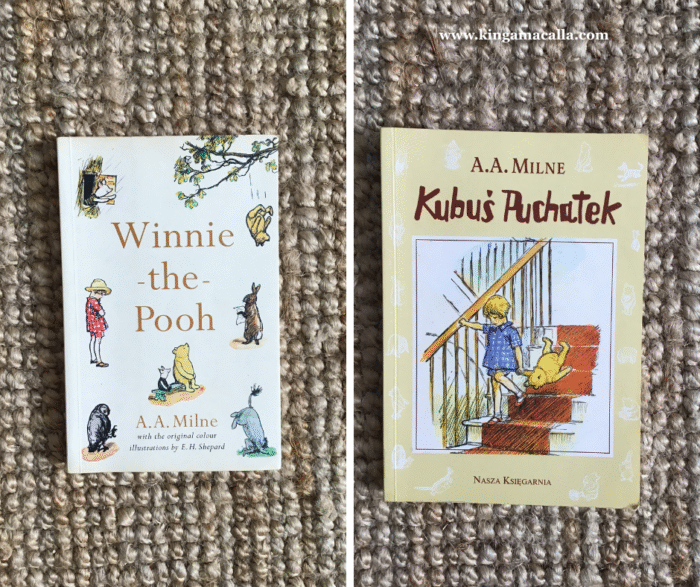
A.A.Milne Winnie-the-Pooh // A.A. Milne Kubuś Puchatek

(originally published in English)

This is a classic and it was one of the first books we had in two languages. We read it chapter after chapter in Polish and then in English. We later found some audio-recordings which we listened to, as well. The stories are charming, as if we’re allowed to enter a magic world of teddy bears.

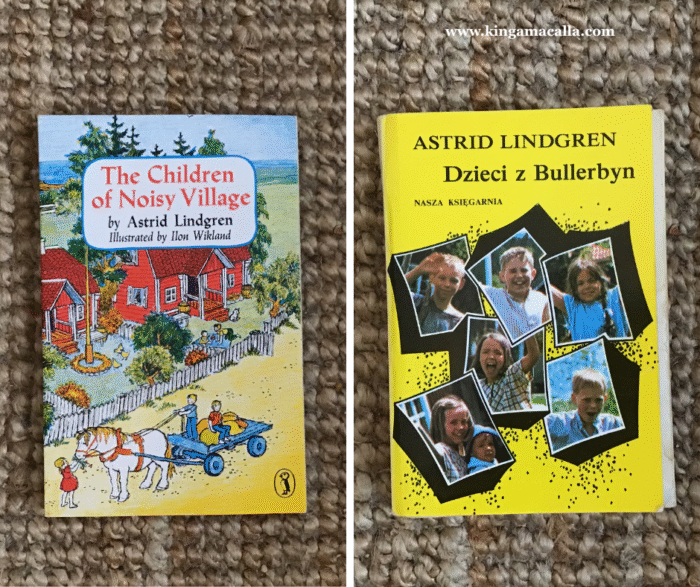
Astrid Lindgren The Children of Noisy Village // Astrid Lindgren Dzieci z Bullerbyn

(originally published in Swedish)

I read Astrid as a child and couldn’t wait to read those stories to my children. We love the noisy, courageous and joyful children who live together in a little village of Bullerby in Sweden.  They have a simple life which is full of little adventures, childhood play and happiness.

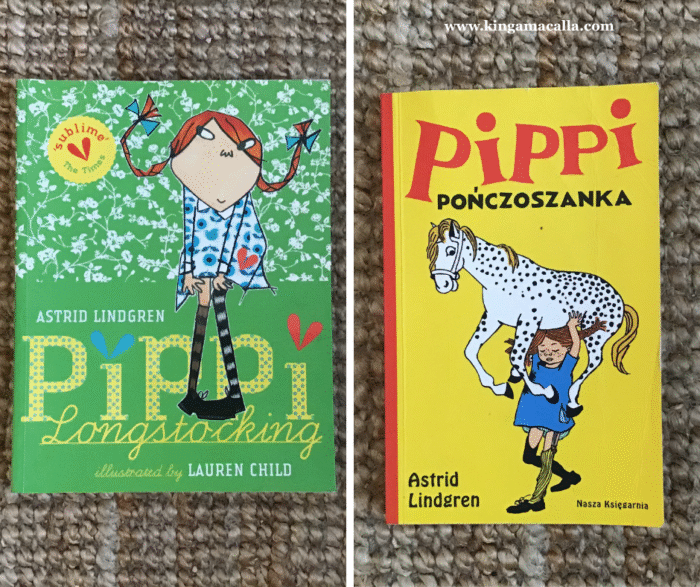
Astrid Lindgren Pipi Longstocking // Astrid Lindgren Pipi Puńczoszanka

(originally published in Swedish)

Pipi is a wonderful character who lives without her parents, with a horse and a monkey. Yes, she leads her life against the agreed way of doing things. Even though Pipi’s life is unusual, it’s also full of her kindness and generosity.

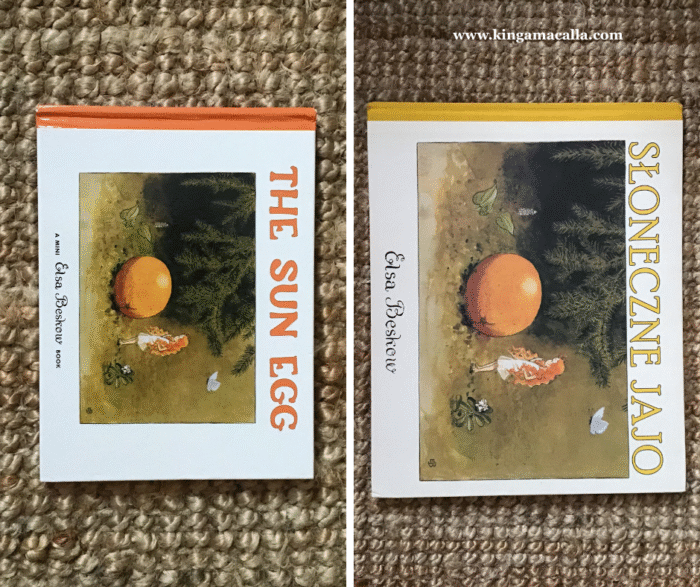
Elsa Beskow The Sun Egg / Elsa Beskow Słoneczne jajo

(originally published in Swedish)

This is one of the first books we read by Elsa Beskow, and we have this publication in Polish and in English. The Sun Egg is our summer read: it’s a short story about an elf who finds a ‘sun’s egg’ and together with forest animals, they try to find out what this round object actually is. Beautifully illustrated.

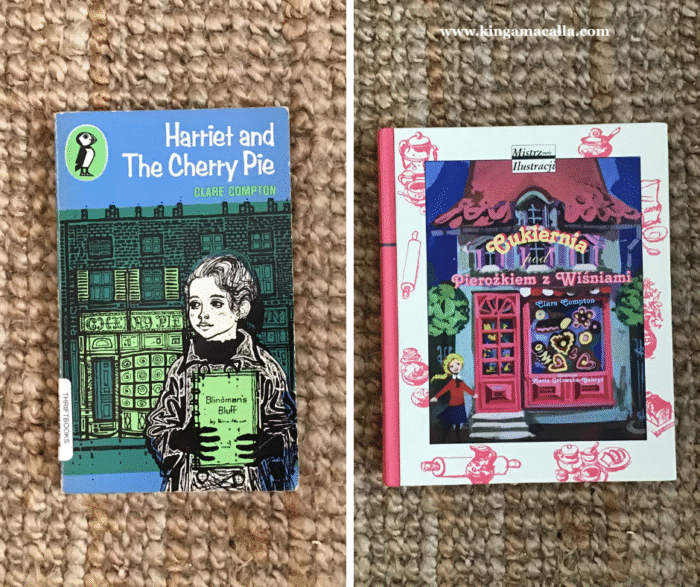
Clare Compton Harriet and the Cherry Pie // Clare Compton Cukiernia pod Pierożkiem z Wiśniami

(originally published in English)

We first found out about this novel as a Polish translation: we listened to an audiobook and then we read a book too. I then started searching for information about the author who actually turned out to be British–Clare’s real name was Hilda Hewett! Harriet and the Cherry Pie is a heart-warming story about an 11-year-old, Harriet, and her 6-year-old sister, Kitten. It’s a beautiful read, with some delicious recipes, like peppermint creams and chocolate crispies. It’s a shame that the book hasn’t been re-printed in English since 1968, and it’s only available second-hand.

Just to add that the Polish translation is absolutely scrumptious, as is the audio-recoding of the book.

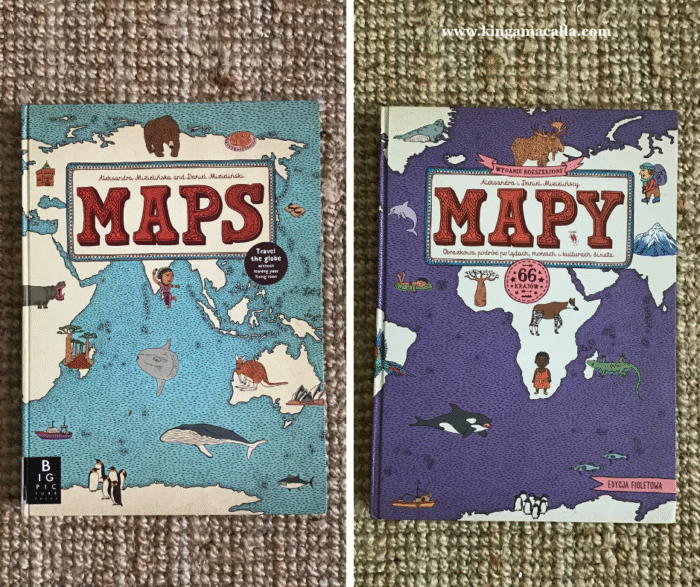
Aleksandra & Daniel Mizielińscy Maps // Aleksandra & Daniel Mizielińscy Mapy

(originally published in Polish)

This is a treat for children and adults. It’s beautifully illustrated and contains many useful and interesting facts about each country. You can go from country to country and your interest only grows, as you learn more about different countries, their food, nature, literature, sports, customs etc. Maps is a simple idea, but it is so cleverly executed!

I hope you’ll find some inspiration in the above reading list. Please comment below if you have read any of the above with your children and let me know about you or your children’s favourite bilingual books.
September 3, 2025

Book review: Creative Schools by Ken Robinson

[It’s a re-post from March 2021.]

When you teach a child something, you take away forever his chance of discovering it for himself. Jean Piaget

I read the book for the first time when I was doing my post-grad diploma in education. But now I’ve decided to return to this publication, especially since I became more involved in my daughters’ education.

The main message I took from this book is that education equals creativity. Education is an organic process (p. 41), because children are natural learners (p. 74). The learning process happens through play (p. 94) and it encourages mastery (p. 114).

The publication highlights some positive and inspirational stories and ideas about education, e.g. the world famous Finnish education system, Salmon Khan’s flipped classroom (p. 113) and teaching through and about the arts (p. 196).

Why read such publications? Because, I wouldn’t want learning and learners to be reduced to numbers in the future (p. 172) and I believe there might a more creative and organic approach to education.

Do you read books on education? What’s your most inspirational or favourite publication? Please let me know in the comments below.

December 11, 2024

Book review: Breath by James Nestor

“If I had to limit my advice on healthier living to just one tip, it would be simply to learn how to breathe better.” Andrew Weil

As we’re approaching the end of 2024, I think I’m brave to say that if there is one book you read in 2025, let it be Breath by James Nestor. For your health, well-being and overall sanity. Yes, I’m serious. I read it a few months ago, but waited for the right (aka free!) moment to put together this short review, as I wanted to recommend this book to you. I found this publication fascinating: from knowledge of the past, interesting experiments, scientific facts to practical advice. While reading the book I was becoming more and more aware of my own breath, and I slowly started re-discovering the beauty of breathing. To introduce any changes into my breathing practice sounded so simple, but in reality, it was and still is much more challenging. I’m not going to share more details about this book, as I don’t want to spoil the pleasure of reading it yourself, and discovering the story behind our own breath.

As I’m publishing my words in December, I’m taking this opportunity to wish you a wonderful and calm Christmas, and a most prosperous New Year, 2025! Thank you for reading my blog and let’s meet here in 2025!

With love, Kinga

May 22, 2024

Book Recommendations. Summer 2024 Edition.

Since being less present online, I have started reading more. I have collected a list of my favourite books over the last few months and here are my recommendations for summer 2024. You’re welcome to add them to your summer reading list 😉

It’s Going to Hurt by Adam Kay

It’s as funny as it is terrifying and sad. It’s written in the form of a diary by a doctor journaling his path as a junior up to the more senior positions. It has some interesting medical terms (for those loving words, me!), but overall the stories flow nicely and the language is approachable. It’s interesting to get to know some ins and outs and bests and worsts of being a medical doctor.

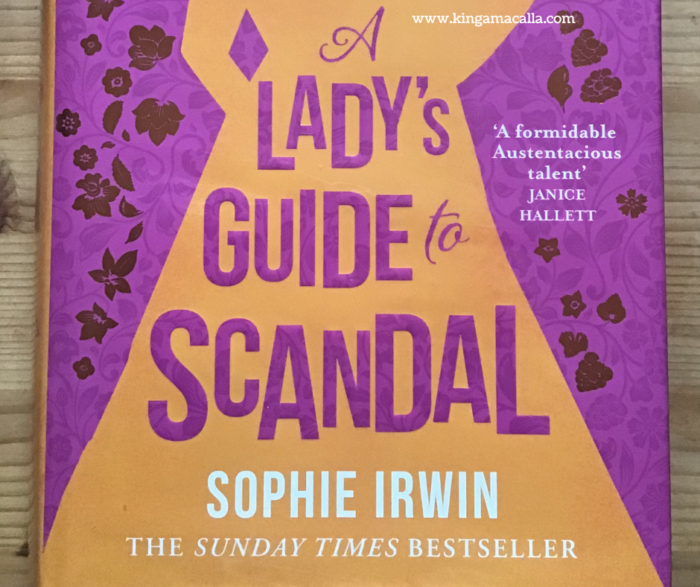
Lady’s Guide to Scandal by Sophie Irwin

The perfect summer read. Light, funny, gossipy and elegant. I couldn’t put the book down, was too curious to close it without turning a page to read just a bit more. I’ll need to read other books by Sophie Irwin.

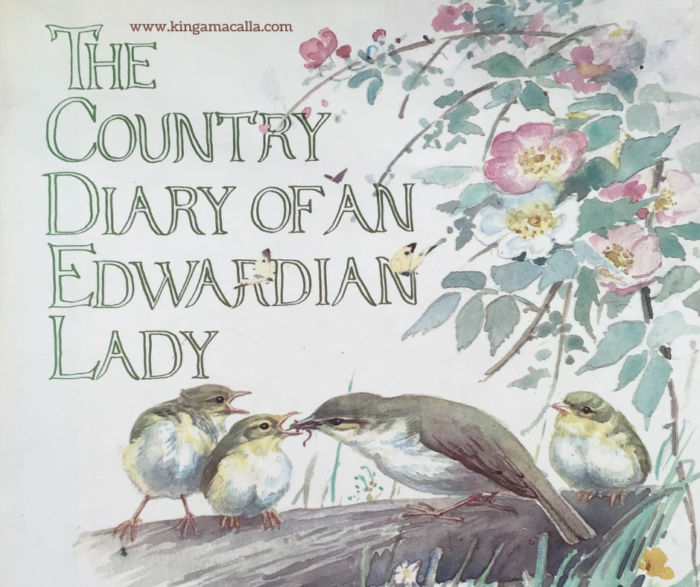
The Country Diary of an Edwardian Lady By Edith Holden

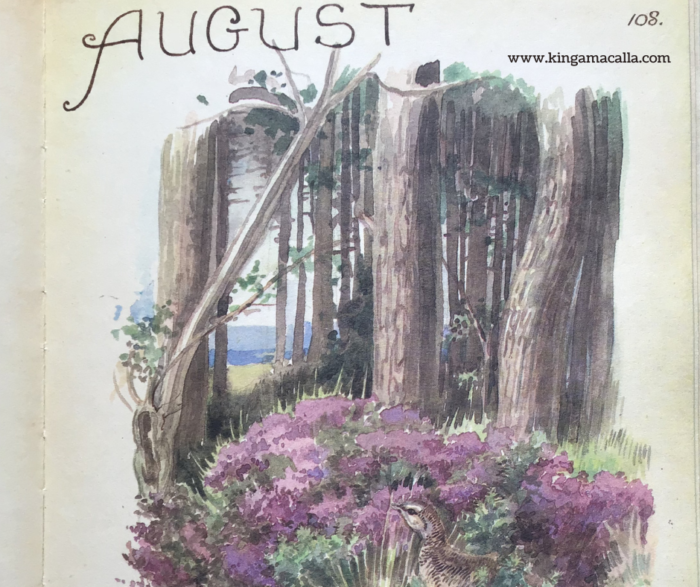
My copy (from the library) has drawings and hand-written journal entries. It’s a year-long journal with beautiful illustrations of trees, flowers, birds and insects. Each month has a short etymological explanation, days to note and month’s mottos, poems and the author’s nature diary. The richest months are in summer, so I recommend reading it now and getting some inspiration for long walks in nature.

What’s on your summer reading list this year? Please let me know in the comments below.

March 20, 2024

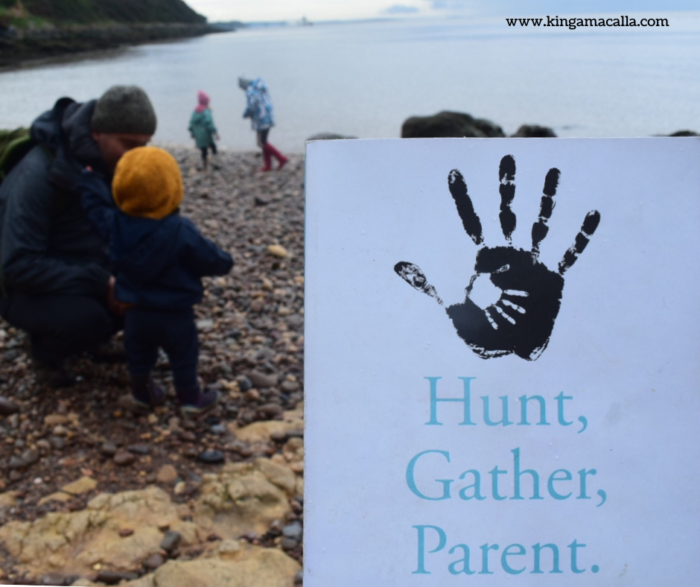
Book review: Hunt, Gather, Parent by Michaeleen Doucleff

I saw this book recommended on one of the parenting channels and for some reason, I felt it was going to be an interesting read. I wasn’t disappointed. In a way, it presents a sad picture, because it shows that something as natural as being a parent has become a struggle. These days, I have a feeling that many parents could relate to the author’s parenting struggles and the overwhelming feeling of helplessness. When reading Doucleff’s publication, I went back to my favourite books which I read years ago, e.g. to Jean Liedloff and The Continuum Concept. In the first chapter of The Continuum Concept, we read about the author’s reaction and how she felt shame by the fact that in the US, women feel inadequate bringing up their children, unless they read a book written by a strange male. [p. 14] The second book I went back to was Siblings without Rivalry by Adele Faber and Elaine Mazlish​​. In this publication, we find so many examples where adult parents still feel so much pain because of their own childhood and how they were raised.

Now, let’s go back to Hunt, Gather, Parent. Why had this book been written? As you can guess, because of the mother’s struggles and her difficult life where her beloved little daughter became her enemy. The author was so desperate to find a solution to her own parenting struggles that she decided to embark upon a mission to find the answer. She visited some hunter-gatherer cultures where parents build a relationship with their children based on cooperation, trust and personalised needs. [p. 7] She visited a Maya village in Mexico, an Inuit village of Kugaaruk in Canada and a Hadzabe village in Tanzania. With each visit, she made some inspiring observations which changed the way she parented herself. In the Maya community, she found the most flexible and cooperative children; in the Inuit community, it was the emotional intelligence of the parents and grandparents and finally; in the Hadzabe community, it was the autonomy and courage of the children.

The book also contains some wise words from members of the community. We read that:

“In Maya culture, there’s a belief that everybody has a purpose (…)” [p. 76]

“When you yell at children, they stop listening.” [p. 145]

“With the !Kung hunter-gatherers in southern Africa, the word for ‘learning’ and ‘teaching’ is the same (n!garo), and parents will often use the phrase ‘She’s teaching/learning herself’ while a child is trying to figure out how to do something. Why interrupt their learning?” [p. 252]

For me, one of the most beautiful stories was the peaceful birth story of the Inuit mum. I also enjoyed learning about a special word for a kiss for the Inuit children called a kunik; this is when you put your nose against the child’s cheek and sniff their skin. [p. 145] However, the element that I didn’t like or understand much was about parenting through scary stories (I need to research this more!).

The book definitely made me think about my own parenting style and the parenting styles present in Western culture. Have you read this book or a similar one? Please let me know in the comments below.

December 13, 2023

Book review: Don’t Worry by Shunmyō Masuno

If not now, when? [p. 73]

If you remember my book review of Zen: The Art of Simple Living, I mentioned in it that this book was my bedtime story. The same actually happened with another publication by Masuno. Don’t Worry was also my bedtime read, as it made me calm and positive before falling asleep. 

The book is divided into 5 parts with 48 short chapters and is beautifully illustrated. Each chapter can be treated as a little prompter to meditate and reflect on some important life matters, e.g. about being gracious, cherishing the morning, going with the flow, making good connections and being a good listener, as well as more practical / fundamental topics like money, aging, illness and death.  

Here are some of my favourite words of wisdom:

“It’s okay to feel down, but get yourself up again soon” [p. 55]

 “Words possess awesome power” [p. 97]

“Your turn will surely come around” [p. 100]

 “You be you, and let others be themselves” [p. 114]

“The more you’re able to forgive, the happier you’ll be” [p. 180]

I’m taking this opportunity to wish you a wonderful and calm Christmas and a most prosperous New Year of 2024! Thank you for reading my blog and let’s meet back in January!

November 22, 2023

Book review: The most inspirational books on education and home-schooling

Five years ago, I completed a post-graduate diploma in education at Bristol University. I mostly focused my research on bilingualism and language education. Back then I discovered Ken Robinson and his most famous publication ‘Creative schools’. When we started home-schooling our children two years ago, I was greatly inspired by “Kreda”, a Polish magazine on education and home-schooling (sadly, the print version will be discontinued from September 2023). But recently, I felt this urge to read more on education and home-schooling to get even more inspired and broaden my horizons on these subjects. Here are the books that are a great inspiration to me:

Home Education. Vol. 1. by Charlotte Mason

“The resourcefulness which will enable a family of children to invent their own games and occupations through the length of a summer’s day is worth more in the afterlife than a good deal of knowledge about cubes and hexagons.” (p. 191)

Charlotte Mason’s publication can be treated as a framework for home education. It was written more than a century ago, at the turn of the 20thcentury, so you might think it would represent some old-fashioned values and ideas, but I think her vision is as relevant today. For example, she sees education as an atmosphere, where the child’s natural surroundings, people and things form the home-schooling life together. She also points out the importance of forming habits whether in regard to education, healthy diet, savoir-vivre or having a rest. She writes fondly about the outdoors, nature, foreign languages, music and art. Charlotte Mason references many books (would love to read some of them!) and even provides some detailed instructions on how to teach children to read or write.

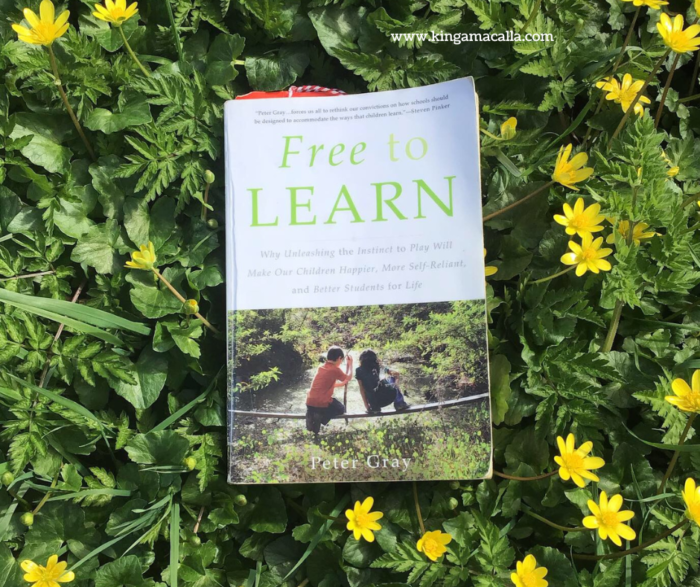
Free to Learn by Peter Gray

“When language play is carried into adulthood, we call it poetry.” (p. 123)

This is a fascinating read on the role of play in children’s education. It’s so well-written that when I read it, it felt more like a detective story than a non-fiction publication. On many different levels it made me sad. When we look at a school’s compulsory system, the obligation to sit and learn, to follow the teacher’s guide, to spend hours indoors and only short breaks outdoors, to be quiet and follow the rules, etc. Why? Because we want our children to succeed, to go to a ‘good’ university, to have a ‘good’ job and a ‘good’ life. But we don’t need to take away this tremendously important learning tool of letting our children play. Our children can still be successful and happy in their adult life. Just some food for thought. I’d make this book compulsory (!) to any parent (before their child/ren starting any form of education). 

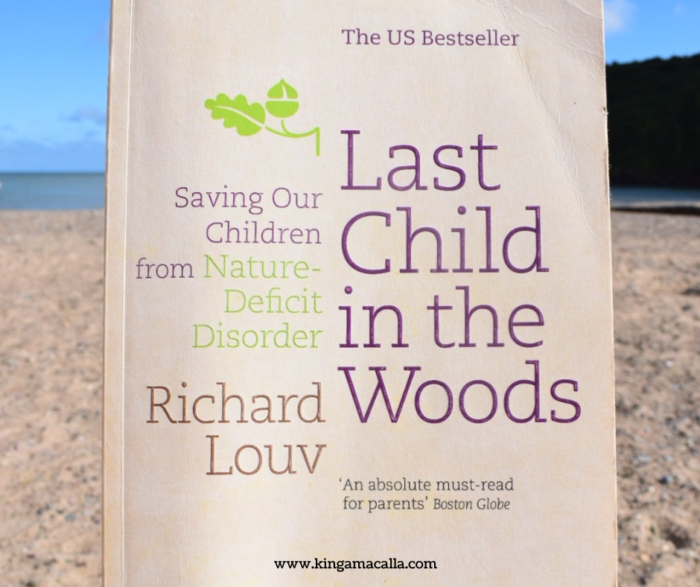
Last Child in the Woods by Richard Louv

“Not everything that can be counted counts and not everything that counts can be counted.” Quote attributed to Albert Einstein

This book is as fascinating and eye-opening as it is sad. It tells some realistic truths about our disconnection from nature, how children no longer play and explore freely the outdoors. It says that the value of knowing and understanding nature is less and less important for schools and universities, even though “[a]ny natural place contains an infinite reservoir of information, and therefore the potential for inexhaustible new discoveries.”. [p. 68] Through his extended research and interviews, Adam Louv not only tries to analyse children’s relationship with nature in the modern times, he also provides solutions on a micro and macroscale. Last Child in the Woods beautifully corresponds with the ideas presented in Free to learn, but obviously with an emphasis on nature. I couldn’t read more than a few short chapters in one go, as I needed time to digest its content. It’s written from an American perspective, but also includes some references to Europe.

What are your most inspirational books on education? Please let me know in the comments below.

December 14, 2022

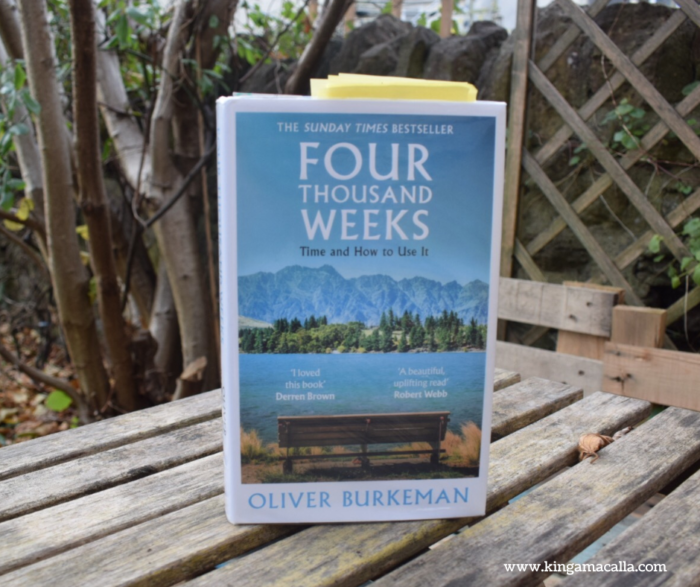
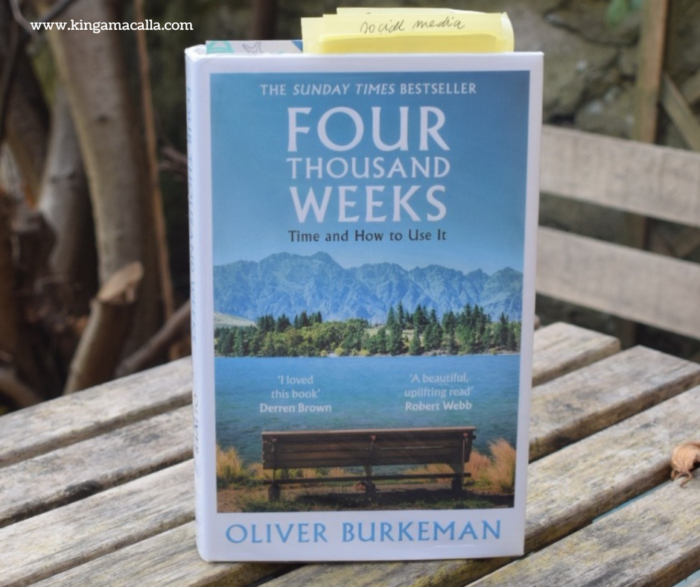
Book review: Four Thousand Weeks by Oliver Burkeman

Practise doing nothing. [p. 244]

I planned to write a long and thorough review about the most fascinating book I’ve recently read. But instead, I spent most evenings with my teething baby, reading one or two pages, before being too tired to read and simply falling asleep. But, as the festive season is approaching (and January!), I thought I’ll still write a short review and choose a few quotations to give you a little flavour of this intellectual treat.

Why ‘four thousand weeks’? As we read in the introduction: “[t]he average lifespan is absurdly, terrifyingly, insultingly short. […] Assuming you live to be eighty, you’ll have had about four thousand weeks.” [p. 3]

It points out the absurdity of our modern ‘better’ life: “Life, I knew, was supposed to be more joyful than this, more real, more meaningful, and world was supposed to be more beautiful. We were not supposed to hate Mondays and live for the weekends and holidays. We were not supposed to have to raise our hands to be allowed to pee. We were not supposed to be kept indoors on a beautiful day, day after day.” [Charles Eisenstein, p. 12]

“You breathe a sigh of relief, and as you dive into life as it really is, in clear-eyed awareness of your limitations, you begin to acquire what has become the least fashionable but perhaps most consequential of superpowers: patience.” [p. 170-1]

And I also want to mention my two fav words: happenstance and finitude.

Finally, I want to use this opportunity to wish you a joyful and peaceful festive season and a very prosperous 2023. Merry Christmas!

December 8, 2021

Book review: Lagom by Niki Brantmark

The right amount is best. (Swedish proverb)

I read and reviewed a lagom book some time ago and this winter I decided to return to this concept. Why? To get inspired by a simpler and more harmonious life. The word lagom loosely translated means ‘not too much and not too little – just right.’ It’s about having a more comfortable and balanced life. Sounds good, right?

In the introduction we read a wonderful story where the author writes about her summer holiday in Sweden. Her Swedish holiday was carefree, uncomplicated and enjoyable. Even though it sounds so simple and idyllic, in my personal experience, I find it difficult to completely switch off and slow down. And now, when the festive season is coming, I’m feeling even more encouraged to try not to put too much pressure on myself to have the ‘perfect’ Christmas and instead to balance my energy to have more relaxed celebrations and to enjoy this special time with my family and friends.

The book Lagom: The Swedish Art of Living a Balanced, Happy Life is divided into three main categories: personal life, family & relationships and the wider world. The book first focuses on home and personal life and how to make them more lagom, for example through decluttering, buying second-hand, bringing nature indoors, preparing your bedroom for a good night’s sleep, taking good care of yourself (oh yes!), enjoying time in nature, and integrating some exercise into your daily life.

Niki Brantmark also writes about work-life balance: this aspect is important to me, as I sometimes struggle with it. What recently helped me to have some perspective into my work-life balance are my values: putting my family and home life first. As we read further, the Swedes also try to have a balanced work etiquette: they work very effectively and timely (staying late at work is not popular in Sweden!). We also read about the importance of having a break at work or from any other daily commitments (in Swedish it’s called fika aka taking time for a coffee, treats and conversation with friends) and disconnecting from emails and social media.

Another chapter that I found inspiring was on parenting. Being a parent myself, I sometimes feel overwhelmed by the amount of work involved in raising our little ones. If we apply the lagom approach, maybe we’ll feel less pressured and plan our family life in moderation. After all, it’s good for our children not to be constantly stimulated and to be actually bored.

The book also contains lagom guides to celebrations (including Christmas and Easter), community, nature and eco-life.

Personally, I found the publication an inspiring and useful reminder about the importance of having a more balanced life. I think I feel ready for the coming festive season and the coming year. Let’s make them more lagom 😉

Have you recently read any books on the Swedish lagom? Please let me know in the comments below.