Tag Archive: on languages

December 6, 2017

Beauty and Style: Facts about the Arabic Language and How to Learn It

Arabic is one of the five most spoken languages in the world.  It is spoken by around 422 million people and is the native language of over 200 million people in the geographical region stretching from Southwest Asia to Northwest Africa, also known as the Arab World.  Arabic is the official language of the 22 countries of the Arab League and it is the language of prayer of 1.7 billion Muslims, as it is the language in which the Qur’an القرآن, the Holy Book of Islam, was revealed.  It is also one of the six official languages of the United Nations.  In the UK, one per cent of the adult population can hold a basic conversation in Arabic.
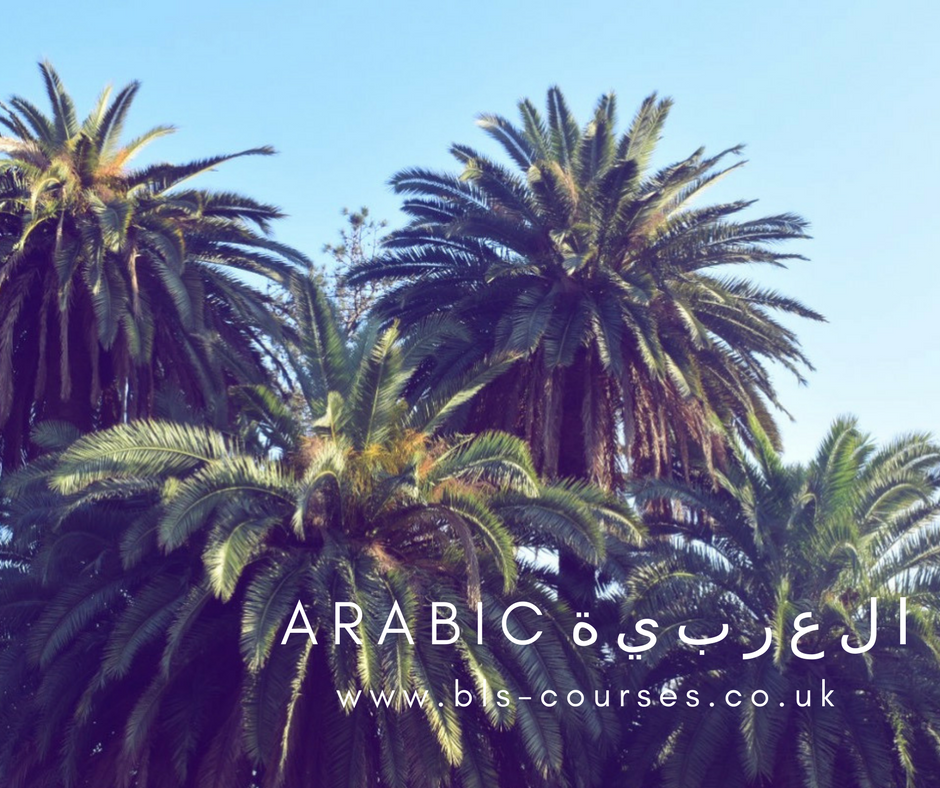
Arabic has influenced many languages throughout its history.  During the Middle Ages, Literary Arabic was a major vehicle of culture in Europe, especially in science, mathematics and philosophy.  As a result, many European languages have also borrowed words from it, mainly Portuguese and Spanish (approximately 4000 words).  English too has words borrowed from Arabic, typically words starting with “al” (“the”) such as “alchemy”, “algorithm”, “algebra”, “alcohol”, “algebra”, “alkaline”.  The Arabic numerals (0,1,2,3, etc.) are also used all over the world now.  Arabic has also borrowed words from other languages including Greek and Persian in medieval times, and contemporary European languages such as English and French in modern times.

Basic features of Arabic

Arabic has different forms depending on the context in which it’s used.  The “formal” Arabic language, known as الفصحى, Fus-ha (elegant or clear language), Classical Arabic and sometimes Literary Arabic or Qur’anic Arabic is the language in which the Qur’an is written and is the base of Arabic grammar rules. It is the recognized language of literacy across the Arabic speaking world.

Modern Standard Arabic, or MSA, is derived from the language of the Qur’an but is easier than Classical Arabic. It’s understood across the Arab world and used by the media, government, in works of modern Arabic literature and in the workplace.  It is taught in schools and universities and is used to teach Arabic as a foreign language. Modern Standard Arabic largely follows the grammatical standards of Qur’anic Arabic and uses a lot of the same vocabulary.  However, some grammatical constructions and vocabulary that no longer exist the spoken varieties are no longer used.

Arabic developed through an oral and poetic tradition that flourished in the Arabian Peninsula before the emergence of Islam and a codified Arabic script.  “Spoken” Arabic, ‘Aamiya, has many forms and varies from country to country, even town to town. While roughly four major regional dialects of Arabic are spoken in the Arab world, many different variants can even be found within one country. The four regional dialects are: Maghreb Arabic (North Africa), Egyptian Arabic (Egypt and the Sudan), Levantine Arabic (Lebanon, Syria, Jordan and Palestine/Palestinians in Israel), and Iraqi/Gulf Arabic.  These dialects are so different from one another that speakers of different varieties may not be able to understand each other.  They will be able to communicate in Modern Standard Arabic instead.

How the language works

The Arabic Alphabet

Arabic is written from right to left, in cursive (joined-up) script.  Sometimes, especially with the advent of computers and mobile telephony, its spoken varieties are written using the Latin alphabet and from left-to-right, using non-standard spelling.  There are 18 distinct letter shapes in the Arabic alphabet.  The shapes vary slightly depending on whether they are connected to another letter before or after them.  There are no capital letters.  The full alphabet of 28 letters is created by placing various combinations of dots above or below some of these shapes.  A single dot, added by mistake, can make a certain word mean something completely different – so be careful!  The Arabic language uses the same punctuation marks and rules as English, but some of the symbols are inverted, such as the comma (،), or reversed, like the question mark (؟).

Calligraphy

After Khalil ibn Ahmad al Farahidi set down the Arabic script around 786, many styles were developed, both for writing down the Qur’an and other books, and for inscriptions on monuments as decoration.  There are several styles of script, such as naskh, which is used in print and by computers, and ruq’ah, which is commonly used in handwriting.  Arabic calligraphy is still considered a major art form. Its composition is often abstract, but sometimes the writing is made into a shape such as an animal.

Numerals

In most of North Africa, the Western Arabic numerals (0, 1, 2, 3, 4, 5, 6, 7, 8, 9) are used.  However, in Egypt and countries to the east of it, the Eastern Arabic numerals (٠‎ – ١‎ – ٢‎ – ٣‎ – ٤‎ – ٥‎ – ٦‎ – ٧‎ – ٨‎ – ٩‎) are used.  When writing a number in Arabic, you would place the lowest-value numeral on the right, so the order of positions is the same as in left-to-right scripts. Sequences such as phone numbers are read from left to right, but numbers are said with units first and then tens, for example, “24” is said “four and twenty”.

Pronunciation

Arabic has 28 consonants (including two semi-vowels) and three vowels – a,  i, u – which can be short or long.  Some sounds don’t exist in English like the glottal stop, usually transliterated by (‘) like in the word ‘elm (science), “ح” , which is a “h” sound as in “hubb” (“love”), the consonants (“q”) and “gh”) produced far back in the mouth in English like in “qalam” (“pen”), and “loghah” (language). (“kh”) which sounds like the Scottish “ch” (as in “Loch Ness”).

Grammar

Arabic constructs words from a basic root of (usually) three letters, based on a semantic field. For example, words with the “k-t-b” root will always be the base of words that have the semantic field of “writing”, such as “kitāb”, “a book”, “maktab”, “a desk or office”, “katabtu”, “I wrote”.[1]  Words in Arabic dictionaries are normally listed under their three-letter roots. So, you would look for “istiqbāl” (“reception”) under “q” because the root letters are q-b-l. Getting used to this takes a little practice but it is not particularly difficult because additions to the roots follow set patterns. It becomes easier to memorise vocabulary once you understand the concept behind a particular root. Knowing a root unlocks the door to knowing the various words derived from it.

In Arabic word order, the verb comes first.  To say, “the boy eats the apple” you should say “eat the boy the apple”: اكل الولد التفاحة [akala al walado attofaha].

Nouns in Literary Arabic have three grammatical cases (nominative, accusative, and genitive); three numbers (singular, dual and plural); two genders (masculine and feminine); and three “states” (indefinite, definite, and construct).  Adjectives come after the noun, rather than before as in English: السيارة الحمراء [assayara alhamra”a], “the red car”, literally “the car red”.

Can I learn Arabic?

Arabic is like any other language, easy in some aspects and hard in some others. A person whose mother tongue is a language like, say, Hebrew will find it easier than a person whose mother tongue is English, because of the similarities between the two languages.

If you speak English, you will find that you already know some Arabic words.  Arabic has contributed numerous words to the English language like قطن [koton], “cotton”, سكر [succar], “sugar”, غزال [ghazal], “gazelle”, قيثارة [qithara], “guitar”, الكحول [alcoo’hool], alcohol, صحراء [sahra’a], “sahara”, قيراط [qeerat], “carat”, and ليمون [laymoon], “lemon”, قهوة [qahua], “coffee”, ترسانة [tirsana] “arsenal”, غول [ghawl] “ghoul”, خطر [khatar] “hazard”, لاعب اللو [laeib allaw] “loofah”, مخزن [makhzin] “magazine”, شربات [sharabat] “sherbet”, تعريفة [taerifa] “tariff”, صفر [sifr] “zero”.

These four lessons give an idea of what is involved in learning to read and write Arabic: Lesson One ; Lesson Two ; Lesson Three ; Lesson Four .

Where can I learn Arabic?

You can learn Arabic at Bristol Language School.  We offer one-to-one and group lessons at all levels.

You can also get more information on learning Arabic and links to resources/a bibliography on the Al Bab (The Door) website.  For more about reading and writing Arabic, see: Learning the alphabet.  This animated version of the alphabet also shows how to move the pen when writing the letters.

There is also quite a bit of information on the BBC website, including key phrases and the Arabic alphabet, as well as some videos to help you learn.  The BBC World Service is also available in Arabic so you can use it to practise.  If it’s the basics you’re looking for, check out this key word resource and this free online Arabic dictionary.

Written by Suzannah Young

[1] More examples: kattabtu “I had (something) written”; kātabtu “I corresponded (with someone)””; aktabtu “I dictated”; iktatabtu “I subscribed”; takātabnā “we corresponded with each other”; aktubu “I write”; ukattibu “I have (something) written”; ukātibu “I correspond (with someone)”; uktibu “I dictate”; aktatibu “I subscribe”; natakātabu “we correspond each other”; kutiba “it was written”; uktiba “it was dictated””; maktūb “written”; muktab “dictated”; kutub “books”; kātib “writer”; kuttāb “writers”; maktabah “library, bookshop”.

October 4, 2017

On Languages: Japanese

Japanese (日本語 [nihõŋɡo]) is the ninth most widely spoken language in the world.  It is the official language of Japan, which has a population of over 125 million people.  There are also around 2.5 million people of Japanese origin, many of whom speak Japanese as their first language, living in the Americas, particularly Brazil and the United States (Hawaii).  There is also an expatriate presence in major cities such as London, New York and Paris.  Japan is one of the world’s leading industrial powers and Japanese language services have become extremely important in social and business settings.

Much about the roots of the Japanese language is unclear.  There are debates about which other languages Japanese is related to and it only seems certain that it is a member of the Japonic language family, which includes the Japanese language spoken on the main islands of Japan and the Ryukyuan languages spoken in the Ryukyu Islands.  Little is known of the language’s prehistory, or when it first appeared in Japan. Chinese documents from the 3rd century recorded a few Japanese words, but longer texts did not appear until the 8th century.  Old Japanese vocabulary was influenced by Chinese.  Late Middle Japanese (1185–1600) saw changes brought it closer to the modern language, as well as the first appearance of European loanwords.  Portuguese, Dutch and Spanish words, such as “pan” (bread) and “igirisu” (the UK), from the Portuguese “po” and “ingles” arrived during the 16th and 17th centuries, when missionaries and merchants started to visit the country.  Following the end in 1853 of Japan’s self-imposed isolation, the flow of loanwords from European languages increased, especially English loanwords. These include “teburu” (table), “biru” (beer), “gurasu” (glass), “aisu” (ice), “takushi” (taxi) and “hoteru” (hotel).

How Japanese works

Word order in Japanese is normally subject–object–verb.  Sentence structure starts with the topic and then gives a comment about the topic.  It uses particles (small words) to mark the grammatical function of words, such as ‘wa’ (topic marker), ‘ga’ (new information).  This means they function like cases in other languages.  For example, これは本です。(‘kore wa hon desu’) = ‘This is a book’.  A longer example is 私はブリストル に 住んでいます (‘Watashi wa Bristol (Burisutoru) ni sundeimasu’).  A literal translation into English would be ‘I (topic) Bristol (in) reside’).  Thus Japanese, like many other Asian languages, is often called a topic-prominent language, which means it has a strong tendency to indicate the topic separately from the subject, and that the two do not always coincide. The sentence Zō wa hana ga nagai (象は鼻が長い) literally means, “As for elephant(s), (the) nose(s) (is/are) long”. The topic is zō “elephant”, and the subject is hana “nose”.

Particles are used at the end of sentences to add impact (‘ne’), or make questions (‘ka’) as well.  Questions can have the same structure as statements, but with intonation rising at the end.  In the formal register, the question particle -ka is added. For example, ii desu (いいです) “It is OK” becomes ii desu-ka (いいですか。) “Is it OK?”.

Nouns do not change with number or gender, and there are no articles (‘the’ or ‘a/an’).  Verbs do change with the tense, of which there are two: past and present (or non-past), which is used for the present and the future.  For verbs that represent an ongoing process, the -te iru form indicates a continuous (or progressive) aspect, similar to the suffix ing in English.  Verb conjugations are also used for voice (active or passive), but not the person the verb is are referring to.

Japanese has a grammatical system to express politeness and formality. Broadly speaking, there are three main politeness levels in spoken Japanese: the plain form (“kudaketa”), the simple polite form (“teinei”) and the advanced polite form (“keigo”).  It also has a system of honorific language, where verbs and vocabulary change to indicate the relative status of the speaker, listener and persons mentioned.  Their status is determined by a variety of factors including job and age.  The person in the lower position is expected to use a polite form of speech, whereas the other might use a more plain form.  Japanese people often use titles of the person referred to where pronouns would be used in English. For example, when speaking to one’s teacher, it is appropriate to use sensei (先生, teacher), but inappropriate to use ‘anata’ (‘you’). This is because ‘anata’ is used to refer to people of equal or lower status, and one’s teacher has higher status.  Strangers in Japan will speak to each other politely.  Most nouns in the Japanese language may be made polite by the addition of o- or go- as a prefix. o- is generally used for words of native Japanese origin, whereas go- is affixed to words of Chinese derivation. In some cases, the prefix has become a fixed part of the word, and is included even in regular speech, such as gohan ‘cooked rice; meal.’ Such a construction often indicates deference to either the item’s owner or to the object itself.  Even if you don’t have the language skills, a softening of the voice, a discreet awareness of the other person’s personal space and undemonstrative body language go a long way when it comes to courtesy and showing respect.  Read more about honorific speech here.

Writing Japanese

The Japanese writing system has three different sets of character: Kanji (several thousand Chinese characters) and Hiragana and Katakana (syllabaries with 46 characters each).  The adaptation of Chinese characters during the sixth to ninth centuries A.D. developed the language. By the 12th century, hiragana and katakana were created out of kanji, providing the Japanese new freedom in writing their native language.  Today, Japanese is written with a mixture of the three.  Hiragana are used for words without kanji representation, for words no longer written in kanji, and also following kanji to show conjugational endings.  Katakana, like hiragana, are a syllabary; katakana are primarily used to write foreign words, plant and animal names, and for emphasis. For example, “Australia” has been adapted as Ōsutoraria (オーストラリア), and “supermarket” has been adapted and shortened into sūpā (スーパー).  Japanese texts can be written in horizontal rows left to right, or in traditional Japanese style, i.e. in vertical columns from the right to the left side of the page.

Can I learn Japanese?

Japanese is considered a difficult language to learn for speakers of European languages.  Some difficulties are learning to master the Japanese writing system.  Unless you are already familiar with Chinese characters (kanji), many years of study are necessary to achieve complete literacy.  Japanese students learn about 2000 kanji until the end of junior high school and continue to learn more until the end of their school careers. The two syllabaries Hiragana and Katakana (together about 100 signs), however, can be memorized quickly time.  Another difficulty can be the existence of honorific speech: the fact that a person’s speech can vary depending on the situation and the person. A student of Japanese has to become familiar with Japanese society and customs in order to understand the detailed rules of the different levels of speech.

However, compared to many European languages, basic Japanese grammar is relatively simple. There are not the complicating factors of gender articles and plurals, and conjugation rules for verbs and adjectives are almost entirely free of exceptions.  Nouns are not declined at all, but always appear in the same form.  This makes the language relatively easy for students starting out.

You may also have a head start when learning Japanese because it has a lot of foreign loan words, especially from English.  (外来語 [gairaigo] – ‘words from outside’ are not limited to nouns, they can be adjectives too.  The word for ‘TV’ is テレビ [terebi], サンドイッチ [sandoitchi] is ‘sandwich’, ‘bread’ is パン [pan] from the Portuguese word ‘pão’ and part-time worker is アルバイト [arubaito], from the German ‘Arbeit’, work.  You have probably heard a lot of Japanese words aleady too.  A lot of Japanese words have been absorbed into English.  See how many of these words you recognise (many thanks to An Idiot Lost in Japan for these!):

Origami

Sake

Karaoke

Sumo

Tsunami

Sushi

Haiku

Sashimi

Teriyaki

Anime

Manga

Kimono

Samurai

Ninja

Bonsai

Wasabi

Shogun

Karate

Judo

Sensei

Zen

Geisha

Emoji

Koi

Sudoku

Futon

Nintendo

Where can I learn Japanese?

You can learn Japanese at Bristol Language School.  We offer group and one-to-one lessons at all levels.

There is also a lot of information about learning Japanese on the Bristol Japan Club website.  There are also teaching and learning resources on the Japan Foundation website.  This kanji dictionary with sound can help you learn to recognise and write Japanese characters.  If you want to listen to Japanese, you can try these Japanese podcast lessons from the Japan Broadcasting Corporation, NHK.  To practice reading, you can go to asahi.com, one of Japan’s leading newspapers.

You can also find out where to buy books for learning Japanese here.  You can find websites to help you with learning Japanese and other Online Resources here.  Nihongo o Narau – Learn Japanese is a free online Japanese course.  Digital Dialects’ Japanese Games are interactive games for learning the Japanese language.  There are also Mobile Apps for iPhone, iPad, Android phones and tablets.  If you want to learn for travel, use this guide to Japanese Phrases for Travellers, with a pronunciation guide.  Plus, this Glossary for Learners is a quick reference guide to the essential elements of Japanese.

In the United Kingdom, study of the Japanese language is supported by the British Association for Japanese Studies.  The Japanese government provides standardized tests to measure spoken and written comprehension of Japanese for second language learners; the most prominent is the Japanese Language Proficiency Test (JLPT), which features five levels of exams.  The JLPT is offered twice a year.

Good luck!

Written by Suzannah Young

May 24, 2017

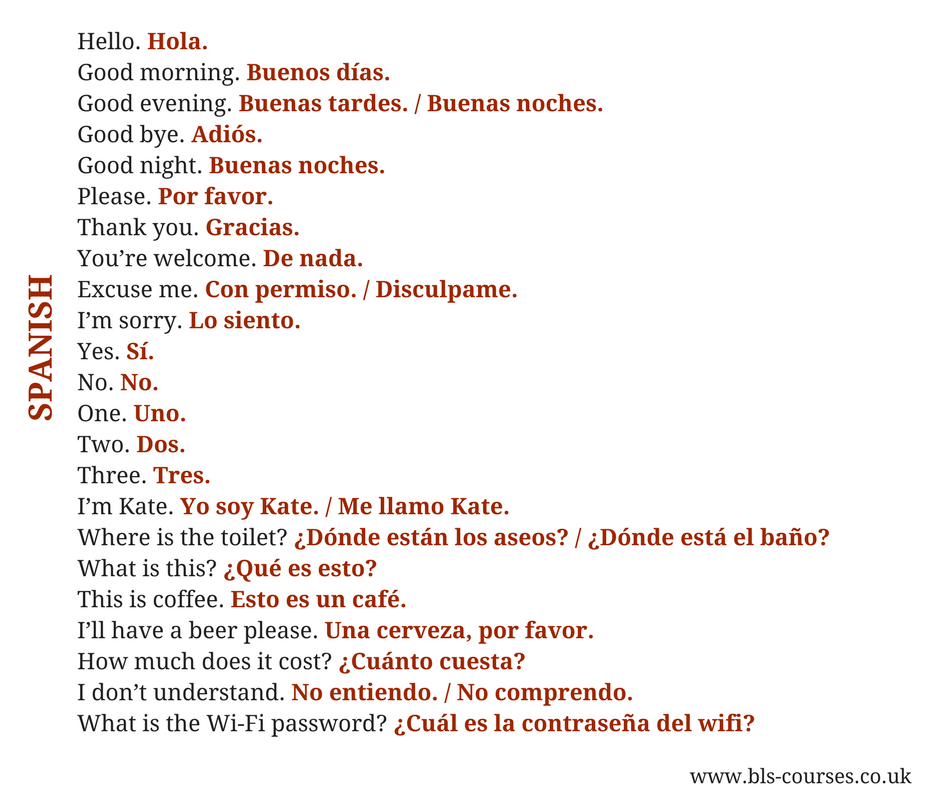
Learning a Language: Learn Spanish with BLS online & FREE!

We would like to introduce a new series of blog posts/videos where we teach you some useful phrases in different languages. Sounds amazing? Let’s start with Spanish!


Learning a language -- useful phrases in Spanish 2

Are you planning your summer holiday in Spain? Do you travel frequently to Madrid? Do you dream of exploring South America?

If so, we would like you to taste & learn some essential Spanish first. Below you’ll find a list of useful phrases in Spanish (greetings, polite phrases, closed question words, numerals & simple questions and sentences).

We also video recorded Noelia, our Spanish tutor to help you with reading, pronunciation and accent (available on YouTube).

We hope you’re going to enjoy this series and that you’ll come and learn Spanish with us! Good luck!

learning a language -- useful phrases in Spanish 1

Which language would like you like to learn next? Let us know in the comments below.

Written by Kinga Macalla

May 3, 2017

On Languages: German

German (Deutsch in German) is a West Germanic language that is mainly spoken in Central Europe but is also found all over the world.  German has a broad range of dialects that are spoken in Europe and further afield.  It is an official language in Germany, Austria, Switzerland, South Tyrol (Italy), Belgium, Liechtenstein and Luxembourg.  It is also recognised as a minority language in the Czech Republic, Denmark, Hungary, Kazakhstan, Ukraine, Namibia, Poland, Romania, Russia, Slovakia, Slovenia, Croatia, Serbia, South Africa, the Vatican City and Venezuela. There are German-speaking communities in the USA, Canada, Brazil, Argentina, Mexico, Australia, South Africa, Chile, Paraguay, New Zealand and Peru as well.

on languages--german

German is the most widely spoken native language in the European Union.  Standard German (Hoch Deutsch) has about 95 million native speakers.  Around 30 million people speak other varieties of German as their first language too.  About 80 million people speak German as a second language, and many others study it as a foreign language.  It is the third most widely taught foreign language in the EU (after English and French), the second-most widely used scientific language and the third most widely used language on the internet (after English and Russian).

What is the German language like?

Learning these few facts about German grammar will give you a head start if you want to learn the language.

One of the particularities of German is that has three genders, masculine, feminine and neuter.  You can sometimes tell the gender of a noun from its ending: for example, words ending in –ung (-ing), -schaft (-ship), -keit or –heit (-hood, -ness) are feminine, words ending in -chen or -lein (diminutives) are neuter and nouns ending in -ismus (-ism) are masculine.  You can’t always tell just by looking at a word, though, and some endings are used for more than one gender, e.g. -er (see for example Feier (f.), celebration, party, Arbeiter (m.), labourer, and Gewitter (n.), thunderstorm).  German capitalises all its nouns.

German nouns also take four cases: nominative, accusative, genitive and dative.  Cases show the role a noun is playing in a sentence.  The nominative case shows the subject of a sentence.  The accusative shows the direct object of a sentence, i.e. the thing having the action done to it.  The dative is used for the indirect object of a sentence, i.e. the thing being affected by the action.  Finally, the genitive is used to show possession, i.e. who something belongs to.  Read more about cases here.

German is a descriptive language. Nouns are often made by combining an object and a verb, such as der Staubsauger – the vacuum cleaner, consisting of the noun Staub, ‘dust’ and the verb saugen, ‘to suck’, so a vacuum cleaner is a ‘dustsucker’.  Another example is das Fernsehen – ‘the television’, combining the words fern, ‘far’, and sehen, ‘watching’, so the television is literally the ‘far-watching’.  The longest German word is Donaudampfschiffahrtselektrizitätenhauptbetriebswerkbauunterbeamtengesellschaft (Association for subordinate officials of the head office management of the Danube steamboat electrical services) made up of 79 characters!  Most German vocabulary is of Germanic origin but it also has quite a few loanwords from other languages, mostly Latin, Greek, Italian and French.  English words have recently started finding their way into German vocabulary too.  There is even a word for them: ‘Denglish’, (the D is for Deutsch).  This makes for words such as die Airconditioning – air conditioning, babysitten – to babysit, joggen – to go jogging or running, das Handy – the mobile phone.  There are also many loanwords from German in the English language.  Here are a few examples: abseilen – to abseil; Bildungsroman; Delikatessen, Doppelgänger, Glockenspiel, Kindergarten, Leitmotiv (leitmotif in English), plündern – to plunder, Poltergeist, Schadenfreude, Wanderlust, Wunderkind and Zeitgeist.

on languages--german 2

Where can I learn German?

If you are not content with speaking Denglish, you can do a course in German at Bristol Language School! You can take Complete Beginner’s, Beginner’s Plus, Elementary, Upper-Elementary, Upper-Intermediate and Advanced German courses.  We also offer one-to-one tuition.

Several organisations promote the use and learning of the German language, such as the Goethe-Institut, Verein Deutsche Sprache and Deutsche Welle.  They can help you find German courses and have online exercises too.  There are also many websites where you can learn German, such as the BBC website, Alison and Deutsch-Lernen.  You will find more general information on the German language and courses here.

Viel Spaß!

Written by Suzannah Young

April 5, 2017

On Languages: The Languages of Belgium

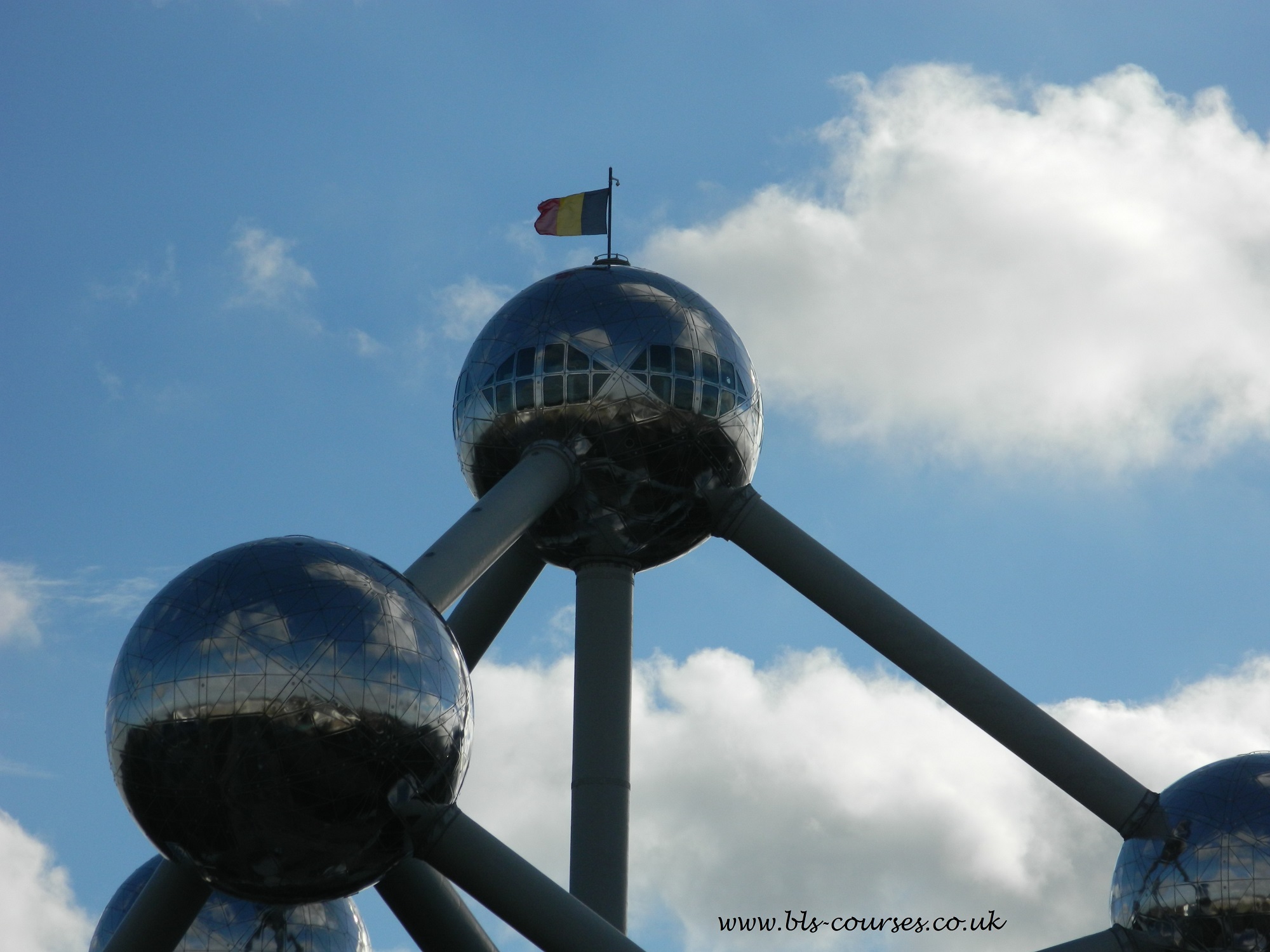
With around 11 million inhabitants over an area of 30,528 square kilometres (11,787 square miles), Belgium is a small, densely-populated country in Western Europe.  It may be small but Belgium has a diverse population and three official languages, Dutch, French, and German.  Its inhabitants also speak a number of non-official, minority languages and dialects as well.  A lot of people in Belgium speak English and it is used as an unofficial language of communication in the Belgian capital, which also happens to be the European capital, Brussels.

DSCN3319

The Belgian Constitution guarantees language freedom in the private sphere. This implies that people can decide themselves which language they wish to use in their household, among friends, in the media, and for cultural, economic, commercial and religious activities. Before the federal (linguistically-defined states) structure and language legislation introduced in the 20th century, French was the only language used by the authorities. Now there is a lot of legislation around Dutch, French and German, although the constitution does not explicitly mention which languages enjoy official status.  Article 4 of the constitution does divide the country into linguistic areas: “The French-speaking area, the Dutch-speaking area, the bilingual area of Brussels Capital and the German-speaking area.”

6.25 million people live in the Flemish Region (Dutch language area), 3.5 million in the Walloon Region (French and German language area) and 1.09 million in the Brussels-Capital Region (bilingual area).  This means that 59% of Belgians belong to the Flemish (Dutch-speaking) Community (Flanders) in the north, 40% to the French-speaking Community (Wallonia in the South and part of Brussels) and 1% to the German-speaking Community (in the Ardennes area).  Alongside these official figures, there are migrants and their children living in the country who speak other languages (as well as one or more of the official languages), and speakers of other Belgian dialects. The capital, Brussels, is located in Flanders but 80% of its inhabitants speak French as their first language.  French is also used as a lingua franca in Brussels, as is English.  All public services and information in Brussels are available in both French and Dutch.  Many road signs and other notices around the rest of Belgium are written in both French and Dutch too.  Like many capital cities, Brussels is actually multilingual, especially as it is the home of many European institutions and there are a lot of foreign officials and diplomats living there.

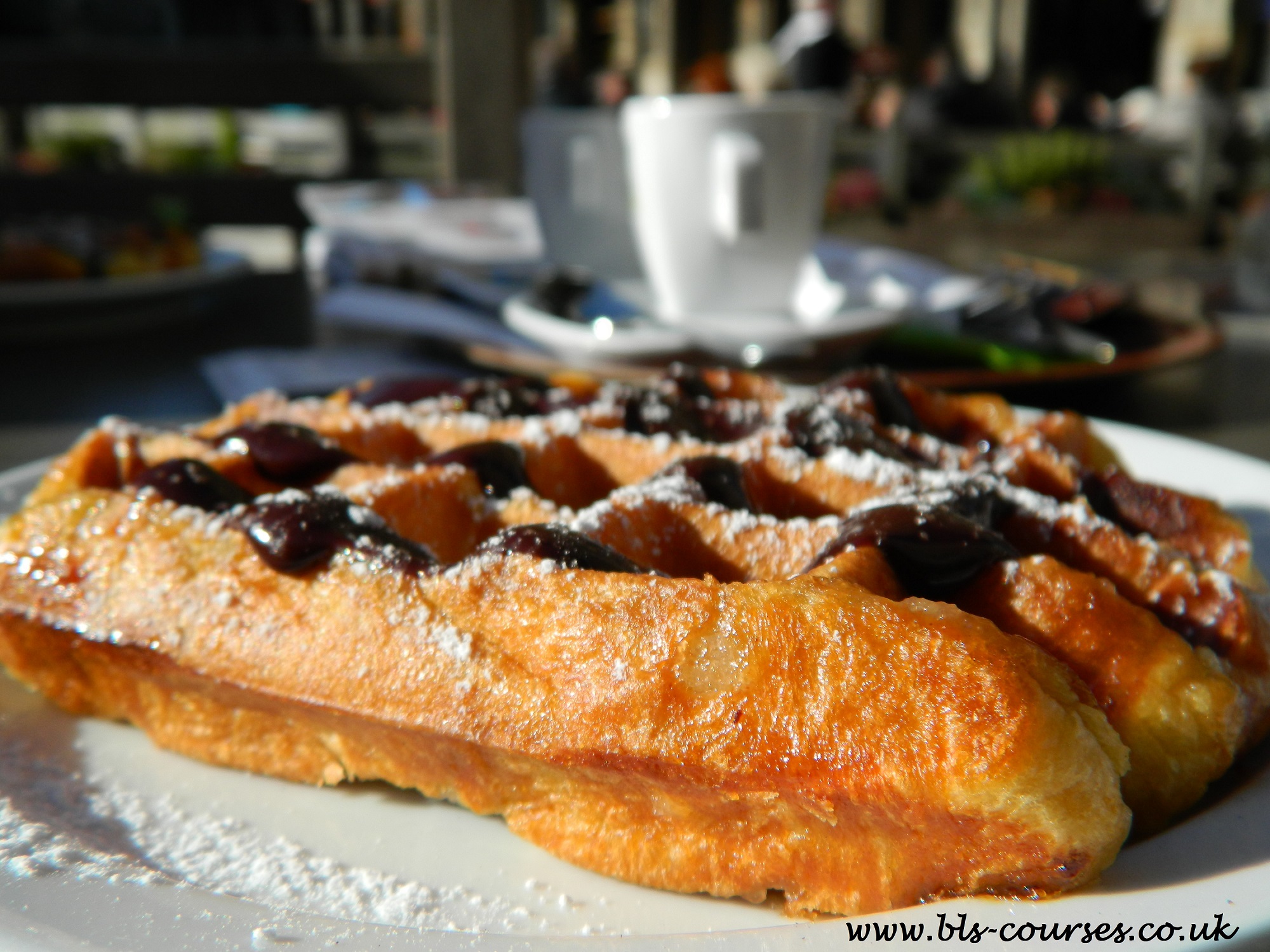
Belgian Waffels 2

The standard form of Dutch used in Belgium is very similar to that spoken in the Netherlands but is often referred to as Flemish.  There are a lot of dialects in Flanders too.  The main ones are Brabantian, West Flemish, East Flemish, Antwerp and Limburgish.  Walloon, a dialect closer to French and mostly spoken by older people in rural areas, is used by 33% of population. Walloon has no official status in Belgium and is not used in education, though there are many evening classes in it.  The majority of the population of Wallonia can understand the language, about a quarter can speak it and a few can write it.  Luxembourgish is spoken by around 0.5% of the population, but the language has no official status, like Picard, Low Dietsch, Lorrain (also called Gaumais locally) and Champenois that are also spoken there.  About 10% of the Belgian population are non-native, and languages spoken include Italian, Spanish, Greek, Arabic and Turkish.  Antwerp, the capital of Flanders, also has one of the few Jewish communities worldwide that still speaks Yiddish as its dominant language.

Words which are unique to Belgian Dutch and Belgian French (i.e. not found in the varieties of Dutch and French spoken in other countries) are called belgicisms.

More information on the languages of Belgium can be found at http://languageknowledge.eu/countries/belgium

Written by Suzannah Young

January 4, 2017

On Languages: Russian

What do we know about the Russian language?

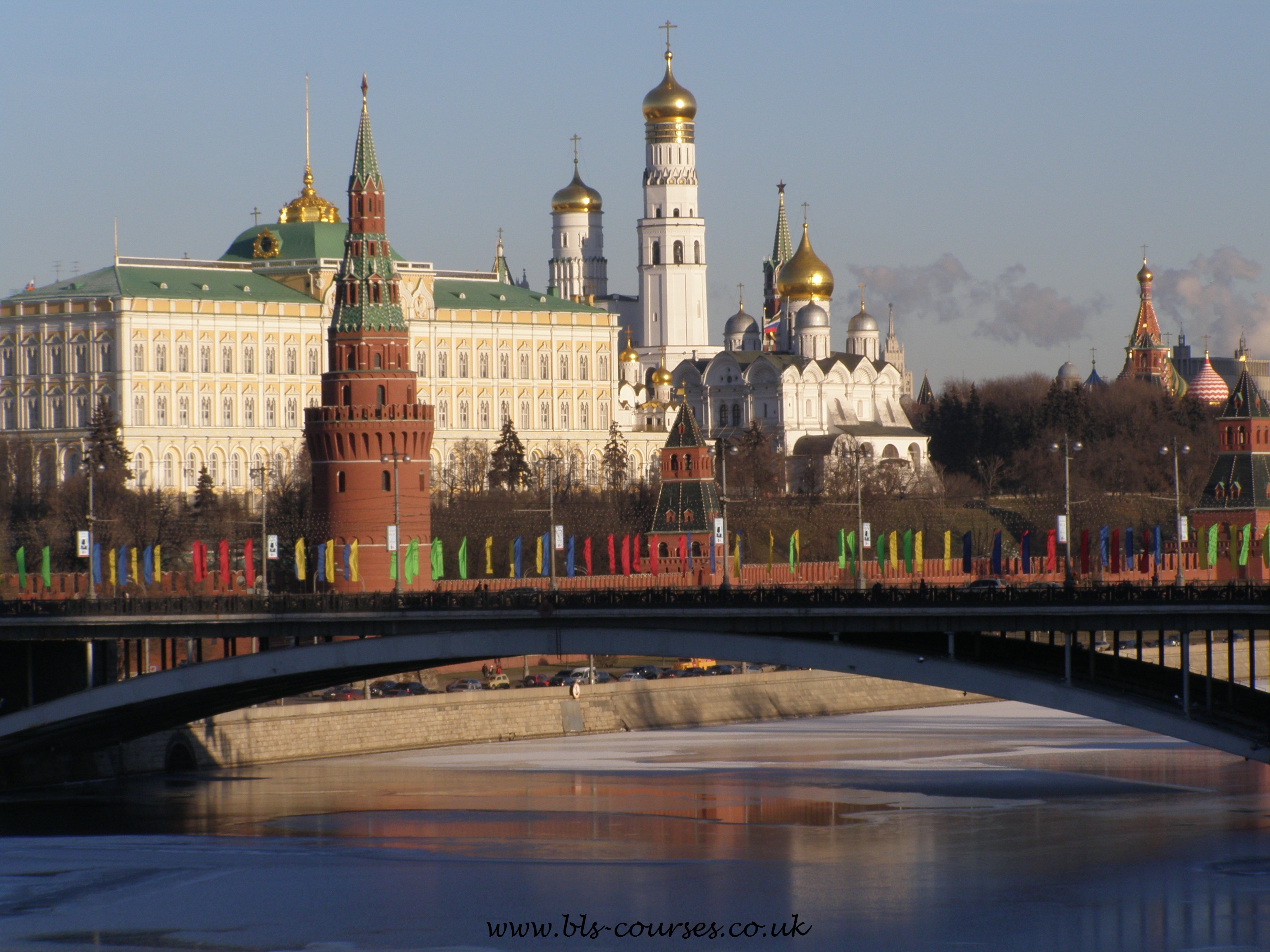
Russian is the 5th most widely spoken language in the world with 277 million speakers. Russia itself has 142 million native speakers and is the world’s largest country. Russian is one of the six official languages of the United Nations. Due to the size of the Soviet Union a significant part of the world understands Russian.

Russian comes from the Slavic group of the Indo-European languages. Russian, Ukrainian and Belorussian languages form the East Slavic part of this group.

OLYMPUS DIGITAL CAMERA

The difficulties of learning Russian

The difficulties of learning Russian alphabet are often exaggerated. Though the Cyrillic alphabet is based on Greek, it still has a resemblance to Latin. There are 33 letters in the Russian alphabet, most of which are pronounced and read in words the same way as they are in the alphabet. You will be surprised how easily you can read Russian aloud once you have mastered the alphabet.

Russian words have one stressed syllable. The stressed syllable is longer and articulated more tensely than the unstressed ones. Unstressed vowels in Russian lose their full value.  An unstressed word without any syllable accented will still be perfectly correct and understood, especially when spoken by a foreigner.

OLYMPUS DIGITAL CAMERA

A little bit about Grammar

  • Russian nouns have 3 genders: masculine, feminine and neuter, which are distinguished by the gender endings
  • there is no article in Russian: “the table” and “a table” are both translated “стол”
  • auxiliary verbs are hardly used in Russian, the present tense of “to be” is not used as it is in English, for example: He is here– Он тут
  • Russian is a language with a case system. Nouns appear in different cases, indicated by different endings, according to the role they fulfil in the sentence. There are 6 cases in Russian: nominative, accusative, genitive, dative, instrumental and prepositional.
  • Each verb in Russian is conjugated based on person, number, tense and gender

It is important to know that the main difference between Russian and other languages is in the way of thinking: in the philosophy of the language. Understanding the mechanism of developing the language structure, including Russian word-building based on the semantic connection within groups of words which bind themselves to various aspects of life helps to reveal the philosophy of Russian and other Slavonic languages. Once this is understood, the language is not difficult.

Start reading as much as you can as soon as you master the alphabet.

Russian literature is best read in Russian to gain the full benefit of the richness of the language. Dostoevsky (Crime and Punishment), Tolstoy (War and Peace), Pushkin (Eugene Onegin), Gogol (The Nose) and Chekhov (The Cherry Orchard) are all writers of international prominence and form just a small selection of the great Russian writers.

Written by Natalia Adkins

December 7, 2016

On Languages: Dutch

The Dutch language is a West-Germanic language (others in this family include English, Frisian, German and Luxembourgish) and its use goes back to the fifth century. Modern Dutch (Nederlands) is spoken by about 23 million people as a first language in the European Union —including most of the Netherlands and Flanders in the north of Belgium – and by another 5 million as a second language.  The Dutch Empire took the language around the world from the 17th to mid-20th centuries.  It is the native language of the majority of the population of Suriname, and also holds official status in Aruba, Curaçao and Sint Maarten. There are Dutch-speaking minorities in France, Germany and Indonesia and up to half a million native speakers are spread across the United States, Canada and Australia.

on-languages-dutch

There are several regional variations in spoken Dutch, the most significant of which is Flemish (in Belgium), which is spoken by around ten million people. Standard Dutch (Standaardnederlands or Algemeen Nederlands) is used for public and official purposes, including in schools and universities. A wide variety of local dialects are used in informal situations.

Most Dutch vocabulary is Germanic but also has loans words from Romance languages like French (and Latin).  It has more of these than German but fewer than English.  Because of contact between the Netherlands and Belgium and English-speaking countries throughout history, there are a lot of words in English that are of Dutch origin, especially names for everyday things like fruit and vegetables or colours.  This can make it easier for English speakers to remember Dutch vocabulary because a lot of it is familiar to them.  Some examples of English words of Dutch origin are ‘cookie’, ‘coleslaw’, ‘luck’, ‘mannequin’ or ‘Santa Klaus’.

Read more about the Dutch language on the BBC website and a comprehensive history of the language on the Dutch literature digital library.

How the language works

Dutch spelling is phonetic so you can tell how a word is pronounced by looking at it, and you can spell words easily if you listen to them!  Some sounds are a bit tricky for English speakers to pronounce, especially vowel sounds, but get easier with practice.  Examples are the ‘g’ sound, which is a bit like ‘ch’ in ‘loch’ and ‘ui’, which is a bit like ‘owe’ but not quite!  Learn more about the Dutch alphabet, spelling and pronunciation here.

Dutch grammar is similar to both English and German grammar.  Like English, it is simpler than German grammar, especially as it does not really use cases.  Features shared with German include three genders and a similar word order, such as putting the verb at the end of the sentence.  Learning how to speak Dutch is thought to be easier than learning German for English people because of its simpler grammatical rules.  I wouldn’t go as far as some people do who say that Dutch is the easiest language for English speakers to learn, though.  I think that can also be a potential pitfall because the languages are similar but are not identical, so it can be tempting to use English grammar in Dutch but that doesn’t work!  Also, the supposed simplicity of Dutch is deceptive: there are two articles for three genders (‘het’ for neuter and ‘de’ for masculine and feminine nouns (but you still have to know whether the thing you are talking about is a ‘he’ or a ‘she’)), and there are a few exceptions to rules that you learn.  Also, academic and literary Dutch has a very high register and is quite stylised.

Why learn Dutch?

There are practical incentives for people from the UK to learn to speak Dutch.  The Netherlands is a major trading partner of the UK and there are Dutch and Dutch-speaking businesses in the UK.   The Department for International Trade (DIT), that helps UK-based companies succeed in the global economy, is based in Belgium.  Belgium is the UK’s sixth-largest export market, worth £10 billion a year. The UK is Belgium’s fourth-largest export market with two-way trade worth in the region of £22 billion.  Learning the language can also help you on your travels.  Nearly a million Brits go on holiday to the visit our Netherlands every year and Brussels is reachable from the UK by train (the Eurostar).  For fans of cycling, canals, tulips, chocolate, windmills, beer, and European history, the Netherlands and Belgium are great places to visit.  Dutch and Belgian writers and film-makers also produce some hard-hitting work.

Where can I learn Dutch?

There are many ways you can learn Dutch.  If you want to learn the traditional way, you will find a long list of Dutch textbooks at the European Bookshop.  You can choose from monolingual (Dutch only) or bilingual (Dutch and English) books.  If you like to learn online, you can start with this introductory class on FutureLearn.  There are also lots of free YouTube videos that explain the finer points of the language.  If it’s vocabulary (woordenschat, literally ‘word treasure/riches’) you’re after, Taalklas (language class) is an online series that helps you learn Dutch vocab through videos and exercises.  They also have YouTube videos.  You can also stock up on lexicon using this free online dictionary.  If you prefer classes, some language schools offer Dutch classes.  Lastly, why not look for a language partner, perhaps through the ‘Nederlanders in BristolFacebook page?

Veel plezier! Have fun!

Written by Suzannah Young

October 5, 2016

On Languages: Spanish

Spanish is spoken as a first language by more than 427 million people throughout the world and around 21 million people are learning it.  It is the second most common native language in the world.   It is the third most studied language in Europe, with 19% of school pupils learning it as a second or additional language.  Its speakers can be found in South and Central America, Europe and Africa.  Given this diversity of locations, there are also many varieties of Spanish spoken.  In the UK you will most likely learn Castellano, Castillian Spanish, as in the Spanish of Spain, but there are other varieties of the languages and ways of pronouncing it.  You are also free to choose which variety you learn, perhaps if you have a special connection to one or other variety.  Teaching and learning materials may be slightly more difficult to find for them but the internet will be of great help here.

Vocabulary
Spanish is a romance language and so shares much cognate vocabulary with languages such as French, Italian, Portuguese and Romanian.  Unlike some of these languages, though, following several centuries of Arab rule in the Spanish peninsula, 8% of Spanish vocabulary is derived from Arabic.  This can be seen, for example, in words beginning with ‘al’, such as ‘alfombra’ (‘rug’) and ‘almohada’, (‘pillow’), and also one of the words most associated with Spain, ‘aceituna’, ‘olive’.  Many place names in Spain and ones that have been transposed to Latin America reflect Arab roots, such as Guadalahara (river/valley of stones).

Pronunciation
Spanish is a phonetic language, so once you have learned the sound each letter makes, you will have no problem reading words aloud or spelling words you hear.  Spanish has some letters that do not feature in the English alphabet, but most of the sounds do exist in some form, such as ‘ll’, which is a ‘y’ sound (‘sh’ in some parts of Latin America) and ‘n’, a ‘nyuh’ sound, found between some words, such as ‘phone you’ in English.  One sound that is more difficult is ‘j’ (‘Jesús’, ‘jornada’) or ‘g’ before ‘e’ and ‘i’, (‘gestión’, ‘gimnasio’) which is pronounced a bit like ‘ch’ in the Scots word ‘loch’.  Depending on which variety you choose to learn, the pronunciation can be slightly different.  In some parts of Spain, ‘c’ and ‘z’ make a ‘th’ sound, but in other parts of Spain and Latin America, they are pronounced ‘s’.
The stress usually falls on the penultimate syllable of a word, and when the stress is somewhere else, the word is usually spelled with a helpful accent over the syllable to be stressed (guanábano, habitación, inglés).

Grammar
Again, Spanish grammar depends on which variety you choose to learn.  The main differences between the varieties is that some use the ‘’ and ‘vosotros’ forms to mean ‘you’ (singular and plural respectively), and others use ‘vos’ and ‘ustedes’ for the same groups, and the associated verb forms change slightly.  For example, ‘you have’ can be ‘(tú) tienes’ or ‘(vos) tenés’.  There is also more use of the present perfect in Castillian Spanish, whereas other forms tend to use the preterite (similar to UK and US English…).

Why Learn Spanish?
As Spanish is such a widely spoken language and the countries where it is spoken have influence in the world, speaking Spanish can give you a competitive advantage in business, give you access to popular culture such as film and music, enhance your travel experience across the world (you will be able to speak to the locals!), give you a head start in learning other romance languages, help you understand our not-so-far-away neighbours, and let you have fun!

Written by Suzannah Young

July 6, 2016

On Languages: French

One of the most widely-learned and widely-spoken languages in the world is spoken by England’s neighbours across the Channel. Many of us will have learnt some French at school.  The chances are we mostly learnt about France in our lessons.  However, French speakers can be found all over the world, in many countries and on all five continents. With 274 million speakers, French is the 9th most widely spoken language on the planet.  Of those 247 million, 96.2 million are in Africa, making it the continent with the largest number of French speakers, in countries as diverse as Burkina Faso, Djibouti, Rwanda and Morocco.  Many African countries use French as their main international language, as do Vietnam, Laos and Cambodia.  In Europe, French is the 2nd most common mother tongue, and is spoken in Belgium, France, Luxembourg, Monaco, Switzerland, and by some speakers in Italy.  In North America, it is the first language of 7.2 million Canadians and nearly 2 million people in the United States (primarily in Maine and Louisiana).  It is also spoken in Lebanon, and in French overseas territories like Guadeloupe, Martinique and French Polynesia.

French also has an important place in international institutions.  It is one of the official languages of the United Nations (UN), the North Atlantic Treaty Organization (NATO), and the European Union (EU).

On Languages--French 2

Apprendre le français – Learning French
French is a Romance language.  As such, it is similar to Italian, Romanian, Spanish and Portuguese in its vocabulary and grammar.  Its spelling is slightly more difficult than those other languages though, as it has many homophones (words that sound the same but are spelt differently) and silent letters, and it has a some irregular plurals: plurals usually end in ‘-s’ but they can also end in ‘-eux’ and ‘-aux’ (watch out for ‘cheval’ (horse)-‘chevaux’ (horses) vs ‘cheveu’ (a hair)-‘cheveux’ (hair)).

Grammatical differences between French and English are that French uses gendered nouns, so there are nouns like ‘la voiture’ (the car) and ‘le bateau’ (the boat).  Sometimes, the gender of the word changes its meaning, so ‘la tour’ is a tower and ‘le tour’ is a trip around something (like Le Tour de France).  Adjectives take the same gender as the noun, so ‘the blue boat’ is ‘le bateau bleu’ and ‘the blue car’ is ‘la voiture bleue’.

French verbs take different forms depending on the speaker – these are called conjugations.  English only changes its conjugation for the third person (he, she, it) (I walk, you walk, he/she walks, we walk, you all walk, they walk) but French does this for every person (je marche, tu marches, il/elle marche, nous marchons, vous marchez, ils/elles marchent).

French has some different past tenses compared to English, and two auxiliary verbs, avoir and être, which are used to form the past.  The gender of the person has to agree with être verbs.

Parler français – Speaking French
Because French is found in so many different places, there are inevitably many different varieties of the language. There are differences in words, expressions, pronunciation and even grammar.  This page has some videos that show you the differences. You can choose which variety you would like to learn and find examples of it online to help you practice, or you can watch films or listen to the radio.  A good place to listen to different varieties of French is Radio France Internationale, which has presenters and callers from around the world.

If you want to speak like a native French speaker, the chances are you will need to work on your pronunciation.  The French language has quite a few sounds that do not exist in English, such as ‘ʁ’, the guttural ‘r’, which means that you pronounce ‘r’ with your throat rather than at the front of your mouth, and ‘y’, a ‘u’ sound made with your lips pursed.  You may also notice that French people move their mouths a lot when they speak – this is because it is important to articulate when speaking French.  Practise doing this in front of a mirror – and don’t be embarrassed to do it when speaking in public too!

S’ouvrir sur le monde – Embrace the world
Speaking French gives you access to an array of culture – literature, film, music, history, food, philosophy, art, fashion – from all the different places where French is spoken and allows you to travel the world (all five continents, remember).  It also gives you an insight into international politics and, who knows, might even land you a job in one of the European or international institutions!

Written by Suzannah Young

June 1, 2016

On Languages: Italian

Do you want to get a real taste of Italian life, travel around this beautiful country with ease, appreciate its art and architecture and be able to compliment the chef when you try the local delicacies? This guide to learning the language of the Bel Paese should give you a head start.

On Languages--Italian 2

Say what you see
Unlike English, Italian spelling is phonetic. That means that the spelling of a word tells you how to say it (except in a few isolated cases, such as homonyms like ‘pesca’ (fishing) and ‘pesca’ (peach), and of course regional variations). It also means that words that have the same ending will always rhyme. For example, ‘cane’ (dog) and ‘pane’ (bread) will always rhyme (compare with English ‘chalice’, ‘police’ and ‘lice’, to give you an idea!). Italians pronounce every letter in a word, including vowels, so ‘aiuola’ (flowerbed) is a-i-u-oo-l-a and ‘cappello’ (hat) is cap-pel-lo. One thing to watch out for though is the stress pattern in words: in words with two syllables, like freddo (cold) and dito (finger), the stress falls on the first syllable, unless there is an accent on the last syllable to tell you that it is stressed (compare ‘papa’ (Pope) and ‘papà’ (dad)). In longer words, there is no predictable stress pattern, so you will need to learn them.  Uomo avvisato mezzo salvato – forewarned is forearmed!

Articulate!
Italian speakers move their mouths a lot when they are speaking.  They open their mouths wide and form the sounds with their lips – they don’t mumble!  They do this to say the vowel sounds clearly.  Have a go: try pronouncing the Italian letter ‘a’ – you just have to open your mouth wide and say ‘aahh’! Try this with new words you learn – practice pronouncing them in front of the mirror and make sure you get your mouth moving!

Get your hands moving
Anyone who has spent any amount of time in Italy or around Italians will have noticed that Italians move their hands a lot when they talk.  The insider knows that this is not just for emphasis – unlike some languages where speakers have more or less idiosyncratic hand gestures that they use to stress what they are saying, or to try to make it clearer, Italian hand gestures each have an individual meaning.  They are so vital to communication that Bruno Munari even published a (humorous) Supplement to the Italian Dictionary all about hand gestures (the text is available in Italian, English, French and German). You can also find numerous videos on the internet that explain their use. Try and learn a few to make your spoken (and silent) Italian more authentic.

Regional variations
There are many different regional accents in Italian, which means that consonants, vowels and the melody of the phrase change depending on where you are in the country. Most areas, but particularly villages and rural areas, also have a dialect that is different from standard Italian.  Dialects are mostly used at home and with friends, whereas standard Italian is used for more formal occasions and between Italians from different regions so they can understand each other. Read more about regional variations here and read about the use of different expressions here.

Take your pick
Italy has a lot to offer, be it music, art, literature, food, sport, architecture, history, travel or fashion.  Pick your favourite one of these and learn all about it – in Italian!

Written by Suzannah Young